The Problem with Confusing Equality and Sameness
Real equality isn’t about becoming identical, it is about making space for each other to remain fully ourselves
The Problem with Confusing Equality and Sameness
Real equality isn’t about becoming identical, it is about making space for each other to remain fully ourselves
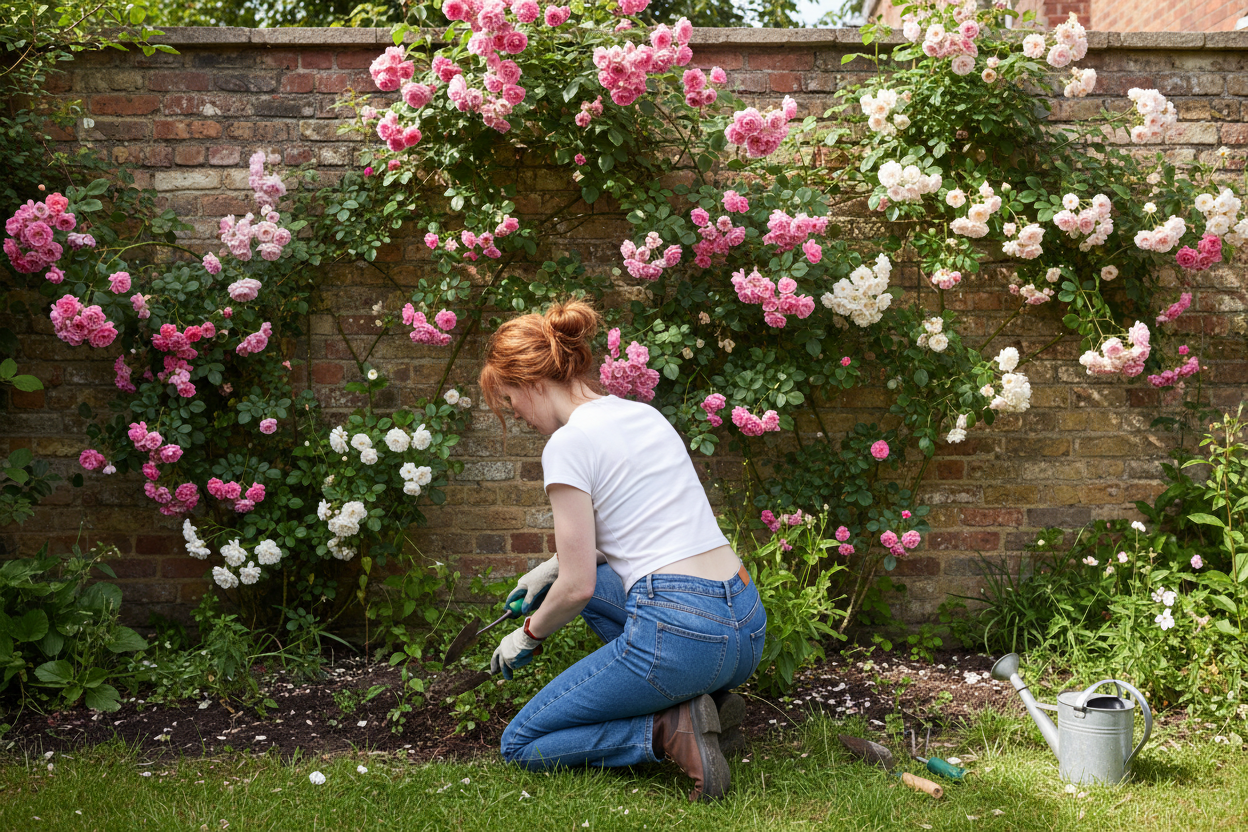
Photo by Diego Corona on Unsplash
The Misunderstanding (Surprisingly Common)
I have noticed that whenever people begin talking about equality, there is a tendency to drift almost immediately towards sameness.
Everything must be equal, everything must be shared, everything must be divided with perfect symmetry, as though the ideal relationship resembles a particularly successful accounting exercise.
This has never made much sense to me.
Perhaps because I am French, which means I was raised in an environment where people can passionately disagree for three hours over lunch and still leave convinced they have demonstrated mutual affection. Or perhaps because the older I get, the more convinced I become that human beings are far too complicated to fit neatly into identical categories.
Whatever the reason, the idea that equality means sameness feels fundamentally wrong.
Not just slightly wrong. The wrong shape entirely.
The Venn Diagram (Which Is How I Think About It)
I have always suspected that a good relationship looks less like two identical circles placed on top of each other and more like a Venn diagram.
There is you, there is them and there is the overlap in the middle.
The overlap matters. It is where the relationship lives. It is where shared experiences, compromises, plans, memories, arguments, and all the other complicated things that make up a life together accumulate over time.
But the circles themselves still exist. They do not disappear simply because they touch and nor should they.
Equality Is Space
To me, equality is not about ensuring that both people do the same things in the same way with the same frequency, it is about creating equal space for each person to exist fully, it is about creating equal opportunity for strengths to flourish and weaknesses to be accepted without criticism or scorekeeping.
A relationship where each person is required to become a smaller version of themselves in order to maintain balance is not equal.
It is simply restrictive.
The English Man and the Pavement
The English man always walks on the outside of the pavement and when I say always, I mean always!
If we are walking down a street together, he will position himself closest to the road with such consistency that I genuinely believe it has become part of his skeletal structure.
He was raised this way and to him, it is an expression of care. It is not protection exactly, because he is perfectly aware that I am capable of existing near traffic without immediate supervision. It is simply how he demonstrates consideration.
Now, there are people who would find this problematic and I know this because some of them have explained it to me.
At length.
The Question That Follows
“Why should he walk on the outside?”
The implication, of course, is that because I am entirely capable of doing so myself, I should object to it.
I do not. Not because I lack independence, not because I require protection and certainly not because I am incapable of navigating Oxford without a designated safety officer.
I do not object because I understand what it means.
Looking Through Their Eyes
This is the part I think people often miss. Actions should be viewed through the eyes of the person performing them before they are judged through our own.
The question is not “What would this gesture mean if I did it?”, rather it is “What does this gesture mean to them?” and these are very different questions.
To him, walking on the outside is a small expression of care and affection learned long before he ever met me, so why would I reject something so kindly intended?
The French Version
I was raised differently.
I cook. Not because I have to, not because anyone expects me to and certainly not because there has been some secret contractual agreement requiring me to produce meals in exchange for affection.
I cook because, for me, food is love.
This is such a deeply ingrained part of French culture that separating the two feels almost impossible.
If I care for you, I feed you.
Preferably well.
The Difference Matters
The English man does not expect this. He does not see it as my responsibility, it is not my role. If I decided tomorrow that I never wished to cook another meal in my life, he would survive. He is perfectly capable.
The important thing is that when I choose to cook, the act itself is understood and it is received as the gesture it was intended to be. It is not obligation, it is not duty, it is love.
Equality Is Not Accounting
This is why I become slightly uneasy when relationships begin to resemble spreadsheets.
Who did what? Who contributed more? Who performed precisely fifty percent of every task? Life, thankfully, is rarely this tidy.
The strongest relationships I know are not built on identical contributions. They are built on complementary ones. One person is better at one thing, the other is better at something else.
Neither contribution becomes more valuable simply because it looks different.
The Audre Lorde Observation
Audre Lorde expressed this far more eloquently than I ever could: “It is not our differences that divide us. It is our inability to recognize, accept, and celebrate those differences.”
I return to this repeatedly because it contains something essential. The problem is rarely difference itself because difference is inevitable. The problem appears when difference is interpreted as inequality rather than individuality.
Weaknesses Matter Too
This philosophy applies not only to strengths but also to weaknesses. A genuinely equal relationship allows room for imperfection, it accepts that one person may be better at planning while the other is better at adapting. One person may be calm under pressure while the other is excellent at anticipating problems before they arrive.
Neither needs fixing, neither needs apologising for. They simply need understanding.
The English Man (Predictably Sensible)
The English man understands this instinctively.
One of the things I admire most about him is that he never attempts to make me more like him or to make me more English.
He does not try to reduce my French enthusiasm, my tendency to analyse things extensively, or my occasional habit of explaining simple matters with enough detail to qualify as a university lecture.
He simply allows them to exist.
This is surprisingly rare. And deeply valuable.
What Equality Actually Feels Like
Equality does not feel like sameness, it feels like acceptance. It feels like being allowed to remain yourself without worrying that the relationship depends on you becoming someone else.
It feels like your strengths being celebrated rather than competitively evaluated and your weaknesses being understood rather than weaponised.
Most importantly, it feels like having enough space to thrive.
Which Is, Ultimately
why I have come to believe that equality is not about making two people identical. It is about creating a relationship where both people can remain fully themselves while building something together.
The overlap in the middle matters enormously., but so do the two circles that created it.
And perhaps the most equal thing we can do is not insist that everyone expresses love in the same way, but instead learn to recognise, accept, and celebrate the ways they already do.
Prompt: https://medium.com/modern-women/modern-women-july-writing-prompts-theme-9984fe6b02c4
메타데이터
- post_id
- d15a16b1c8cb
- slug
- the-problem-with-confusing-equality-and-sameness-d15a16b1c8cb
- url
- https://medium.com/modern-women/the-problem-with-confusing-equality-and-sameness-d15a16b1c8cb
- canonical_url
- https://medium.com/modern-women/the-problem-with-confusing-equality-and-sameness-d15a16b1c8cb
- author_url
- https://medium.com/@alicecoutand
- status
- ok
- fetched_at
- 2026-07-15 20:04:32