The Present as Memory of the Unborn God
A seedling grows toward the light, its tender shoots reaching upward, while at the same time, it sheds and withers. Each moment of this…
The Present as Memory of the Unborn God
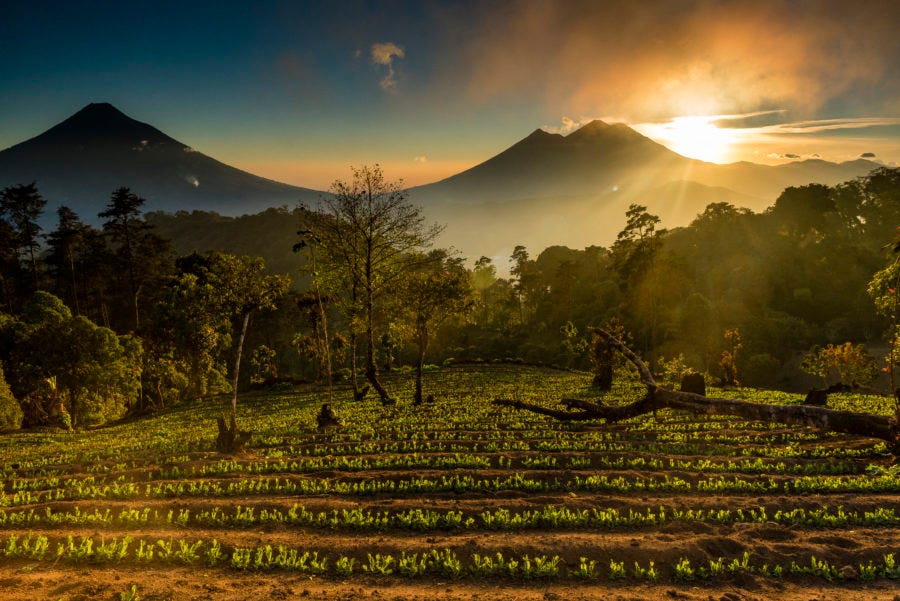
A seedling grows toward the light, its tender shoots reaching upward, while at the same time, it sheds and withers. Each moment of this process deepens its essence, and yet, it embraces the very decay that marks its becoming. The seedling does not resist its disintegration — it knows that death is intertwined with growth, that decay is not a tragedy but a transformation. This paradox of life and death is not a contradiction, but a sacred cycle, a process that makes the seedling more fully itself even as it dissolves.
In much the same way, God’s presence in us is not a clean, linear ascent toward wholeness. It is an unfolding that involves a constant shedding, a dying into life, a living into death. Each step toward the divine is simultaneously a step deeper into dissolution — an unraveling that is not an end but a becoming. This sacred growth, like the seedling, does not fear decay but trusts it as part of the divine rhythm.
Too often, we think of the present as a hollow void, or a horizon that endlessly stretches toward nothingness. But the present is far from empty. It is charged with significance — it is a memory, a trace, a presence that carries the weight of eternity’s unfolding. The present is not static; it pulses with life, bridging timelessness and the rhythm of finite moments. This pulse, this interplay between eternity and time, is where the sacred lives — not as a distant, unreachable concept, but as the very beating heart of existence.
When we call the present “the memory of the unborn God,” we are making a statement that challenges conventional understanding of time. The present is not a mere dot on the timeline of life, but a living remembrance of eternity stepping into time. God, unborn, exists beyond the boundaries of time, yet it is in the present moment that God “remembers” eternity’s gesture toward the temporal. This is not a recollection of what has been, but a continuous act of giving — of breathing life into the future, of shaping time with divine rhythm. The present, then, is not a fleeting moment; it is the place where eternity and temporality converge, where the pulse of God’s memory beats in every second.
Eternity, often envisioned as an unchanging, static realm, is instead a living force, one that has a future, a pulse, a beat. This pulse is not time passing as we know it, but the dynamic rhythm of existence itself. It is the continuous unfolding of God’s gestures in the world — a rhythm that gives life to each moment. The present is the meeting point of eternity and time, where both realities do not stand apart but are intimately woven together in an inseparable dance. Each moment becomes a note in the symphony of divine memory.
If the present is how God remembers, then life itself is our participation in this divine act of remembrance. To live is to enter into God’s memory, to take part in the rhythm of eternity as it manifests in the world. Every breath, every movement, is a testament to the unborn God’s eternal becoming. Our striving, our fragility, and even our decay are all part of this memory — each of us a living gesture that extends the divine pulse through time.
The seedling’s path toward the light, growing and decaying in unison, mirrors the paradoxical growth of God within us. This growth is not a simple progression; it is a constant, paradoxical movement where each step forward is also a step deeper into dissolution. Yet this dissolution is not an ending, but a transformation — a process of becoming more fully what we already are in God. It is not a journey of loss but of renewal, an eternal becoming that cycles and returns, over and over again.
In this sense, the present moment is sacred not because it points beyond itself, but because it is the rhythm of God’s memory in motion. Every pulse of time is a moment where eternity and finitude meet, where the unborn God remembers and gives life. The present is not a pause in the grand scheme of things; it is the active center where eternity touches the finite world, where the divine pulse vibrates through every living thing.
Memory, as described here, is not a static relic of the past. It is alive, dynamic, and infinite. It reaches forward into what will be, as much as it holds what has been. God’s memory is not about what is lost, but about the eternal act of creating, of giving life, of becoming. It is a continual unfolding, a process of creation that extends far beyond time, and into all of eternity. And we, as participants in this process, are not simply remembering; we are living the divine memory, breathing it into existence with every heartbeat.
Ultimately, the present is where eternity speaks. It is not a moment to be overlooked, but one to be inhabited fully. Each pulse is a gift, a testament to the sacred rhythm that courses through all things. To live in the present is to participate in the eternal becoming, to embrace the paradox of life and death, growth and decay. The memory of the unborn God is not just in the past; it is in every breath, every moment, every gesture of life that carries us toward the future.
In this way, we are all part of the divine unfolding, each of us a living testament to the sacred pulse of eternity, beating through time, ever becoming, ever remembering.
메타데이터
- post_id
- d17c22d66c76
- slug
- the-present-as-memory-of-the-unborn-god-d17c22d66c76
- url
- https://medium.com/@icaj2000/the-present-as-memory-of-the-unborn-god-d17c22d66c76
- canonical_url
- https://medium.com/@icaj2000/the-present-as-memory-of-the-unborn-god-d17c22d66c76
- author_url
- https://medium.com/@icaj2000
- status
- ok
- fetched_at
- 2026-07-20 22:48:06