Cabinet of Curiosities, Self-Portrait
The asylum stood at the edge of the sea where the cliffs swallowed sound.
Cabinet of Curiosities, Self-Portrait
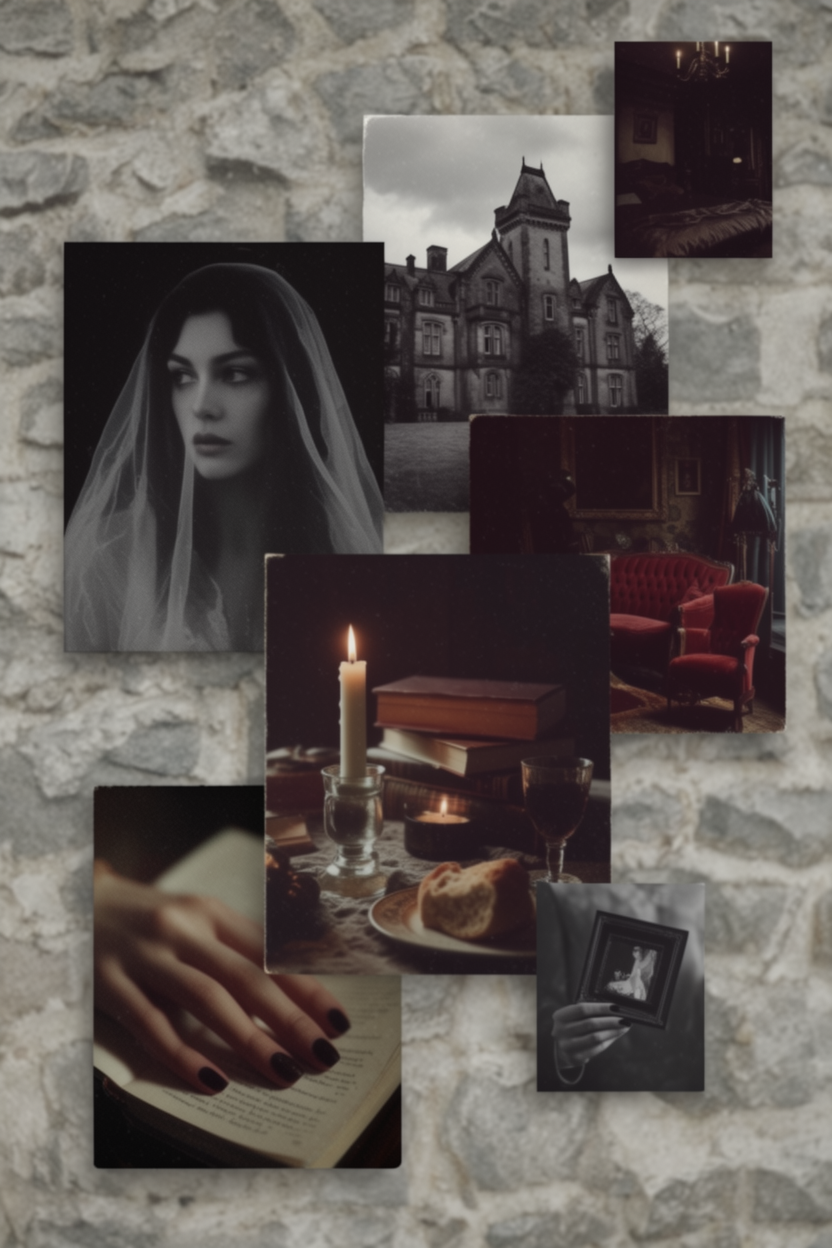
The asylum stood at the edge of the sea where the cliffs swallowed sound.
No one remembered when it was built. The villagers below claimed the stone had always been there, black against the horizon, its narrow windows glowing faintly at night like dying embers beneath ash. They said the place did not take patients it collected them.
I was seven when they brought me there.
My mother never cried when they took me away. She held my face between her hands — not cold, not warm, just certain, and said, “You’ll thank me someday. When you’re better.”
“I’m not sick,” I told her.
She smiled like I’d said something unbearably sad.
“That’s what sickness is, darling. Not knowing you have it.”
The carriage doors shut.
I never saw her again. But sometimes, in the darkest hours, I still hear her voice.
You’ll thank me someday.
I won’t.
But she’ll never know that.
Candle smoke, mildew, and wet iron clung to the asylum halls. Corridors stretched endlessly beneath cathedral ceilings, lined with portraits whose eyes seemed to follow you long after you passed. Every floorboard groaned beneath your weight as though the building itself disapproved of your existence.
The doctors spoke softly, which somehow made them crueler. They never shouted. They never struck. They simply wrote things down while looking at you with the patient disappointment of someone correcting a child’s mistake.
“Melancholia,” one murmured.
“Delusion,” another agreed.
“Resistance to treatment,” the head physician added, tapping his pen. “That is the most concerning symptom.”
I wanted to say:
I am not a symptom. I am not a case study. I am not your project.
But I had learned that arguing only filled their pages faster.
The girls slept in narrow coffin-like beds with wooden frames built high around our heads. At night, matrons walked the aisles carrying lanterns, making sure none of us spoke after curfew. If they heard whispering, they nailed the lids shut.
Not completely.
Just enough to remind us what burial felt like.
My eyes became vacant chambers, candle smoke in a dying church.
The first time it happened to me, I screamed until my throat bled raw. I clawed splinters from the wood with broken fingernails while the girls around me pretended not to hear. By morning, my hands looked skeletal, streaked red beneath the candlelight.
“Still alive?” the matron asked.
I stopped answering after that.
Years passed strangely inside the asylum. Time there did not move forward — it rotted. Winters bled into summers without warmth. Candles melted into pale rivers across forgotten shelves. Salt gathered along the tower windows from the raging sea below. Girls disappeared from their beds and no one spoke their names again.
I watched myself become quieter.
At first, silence felt forced upon me.
Later, I wasn’t sure anymore.
Later, silence felt like the only clean thing left.
One evening, during a thunderstorm, the youngest patient arrived.
She could not have been older than nine. Rainwater soaked through her nightgown as attendants dragged her screaming through the corridor. Her terror echoed violently against the high ceilings.
“Please,” she cried. “Please don’t leave me here.”
No one answered.
That night, I heard her sobbing from the bed beside mine.
“They said you don’t speak,” she whispered carefully.
I turned toward the wall.
“My mother says sad people become ghosts before they die,” she continued. “Is that true?”
Thunder rattled the windows.
After a long silence, I finally spoke for the first time in nearly a year.
“Yes.”
The child fell quiet.
“Does it hurt?”
I thought of the nailed lids. The hollow eyes. The slow forgetting. The terrible emptiness where hope used to live.
I saw no holiness in living, only endless corridors of grief.
“No,” I lied.
Weeks later, she stopped crying altogether.
That was how the asylum consumed you.
Not through violence.
Through subtraction.
One winter morning, I climbed the north tower while the matrons slept.
Snow covered the cliffs below in ghostly white. The sea crashed endlessly against the rocks, furious and alive in ways I could no longer remember being. Above me, the sky looked colorless, vast enough to swallow every prayer ever spoken.
For the first time in years, the world felt quiet.
Not the suffocating silence of the asylum.
Something gentler.
I realized then that I could no longer remember my mother’s face. Only her voice.
You’ll thank me someday.
The doctors’ voices:
Resistance to treatment.
The matron’s voice:
Still alive?
Behind me, the asylum bells began to ring. Someone had discovered my empty bed. Voices echoed through the corridors below. Footsteps climbed the tower stairs.
I closed my eyes.
So I prayed for silence instead — not peace, but disappearance. For the years ahead of me to fall mute, just like I did.
They would find me. They would bring me back inside. They would write in their journals:
Episode of elopement ideation. Prognosis unchanged.
But for this one moment — this single silent moment — I was not their patient.
I was simply a girl who had been right about everything.
And rightness, I learned, was another form of exile.
메타데이터
- post_id
- d17e77052247
- slug
- cabinet-of-curiosities-self-portrait-d17e77052247
- url
- https://medium.com/@khola.captmoiez/cabinet-of-curiosities-self-portrait-d17e77052247
- canonical_url
- https://medium.com/@khola.captmoiez/cabinet-of-curiosities-self-portrait-d17e77052247
- author_url
- https://medium.com/@khola.captmoiez
- status
- ok
- fetched_at
- 2026-06-24 11:06:28