Subnetting or Network Segmentation
Subnetting(Network segments) has always been something I dreaded as a person in cybersecurity. No matter how much I came across the…
Subnetting or Network Segmentation
Subnetting(Network segments) has always been something I dreaded as a person in cybersecurity. No matter how much I came across the concept, it flew right over my head. As someone who was initially hasty to get into the “real” stuff, I didn’t pay much attention when it came to the ground level. As someone with a clearer comprehension now (or so I’d like to think), I want to be the person with that understanding while also helping anyone else understand it better in simpler terms.
After a “bit” :) of reading and coffee, this is as easy as subnetting gets.
What is Subnetting- A Scenario
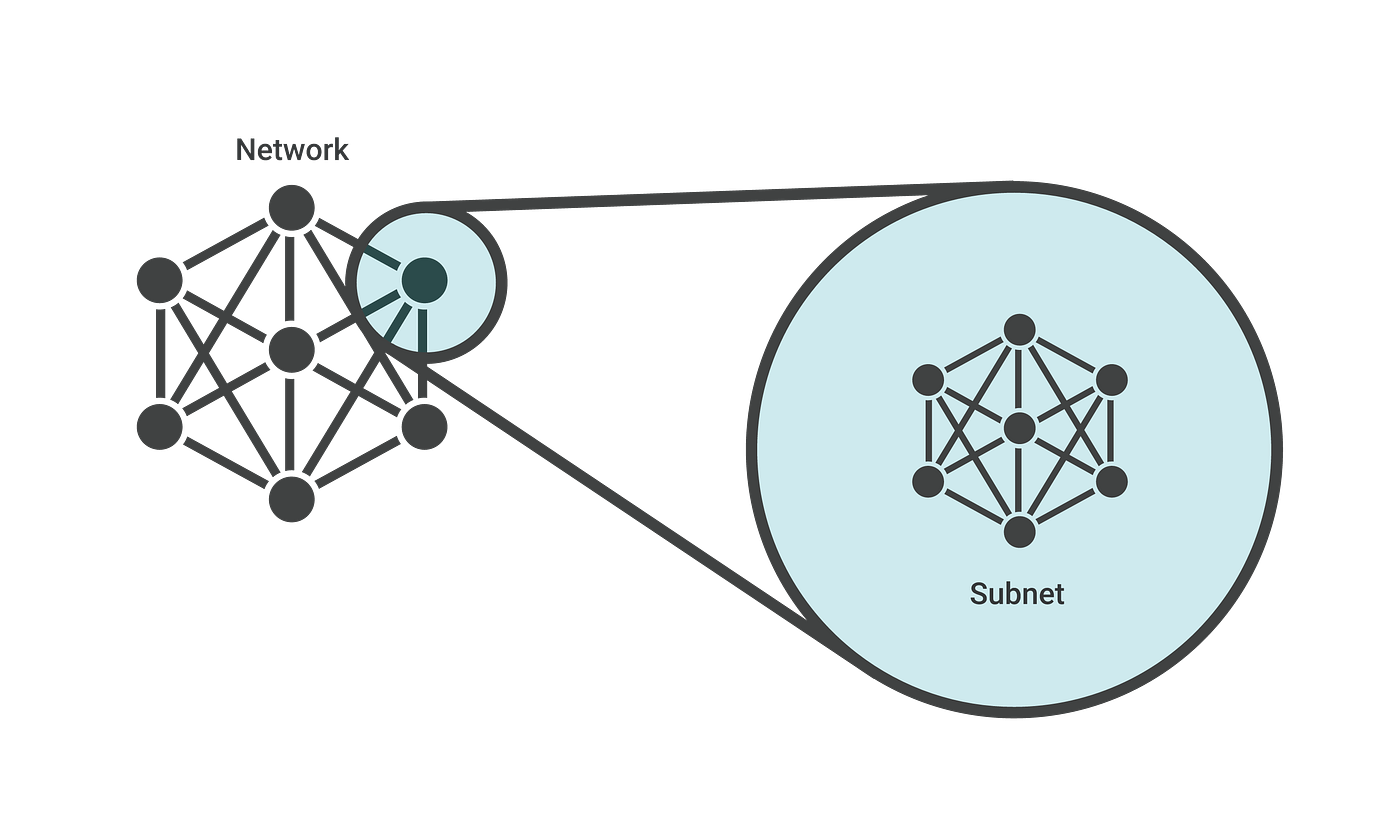
Imagine a big house with a lot of rooms, and every room is full of toys and games. A “subnetwork” is like one little room inside that big house, where only certain toys and kids are allowed to play together.
Big house and little rooms
- The big house is the whole computer network (all the computers and phones and tablets).
- Each little room (subnetwork) is a smaller group of those computers that talk to each other more easily and quietly, without shouting through the whole house.
Think of an IP address like a 32‑light strip where each light can only be on (1) or off (0). Each of these on/off lights is called a bit.
What “bit” means in subnetting
- An IPv4 address is made of 32 bits in total, grouped into four “blocks” of 8 bits each (like four 8‑light boxes).

- Subnetting is about deciding which bits are “network” (the address of the “street/room”) and which bits are “hosts” (the address of the individual device inside that room).
How bits divide network and host
- If you write an IP like
192.168.1.0/24, the first 24 bits are the network part (the “street name”), and the last 8 bits(cuz total is 32) are the host part (the “house numbers” on that street) - When you change the mask (for example from
/24to/25), you are “borrowing” one host bit to make more subnets, so you have 2 subnets instead of 1, but fewer host addresses in each.
Simple rule with bits
-
Every time you add one more bit to the network part, the number of possible subnets doubles (2, 4, 8, 16, etc.), but the number of hosts per subnet is cut in half.
-
The
/number (like/24,/26,/30) just tells the computer: “use the first ____ bits for the network, and the rest for devices.”
So in subnetting, a bit is just one tiny 0 or 1 digit in the IP address, and the positions of those bits decide which network your device is on and which “slot” it gets inside that network.
What the number means
- /24 → 24 bits for the network, 8 bits for hosts → about 254 usable device IPs (plus 2 special ones: network and broadcast). The logic is 28 so 256 IPs minus 2 special ones.
- /16 → 16 bits for the network, 16 bits for hosts → about 65,534 usable device IPs.
- /30 → 30 bits for the network, 2 bits for hosts → only 2 usable device IPs (very small, often used for point‑to‑point links, like a tiny corridor between two routers).
How they differ from each other
- Size: /16 is huge (thousands of devices), /24 is “medium” (about one office‑floor‑worth), /30 is tiny (just 2 devices).
- Use‑case:
- /16 — big company or ISP network.
- /24 — a typical office or small building network.
- /30 — links between two routers (like a private hallway just for them).
In short: bigger / number → smaller segment, fewer devices; smaller / number → bigger segment, many more devices.
Yes, I do understand there are hundreds of articles and texts online that explain subnetting too, maybe even better. But nothing wrong in taking a shot at it yourself. :)
I hope this article helped make subnetting at least a little clearer for you. Thank you for reading!
메타데이터
- post_id
- d181a0fca859
- slug
- subnetting-or-network-segmentation-d181a0fca859
- url
- https://medium.com/@aeshamehveen2093/subnetting-or-network-segmentation-d181a0fca859
- canonical_url
- https://medium.com/@aeshamehveen2093/subnetting-or-network-segmentation-d181a0fca859
- author_url
- https://medium.com/@aeshamehveen2093
- status
- ok
- fetched_at
- 2026-07-11 08:08:22


