Naked Human Sacrifices and Magical Fetishes — the West African Religion Vodun
Vodun is a traditional West African religion with an extremely long and rich tradition, whose birthplace and current centre is considered…
Naked Human Sacrifices and Magical Fetishes — the West African Religion Vodun
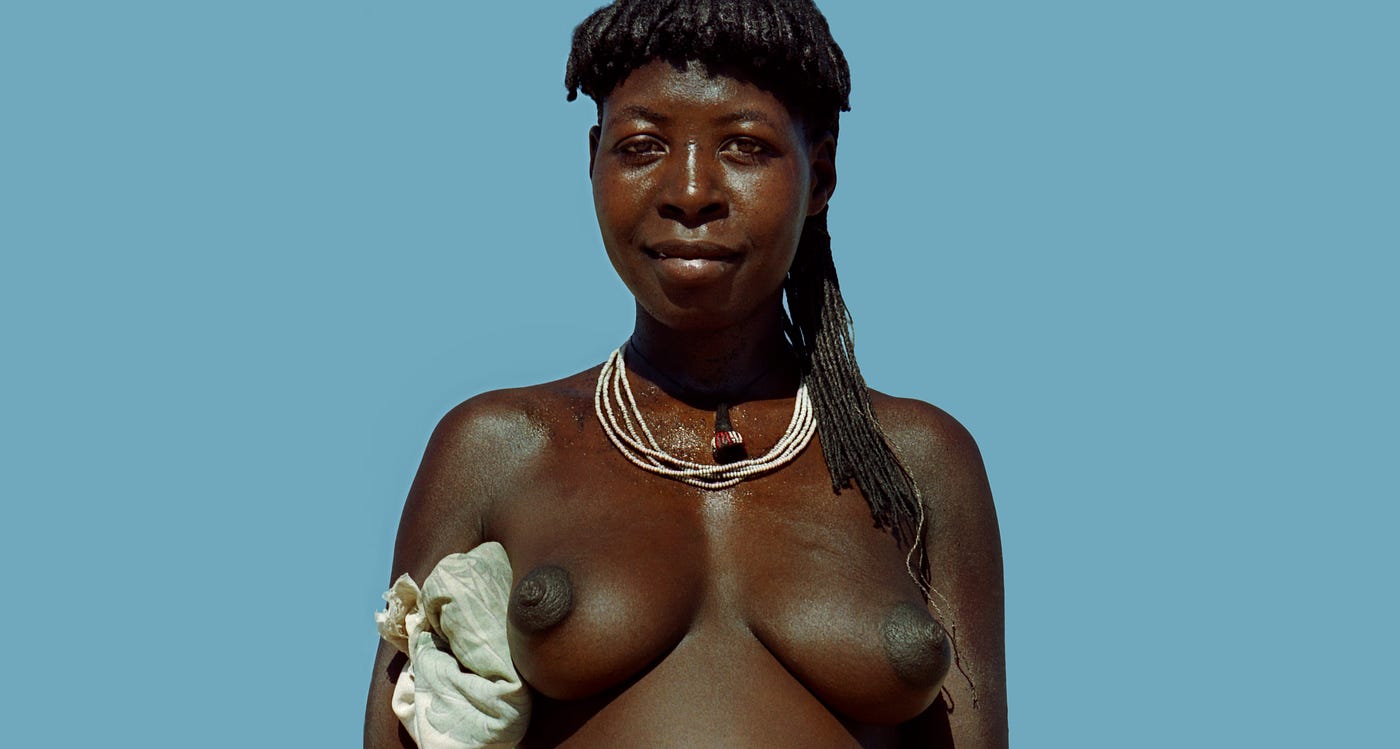
Photo: Ondrej Havelka
Vodun is a traditional West African religion with an extremely long and rich tradition, whose birthplace and current centre is considered to be West Africa’s Benin. Vodun has survived both the Christianisation and the Islamisation of West Africa, it has also survived the very hostile attitude of the former Benin communist government and is currently experiencing a new wave of interest not only in Benin. It is a highly developed, complex religion with an elaborate ceremonial system consisting of various (local) cults linked to specific deities — the so-called vodun. I have encountered vodun repeatedly, especially in Togo, Benin and Nigeria, and marginally in Burkina Faso and southern Mali. I have also observed some very similar religions (e.g. Thron, Bori, Yoruba religion, Odinala and others), which have almost identical ceremonies or divination techniques, in neighbouring countries throughout West Africa.

Photo: Ondrej Havelka
Vodun is characterized by the deification of natural elements, a cultish reverence for deceased ancestors and a belief in spirits (vodun is translated as spirit, deity, supernatural power) that inhabit objects or natural resources and can significantly harm or protect people (according to the believers of this religion) from danger. In Vodun there is a wide range of deities created by the divinization of natural elements or meteorological phenomena, which are divided into so-called families according to their place of occurrence and area of competence: celestial deities, water deities, earth deities, deities in plants or animals, and personal deities. The Mawu and Lisa deities are considered to be the creator duo responsible for the creation of the world, humans and vodun. Lisa was to sculpt the first man from clay and breathe his soul into him with divine breath. The supreme goddess Nana Buluku (or also Nana Buruku, Nana Baluku or Nana Buku) stands above the creator duo of Mawu and Lisa in some belief lines. The doctrine of the supreme God varies regionally, however: I have encountered identical, similar and completely contradictory accounts from believers and insiders alike.

Photo: Ondrej Havelka
Currently, Vodun in Benin has the status of an official, government (widely) supported religion, adhered to by approximately 18% of the total population of nearly 14 million (2023). However, many Beninese Christians and Muslims practice Vodun alongside Christianity or Islam, possibly in a syncretic form. Multiple religious identities are common in sub-Saharan West Africa — if the three most widespread religions in Benin are Christianity (in many different forms, of course, and not infrequently hostile to each other), Islam (also in many doctrinal lineages), and Vodun (in myriad cults), not a few Beninese told me in personal interviews that they hold all three religions in high esteem and believe in all of them equally. In addition to multiple religious identities, various syncretisms and eclecticisms are common. On the other hand, there are also some Benin Christians (especially from the Celestial Church of Christ) and Muslims who consider vodun to be unacceptable witchcraft and de facto Satanism and who strongly oppose vodun and syncretisms with its elements.

Photo: Ondrej Havelka
Who and where is vodun? The Vodun priest (vodunon) is not seen by the faithful as a healer or spiritual teacher, but as a mediator between the world of humans and spirits who can ward off encroaching evil (e.g. bewitchment — a widespread type of attack in West Africa), but can also direct evil against the enemy for a fee, and is therefore greatly feared by people in these areas. He wields the same occult power as a healer (usually to the benefit of the client) and a sorcerer (usually to the benefit of the paying client and to the detriment of the marked victim). The Vodun initiate has the ability to control a powerful supernatural force or entity — the vodun — localized in clay effigies, in trees or other natural objects, or also in a specific inverted clay vessel, and to compel this force to act. Vodun “walks” among the people in religious rituals to “saddle” the chosen ones and enter their bodies. This very element is also present in other surrounding traditional African religions, and under the influence of the spirit (according to them) one can temporarily prophesy, heal, see through the eyes of animals, reveal witchcraft or the hidden causes of society’s ills. Vodun often resides in a clay effigy to which and on which people bring their offerings — animal blood, alcohol, food, money… For example, in the case of Vodun Legba, it is usually a clay effigy about half a metre high, obtusely conical, surrounded by offerings — the blood is then poured or dripped directly onto it. These sacrificial sites often look very disorderly (sometimes even resembling a garbage dump) and certainly have a strong atmosphere.

Photo: Ondrej Havelka
The Vodun initiate prepares fetishes, most often wooden statuettes (the symbolism of twins of the opposite sex is the most significant and powerful) or dried animal parts (formerly also human), enchanted or directly inhabited by a spirit, to protect the household against possible danger on the spiritual plane. However, according to the initiates, these objects do not house the vodun itself. In addition to vodun priests — vodunon, there are also oracles — bokonon, healers — amawato and initiates — vodunsi. Rather than the term healers, some speak of sorcerers (English has escaped this dilemma with the term witch doctor), as they do not primarily heal, but send evil against a designated enemy or repel evil sent against a client. Both healers and witchdoctors use a power called àzě (which is an occult force permeating the material and spiritual worlds, the use of which enables healers and witchdoctors to achieve their purposes) and bŏ (meaning: spell, magic incantation, magic formula or magic recipe), and even popularizers of vodun state that the boundary between healing and witchcraft is very thin, easily penetrated, and often permeated in practice.

Photo: Ondrej Havelka
Human sacrifices Human sacrifice was only banned in Benin at the beginning of the 20th century, but this does not mean that it was immediately (completely) ended. For example, Vodun ceremonies for the burial of a king in the so-called Dahomey period required hundreds of human sacrifices. Until recently, a child was buried alive in the soil to achieve a harvest, a living child was buried in the foundations to ensure the success of a building, a child was thrown into a river to ensure moisture, and a child was drowned in the sea to tilt the vodun. Parts of the sacrificed human body were used to make fetishes. This method of preparing magical objects is still used by various forms of African witchcraft today. Human sacrifice still exists in African witchcraft — not openly, of course. More than one Christian missionary protesting against these Vodun practices was promptly included among the sacrificed for his criticism a century ago. Today, human sacrifices in Vodun are replaced by animal sacrifices and various foodstuffs: the Vodun deities, according to local beliefs, need sacrifices — especially animal blood — because these give them power and strength; without sacrifices, they may even cease to exist. Among the most famous and powerful Vodun are Dan, Heviosso, Hu, Sapata, Gu, Dangbe, Loko, Aidohwedo or Legba. Interestingly, the individual voduns speak different languages and do not understand each other; the mediator who understands all languages in the divine realm is the contradictory vodun Legba. Greater and lesser vodun are numerous: each cult of a particular deity — a vodun — is organized around a chief priest and a sacred place where the worshipped vodun resides — The human destiny called se and the fá system of divination play an important role in the life of the believer. These phenomena are also very pronounced in the neighbouring Yoruba religion (Ori destiny and ifa divination) and the Odinala religion (chi destiny and fa divination). For Vodun practitioners, se is viewed in several ways: (1) se as the destiny of the individual, (2) se as a personal life force, and (3) se as the human soul. According to Vodun believers, one’s destiny is determined by one’s personal deity before birth and one should follow it.

Photo: Ondrej Havelka
West African Vodun is also known as vodou or voodoo and is often confused with the Haitian religious movement known as Caribbean (or Haitian or Dominican) voodoo. West African Vodun is an older indigenous traditional religion that came with the slaves to the Caribbean, where its syncretion with Catholic Christianity gave rise to Caribbean voodoo, similar to Brazilian Candomblé and Cuban Santería. There is no difference between West African voodoo, vodun, vodoun, etc., it’s just the way it is pronounced by different linguistic variations. In the Gulf of Guinea people pronounce the word vodu.

Photo: Ondrej Havelka
Magical statues, masks, kri-kri and zangbeto An important part of Vodun practice is the fetishes into which the lower spirits — but not the Vodun themselves — can materialise. In addition to fetishes-protective statuettes or masks-insiders prepare protective amulets called kri-kri (also spelled gris-gris), which is a small leather case usually hung around the neck, inside which is an enchanted protective object or spell written on paper, usually dripping with the blood of a sacrificed rooster. I have observed the kri-kri countless times not only among followers of the Vodun, Bori, and Yoruba religions, but also to a considerable extent among West African Christians and Muslims, even among the Tuareg in northern Mali. As in the surrounding traditional religions, there are also so-called secret societies within Vodun that have a protective role — in Benin, the Zangbeto (translated as ‘people of the night’) society is well known. The eponymous mask worn by the dancer is popular at Vodun festivals and celebrations. The Zangbeto is made to give the impression that it moves and spins on its own, with no one inside. People are very inventive in making the zangbeto and can often create the real belief that the zangbeto is dancing among the people by itself, powered by the vodun.

Photo: Ondrej Havelka
Please buy me a coffee: Ondřej Havelka (buymeacoffee.com)
Thank you very much in advance!
메타데이터
- post_id
- d1b9779cc5f7
- slug
- naked-human-sacrifices-and-magical-fetishes-the-west-african-religion-vodun-d1b9779cc5f7
- url
- https://medium.com/@drondrejhavelka/naked-human-sacrifices-and-magical-fetishes-the-west-african-religion-vodun-d1b9779cc5f7
- canonical_url
- https://medium.com/@drondrejhavelka/naked-human-sacrifices-and-magical-fetishes-the-west-african-religion-vodun-d1b9779cc5f7
- author_url
- https://medium.com/@drondrejhavelka
- status
- ok
- fetched_at
- 2026-06-25 12:15:08