Where the Meadows Weep: Reckoning with the Forgotten Violence of the Boyd and Parker Ambush
By George Cassidy Payne
Where the Meadows Weep: Reckoning with the Forgotten Violence of the Boyd and Parker Ambush
By George Cassidy Payne
It started, as many discoveries do, with getting purposely lost.
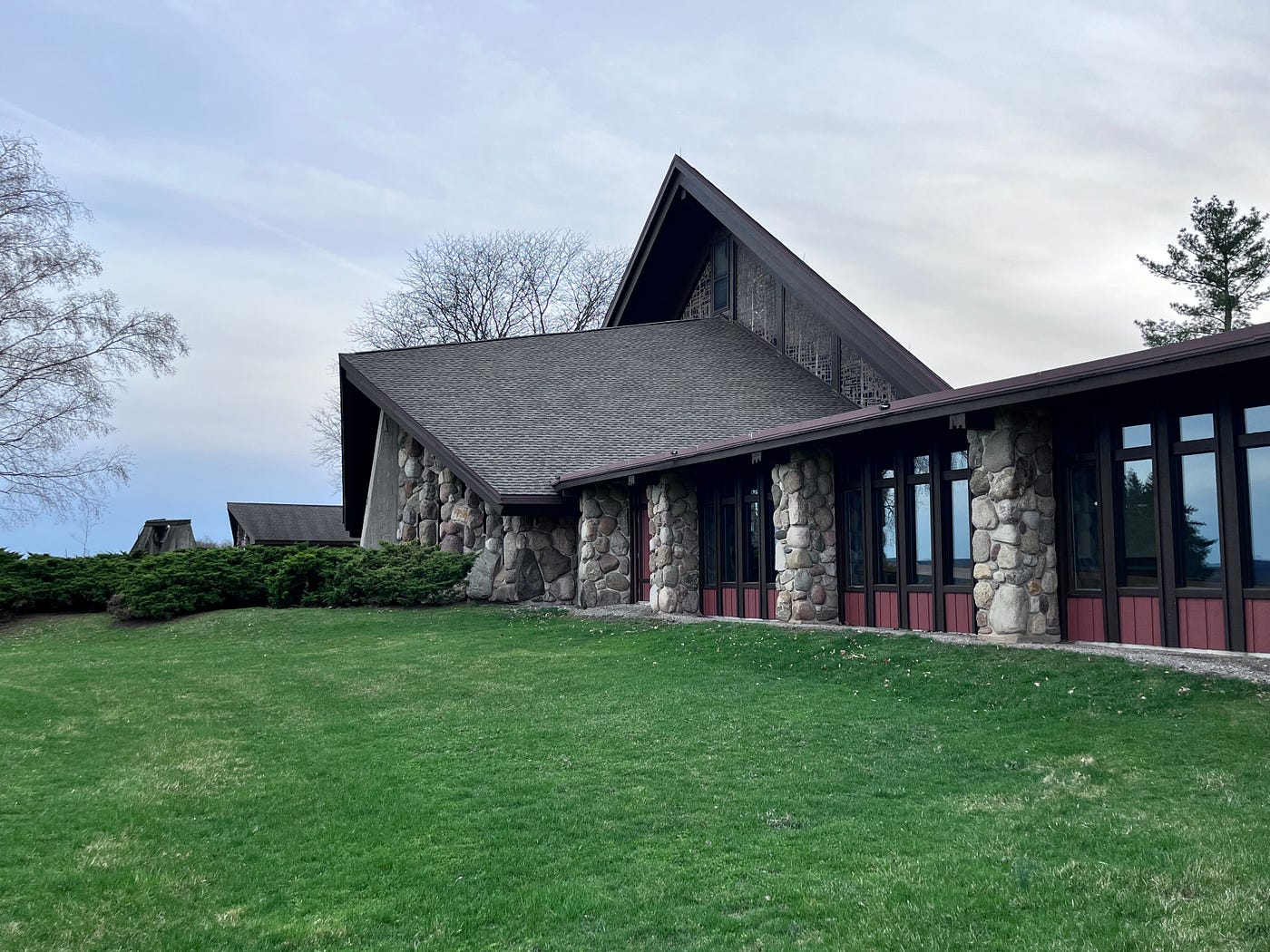
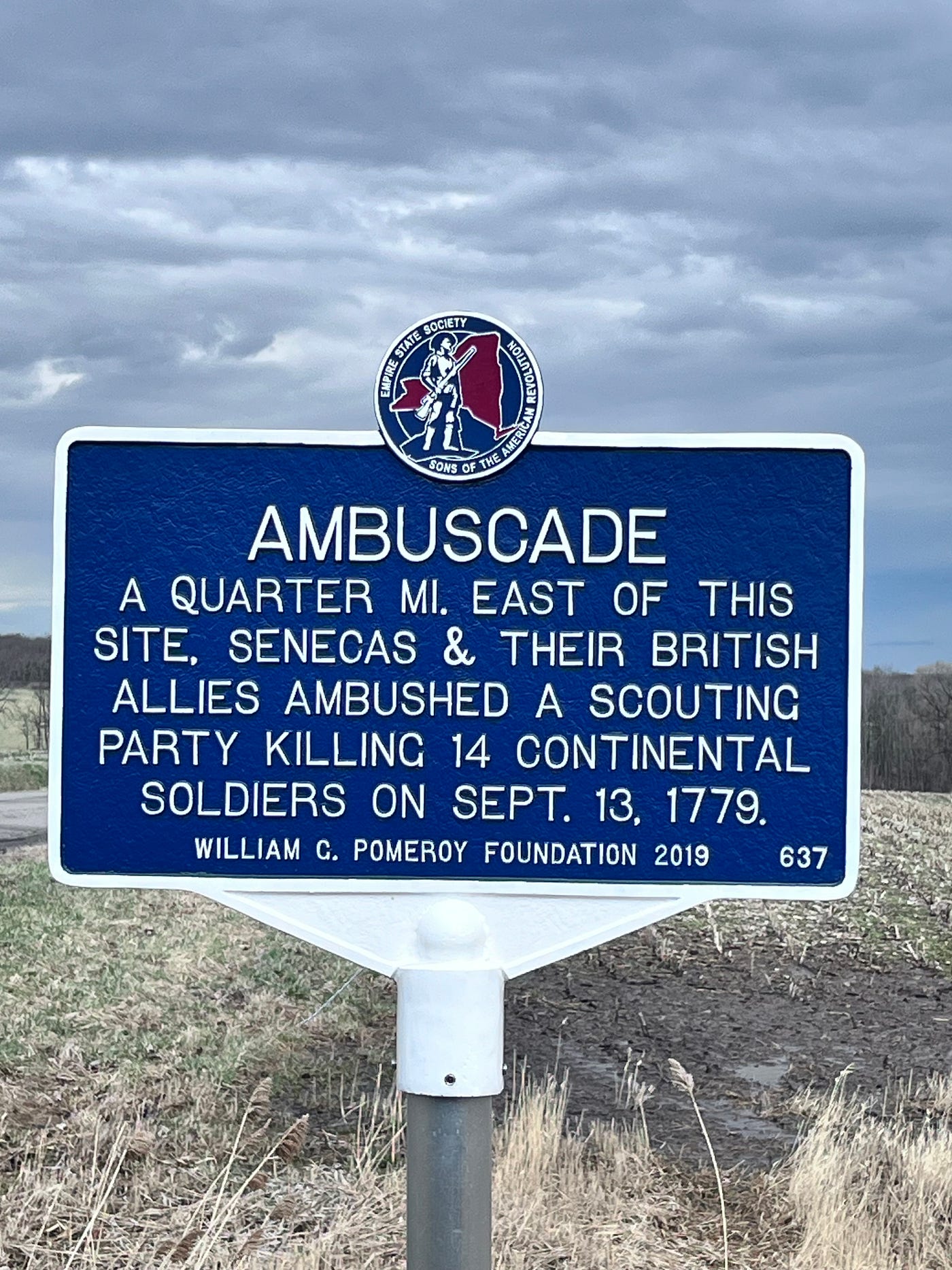
Driving the backroads around Groveland, near Conesus Lake in the Western Little Finger Lakes region, I stumbled upon a small, seemingly unremarkable picnic area. A simple pavilion stood empty. A historical marker near the parking lot gave some hints. Beyond it, across a wide meadow, a stone monument sat solemnly, gazing over the countryside. It was here, on September 13, 1779, that blood was spilled — a place known as the Boyd and Parker ambush.
At first glance, it seems like a footnote in the sprawling saga of the American Revolution. Yet, as with so much of history, the closer you look, the more it refuses to stay simple.
The ambush took place during the Sullivan Expedition, a brutal campaign ordered by George Washington to devastate the Seneca and Cayuga nations, whose raids had terrorized frontier settlements. Major General John Sullivan led several thousand Continental soldiers north through Pennsylvania into the Finger Lakes, burning villages, destroying crops, and driving Native peoples from their homelands.
On the night of September 12, 1779, Lieutenant Thomas Boyd and Sergeant Michael Parker led a scouting party of 26 men to reconnoiter the important Seneca town of Chenussio. Unknown to them, roughly 400 Loyalist Rangers and Seneca warriors, commanded by Major John Butler and the war chiefs Cornplanter and Little Beard, were also lying in wait.

The next morning, after a brief skirmish and ignoring the warning of their Oneida guide, Boyd’s patrol stumbled into an ambush. Surrounded and outnumbered, fourteen were killed outright. Boyd, Parker, and their guide were captured. The guide, Thaosagwat, was executed immediately. Boyd and Parker were taken to Chenussio, interrogated by Butler, and then handed over to Little Beard, who subjected them to horrific torture before executing them in rage over the destruction of Seneca lands.
The brutality inflicted upon Boyd and Parker defies easy recounting. Contemporary journals describe mutilations so gruesome that some details are omitted entirely. According to legend, one of the trees in today’s Boyd and Parker Memorial Park marks the very spot where Boyd was tortured to death.
But it would be a grave mistake to let our sympathy for Boyd and Parker blind us to the wider moral complexities. The American Revolutionary War was not a simple battle of “good guys” versus “bad guys,” and the frontier was not a stage for neat, heroic dramas. It was a landscape soaked in vengeance, atrocity, and fear, from all sides.
The Seneca, while fiercely defending their lands, were infamous for their ceremonial use of torture as an act of intimidation and spiritual retribution. Some of the practices they employed to inflict misery on their captives are too gruesome even for historical record. Yet the American Patriots were no innocent party, either. Captured Native Americans were sometimes tortured, starved, and even raped.

War strips away our pretenses. As historian Barbara Tuchman once wrote, “War is the unfolding of miscalculations.”
It brings out the worst in all of us, no matter what cause we fight for.
The role of the historian, then, is not to invent heroes or villains to comfort our modern sensibilities. It is to honestly and objectively record how humans actually behaved, not how we wish they had behaved, according to our better angels.
Today, in an age when school curricula are increasingly sanitized, when books are banned to shield students from the uncomfortable truths of our past, it is even more important to confront history in all its messy complexity. As philosopher George Santayana warned, “Those who cannot remember the past are condemned to repeat it.”
When I stood in that meadow at Groveland, with only the wind moving through the grass, I felt the sadness of the place. The land itself seemed to grieve. There are no pure victors here, only loss—loss of lives, of homelands, of possibilities.
The meadows weep, even if we refuse to.

George Cassidy Payne is a writer, historian, and passionate advocate for a nuanced understanding of the past. With a background in philosophy and the humanities, Payne has spent years exploring the intersection of history, memory, and cultural identity. His work delves into the complexities of historical events and the human experiences that shape them, often focusing on the overlooked and misunderstood narratives.
메타데이터
- post_id
- d1ca5fa07b66
- slug
- where-the-meadows-weep-reckoning-with-the-forgotten-violence-of-the-boyd-and-parker-ambush-d1ca5fa07b66
- url
- https://medium.com/@icaj2000/where-the-meadows-weep-reckoning-with-the-forgotten-violence-of-the-boyd-and-parker-ambush-d1ca5fa07b66
- canonical_url
- https://medium.com/@icaj2000/where-the-meadows-weep-reckoning-with-the-forgotten-violence-of-the-boyd-and-parker-ambush-d1ca5fa07b66
- author_url
- https://medium.com/@icaj2000
- status
- ok
- fetched_at
- 2026-07-20 02:25:49