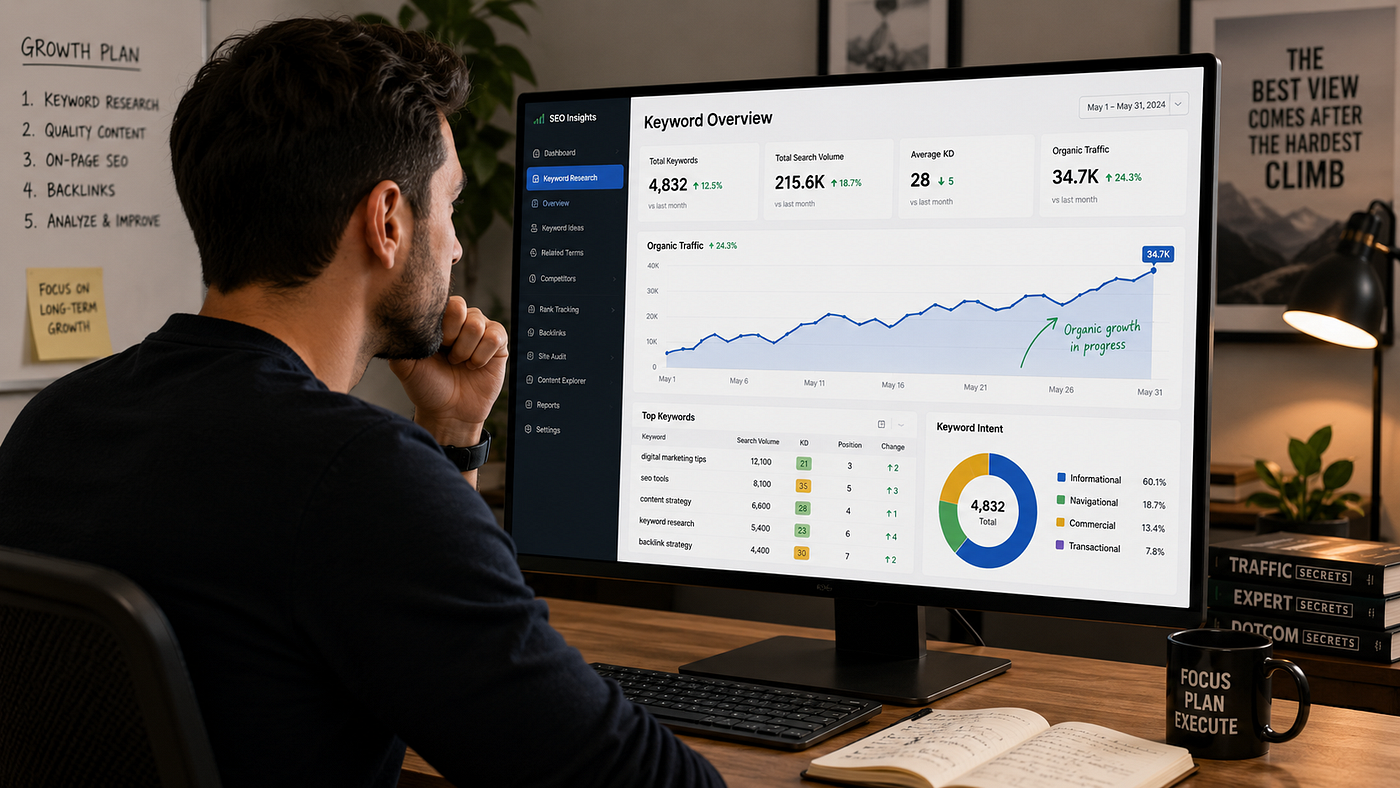
Best Analytics Tools for Digital Marketers in 2026
Your campaigns are running. Your budget is moving. But do you actually know what’s working?
Best Analytics Tools for Digital Marketers in 2026
Your campaigns are running. Your budget is moving. But do you actually know what’s working?
Most marketers I talk to have the same quiet problem. They have dashboards. They have data. But when someone asks, “Which channel actually drove revenue last quarter?” the answer takes three hours and a spreadsheet to find.
The right **marketing analytics tools* don’t just show you numbers. They show you the right* numbers, fast enough to act on them. After testing a lot of platforms across different team sizes and budgets, here is what the landscape actually looks like in 2026.
First, Decide What Problem You Are Solving
Before I throw a list at you, a quick diagnostic. There are roughly four things digital marketers need from analytics:
- Attribution:- What touchpoints actually caused the conversion?
- Campaign performance:- Is this ad/email/SEO effort paying off?
- Audience behavior:- What are people doing on our site or in our app?
- Reporting efficiency:- Can I pull this data without rebuilding the same report every Monday?
Most tools are strong on one or two of these and weak on the others. Knowing your priority saves you from paying for features you will never use.
The Core Stack Most Teams Are Running in 2026
Google Analytics 4
GA4 is not perfect, the learning curve is real, and the interface still feels like it was designed by a committee that hates marketers, but it is still the baseline. The event-based model is genuinely more flexible than Universal Analytics ever was once you understand it.
The biggest mistake people make with GA4 is not configuring custom dimensions properly from the start. The default reports miss a huge amount of meaningful behavior. Google’s own documentation on custom dimensions is worth reading before you go live with any new setup.
Best for: behavior tracking, funnel analysis, free tier coverage for smaller sites.
Looker Studio (formerly Data Studio)
Looker Studio has quietly become the reporting layer most teams rely on. It connects to GA4, Google Ads, Meta, BigQuery, and dozens of other sources. The templating system means you build the dashboard once and update it automatically.
The trick is not to use it for exploration, use it for presenting conclusions. Do your exploratory work elsewhere, then pipe the clean numbers into Looker Studio for stakeholders.
Best for: automated reports, multi-source dashboards, client-facing presentations.
Mixpanel
If your product has a user account or any kind of retention loop, Mixpanel is worth serious consideration. Its cohort analysis and funnel breakdowns are faster and more intuitive than GA4’s equivalents. The Mixpanel blog actually has strong content on product analytics methodology if you want to go deeper on how to structure events.
Best for: SaaS, apps, and any product with repeat engagement.
Where Campaign Tracking Gets Messy
Here is the thing that gets skipped in most “best analytics tools” roundups: the tools only work as well as the data going into them.
And the data going into them is almost always broken in at least one place.
The most common culprit? UTM parameters applied inconsistently across campaigns. One team member uses source=linkedin, another uses source=LinkedIn, and another uses source=li. GA4 treats all three as different traffic sources. Three months later your LinkedIn attribution data is split across five rows and none of them are accurate.
This is why having a clean link-building and tagging workflow matters as much as which platform you pick. Tools like linkutm.com/tools/analytics help teams generate consistent UTM parameters and keep naming conventions clean across campaigns, along with team management workflow, so the data you are analyzing is actually reliable.
Getting this right at the parameter level means your platform-level data is trustworthy. Skip it, and no amount of dashboard sophistication will fix the underlying mess.
The Growth Marketing Tools Worth Paying For
Triple Whale
Triple Whale has become a go-to for DTC brands running paid social at volume. It pulls in data from Meta, TikTok, Google, and Shopify into one dashboard and applies its own first-party attribution model. If you are running significant ad spend and tired of platform-reported ROAS that never matches reality, this is the tool that started to fix that problem for a lot of teams.
Triple Whale’s attribution docs are unusually clear if you want to understand exactly how they are calculating things.
Best for: ecommerce brands, high-volume paid social, multi-platform ad spend.
Northbeam
Similar territory to Triple Whale but with a heavier focus on media mix modeling for larger budgets. If you are spending above $100k/month on paid and need incrementality testing alongside attribution, Northbeam is worth a demo.
Best for: enterprise DTC, teams with dedicated media buying operations.
Amplitude
Where Mixpanel is fast and intuitive, Amplitude is more powerful for complex behavioral segmentation and predictive analytics. The free tier is generous. The learning curve is steeper. For product-led growth companies especially, it has become a foundational tool.
Best for: PLG companies, product analytics, behavioral cohorts.
Link Tracking and UTM Management
A category that is often an afterthought but should not be. Every campaign link is a data point. If the link is broken, the data is broken.
Bitly remains the most widely used link shortener. Its analytics are basic but the brand recognition makes it easy to use in shared content. The Bitly analytics overview gives you a sense of what is tracked per link.
Rebrandly is the cleaner choice if you want branded short domains and deeper click data. Worth it if link credibility matters to your audience.
UTM.io lets teams build, store, and share UTM links from a central dashboard. The main value is consistency: everyone on the team builds links the same way, using the same naming conventions, and old campaigns are searchable.
**LinkUTM** does something similar but with a stronger focus on analytics integration. You can build UTM parameters, shorten links, create custom links or branded links, preview how they will show up in your reports, and manage link sets by campaign. I like it for teams where the marketer building the link is not always the same person reading the data in GA4, because it forces a consistent structure that both sides can actually use.
PixelMe is worth knowing about if you run retargeting campaigns. It lets you add retargeting pixels directly to shortened links, which means anyone who clicks a link in your email or social post gets added to your ad audience automatically, without ever landing on a page you own.
For teams managing hundreds of campaign links across multiple channels, the combination of a UTM builder workflow and a link shortener is what keeps tracking clean without adding hours of manual work.
SEO and Organic Performance
Google Search Console
Still the most accurate source for organic search data because it comes directly from Google. Use it alongside GA4 rather than instead of it. Where GA4 gives you what people did after they landed on your site, Search Console tells you what queries brought them there.
Ahrefs / Semrush
Both are strong. Ahrefs has the better backlink data; Semrush has the stronger competitor analysis and content audit tools. Most teams pick one and stick with it. If you are primarily doing content marketing and link building, Ahrefs edges ahead. If you want the kitchen-sink SEO suite with paid keyword research too, Semrush wins.
One Honest Caveat About All of This
No analytics tool solves a strategy problem. I have watched teams spend serious money on sophisticated attribution platforms while their fundamental issue was that they were running campaigns to audiences who would never convert. The data got more precise. The results stayed flat.
The best growth marketing tools make good decisions faster. They do not replace the judgment you need to decide which decisions to make in the first place.
A Quick Framework for Picking Your Stack
Start with what you are already measuring and what that measurement is missing. Then fill the gap with the most targeted tool rather than the most comprehensive one. Complexity scales badly. A focused three-tool stack you actually understand beats a seven-tool stack with three redundant platforms nobody checks.
The tools mentioned here cover most of the scenarios a digital marketing team will face in 2026. The right combination depends on your channels, your team size, and honestly, how disciplined you are about keeping the underlying data clean.
That last part matters more than most people want to admit.
What analytics tools have actually changed how your team makes decisions? Drop it in the comments. I am genuinely curious what is working outside the obvious options.
메타데이터
- post_id
- d203e2424d61
- slug
- best-analytics-tools-for-digital-marketers-in-2026-d203e2424d61
- url
- https://medium.com/@Hannah_Brooks/best-analytics-tools-for-digital-marketers-in-2026-d203e2424d61
- canonical_url
- https://medium.com/@Hannah_Brooks/best-analytics-tools-for-digital-marketers-in-2026-d203e2424d61
- author_url
- https://medium.com/@Hannah_Brooks
- status
- ok
- fetched_at
- 2026-06-14 11:28:49