10 Key Elements of Modern Web Design Every Business Website Needs
TL;DR:
10 Key Elements of Modern Web Design Every Business Website Needs
TL;DR:
- Modern web design focuses on creating websites that are interactive, user-friendly, and visually engaging.
- Responsive and mobile-first design ensures a smooth experience across all devices.
- Technologies like AI, AR/VR, and microinteractions make websites more personalized and engaging.
- Accessibility and cultural awareness help websites connect with a wider and more diverse audience.
- Balancing design, performance, and usability is key to building effective modern websites
Introduction:
Modern web design is not just about how a website looks. It’s about how easy it is to use and how well it works for visitors. A good website helps users find information quickly, navigate smoothly, and enjoy their experience without confusion or frustration.
Today, websites are designed with users in mind first. Features like mobile-friendly layouts, fast loading speeds, simple navigation, and smart technology help create better experiences. Modern web design focuses on making websites clear, useful, and engaging while also supporting business goals and building trust with users.
Key Elements of Modern Web Design:
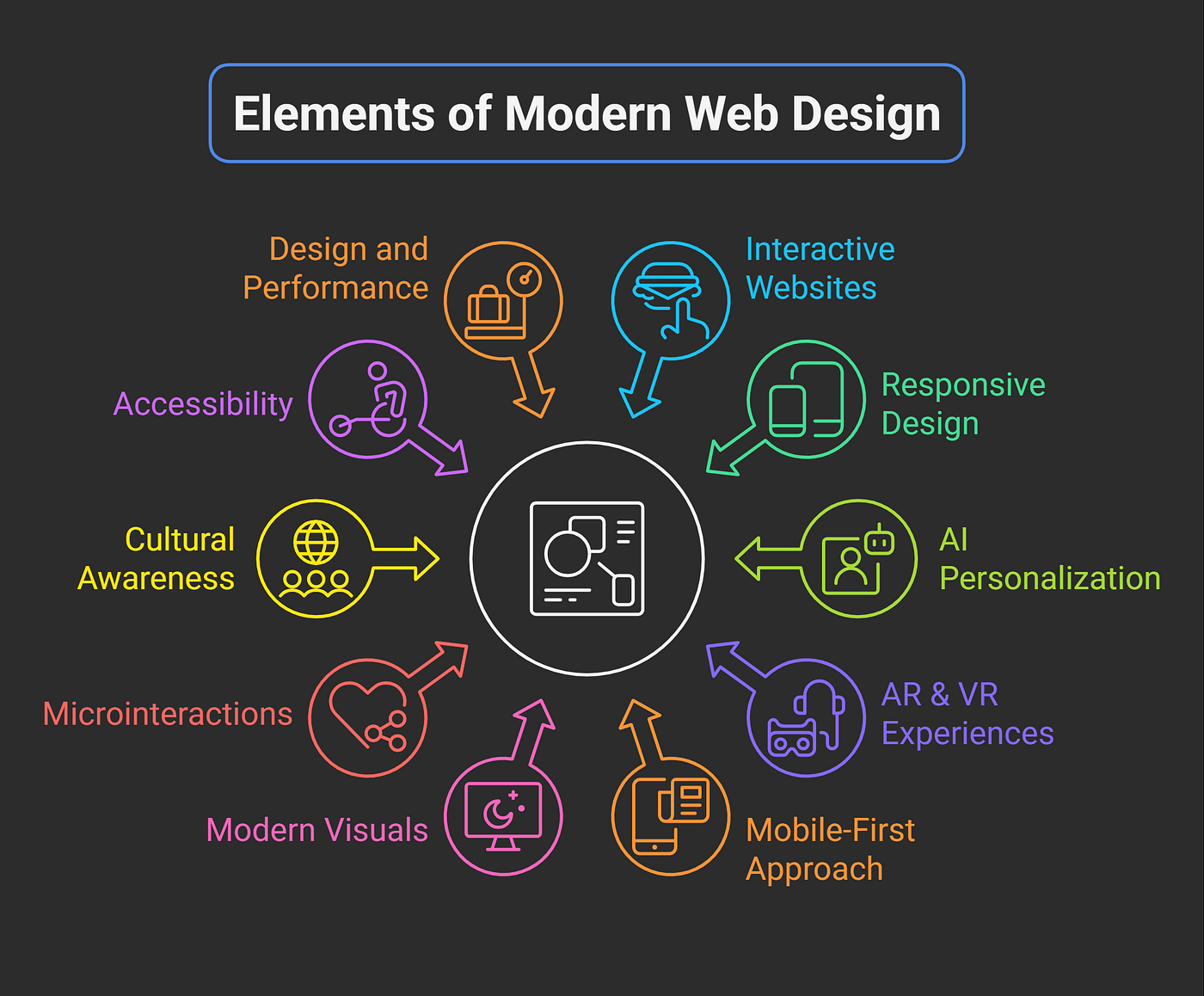
Modern web design is about making websites useful, interactive, and engaging. Many **leading web design providers** follow these principles. Here are 10 key elements of a modern website:
1. Interactive and Immersive Websites
Today’s websites go far beyond static pages. Designers use animations, dynamic content, and interactive features to make users feel engaged. Immersive design keeps visitors interested, encourages exploration, and helps communicate brand messages in a memorable way.
2. Responsive Design for All Devices
With users accessing websites on smartphones, tablets, and desktops, responsive design has become essential. Modern websites automatically adjust layouts, images, and content to fit any screen size, ensuring a smooth and consistent experience across all devices.
3. AI Personalization
Artificial intelligence is changing how users experience websites. By analyzing behavior, AI can display content, products, or layouts that match individual preferences. This personalization makes websites more relevant, engaging, and effective for each visitor.
4. AR & VR Experiences
Augmented reality (AR) and virtual reality (VR) allow users to interact with digital content in exciting ways. From virtual product demos to immersive storytelling, these technologies bring websites to life and create experiences that go beyond traditional browsing.
5. Mobile-First Approach
Designing for mobile devices first ensures that websites look and work great on smaller screens, where most users spend their time. A mobile-first strategy also helps designers prioritize essential content and features, improving overall usability.
6. Modern Visuals and Dark Mode
Minimalistic layouts, clean typography, and dark mode options improve both aesthetics and user comfort. Simple designs help users focus on content, while dark mode reduces eye strain and creates a modern, sleek look.
7. Microinteractions and Feedback
Small animations and interactive responses like buttons changing color when clicked or subtle hover effects make websites feel alive. Microinteractions guide users, provide feedback, and make interactions more enjoyable without overwhelming the design.
8. Cultural and Audience Awareness
Designing with cultural context in mind ensures that visuals, colors, and messaging resonate with the target audience. Culturally aware design builds trust, connects emotionally with users, and makes websites feel more personal and relevant.
9. Accessibility and Cross-Device Support
A modern website must be usable for everyone. Features like screen readers, keyboard navigation, high-contrast modes, and responsive layouts ensure that all users, including those with disabilities, can access content easily and comfortably.
10. Balancing Design and Performance
Beautiful visuals alone are not enough. A great website also needs to load quickly, function smoothly, and provide an intuitive user experience. Balancing aesthetics with performance ensures that users enjoy both a visually appealing and reliable website.
Conclusion:
Modern web design is about creating websites that are easy to use, visually appealing, and helpful for users. It combines clean design, smart technology, and thoughtful user experience to keep visitors engaged and make information easy to access. A well-designed website helps users feel comfortable and confident while browsing.
By focusing on usability, performance, accessibility, and modern features, businesses can build websites that truly work. When design and functionality are balanced, a website not only looks good but also delivers value, builds trust, and leaves a strong, lasting impression on users.
FAQs:
1. What is modern web design?
Modern web design is creating websites that are interactive, user-friendly, visually appealing, and tailored to users’ needs using the latest technology and design trends.
2. Why is technology important in web design?
Technology like AI, AR/VR, and responsive layouts allows websites to be more engaging, personalized, and functional across all devices.
3. How does culture affect web design?
Cultural awareness helps websites connect with users emotionally by using colors, visuals, and messaging that fit local values and traditions.
4. What makes a website user-friendly?
A user-friendly website is easy to navigate, fast, accessible on all devices, and designed with the user in mind, including interactive and clear features.
5. What trends define modern web design?
Key trends include mobile-first design, minimal layouts, dark mode, microinteractions, AI personalization, and accessibility for all users.
메타데이터
- post_id
- d242974cfbce
- slug
- 10-key-elements-of-modern-web-design-every-business-website-needs-d242974cfbce
- url
- https://medium.com/@creolestudios/10-key-elements-of-modern-web-design-every-business-website-needs-d242974cfbce
- canonical_url
- https://medium.com/@creolestudios/10-key-elements-of-modern-web-design-every-business-website-needs-d242974cfbce
- author_url
- https://medium.com/@creolestudios
- status
- ok
- fetched_at
- 2026-06-20 20:29:01