From Collapse to Diagnosis, and Toward the Future
A personal narrative about autistic burnout, late diagnosis, and the slow learning of living through accommodation
From Collapse to Diagnosis, and Toward the Future
A personal narrative about autistic burnout, late diagnosis, and the slow learning of living through accommodation
I. Introduction
The collapse did not arrive all at once. It came the way tides do when no one is watching: slowly, withdrawing energy, clarity, and margin, until one day there was no firm ground left to stand on. For years, I called it fatigue, stress, excessive demands. I thought it was something that could be fixed with more discipline or better habits. I never imagined it was my nervous system urgently asking for a language I did not yet know.
I write this in the first person because for a long time my story was told from the outside: through evaluations, partial diagnoses, or interpretations that never quite explained what I was living on the inside. This text does not seek to dramatize collapse or turn it into an inspiring metaphor. It seeks to make it understandable. For an autistic mind, understanding is not an intellectual exercise: it is a form of rest.
II. The collapse was not sudden: it was erosion
For years, I functioned at a high level. I delivered. I responded. I held myself together.
From the outside, my life looked stable. From the inside, it felt increasingly narrow. I sustained complex roles, overlapping expectations, demands that were never fully articulated. I learned to move through noisy, ambiguous environments because there did not seem to be another option. None of this broke me immediately. What it did was wear me down in silence. The system held because I was capable. But my body paid the price.
The signs were there long before the collapse: fatigue that never lifted, incomplete recovery, irritability, intermittent enjoyment, a growing need for silence. I read it as a personal failing. I thought that if I adjusted just a bit more-the pace, the attitude, the level of demand-everything would fall back into place. That reading was not naïve. It was the only one possible after a lifetime of adaptation.
III. When the rupture is neurological, not emotional
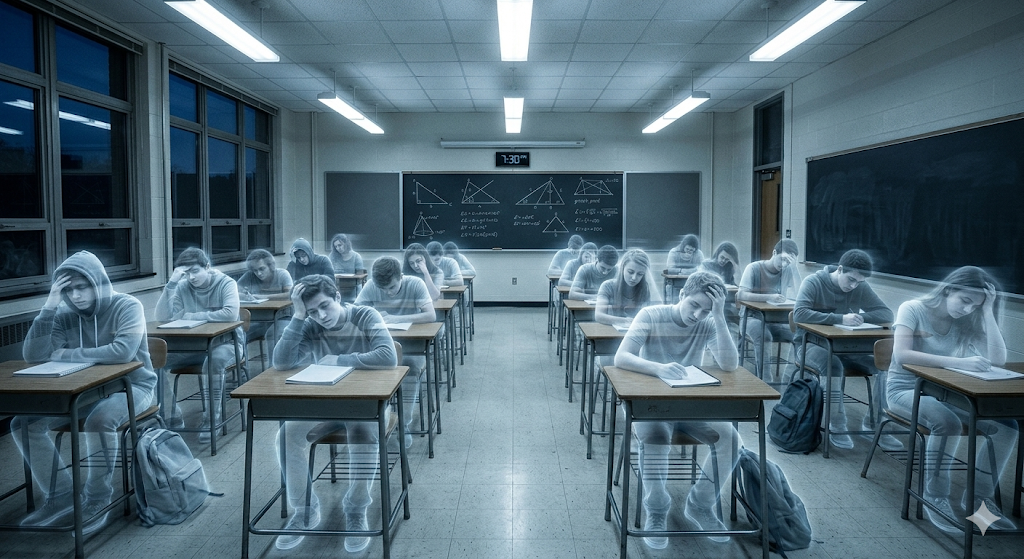
The rupture did not begin as sadness or as a clear emotional crisis. It began in the body. Saturation appeared. Brain fog. Difficulty making simple decisions. My tolerance for noise, interaction, and demand dropped abruptly. Shutdowns began. Moments when I simply could not go on.
For a while, I tried to explain it as stress. But something did not add up. I was not “emotionally unwell” in the classic sense; I was neurologically overwhelmed. What was happening had a name: autistic burnout.
Only afterward came the emotional blow: losing access to my usual resources, watching the identity I had built around functioning collapse, and facing the feeling of having no place in a system that recognizes value only when there is performance.
IV. Late diagnosis: rupture and relief
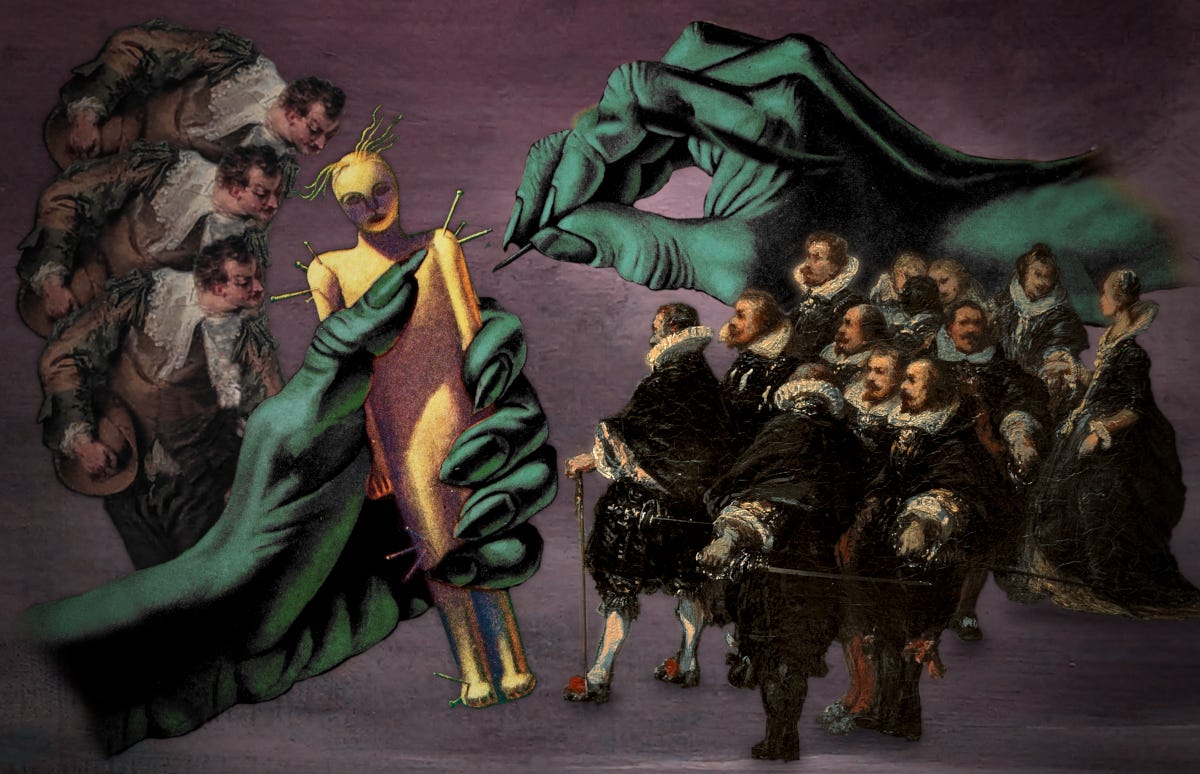
The diagnosis did not explain the collapse retroactively; it made it legible. Suddenly, the body stopped being a traitor. Exhaustion stopped being laziness. Collapse stopped being failure. What collapsed was not my capacity, but a survival strategy.
I did not break; I ran out of margin. And when a neurodivergent person runs out of margin, the nervous system takes over, the body sets limits the mind could never set, and an identity built on endurance falls apart.
V. “Regular” burnout and autistic burnout are not the same
Occupational burnout is usually tied to work and improves with real rest or role changes. Autistic burnout is not. It is not just work. It is living in a world not designed for this kind of nervous system.
Rest helps, but it does not restore. Vacations do not always recover. The environment itself hurts. Noise, unstructured interaction, small decisions. Meltdowns, shutdowns, fog, ringing appear.
Autistic burnout does not suddenly emerge in adulthood. It builds on a lifetime of constant compensation and high functioning with invisible wear.
VI. What was always there (before the collapse)
Before burnout, there were already:
- High functioning, but costly
- Learned social masking, not natural
- Interaction as drainage
- Deep, systemic thinking
- Intense, regulating interests
- High sensitivity held together by energy
- Need for structure and clear rules
- An identity built around duty
Burnout did not make me autistic. It took away the energy required to keep hiding it.
VII. Strengths that were adaptations
Many things read as strengths were, in reality, autistic adaptations:
- “Responsible”: hypervigilance to feel safe
- “Performs under pressure”: crisis reduces ambiguity and provides structure
- “Analytical”: a need to understand in order to feel safe
- “Good communicator”: learned scripts at the cost of social exhaustion
- “Independent”: functional isolation to avoid social debt
- “Always available”: difficulty setting limits without guilt
- “Resilient”: extreme self-demand sustained by a performance-based identity
None of this disappeared out of weakness. It disappeared because it was unsustainable.
VIII. Separating layers to avoid getting lost
So that everything does not collapse into “I am nothing now,” layers need to be separated:
- Authentic traits: deep thinking, genuine interests, ethical compass, sensitivity. They remain.
- Adaptations: the “functional me,” self-exigence, masking. Useful, but not a sustainable foundation.
- Internalized demands: worth tied to endurance, to always being able, to not asking for accommodations. They were never mine.
Burnout did not leave me without an identity. It left me without a costume.
IX. From diagnosis to accommodation
The next step is not “going back to functioning.” It is learning to live through accommodation rather than compensation. Learning which demands require adaptation and which touch essence. Setting limits that previously only the body could impose.
Not a heroic reconstruction, but an honest reorganization.
X. A possible future
For a long time, I imagined the future as a goal: getting better again, performing again, becoming who I used to be. I can no longer think of it that way.
The future now appears first as bodily information. I learn-sometimes the hard way-what drains me and what regulates me. What can be negotiated and what cannot. What I used to accept by inertia and can no longer sustain. There is no immediate enthusiasm or total clarity. There is something more modest and more honest: a truth I am no longer willing to ignore.
From there, something different begins to take shape. A less heroic and more livable identity. A relationship with work that does not depend on self-extinction. A way of being with others that does not require me to disappear a little in order to belong. It is not about moving fast. It is about not betraying myself again.
XI. Closing
For a long time, I thought of my collapse as a collapse. Today I understand it differently.
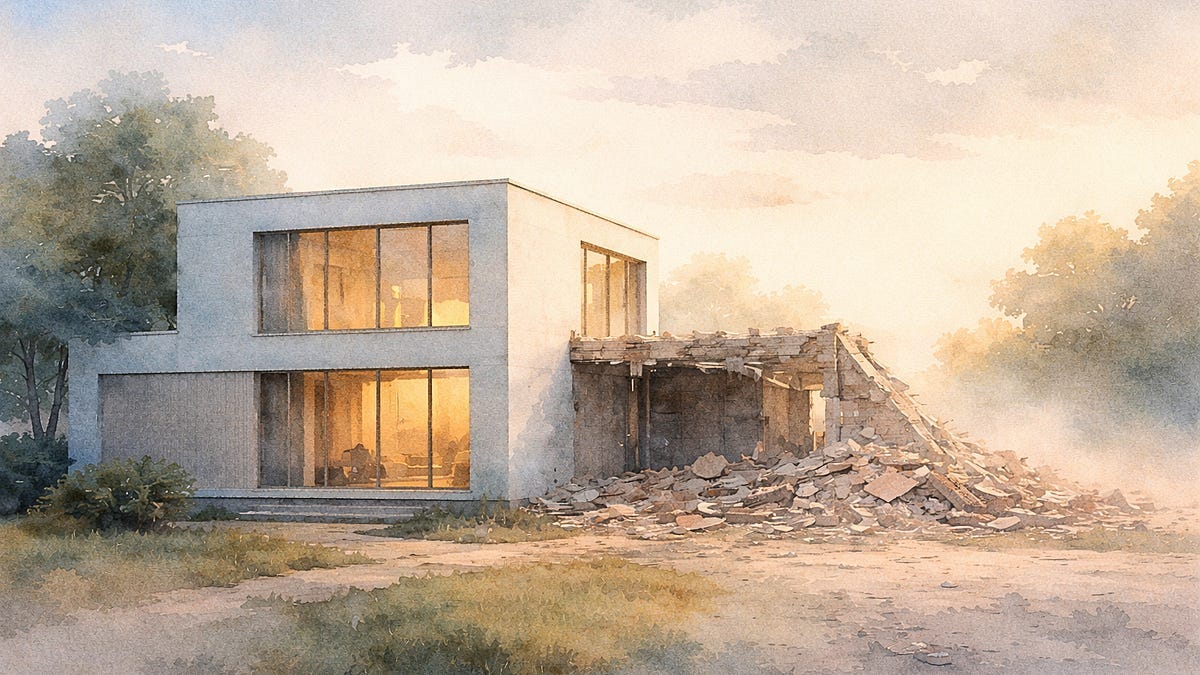
It was not the fall of the building. It was the demolition of a poorly built extension, constructed by enduring more than my nervous system could hold. It hurt. It left dust. It left exhaustion.
But the building is still there. Tired. Wounded. Perhaps more limited. But real.
XII. Epilogue
I write this still in the middle of the process, not from a safe shore. There are days when everything feels fragile, and others when an unexpected calm appears. I have no inspiring ending and no closed lesson.
What I do have is something I did not have before: internal permission to stop demanding that I return to the impossible.
If this text reaches someone who was diagnosed late, I would like them to take away one single idea: you did not break. You ran out of margin. And sometimes, running out of margin is the only way the body finds to tell the truth.
Originally published at https://theautisticcompass.substack.com.
메타데이터
- post_id
- d2949f72c02c
- slug
- from-collapse-to-diagnosis-and-toward-the-future-d2949f72c02c
- url
- https://medium.com/@fmartell71/from-collapse-to-diagnosis-and-toward-the-future-d2949f72c02c
- canonical_url
- https://medium.com/@fmartell71/from-collapse-to-diagnosis-and-toward-the-future-d2949f72c02c
- author_url
- https://medium.com/@fmartell71
- status
- ok
- fetched_at
- 2026-08-04 16:40:22