Ethics and Business
I’m not an economist, but in my struggle to understand socioeconomic class dynamics, I’ve come to appreciate how innovative businesses are…
Ethics and Business
I’m not an economist, but in my struggle to understand socioeconomic class dynamics, I’ve come to appreciate how innovative businesses are directed at helping consumers financially. I took some very informative classes in college that prepared me to understand the world’s financial aspects more deeply, and thus, with my greater interest in sociology and philosophy, led me to write this article.
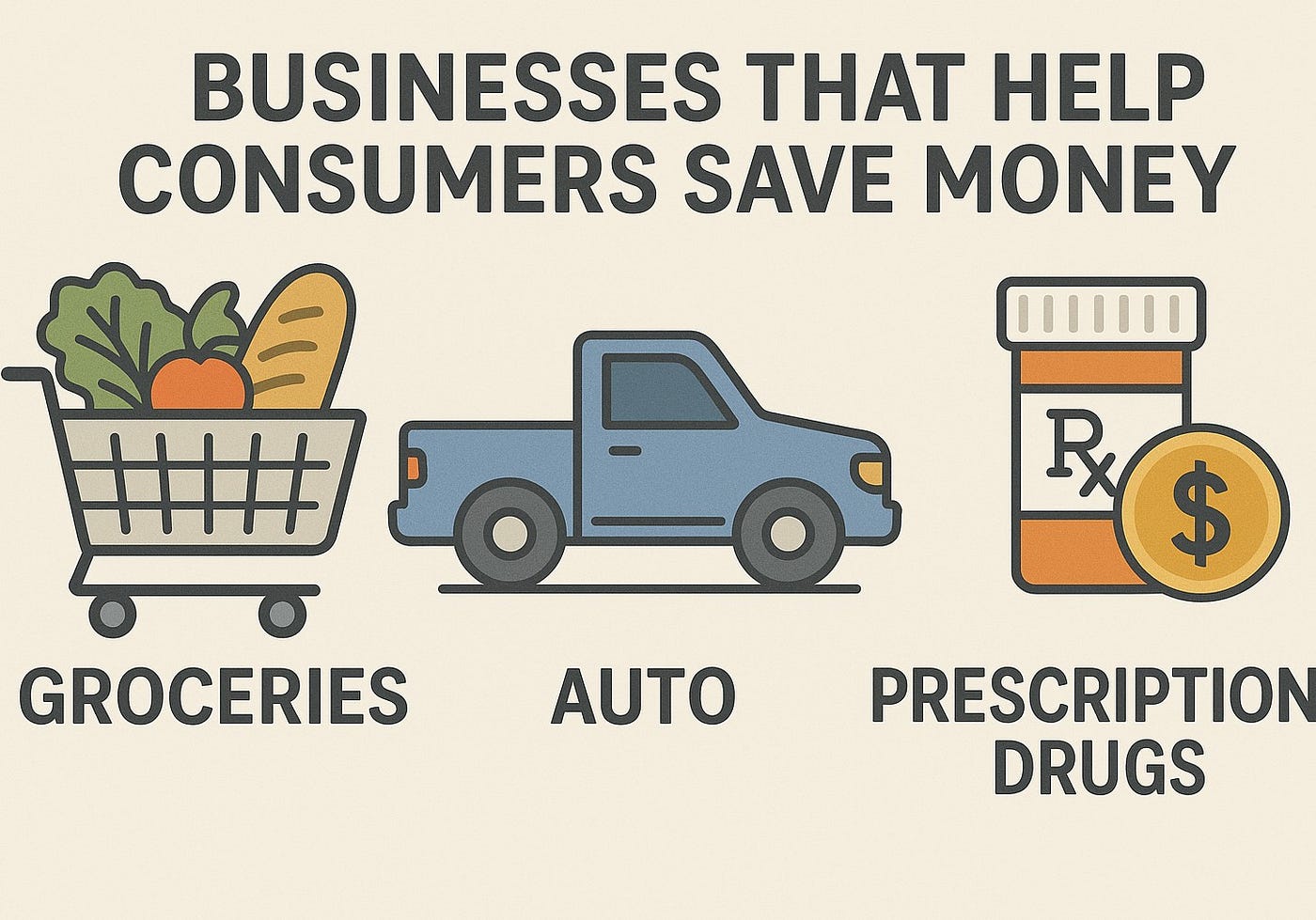
This article will examine how companies like Slate, Aldi, and Cost Plug Drugs employ clever business tactics to deliver the most affordable products to their consumers.
But more than that, this article will delve into my own philosophy about economics and everyone’s right to live a life free from the economic pressures that weigh down on many people’s psyches and relationships, particularly when most in the working class are suffering from inflation and could enjoy more of the benefits of the success of society.
Now, some might argue that in the next few years, A.I. could help create realistic future scenarios upon which “scarcity, the driving force behind economics,” is borderline not present, and the social contract breaks down, perhaps giving way to a more utopic vision of people’s wealth and time.
However, for this article, I will leave futuristic utopias to the future and focus on the present. And at present, we exist in a capitalistic world, a world of dog-eat-dog where competition breeds innovation, where markets always know best, and where you can buy almost anything your little heart desires, and if you can’t, you can create a company that does.
I am not an Anti-capitalist, but I do have critiques. Over the past couple of centuries, the economic propulsion of the capitalist system and its unique blend of competition-led innovation have driven the development of remarkable inventions that enhance the quality of life for many people. But in that same period of time, society has created problems that didn’t need to exist, struggles that cause real, tangible, and unworldly amounts of pain for many, many people.
For those whose blanket statements are that Capitalism is good or capitalism is bad, or that Socialism is bad or Socialism is good, they simply must take the time to see the whole picture. Aspects of Capitalism are good while other elements are harmful; the same is true with socialism. It is why we see a blend of these systems take place in what we consider a capitalist society; public education, libraries, and parks are a form of socialism, funded by taxes for the greater good, which are in every capitalist society. It is therefore the range and application to which the government should invest for its people, and what the free market should serve, which is known as politics. Both have their pros and cons, with each version of the capitalist society having its own critiques. Liberals often invest heavily in public projects but are frequently criticized because of an inability to fulfill many projects on time or at cost, which pundits of the right would say is the result of unnecessary and arduous bureaucracy. Conservatives are often criticized for the lack of social welfare, leaving the poor to their own devices, causing a milieu of social problems, which pundits of the left would say is a result of the lack of any bureaucracy. Both are blamed for seizing upon their own political agendas and failing to find any space for compromise, resulting in unfinished public projects and a range of social problems. These systems are not perfect, but neither is humanity; they can and should be improved upon for the greater good of all while keeping in mind the individual.
Politics is one of the reasons I am fascinated by the humanities, because it is in the humanities that you find the reasons why the scientific capabilities of the world don’t match up with our reality. For example, having enough food to feed the world, yet still having people go hungry.
However, regardless of the region’s politics, innovative business practices with more ethical ideals can help reduce the cost of living for all and enable people to live their best lives.
So, what are these innovative yet still ethical business practices? In the case of Aldi, a popular privately owned German grocery store, they use tactics such as less variety so they don’t have to get their product from numerous sources, smaller stores, ones in which a baker or a butcher is not needed, and almost no marketing. All this so that customers can get what they need without sacrificing too much of their hard-earned money. It is a tactic that has proven quite effective, as it is one of the fastest-growing grocery chains in the United States.
In the case of Slate, a new American private car company backed by Jeff Bezos, they are set to produce a single style of truck, all the same color, with no electronics, and roll-up windows, all for a third of the price of their competitors in the same space. Think Model-T, except electric, and for the 2020s, not the 1920s. At first glance, it doesn’t sound very appealing, more like something from Soviet Era-Russia than that land of milk and honey. However, the company has stated that the trucks will be customizable with different color wraps, electronics, and features that can be added or installed separately.
Slate is currently only taking requests, as it has not yet begun mass production or sales of its trucks. So it will be interesting to see how this innovative and cost-effective business strategy saves everyday consumers money while still delivering a genuinely reliable product.
And lastly, in the case of Cost Plus Drugs, which Mark Cuban owns, he’s created a private pharmaceutical company that competes with publicly owned pharmaceutical (big pharma) by offering the same prescription drugs for a much lower price, while still making a profit, but helping millions afford medicine in the process.
The business models of these three companies offer a sliver of the possibilities that savvy business tactics could have in helping consumers afford necessary products. They do not provide an overwhelming solution to the grander problem of poverty itself, and perhaps they are not intended to. Still, they are effective in addressing the issues of overpriced goods and, at the very least, can help some consumers with their basic needs.
My hope is that more businesses follow in their lead or at least strive to achieve their ideal of helping people afford more and live better.
Cited Sources (clickable links)
메타데이터
- post_id
- d2b2acba6766
- slug
- ethics-and-business-d2b2acba6766
- url
- https://medium.com/@giomg02/ethics-and-business-d2b2acba6766
- canonical_url
- https://medium.com/@giomg02/ethics-and-business-d2b2acba6766
- author_url
- https://medium.com/@giomg02
- status
- ok
- fetched_at
- 2026-06-14 16:15:44