WhatsApp Verification Code Phishing: Technical Breakdown of a Low-Effort, High-Impact Hack.
Despite its simplicity, a widespread WhatsApp account takeover attack based on social engineering and abuse of the WhatsApp registration…
WhatsApp Verification Code Phishing: Technical Analysis of a Low-Effort, High-Impact Account Takeover Attack.
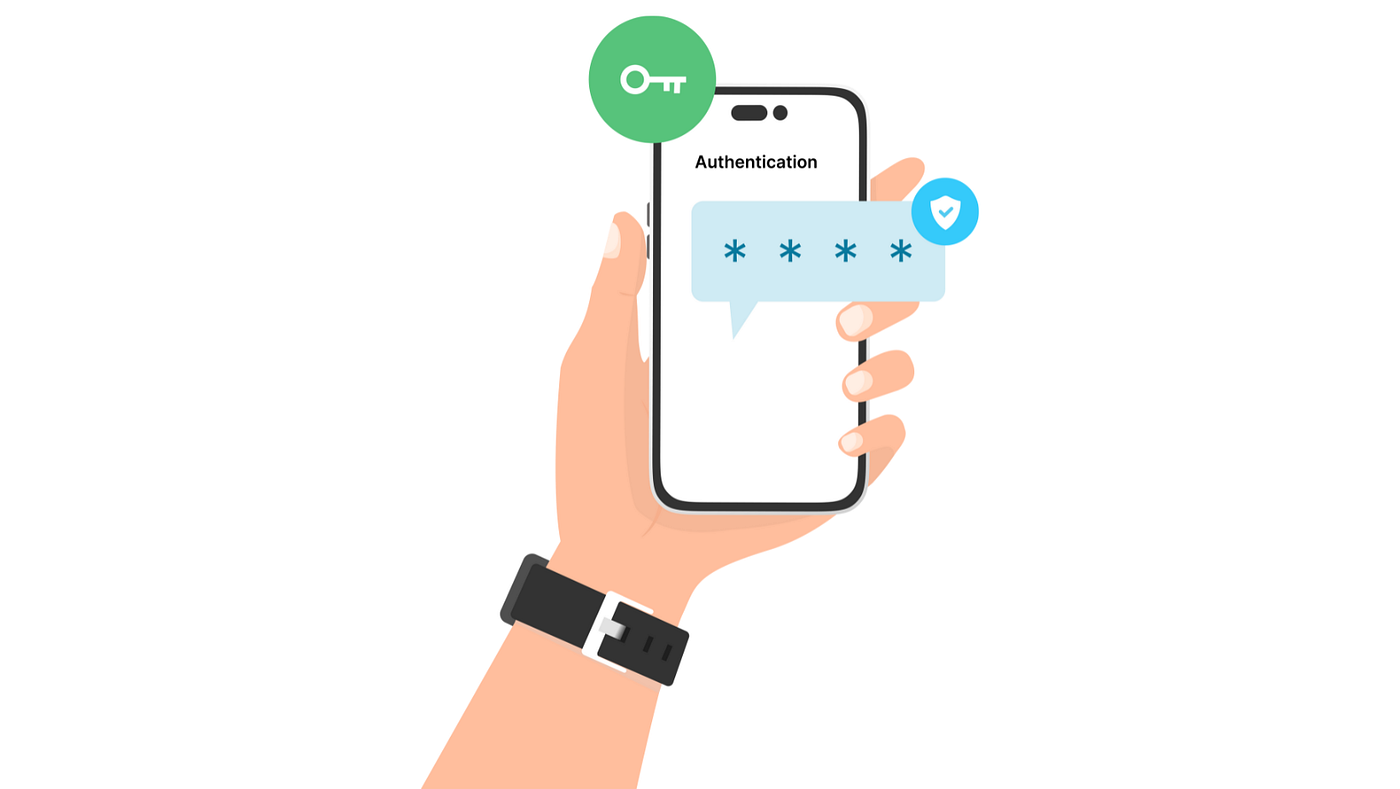
Whatssap OTP verification. Image source : 1msg.io
Despite its simplicity, a widespread WhatsApp account takeover attack based on social engineering and abuse of the WhatsApp registration workflow continues to compromise individual and organizational accounts globally. A real-world example is used, including a verification message delivered in Russian, highlighting the international scale and automation of the campaign.
Messaging platforms such as WhatsApp have become critical communication channels for both personal and professional use, which makes them attractive targets for identity-based attacks. One of the most prevalent threats today is the WhatsApp verification code phishing campaign, a form of account takeover that exploits trust, urgency, and a misunderstanding of authentication mechanisms.
This attack does not break WhatsApp’s cryptography, bypass encryption, or exploit implementation flaws. Instead, it abuses a legitimate security feature by convincing victims to voluntarily disclose their one-time verification code (OTP).
Incident Overview and Observed Behavior
Today, I narrowly avoided my WhatsApp account takeover, and I want to share this experience because many people are currently being targeted by the same attack.
I received a call from someone who claimed to be part of a group I belong to. The person sounded legitimate and urgent. He told me there was an important business meeting scheduled for the next day and that I needed to participate. He then explained that, to add me to the meeting, he would send me a “meeting code”, and that I should immediately forward that code to him so he could complete the scheduling. A few seconds later, WhatsApp sent me a message containing a short verification code — something like: “Не делитесь своим кодом WhatsApp ни с кем: 345–577”.


The linguistic mismatch between the context and the language of the message strongly suggested the use of automated attack infrastructure, where OTP delivery is not customized per target. The attacker relied on social pressure and urgency to override the explicit warning contained in the message, demonstrating the effectiveness of psychological manipulation over technical safeguards, but little didi he know that I’m a tech savvy and cybersecurity professional.
Tools, Infrastructure, and Automation
For ethical reasons, detailed operational aspects of this attack will not be disclosed; however, a high-level explanation is provided for educational purposes.
This attack does not require advanced tooling, which contributes to its widespread adoption, typically with the use of smartphones, Android emulators, or cloud-based mobile environments to automate registration attempts. Phone numbers may be harvested from data breaches, public profiles, or group memberships.
It is important to regularly check platforms such as ***Have I Been Pwned*** to determine whether your email address has been involved in a data breach and to identify the affected services.
N/B : Some attackers use VoIP services or SIM farms to rotate registration attempts and avoid rate limiting but my African — Nigerain accent — attacker surely cannot afford this infrastucture and that’s a win for humanity.
Social engineering scripts are often reused across campaigns, sometimes translated automatically into multiple languages. Compromised WhatsApp accounts are frequently used as initial footholds to contact new victims, leveraging existing trust relationships. This allows attackers to scale laterally within groups and organizations with minimal effort.
The presence of Russian-language OTP messages in non-Russian contexts highlights the global nature of the infrastructure and suggests that OTP delivery localization is not a priority for attackers, as success relies on user behavior rather than contextual accuracy.
Purpose and Objectives of the Campaign
The primary objective of the attack is FULL WHATSSAP ACCOUNT TAKEOVER !!. Once control is obtained, the attacker can impersonate the victim, access historical conversations, and exploit trusted relationships to conduct further attacks. These may include financial scams, social engineering of contacts, distribution of malicious links, or reconnaissance for corporate and organizational fraud. In professional environments, compromised accounts can be used to manipulate business processes, request sensitive information, or initiate fraudulent transactions. The attack therefore represents a serious identity compromise rather than a simple messaging incident.
Threat and Impact Assessment
For individual users, the immediate impact includes loss of account access, exposure of private communications, and reputational damage. In some cases, financial loss occurs when attackers solicit money from trusted contacts. For organizations, the consequences are more severe. Compromised messaging accounts can undermine internal trust, expose confidential information, and bypass traditional email security controls.
Because messaging platforms are often considered informal or secondary communication channels, they may lack the monitoring and controls applied to email systems. This makes them attractive targets for attackers seeking low-resistance entry points into organizations.
Remediation Strategies and Defensive Measures
Effective mitigation of this attack requires a combination of technical controls and user awareness. Enabling WhatsApp’s two-step verification mechanism introduces a second authentication factor in the form of a PIN, which significantly reduces the likelihood of account takeover even if a verification code is disclosed.
However, technical measures alone are insufficient. Users must be educated to understand that verification codes function as authentication secrets and should NEVER be shared under any circumstances. Organizations should treat messaging platforms as part of their attack surface and include them in security awareness training.
Verification of urgent requests through secondary channels, such as voice calls or official communication platforms, can disrupt social engineering attempts. Establishing clear procedures for identity verification reduces the effectiveness of impersonation attacks.
In the event of a suspected compromise, immediate incident response actions should include account recovery, notification of contacts, review of linked devices, and activation of additional security features.
Cybersecurity awareness, rather than advanced technology, remains the most critical defense against this class of attack.
메타데이터
- post_id
- d2d12e03978c
- slug
- whatsapp-verification-code-phishing-technical-breakdown-of-a-low-effort-high-impact-hack-d2d12e03978c
- url
- https://medium.com/@banzance/whatsapp-verification-code-phishing-technical-breakdown-of-a-low-effort-high-impact-hack-d2d12e03978c
- canonical_url
- https://medium.com/@banzance/whatsapp-verification-code-phishing-technical-breakdown-of-a-low-effort-high-impact-hack-d2d12e03978c
- author_url
- https://medium.com/@banzance
- status
- ok
- fetched_at
- 2026-07-13 14:28:48