Denial Prevention Cost Savings: Why Prevention Beats Rework
Every claim denial sets off a chain of work that never needed to happen. Someone has to identify the denial, find the reason, locate the…
Denial Prevention Cost Savings: Why Prevention Beats Rework
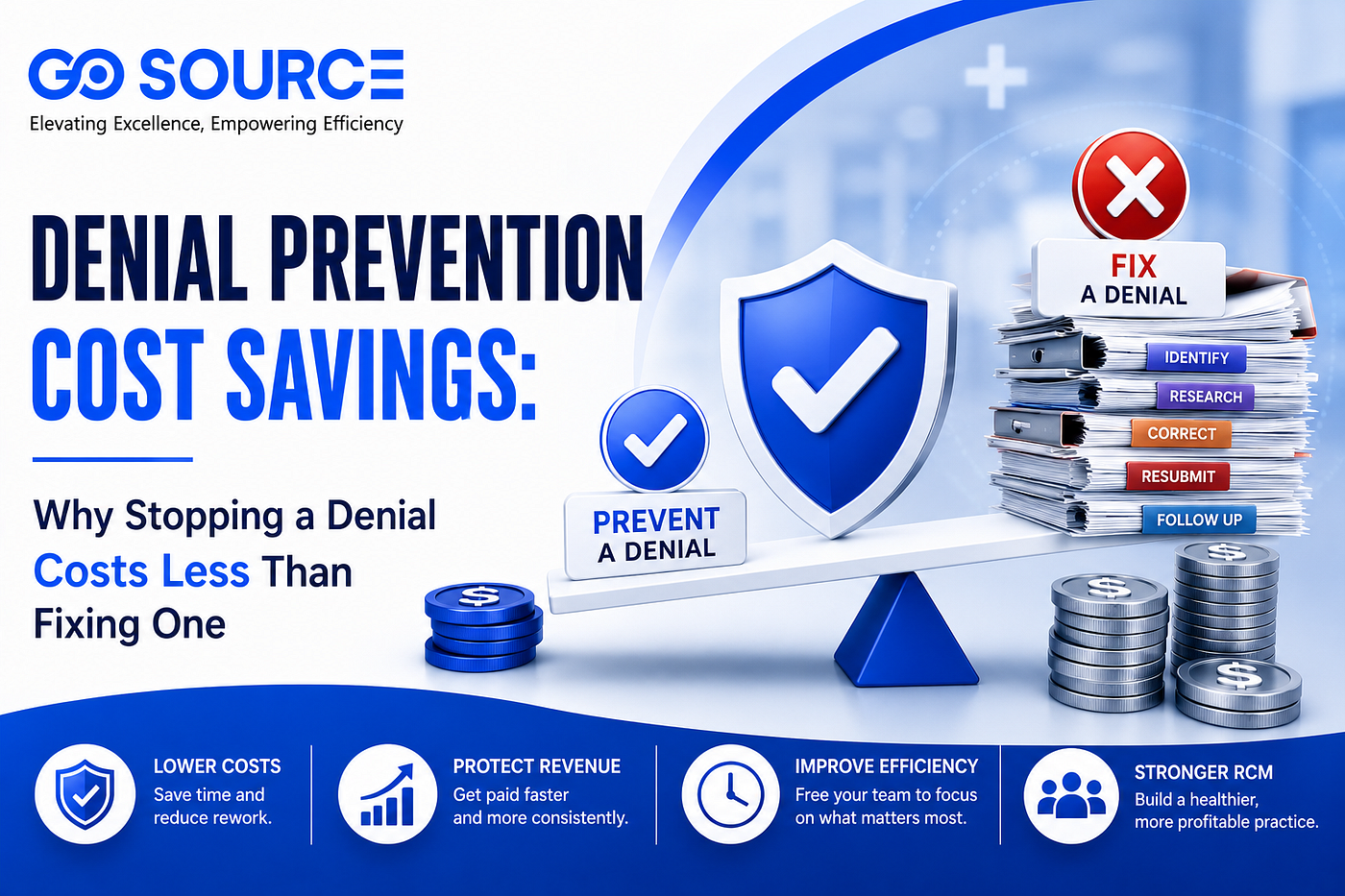
Every claim denial sets off a chain of work that never needed to happen. Someone has to identify the denial, find the reason, locate the missing information or fix the error, resubmit or appeal the claim, and then track it until it’s resolved. All of this is extra work on top of the effort that already went into preparing and submitting the original claim.
What often gets overlooked is that the cost of a denial is not limited to the time spent fixing it. It includes the cost of repeating work that should have been done correctly the first time. Multiply that across dozens or even hundreds of denials each month, and the impact becomes significant. When practices compare the cost of preventing denials with the cost of recovering from them, prevention consistently proves to be the more cost-effective approach.
This guide explains where the hidden costs of denials come from, why prevention delivers greater savings than recovery, and what an effective denial prevention strategy looks like.
The Hidden Cost Structure Behind Every Denied Claim
When most practices think about the cost of a denied claim, they focus on the lost revenue if the claim is never paid. While that is certainly a major concern, it is only one part of the overall cost. Several other expenses add up behind the scenes.
Labor Cost of Identifying the Denial
The first cost is identifying and triaging the denial. Someone has to notice that the denial has been received, review the denial reason code, determine what caused it, and assign it to the right person for follow-up. This takes time but generates no additional revenue. It is simply extra work created by the denial itself.
Research and Correction Costs
The next cost comes from researching and correcting the issue.
For a soft denial, staff may need to review the original claim, identify a missing modifier or eligibility issue, and submit the necessary correction. A hard denial usually requires much more effort. The billing team must review the clinical documentation, understand the payer’s specific denial criteria, and build a strong case to support an appeal.
In many cases, resolving a denial takes more time than submitting the original claim because it requires investigation rather than routine processing.
Resubmission and Follow-Up
Once the correction or appeal is ready, it has to be submitted through the appropriate process. The work doesn’t stop there. Someone also has to monitor the claim until a final decision is received.
This often involves repeated follow-ups because payers do not always process corrected claims or appeals within their expected timelines.
The Opportunity Cost
The most overlooked cost is opportunity cost.
Every hour spent working on denied claims is an hour that cannot be used to submit new claims, improve billing workflows, or strengthen front-end processes that prevent future denials. When a billing team is constantly busy fixing old problems, it has less time to stop the same mistakes from happening again.
As a result, many practices become stuck in a cycle where denial volumes remain high because most of their resources are focused on recovery instead of prevention.
Why Prevention Costs Less at Every Stage
Each of these cost layers is either eliminated or significantly reduced when a denial never occurs.
There is no need to identify or triage a denial because there isn’t one. There is no research or correction because the claim was accurate the first time. There is no resubmission or ongoing follow-up because only one claim submission was needed. Most importantly, there is no opportunity cost because the billing team’s time can be spent on activities that generate revenue and strengthen front-end processes instead of reworking claims.
This is why denial prevention is less expensive than denial recovery. It is not simply because prevention is more efficient. It is because it removes entire categories of work that recovery can never eliminate.
A practice that prevents a denial spends a small amount of time verifying the claim before submission. A practice that allows the same error to reach the payer must spend time identifying the issue, researching it, correcting the claim, resubmitting it, tracking its progress, and sacrificing valuable staff time that could have been used elsewhere. That difference is what makes prevention Where Prevention Delivers the greatest cost savings.
Not every type of denial offers the same opportunity for savings through prevention. Some denials are far less expensive to prevent than they are to recover, making them the highest-priority areas for a prevention-focused billing strategy.
Eligibility-Related Denials
Eligibility denials are one of the clearest examples.
Verifying a patient’s insurance coverage before or at the time of service only takes a few minutes and can easily become part of the scheduling process. Recovering payment after an eligibility denial is much more complicated. Staff may have to determine which coverage was active, identify another payer, or collect payment directly from the patient. That process is slower, less predictable, and significantly more labour-intensive than simply verifying coverage upfront.
Prior Authorization Denials
Prior authorization denials highlight an even greater difference between prevention and recovery.
Checking whether authorization is required and obtaining approval before treatment is a straightforward process. Once a service has been provided without the required authorization, however, recovery is often impossible. Many payers will not reimburse the claim regardless of how much time is spent on appeals.
In these cases, prevention is not just less expensive than recovery. It is often the only way to secure reimbursement.
Coding and Modifier Errors
Coding and modifier errors can often be identified before submission through claim scrubbing.
A quick automated or manual review may catch the issue before the claim reaches the payer. If the same error results in a denial, staff must identify the problem, correct the claim, resubmit it, and wait for the payer to process it. Depending on turnaround times, this can delay payment for days or even weeks while the claim remains in accounts receivable.
Timely Filing Denials
Timely filing denials are perhaps the most extreme example.
Once a claim passes the payer’s filing deadline, there is usually no recovery option. The only way to protect that revenue is to submit claims on time and closely monitor filing deadlines, so nothing is missed.
After the deadline has passed, any effort spent trying to recover payment is unlikely to change the outcome. At that point, the opportunity has already been lost.
The Compounding Effect of Denial Volume on Staffing Costs
The financial impact of prevention goes beyond individual claims. It also affects how a practice staffs its billing department.
Practices with a high number of preventable denials need larger denial management teams to identify issues, research claims, make corrections, and handle appeals. As denial volume increases, staffing demands grow as well. Teams also face additional challenges prioritising ageing claims while trying to meet filing deadlines before more revenue is lost.
Practices that focus on prevention experience the opposite effect.
With fewer denials entering the workflow, less time is spent on rework. Staff can instead support patient financial communication, credentialing, process improvements, or further strengthen denial-prevention efforts.
Over time, these savings extend beyond individual claims and reduce staffing pressure across the entire revenue cycle.
Why the Investment in Prevention Pays for Itself
Building an effective denial prevention process requires an upfront investment. Practices need to establish eligibility verification checkpoints, develop payer-specific claim scrubbing rules, train staff on documentation requirements that support medical necessity, and implement reliable prior authorization tracking.
While this requires time and resources, the return on investment becomes clear over time.
Every claim that passes through these preventive checks successfully avoids the additional work involved in denial recovery. The benefits continue with every correctly submitted claim.
Denial management, on the other hand, remains an ongoing operational expense. As claim volume grows, so does the cost of identifying, correcting, appealing, and tracking denied claims. Those costs continue month after month unless prevention efforts reduce the number of denials entering the system.
This is what makes denial prevention a stronger long-term investment. The initial effort delivers continuing returns, while relying primarily on denial recovery creates recurring costs that never truly disappear.
What a Cost-Conscious Prevention Strategy Actually Requires
Practices that successfully reduce denials and achieve long-term cost savings usually follow a similar approach, regardless of their speciality or size.
Focus on the Costliest Denial Categories
The first step is identifying the denial categories that occur most often and have the greatest financial impact. Instead of guessing where the biggest problems are, successful practices analyse their own denial data.
This allows them to focus their prevention efforts on the issues that are actually driving costs, rather than trying to address every possible error at once.
Build Prevention Into the Workflow
Prevention works best when checkpoints are placed as close to the source of the error as possible.
Eligibility should be verified during scheduling, not after the claim is submitted. Prior authorizations should be confirmed before the appointment, not after the service has been provided. Coding reviews should happen before the claim leaves the practice, not after a denial highlights the mistake.
The earlier an issue is identified, the less time and money it takes to resolve.
Keep Prevention Processes Up to Date
Denial prevention is not a one-time project.
Payer policies change, documentation requirements evolve, and new denial trends appear over time. A prevention strategy that is never reviewed will gradually become less effective, allowing denial rates to increase again.
Regularly reviewing denial data and updating workflows helps practices maintain the effectiveness of their prevention efforts and respond quickly to changing payer requirements.
The Bottom Line
The savings from denial prevention go far beyond small efficiency improvements. They come from avoiding the extra work that follows every denied claim.
When a claim is submitted correctly the first time, practices avoid the time spent identifying the denial, researching the issue, making corrections, resubmitting the claim, and tracking it through the appeals process. Those are costs that denial recovery can never eliminate.
For certain denial categories, such as prior authorization and timely filing, prevention is often the only way to secure reimbursement. Once those claims are denied, recovery may not be possible.
Practices that understand this shift their focus from asking whether prevention is worth the investment to identifying which denial categories create the greatest financial burden and offer the strongest return when addressed proactively.
GoSourceMD builds denial prevention into the front end of every billing workflow we manage because preventing denials is far more efficient than fixing them later. Visit gosourcemd.com to learn how we apply this approach.
Frequently Asked Questions: Denial Prevention Cost Savings
Q1. Why does preventing a denial cost less than fixing one after it happens?
Preventing a denial requires only a simple front-end check, such as verifying insurance eligibility or confirming prior authorization before the claim is submitted.
Once a claim is denied, the work increases significantly. Staff must identify the denial, determine the cause, correct the claim or prepare an appeal, resubmit it, and track it until a final decision is made. These additional steps require time and resources that could have been avoided if the claim had been submitted correctly the first time.
Q2. Which types of denials offer the greatest cost savings through prevention?
Prior authorization and timely filing denials typically provide the biggest savings through prevention because recovery is often impossible.
If a required authorization is not obtained before treatment, many payers will not reimburse the claim. Likewise, claims submitted after the filing deadline usually cannot be recovered.
Eligibility-related denials and coding or modifier errors also benefit greatly from prevention. A quick verification or claim review before submission is much faster and less expensive than correcting the same issue after a denial.
Q3. Does building a denial prevention programme require a large upfront investment?
Implementing denial prevention does require an initial investment. Practices need to establish eligibility verification processes, create payer-specific claim scrubbing rules, and train staff on documentation requirements.
However, these improvements continue to prevent the same types of denials over time. In contrast, denial recovery is an ongoing expense that grows with claim volume. While prevention involves an upfront effort, it reduces recurring costs and delivers long-term savings.
Q4. How does denial volume affect staffing costs?
Practices with high denial rates typically need larger teams to review denials, make corrections, submit appeals, and monitor claim status.
As denial volume increases, staffing demands also increase because more claims require follow-up and prioritization before filing deadlines are missed.
Practices that reduce denials through prevention spend less time on rework. Their billing teams can instead focus on revenue-generating activities, patient financial communication, workflow improvements, and other high-value tasks, helping lower overall staffing pressure.
Q5. How should a practice decide which denial categories to prioritize?
The best place to start is with the practice’s own denial data.
Review which denial categories occur most frequently, consume the most staff time, or create the greatest financial impact. Those areas should become the first priorities for prevention.
Prevention checkpoints should also be placed as close to the source of the problem as possible. For example, verify eligibility during scheduling, confirm prior authorizations before the appointment, and complete coding reviews before claims are submitted. Addressing issues early is both more effective and less costly than fixing them after a denial.
메타데이터
- post_id
- d2f158e340ba
- slug
- denial-prevention-cost-savings-why-prevention-beats-rework-d2f158e340ba
- url
- https://medium.com/@palma.grey99/denial-prevention-cost-savings-why-prevention-beats-rework-d2f158e340ba
- canonical_url
- https://medium.com/@palma.grey99/denial-prevention-cost-savings-why-prevention-beats-rework-d2f158e340ba
- author_url
- https://medium.com/@palma.grey99
- status
- ok
- fetched_at
- 2026-08-06 03:46:33




