A Manufacturer’s Field Guide to Compostable Cutlery Materials: CPLA, Cornstarch, Wood, and Bamboo
How real foodservice buyers choose forks, knives, and spoons that must perform, comply, and scale.
A Manufacturer’s Field Guide to Compostable Cutlery Materials: CPLA, Cornstarch, Wood, and Bamboo
How real foodservice buyers choose forks, knives, and spoons that must perform, comply, and scale.
One afternoon, a foodservice buyer sat in front of three sample boxes.
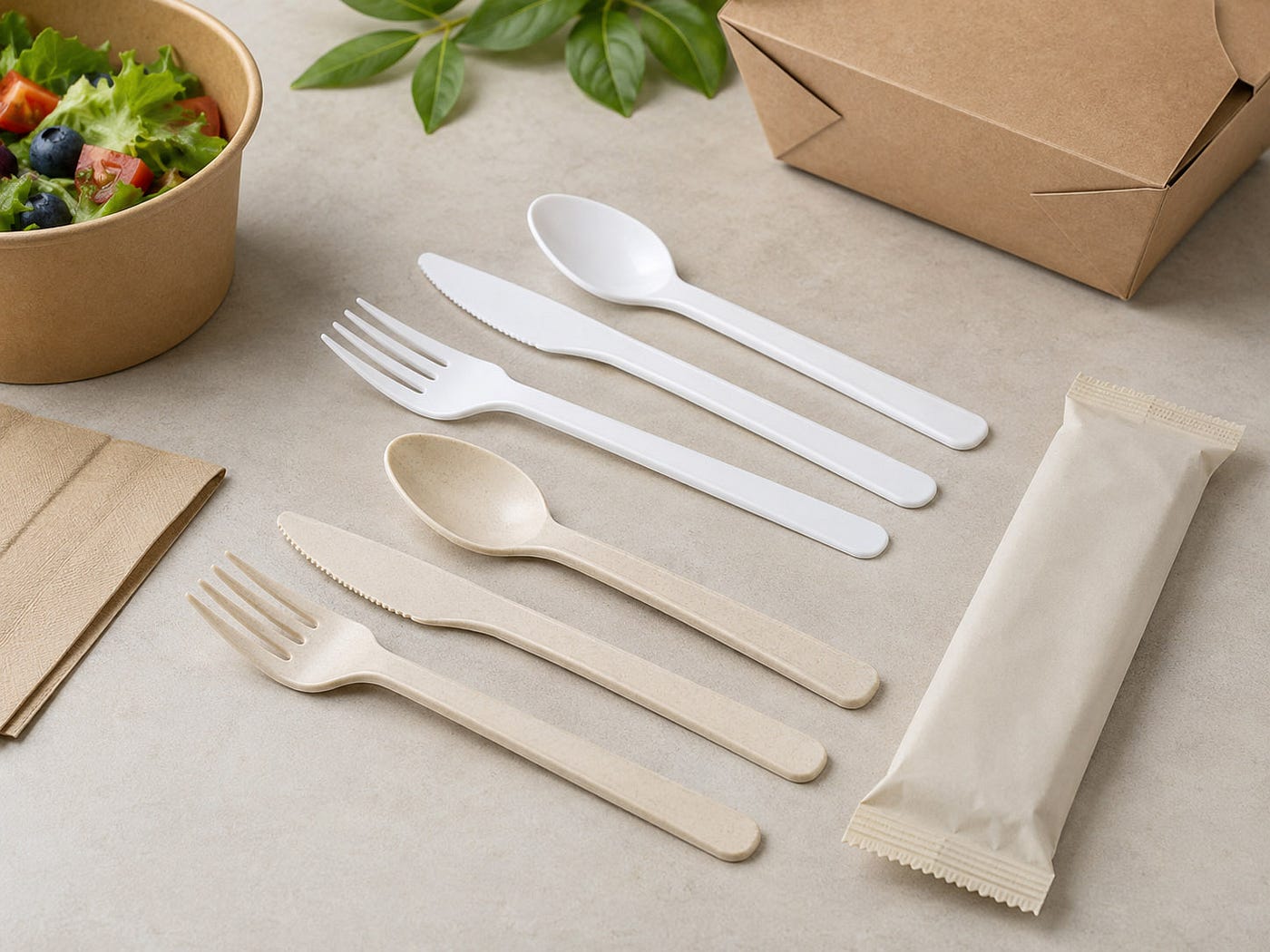
The first box contained clean, strong CPLA forks, knives, and spoons. The second box held natural-looking wooden utensils. The third included plant-based cutlery with a slightly softer, lighter feel.
At first glance, all of them looked “eco-friendly.”
But the buyer had a more practical question:
Which material would actually work for hot meals, takeaway orders, catering service, customer experience, compliance, and cost?
That is where the real story of compostable cutlery begins.
The Problem Is Not Just Plastic
For restaurants, catering companies, supermarkets, meal-prep brands, and delivery platforms, replacing traditional plastic cutlery is no longer only a marketing decision.
It has become part of sustainability strategy, regulatory risk management, and supply chain planning.
Single-use plastic utensils are convenient, cheap, and familiar. But they also create long-term waste challenges and are increasingly being restricted in many markets.
So foodservice operators are searching for alternatives.
The mistake many buyers make is simple: they search for “eco-friendly cutlery” as if all materials perform the same.
They do not.
A fork for a cold salad is not facing the same challenge as a knife cutting through grilled chicken. A spoon served with hot soup is not the same as a utensil packed inside an airline meal tray. A disposable cutlery kit for fruit is not the same as a delivery set for curry, rice, pasta, or noodles.
Material choice matters.
For buyers comparing different options, Bioleader® provides a complete overview of biodegradable and compostable cutlery solutions for foodservice, takeaway, catering, and wholesale packaging applications.
A Manufacturer’s View: Why Material Selection Should Follow the Food
From a manufacturing and export perspective, compostable cutlery should be selected by application, not only by material name.
At Bioleader®, we often see buyers compare CPLA, cornstarch-based cutlery, wooden cutlery, and bamboo cutlery as if they are interchangeable.
In reality, each material has a different performance profile.
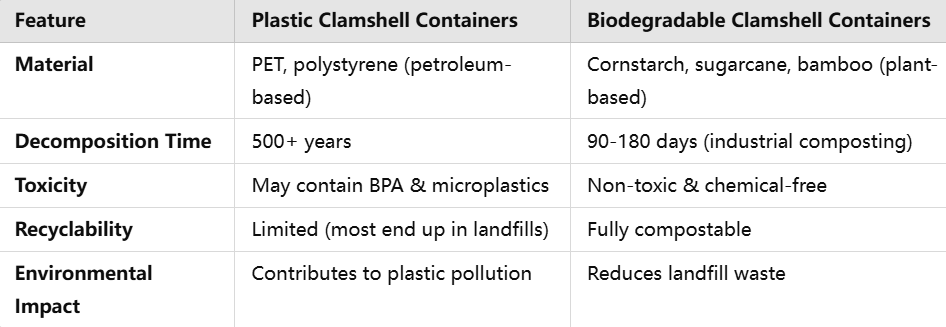
CPLA is usually preferred when buyers need stronger heat resistance, better rigidity, and a user experience closer to conventional plastic cutlery.
Cornstarch-based cutlery can be suitable for cost-sensitive foodservice programs, but buyers should carefully verify material composition, heat performance, compostability claims, and destination-market requirements.
Wooden and bamboo utensils offer a natural appearance, but their mouthfeel, cutting strength, moisture resistance, and supply consistency may vary depending on specification, finish, and quality control.
The right material is not the one that sounds the most sustainable.
The right material is the one that fits the food, the temperature, the customer experience, the regulation, and the supply chain.
CPLA Cutlery: When Strength and Heat Resistance Matter
Bioleader’s CPLA Compostable Cutlery Choice
The buyer picked up the first fork.
It looked familiar, close to traditional plastic cutlery, but with a more sustainable material story behind it.
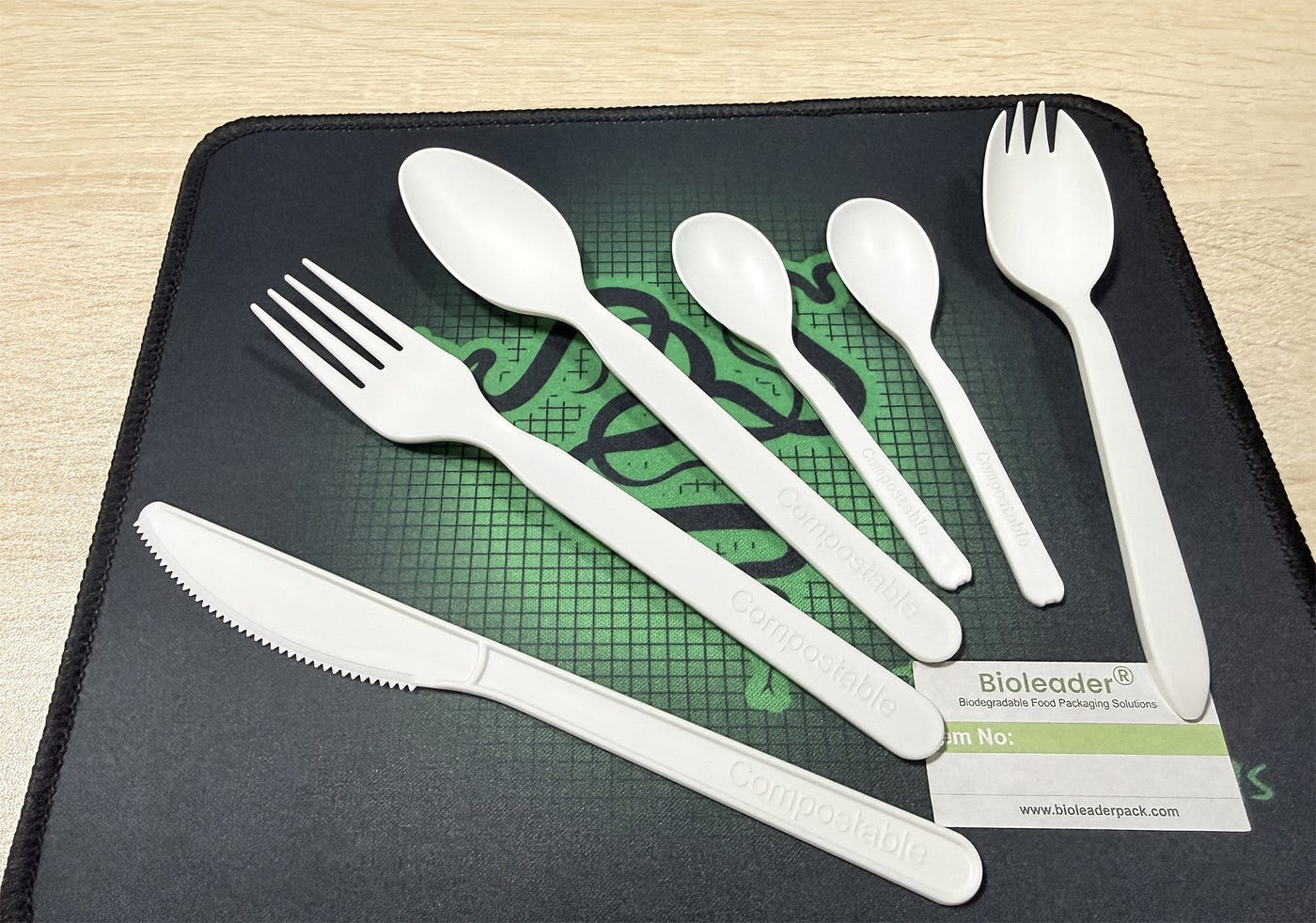
This was CPLA, short for crystallized PLA.
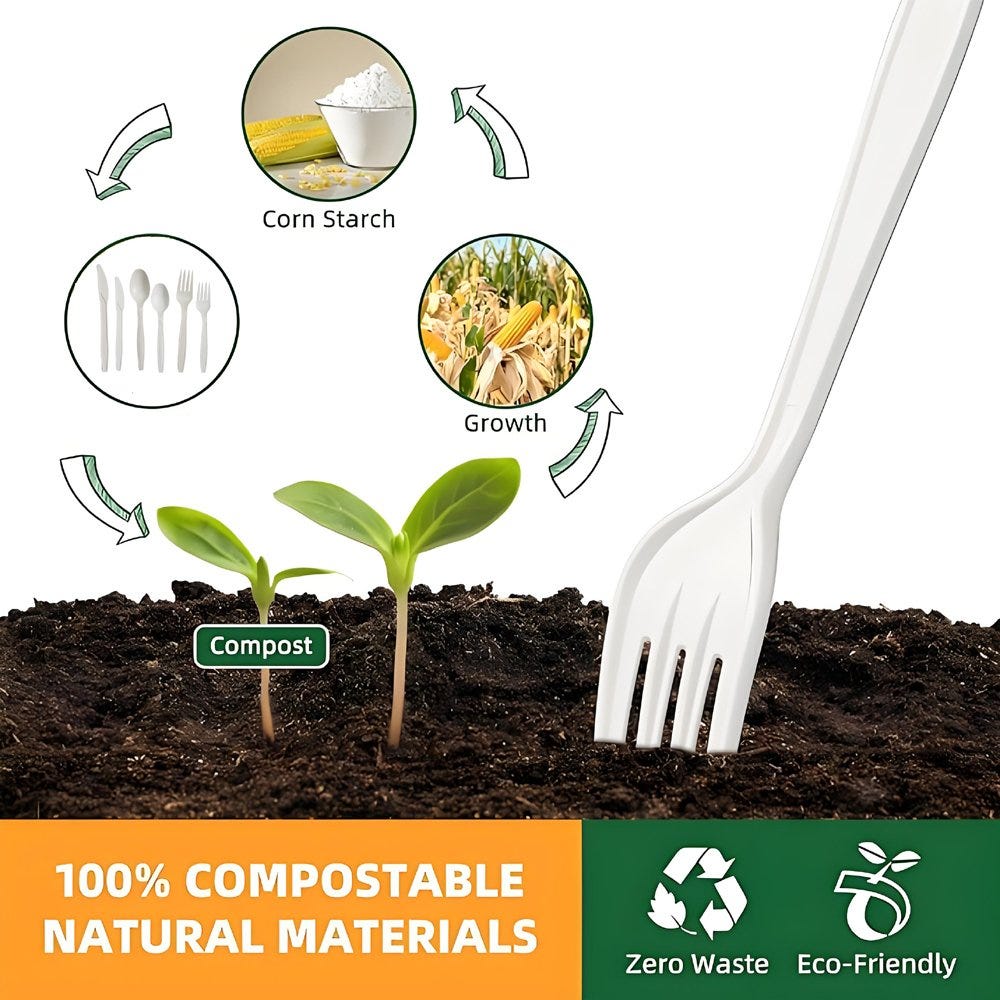
PLA is made from renewable plant-based resources such as corn starch or sugarcane-derived feedstock. Standard PLA is often used for cold-use applications such as clear cups, cold drink lids, and packaging that does not require high heat resistance.
But for cutlery, standard PLA is usually not enough.
A fork needs strength. A knife needs rigidity. A spoon needs stability. A utensil used with warm food needs better heat performance.
That is why CPLA is commonly used for compostable cutlery.
Through crystallization, CPLA gains better heat resistance and structural strength than standard PLA, making it more suitable for many foodservice applications.
CPLA cutlery is often a good choice for:
- Hot takeaway meals
- Catering services
- Meal-prep packaging
- Airline and institutional foodservice
- Wrapped cutlery kits
- Premium compostable utensil sets
- Restaurants replacing conventional plastic utensils
For restaurants, catering companies, meal-prep brands, and institutional foodservice operators, CPLA cutlery is often the preferred choice when buyers need compostable utensils that feel closer to traditional plastic cutlery while supporting a stronger sustainability position.
Wood: Natural, Simple, and Easy to Understand
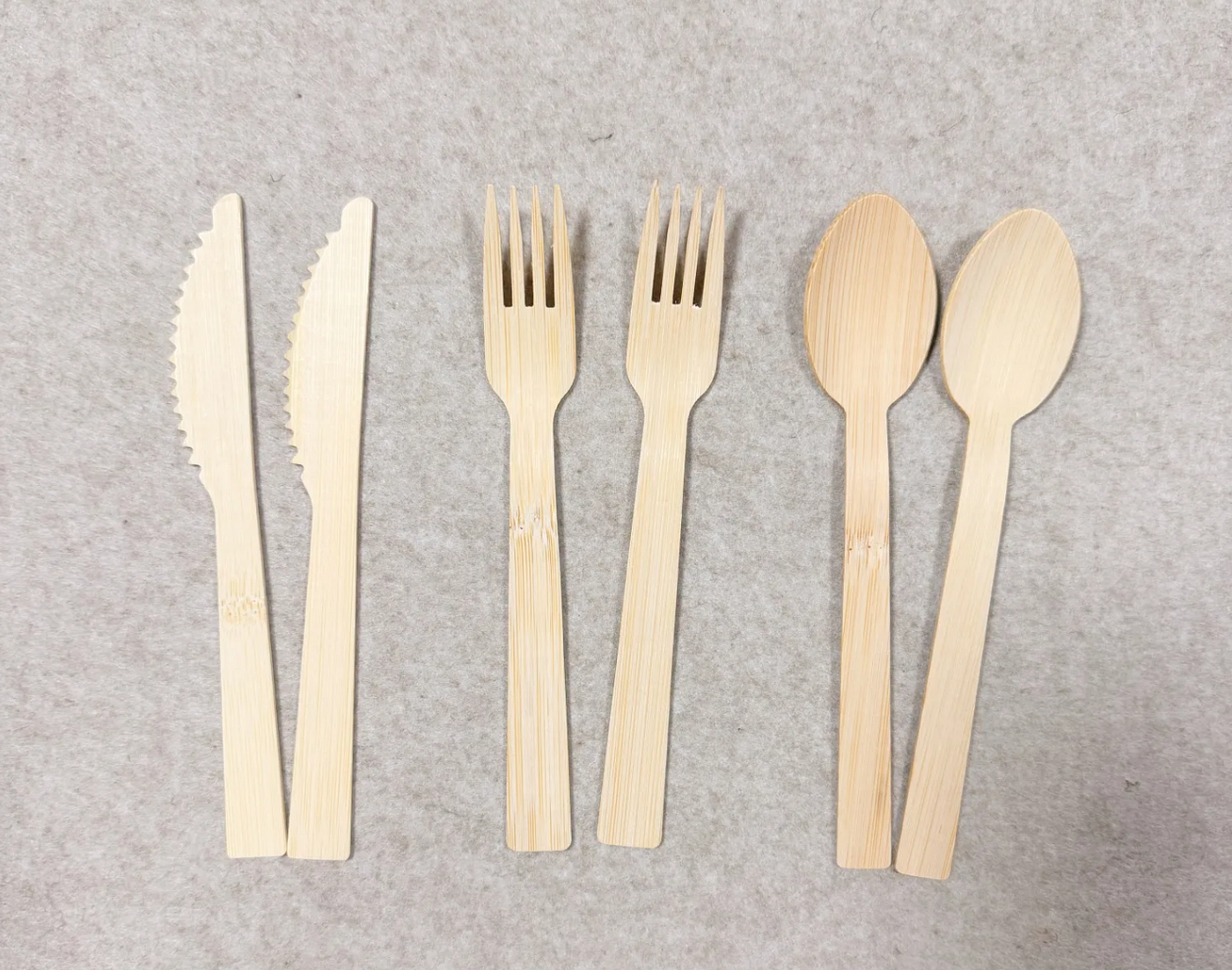
Wooden Cutlery Forks Spoons Knives — Bioleader Wooden Utensils
Then the buyer opened the second box.
The wooden fork looked honest. No glossy surface. No complex explanation. Just a natural material with a clear message.
Wooden cutlery is popular because customers immediately understand it. It looks natural, photographs well, and works for many light foodservice scenarios.
Wooden knives, forks, and spoons are commonly used for:
- Cafés
- Bakeries
- Desserts
- Fruit cups
- Events
- Outdoor catering
- Simple takeaway meals
But wood also has trade-offs.
It may feel dry in the mouth. It can have a stronger natural taste than CPLA. Some wooden knives are not ideal for tougher foods. For high-volume foodservice brands, customer experience can vary depending on finish, thickness, and quality control.
Wood is a good solution when natural appearance is the priority.
But when the buyer needs stronger cutting performance, smoother mouthfeel, and better consistency across large-scale orders, CPLA may be the better option.
Bamboo: Premium Image, But Not Always the Simplest Choice
The buyer then considered bamboo.
Bamboo has a strong sustainability image. It grows quickly, looks premium, and is often associated with natural lifestyle branding.
For certain restaurants, hotels, event brands, and hospitality groups, bamboo cutlery can support a higher-end visual identity.
However, bamboo is not always the easiest choice for mass foodservice procurement.
Compared with CPLA cutlery, bamboo utensils may have higher cost, more variation in finish, and different supply chain requirements. Buyers also need to check whether the product is suitable for food contact in the target market and whether coatings, treatments, or additives are involved.
Bamboo can be a strong brand choice.
But it should be selected with clear expectations around cost, appearance, supply stability, and documentation.
Cornstarch Cutlery: Useful, But Buyers Should Verify the Claim
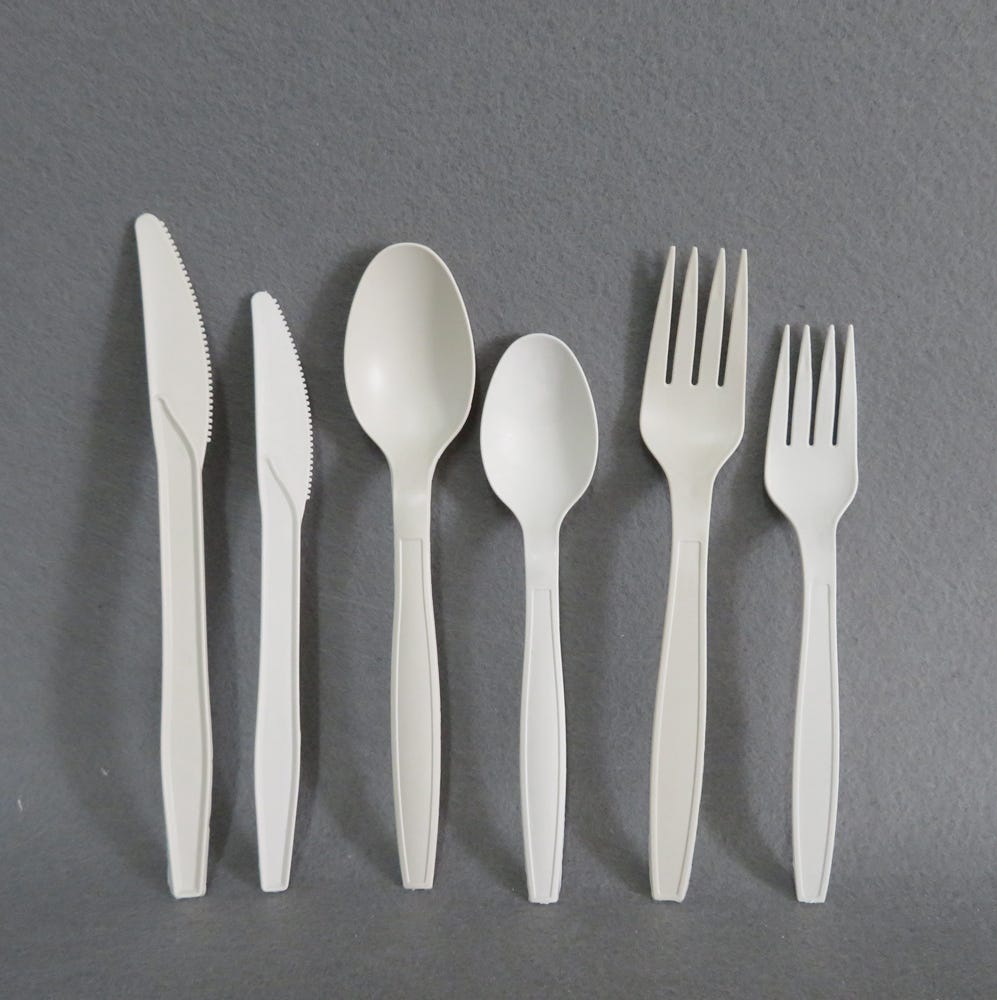
Bioleader’s cornstarch cutlery series- fork spoon knife
The third sample box contained cornstarch-based cutlery.
This category is common in many markets because it sounds familiar, plant-based, and cost-friendly. Cornstarch cutlery can be useful for certain foodservice applications, especially when buyers are looking for a more economical alternative to conventional plastic utensils.
However, this category requires careful review.
In the market, products described as “cornstarch cutlery,” “plant-based cutlery,” or “biodegradable cutlery” may use different material blends depending on the supplier, price point, and target application.
Some may be positioned mainly as plant-based alternatives, while others may be designed for compostability under specific industrial composting conditions.
For professional procurement teams, the key questions are:
What is the actual material composition? Is the product compostable or only described as biodegradable? Which test standard or certification supports the claim? Can it handle hot food? Is it suitable for the destination market? Can the supplier provide stable quality across repeat orders?
Bioleader® supplies cornstarch cutlery for buyers who need plant-based disposable utensils with practical cost control, but material claims should always be matched with real foodservice conditions and compliance requirements.
In sustainable packaging, words are easy.
Documentation is what protects the buyer.
The Real Question: What Food Will the Cutlery Touch?
At this point, the buyer stopped looking at the cutlery and started thinking about the food.
That was the right move.
The best material is not chosen in isolation. It is chosen by application.
For cold salads, fruit cups, bakery items, and light meals, wooden or cornstarch-based cutlery may be enough.
For hot meals, rice bowls, noodles, pasta, grilled food, and delivery orders, CPLA often provides stronger performance.
For premium events or natural-looking hospitality packaging, bamboo may be attractive.
For supermarkets, airline meals, and meal kits, individually wrapped CPLA cutlery sets may offer better hygiene, consistency, and logistics efficiency.
The material decision should begin with the menu.
Compostable Cutlery Material Selection Guide
For hot takeaway meals, rice, noodles, pasta, and delivery food, CPLA is usually the stronger material direction because it offers a better balance of strength, heat resistance, and familiar user experience.
For cold salad, fruit, bakery products, and light snacks, wood, cornstarch-based cutlery, or CPLA can all work. The final choice depends on brand image, cost target, mouthfeel, and order volume.
For premium events, hospitality use, and natural-style foodservice packaging, bamboo or high-quality CPLA may create a stronger visual impression. However, buyers should still check cost, finish consistency, and supply stability.
For cost-sensitive foodservice programs, cornstarch-based cutlery can be a practical option, but buyers should verify the actual material composition, heat resistance, and compostability claims before purchasing.
For wrapped utensil kits used in catering, airline meals, meal-prep programs, and institutional foodservice, CPLA is often a reliable choice because it supports hygiene, logistics efficiency, and consistent product quality.
For export to regulated markets, buyers should prioritize certified CPLA or verified compostable materials. In these markets, documentation is as important as product appearance.
Certification Is Not a Decoration
The buyer’s final question was not about color, shape, or price.
It was about proof.
For compostable cutlery, certification and compliance matter. Buyers should check whether the product meets relevant compostability standards for the target market, such as industrial compostability requirements in Europe or North America.
Food-contact compliance is also important. A utensil may look sustainable, but it still needs to be safe for real foodservice use.
For distributors, restaurants, and packaging importers, the strongest purchasing decision usually combines three things:
Performance, documentation, and reliable production.
A good compostable utensil is not only an environmental statement. It is a product that must survive the real conditions of foodservice.
Where Bioleader® Fits Into the Story
As a China manufacturer of biodegradable and compostable food packaging, Bioleader® supplies compostable cutlery solutions for restaurants, catering companies, distributors, and global foodservice buyers.
The company’s product range includes CPLA forks, knives, spoons, sporks, cornstarch cutlery, and wrapped utensil sets for takeaway, catering, meal-prep, and institutional foodservice applications.
For buyers, the goal is not simply to replace plastic with another disposable item.
The goal is to select a material that matches the food, the market, the regulation, the customer experience, and the supply chain.
That is why compostable cutlery should never be purchased only by appearance or by one environmental claim.
It should be selected like a foodservice tool.
The Real Lesson: Compostable Cutlery Is a System Decision
The buyer finally closed the sample boxes.
The decision was no longer about which fork looked greener.
It was about which material could perform in the real foodservice system.
CPLA was stronger for hot meals and large-scale foodservice. Cornstarch-based cutlery could support cost-sensitive plant-based programs when properly verified. Wood offered a simple natural look for light applications. Bamboo supported a more premium visual identity, but required careful cost and supply chain review.
There is no single perfect compostable cutlery material for every restaurant, distributor, or takeaway brand.
The right choice depends on food type, temperature, market regulation, customer experience, packaging format, and supplier reliability.
For foodservice buyers, sustainable packaging should not be selected by slogans. It should be selected by performance, documentation, and real-world use.
That is the difference between buying an “eco-friendly product” and building a reliable compostable packaging program.
메타데이터
- post_id
- d320265f87ee
- slug
- a-manufacturers-field-guide-to-compostable-cutlery-materials-cpla-cornstarch-wood-and-bamboo-d320265f87ee
- url
- https://medium.com/@bioleaderpack/a-manufacturers-field-guide-to-compostable-cutlery-materials-cpla-cornstarch-wood-and-bamboo-d320265f87ee
- canonical_url
- https://medium.com/@bioleaderpack/a-manufacturers-field-guide-to-compostable-cutlery-materials-cpla-cornstarch-wood-and-bamboo-d320265f87ee
- author_url
- https://medium.com/@bioleaderpack
- status
- ok
- fetched_at
- 2026-07-20 09:42:25