Health Lounge vs. Health Screening Robot: Which Model Truly Scales Preventive Healthcare?
Preventive healthcare is no longer optional. It is becoming the backbone of modern healthcare systems. Yet, when organizations evaluate…
Health Lounge vs. Health Screening Robot: Which Model Truly Scales Preventive Healthcare?
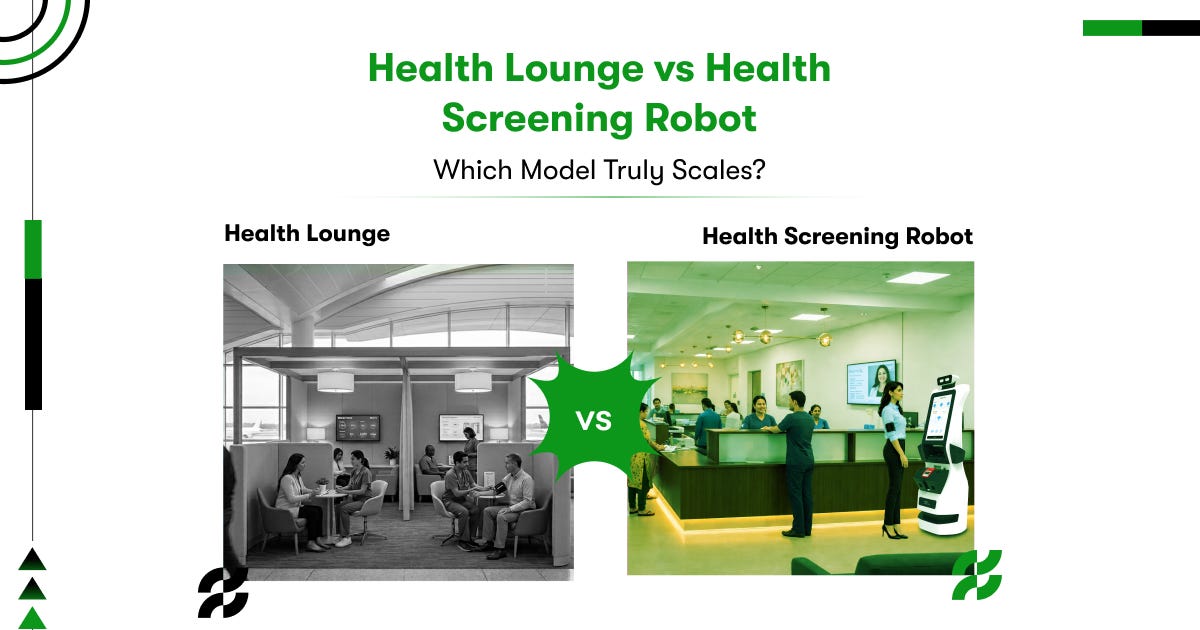
Preventive healthcare is no longer optional. It is becoming the backbone of modern healthcare systems. Yet, when organizations evaluate scalable screening infrastructure, one key debate emerges: **health lounge vs. health screening robot**.
Both models aim to improve early detection and accessibility. But when it comes to scalability, efficiency, and real-world deployment, the difference becomes significant.
This article breaks down the health lounge vs. health screening robot debate to help healthcare leaders, enterprises, and policymakers choose the right model for future-ready infrastructure.
The Growing Need for Scalable Preventive Healthcare
Globally, millions of cases of chronic diseases like diabetes and hypertension remain undiagnosed due to lack of accessible screening infrastructure.
Traditional healthcare systems are reactive. Preventive systems require speed, reach, and repeatability, something legacy models struggle to deliver.
This is where the comparison of a health lounge vs health screening robot becomes critical.
What is a Health Lounge?
A health lounge is a dedicated physical space designed for routine health checkups. It typically includes:
- Medical devices and diagnostic tools
- Trained healthcare professionals
- Scheduled appointments
- Fixed infrastructure setup
Key Advantages
- Human-assisted consultations
- Controlled clinical environment
- Suitable for detailed diagnostics
Limitations
- Limited daily screening capacity
- High operational costs (staff + space)
- Dependency on location and availability
- Difficult to scale across multiple locations
In short, health lounges are effective but resource-heavy and location-bound.
What is a Health Screening Robot?
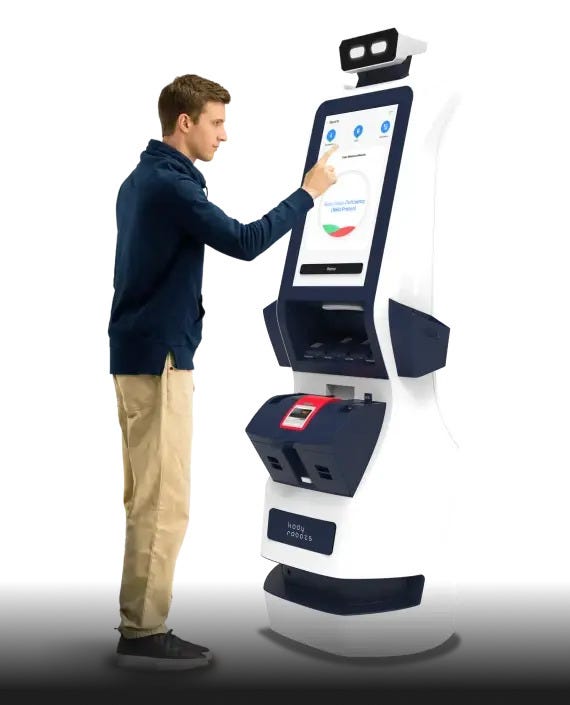
A health screening robot is an AI-powered, automated screening system that performs multi-parameter health assessments without requiring full-time human intervention.
For example, advanced systems like Medigo can:
- Screen 65+ health parameters in ~3 minutes
- Deliver instant digital reports
- Achieve up to 95% screening accuracy
- Enable telemedicine consultations
Key Advantages
- Rapid and automated screening
- Minimal human dependency
- Deployable in high-footfall environments
- Real-time data and reporting
Limitations
- Not designed for complex diagnostics
- Requires initial technology investment
However, these limitations are outweighed by scalability benefits in most use cases.
Health Lounge vs Health Screening Robot: A Direct Comparison
1. Scalability
- Health Lounge: Limited by physical space and staff
- Health Screening Robot: Easily replicable and deployable anywhere
Health screening robots enable mass screening without proportional resource increase, making them ideal for large-scale deployments.
2. Speed and Efficiency
- Health Lounge: Time-consuming due to manual processes
- Health Screening Robot: Instant screening within minutes
Robotic systems drastically reduce wait times and increase throughput.
3. Cost of Operations
- Health Lounge: High recurring costs (rent, staff, maintenance)
- Health Screening Robot: Lower long-term operational costs
Once deployed, robots operate continuously with minimal supervision.
4. Accessibility
- Health Lounge: Restricted to specific locations
- Health Screening Robot: Deployable in malls, offices, airports, and rural areas
Robots bring healthcare closer to users instead of requiring users to travel.
5. Data and Standardization
- Health Lounge: Data may vary based on operators
- Health Screening Robot: Standardized, AI-driven reports
Automation ensures consistent and reliable screening outcomes.
Why Health Screening Robots Are the Future
The shift from traditional infrastructure to AI-driven systems is not just a trend, it is a necessity.
Health screening robots:
- Eliminate infrastructure bottlenecks
- Enable early disease detection at scale
- Support data-driven healthcare decisions
- Reduce dependency on human resources
More importantly, they align with the global shift toward preventive and decentralized healthcare systems.
When to Choose a Health Lounge
- Hospitals and diagnostic centers
- Detailed medical evaluations
- Controlled clinical settings
When to Choose a Health Screening Robot
- Corporate wellness programs
- Public health initiatives
- High-footfall environments
- Rural and underserved regions
Final Verdict: Health Lounge vs Health Screening Robot
If your goal is precision in controlled environments, a health lounge is a reliable choice.
But if your objective is scale, speed, and accessibility, health screening robots clearly outperform.
The future of preventive healthcare will not rely solely on fixed infrastructure. It will depend on intelligent, scalable systems that can reach people anywhere, anytime.
Conclusion
The debate around **health lounge vs health screening robot** ultimately comes down to one question:
Do you want to serve a few efficiently or reach millions effectively?
Health lounges represent the past and present of healthcare delivery. Health screening robots represent its future.
Organizations that adopt scalable, AI-powered screening today will be the ones leading tomorrow’s healthcare ecosystem.
메타데이터
- post_id
- d3255b16a8b4
- slug
- health-lounge-vs-health-screening-robot-which-model-truly-scales-preventive-healthcare-d3255b16a8b4
- url
- https://medium.com/@dipam777/health-lounge-vs-health-screening-robot-which-model-truly-scales-preventive-healthcare-d3255b16a8b4
- canonical_url
- https://medium.com/@dipam777/health-lounge-vs-health-screening-robot-which-model-truly-scales-preventive-healthcare-d3255b16a8b4
- author_url
- https://medium.com/@dipam777
- status
- ok
- fetched_at
- 2026-06-09 15:37:30