Saving Indonesia’s Coconut Sugar Legacy: UMY Plants the Seeds for a Safer, Sustainable Future
In the hills of Kulon Progo, aging coconut trees and a lack of young farmers threaten a sweet heritage. A new replanting program offers a…
Saving Indonesia’s Coconut Sugar Legacy: UMY Plants the Seeds for a Safer, Sustainable Future
In the hills of Kulon Progo, aging coconut trees and a lack of young farmers threaten a sweet heritage. A new replanting program offers a lifeline.
By: Bambang W. Nugroho
Yogyakarta, Indonesia.
The mist still clings to the slopes of the Kokap district as the sun rises. For generations, the farmers of Hargotirto Village have climbed skyward — 30 feet or more—to tap the flower buds of towering coconut palms. The sweet nectar they collect is boiled down into gula jawa (Javanese sugar), the cornerstone of the local economy.
But this ancient tradition is facing a triple crisis. The trees are getting too old and too high to climb, so climbing them is getting too dangerous. And the young people are not coming to take their parents’ place.
Now, a team from the Community Service Program at the Universitas Muhammadiyah Yogyakarta (UMY) is stepping in with a deceptively simple solution: a shorter tree.
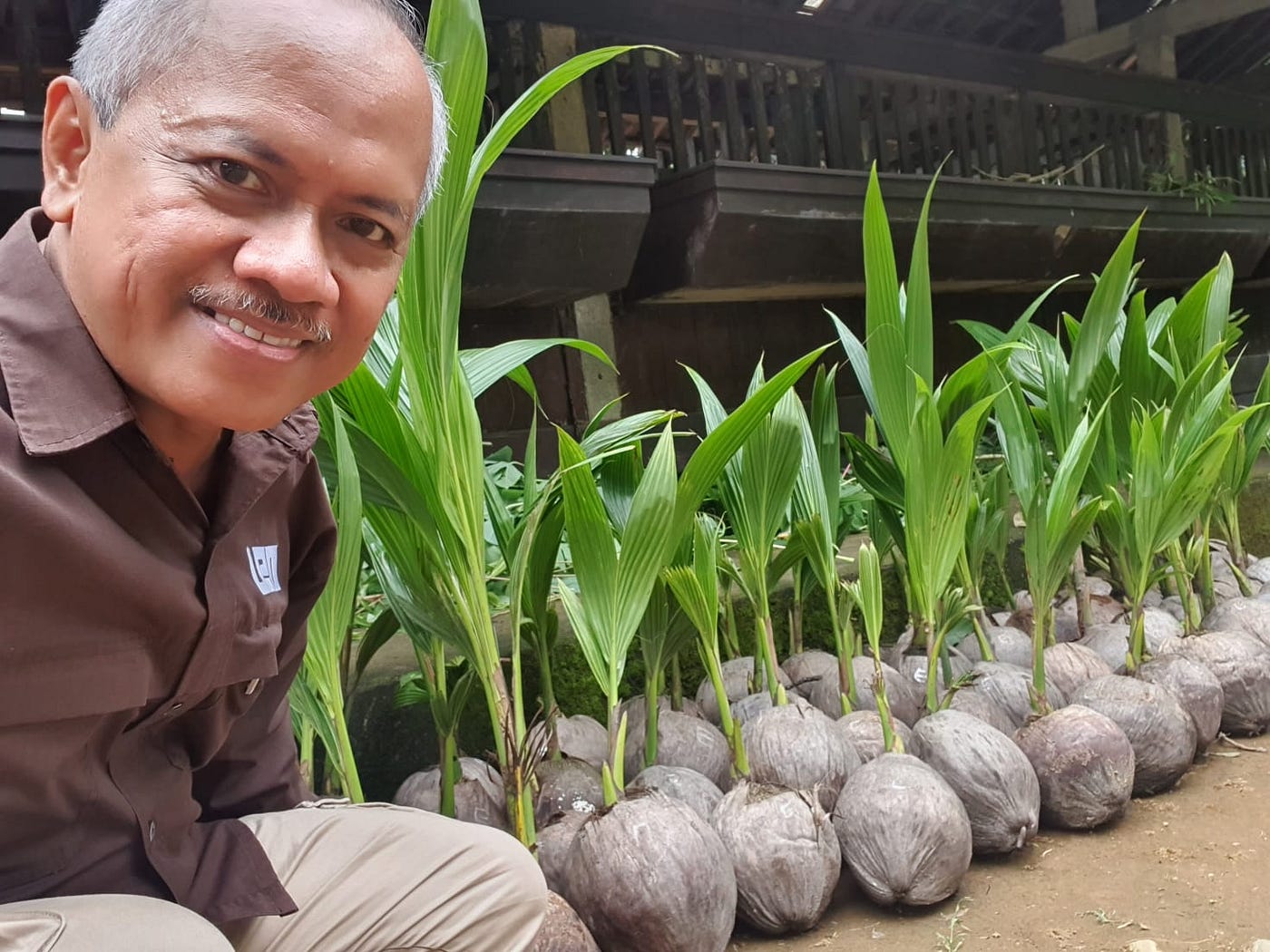
Preparing the delivery of Genjah (dwarf) coconut seedlings
The Problem at the Top
For the penderes (tappers) of the “Mudo Makaryo” and “Baut” farmer groups, the math is unforgiving. Most of their coconut palms are over 30 years old, past their prime and producing less sap. Worse, the extreme height of traditional varieties leads to frequent, often fatal, falls.
Data gathered by the UMY team paints a grim picture. Between 2021 and 2025, 21 tappers in Kulon Progo fell from their trees. Ten of those accidents were in the Kokap district alone.
“The physical toll and risk are immense,” say Drs. Bambang Wahyu Nugroho, M.A., the head of the UMY community service project. “A tapper’s working life is short, not because of the skill required, but because of the sheer danger. Meanwhile, less than half of the next generation is willing to take on that risk.”
The ‘Genjah’ Solution
The UMY solution is not to abandon the industry but to transform it from the ground up. The team is introducing a certified superior variety known as the Kelapa Genjah Entok (Dwarf Coconut).
Unlike its towering cousins, the Genjah variety grows to a manageable height of just 1.5 to 3 meters. This single change has a cascading positive effect: (1) Safety: Farmers can harvest sap using a simple ladder, drastically reducing the risk of fatal falls; (2) Productivity: The Genjah variety begins producing sap in just 3–4 years, compared to 6–7 years for traditional tall varieties; and (3) Appeal: A safer, more accessible job is a more attractive one. The project aims to rebrand coconut tapping as a viable, modern career for the village’s youth.

A Genjah (dwarf) coconut tree (about 3 to 4 years old)
More Than Just a Sapling
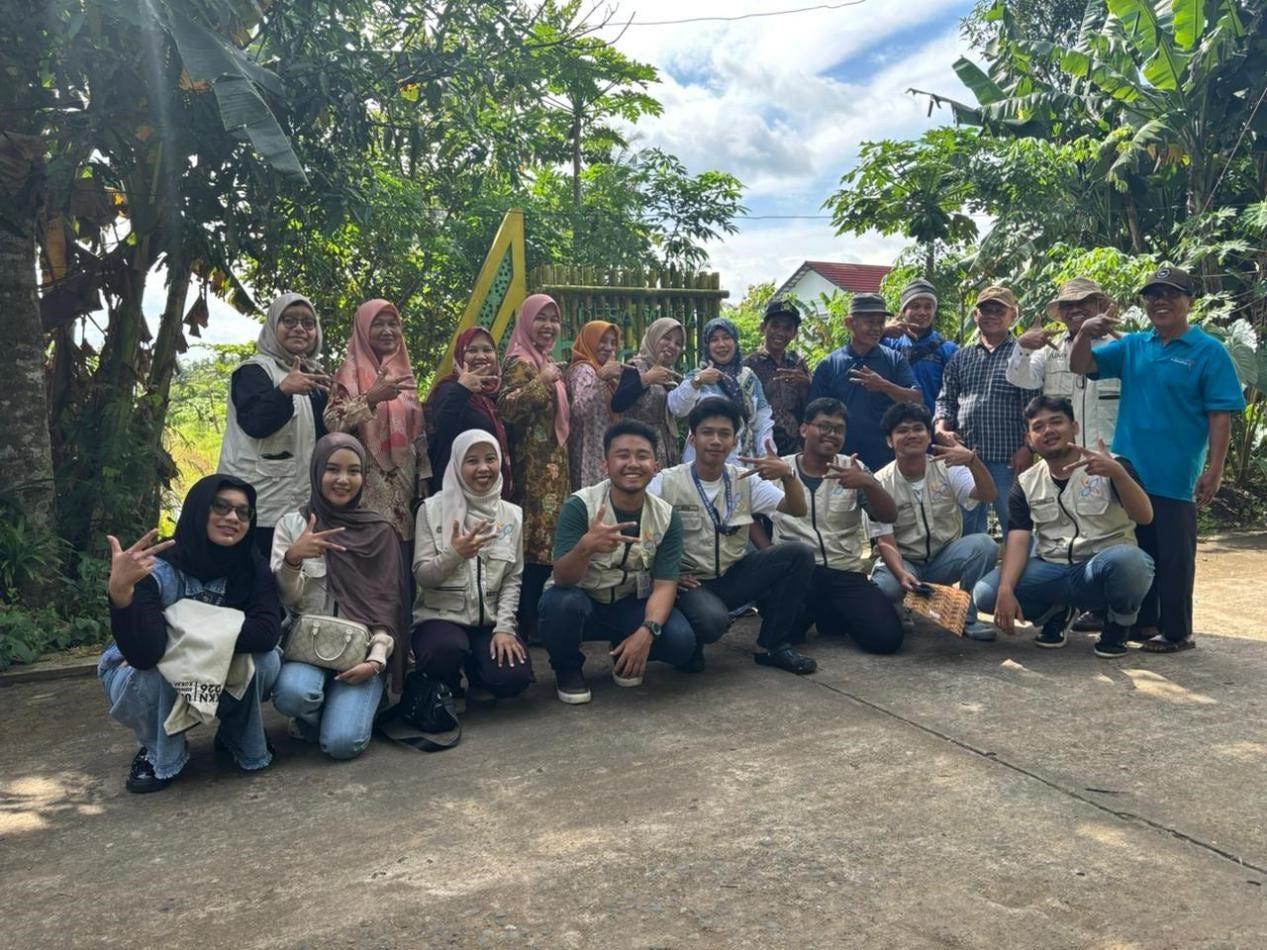
The UMY initiative goes beyond simply handing out seeds. In early March 2026, the team symbolically handed over 62 certified Genjah Entok seedlings to the local farmer groups. This complements similar aid from the Kulon Progo government, ensuring each farmer receives an average of 15 new trees.
But the real innovation is in the method. Instead of a costly clear-cut that would stop production for years, the team is teaching a technique called underplanting. Farmers plant the new dwarf saplings between the old, still-productive trees. The old giants will only be cut down once the new trees are mature enough to produce sap.
“This is an anticipatory, not a reactive, strategy,” explains Sutrisno, S.P., M.P., a team member. “We are not asking farmers to sacrifice today’s income for tomorrow’s safety. We are helping them build a bridge to the future.”
A Model for the Archipelago
The project directly supports several UN Sustainable Development Goals (SDGs), including No Poverty, Zero Hunger, and Decent Work & Economic Growth. By preserving the economic viability of coconut sugar, UMY is helping protect a vital source of income for thousands of smallholder families across Indonesia.
For the farmers of Hargotirto, the project represents hope.
“We know our trees are old. We are tired, and we are scared,” says Watono, the head of the “Mudo Makaryo” farmer group. “Seeing a young, short tree that we can easily manage… it makes me believe that our children might want to continue this work. That our sugar won’t just disappear.”

Mr. Watono (in a blue T-shirt), the chief of farmer group “Mudo Makaryo," symbolically received a Genjah coconut seedling.
As the first saplings are planted in the red volcanic soil of Kokap, they carry a heavy weight. They are not just trees. They are the seeds of a safer, sweeter, and more sustainable future for one of Java’s most cherished culinary traditions.
This community service initiative is funded by Universitas Muhammadiyah Yogyakarta (UMY) and is part of the university’s ongoing commitment to food security and rural empowerment.
메타데이터
- post_id
- d325875a0ee7
- slug
- saving-indonesias-coconut-sugar-legacy-umy-plants-the-seeds-for-a-safer-sustainable-future-d325875a0ee7
- url
- https://medium.com/@bwnbiz/saving-indonesias-coconut-sugar-legacy-umy-plants-the-seeds-for-a-safer-sustainable-future-d325875a0ee7
- canonical_url
- https://medium.com/@bwnbiz/saving-indonesias-coconut-sugar-legacy-umy-plants-the-seeds-for-a-safer-sustainable-future-d325875a0ee7
- author_url
- https://medium.com/@bwnbiz
- status
- ok
- fetched_at
- 2026-06-11 05:11:55