Like There’s No Tomorrow
Sometimes the best way to keep documentation is to tell somebody, right now.
Thursday Thoughts: 19 March 2026
Like There’s No Tomorrow
Sometimes the best way to keep documentation is to tell somebody, right now.
This week I’m spilling all my best secrets, just in case I don’t get to whisper them in your ear.
Photo by Martin Podsiad on Unsplash
I told you last summer that “a series of miracles is not financial stability.” I’ve lurched along for nearly nine months since then, all of them painful.
I can’t see a path whereby I’d take in enough to make rent by the last date to pay it, April 5th — which means I’m iffy about seeing Mr. Interesting’s next birthday, the week after, and I’m worried about finding the chances I’d like to have to write more interesting things of my own.
Obviously I could be wrong, and things could turn around — but the only $1,500 I’ve taken in in over a month is a retainer for work not yet done, and way most of that work is not yet assigned, much less scheduled. I think I’m boxed into a corner from which, at this point, it would be hard to take advantage of a timely miracle even if one showed up right on cue.
I’m feeling rather sorry for myself over the whole thing, and sort of aggrieved at the general state of the universe — so to get myself out of my own head about it, I thought tonight I’d fire off a series of points I would like to develop further, but may not get a chance to.
I always did believe in good documentation.
You’re shooting yourselves in the foot by publishing lackluster content pillars.
Whether you think primarily in terms of content hubs or pillars or clusters or, God help us, buckets (these terms all mean slightly different things, but I’m not convinced that the distinctions are germane to the point I’m making at the moment), you are missing valuable opportunities and leaving good money lying on the table if you post flabby verbiage for no reason other than to exist and hopefully look relevant to Google and/or LLMs. One reason for this is that Google and the assorted LLMs are getting “smarter” and better at separating genuinely worthwhile content from “AI slop” — even while the slop proliferates online. Another reason is that it’s inefficient as hell.
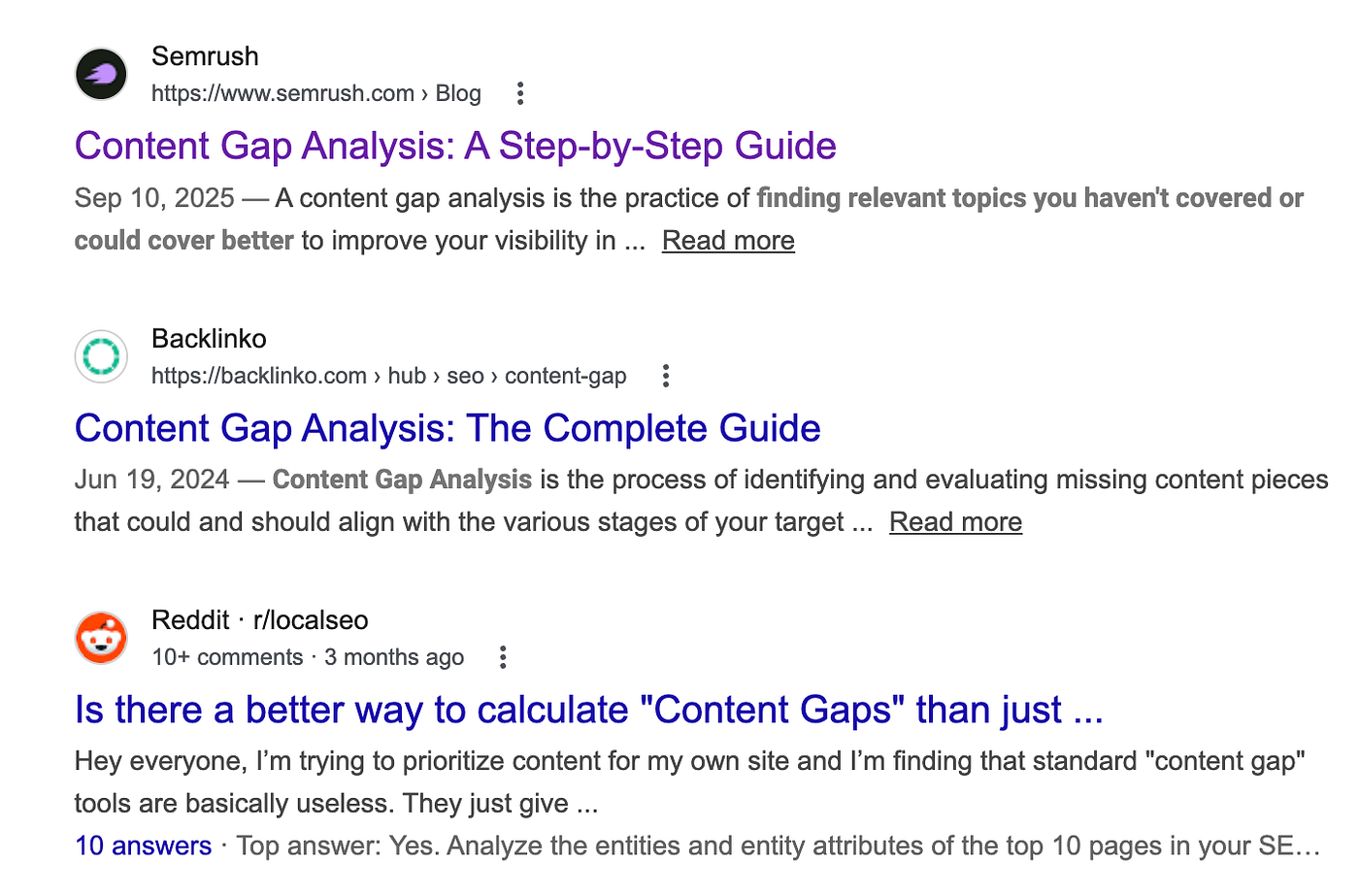
You need material to perform on search, and you also need material to convert visitors into clients or customers (depending on your line of business). There is no damn reason why those need to be two separate sets of content. I gave you some of my reasoning a couple of weeks ago; I’m doubling down now.
SEO has been “dying” forever. Search isn’t going anywhere.
I mean, eventually search will probably be superseded by something, but I don’t see it happening in the very near future unless the entire human race is superseded by an army of robots (you have to wonder, at this point, whether anybody at the Pentagon ever watched any of the Terminator movies), or potentially washed into the ocean by the accelerating effects of climate change. In the meantime, sensible people would do well to mark the difference between search engine optimization and making their stuff findable.
Somebody reading this is probably going, “What’s the difference?”
You already know the basic answer: A search engine is a tool used for scouring the internet for information, and search is another name for that scouring. If you work in digital communications in any capacity — or if you are trying to DIY comms on behalf of your own business somehow — you are probably used to “optimizing” for search and optimizing for search engines being essentially the same thing. For most purposes, for the past 20ish years, that has been a conflation that worked in practical terms.
It is not a conflation that holds up once there are ways to search besides search engines. At that point, people still need to look for stuff, but search engines are only one of their options for looking.
Hunting & gathering at the supermarket.
How do I know people are going to keep looking? Because people are still going to need stuff, and somebody is probably going to want to sell that stuff. There was a world before Google in which people could either follow up on a cool TV ad they’d recently seen, or pick up a phone book and flip through the Yellow Pages. There was a time before THAT when they could hear an ad on the radio and jot down the number to call or the name of the product … or they could clip a print out of the newspaper (or a magazine).
From the ancient world until sometime in the Industrial Revolution (don’t ask me for specifics; I have a weird hazy gap between the “long” 18th century and the part of the 20th I was actually around to remember), it was common in cities for “urchins” to stand on street corners and shout the wares of whoever put them up to it for God knows what pitiful take-home.
The market is always a party.
Mikhail Bakhtin was, famously, kind of obsessed with “the marketplace” — I trudged through *Rabelais and His World* in the conviction that surely I would see some actual marketing going on at some point, but as best I can tell for Bakhtin “the marketplace” was mostly a piece of set design, or possibly a stand-in for any conjuncture of space-time wherein mingling happened across social hierarchies.
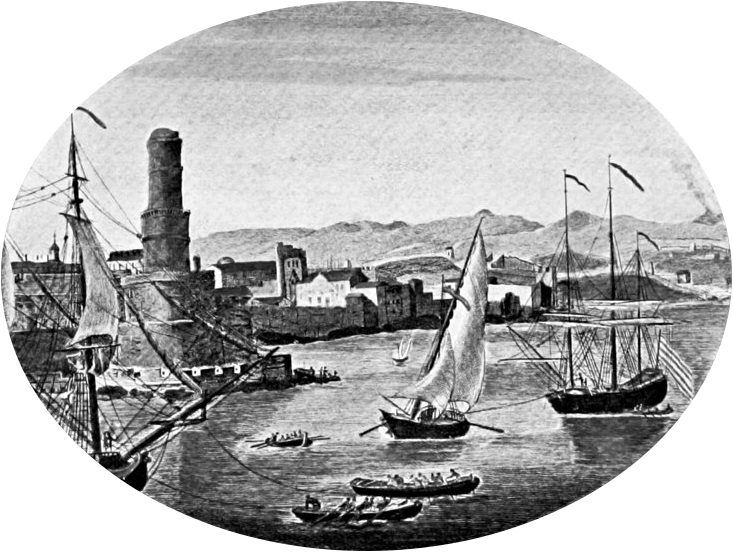
I would’ve liked more citations from primary sources, because Bakhtin is almighty thin on them. I don’t think, however, that anybody disputes the existence of markets during the Medieval through Renaissance periods — and, of course, we today host “Renaissance Faires” for reasons other than pure anachronistic glee (you should definitely attend at least one Renaissance Faire, always spelled with an e, for pure anachronistic glee). At these markets, and at fairs, people came together to buy and sell stuff: You brought what you had to sell, if you had anything you were trying to offload, and you came ready to look at what everybody else had, often with a shopping list in mind.
The more things change, the more things stay the same.
Think space, not medium.
I don’t think I’ve ever seen a plan of stalls from a fair in the pre-modern era, but I’m willing to bet they followed a logic not unlike the state or county fairs you see today, by which I mean that they probably put a lot of the domesticated animals in the same part of the grounds and they probably put a lot of the food stalls close together. Entertainments, like rides and skits, tend to be spaced throughout the fairgrounds today, and there’s a reason for that: The people running the event are wanting you to have to browse around and pass the stalls where items are being sold in order to get to the next cool thing you’d like to see.
Digital contexts operate much more like spaces we collectively inhabit than they do like media through which we take turns transmitting our messages to passive recipients — or even, for that matter, talking over one another. This matters a lot, if you are hoping to give other inhabitants of teh interwebz a clue about what you have to offer them.
One reason why it matters is that, on social media especially, you really need to be interacting as if you are at a fair, which means chatting to other people in booths near you and passing by you, and conceptualizing your own booth as one of many attractions all spread out in a very large, very crowded space where everybody is competing for attention.
“Competing” should not be taken to mean a zero-sum situation. Someone else’s gain is not, usually, your loss. Look at people leaving a fair (or faire) sometime. Many of them probably have handfuls of trinkets and baubles and random prizes. Very seldom do they have more than a couple of items from the same booth. Importantly, a lot of them will have examples of the same type of item from more than one booth.
Like attracts like. Sort of.
You do not have to keep people from finding your competitors. As a matter of fact — in search contexts and on social media — you probably don’t want to, and that’s largely because the places where they’d find your competitors are almost always the same places where they would reasonably go looking for you, or at least for the same things you offer.
Remember that you are thinking of a fair (even a mall will do, if you aren’t comfortable enough with 4-H or D&D to relate to fairs/faires as an example). Your competitors are part of the “draw”; people are wandering through to see them, and you, and a whole bunch of other virtual booths or stalls.
Go into your kitchen or your closet or basically anywhere in your house where you store items for future use.
Do you, or do you not, have items grouped together according to some kind of logic?
I think most people generally put items they perceive as being similar to each other next to each other for storage. I’m much more likely to put things I use together (or in quick succession) next to each other. It fundamentally does not matter what the logic is: It matters that the logic exists. Even if you are not “an organized person,” there is almost certainly some kind of perceptual clustering that happens when you put things down, up, or away.
You want the “place” where you’re hanging your sign in the hopes that people who want what you’re selling will find you — whether that’s a social media platform or a set of sources listed by a chatbot or basically anywhere else, online or off — to be well-populated with the kind of competitors your ideal customer would like to visit again, if you sell the kind of thing people might reasonably buy on a steady rotation. If you sell a once-in-a-blue-moon kind of thing, then you still want the results people get from browsing to be valuable enough in general to keep them noodling around long enough to pass by your virtual location a time or three.
I know you’re saying, “I want them to stop on me!”
Yeah, yeah. As my mom likes to say: “People in hell want ice water.”
A few people really will stop on the first result, anywhere, that strikes the right chord, and plop down their cash (or their credit card number) right then and there. Way most people, in way most circumstances, need to do a little browsing first.
You want to be where they are browsing.
It’s not about you.
If you are knocking yourself out, every day, and still not setting the world on fire — it could be that you don’t have a worthwhile product or a valuable service to offer. Way most of the time, it’s neither. What I see far more often is that somebody has an amazing offer — maybe more than one! — but they haven’t quite figured out how to frame that offer so that it lines up with the way their target customers perceive their own needs.
Figuring that out can be genuinely difficult and complicated. There’s an expectation sometimes that anybody can communicate value effectively because they know what’s cool about their offer. But in actual fact, what you know about why your offer is cool is largely irrelevant. Nine times out of ten, what’s going to matter to the person buying is what they know about their problem, not what they know about your product or service.
Getting into someone else’s head about this sort of thing — even more, getting into multiple people’s heads — is a premium service for researchers like myself for a reason, and the reason is that it’s actually not at all easy to do. It’s something very few people do well on their own behalf, even when there are no significant obstacles beyond just calibrating the message you want to share so that it communicates what you have in mind to the person who eventually hears or sees it.
Sometimes, as in my case, there are structural problems behind the scenes (like a particularly burdensome NDA) that complicate the process of showing clients or customers what you have to offer. Those obviously make things harder, but there’s no point being defeatist. Not only is it very middle-class, it’s also a surefire way to get nowhere.
Don’t give up before you’re beaten. Keep trying. If you believe in your product or your service, keep loading up your cart and heading to the marketplace. Keep visiting with your neighbors at the stalls next to you, and anybody who happens to pass by. Stay generous. Point out your competitors, even when you’re jealous. Tell the people you talk to why you think they’re cool. Give referrals, as often as you can.
Notice I didn’t say a damn about advertising. That’s because almost every business (and even nonprofit org) I’ve worked with instinctively focuses on advertising. We all want to talk about “our” thing. What’s less intuitive is presence in shared space, showing up consistently so that you, like your neighbors, are one of the reasons people come to the fair (or the platform).
Keep showing up.
If you’re lucky, enough people will notice and remember to keep you afloat until word gets around — and then eventually you’re renting a bigger booth and hiring help, because everybody comes to see your wares.
If you’re not quite so lucky — at least you made it a great day at the faire.
About the blogger:
Because she is never defeatist, Dr. Sarah G. Carpenter hopes to be helping other people with their homework for a long time to come.
She keeps current documentation anyway.
Just in case.
메타데이터
- post_id
- d3a8b0be50bb
- slug
- like-theres-no-tomorrow-d3a8b0be50bb
- url
- https://medium.com/@sarah-geri/like-theres-no-tomorrow-d3a8b0be50bb
- canonical_url
- https://medium.com/@sarah-geri/like-theres-no-tomorrow-d3a8b0be50bb
- author_url
- https://medium.com/@sarah-geri
- status
- ok
- fetched_at
- 2026-06-26 21:52:29