Vol. 28 | The First Global Connection: How the Age of Exploration Transformed Human Will
Exploring the collision of civilizations and the birth of global consciousness through the lens of human intentionality
Vol. 28 | The First Global Connection: How the Age of Exploration Transformed Human Will
Exploring the collision of civilizations and the birth of global consciousness through the lens of human intentionality
The Age of Exploration wasn’t merely geographical expansion — it represented humanity’s first comprehensive collision of will-circuits on a global scale. This pivotal moment in history reveals how human consciousness evolved from inward reflection to outward construction, fundamentally reshaping our understanding of freedom, power, and civilization itself.

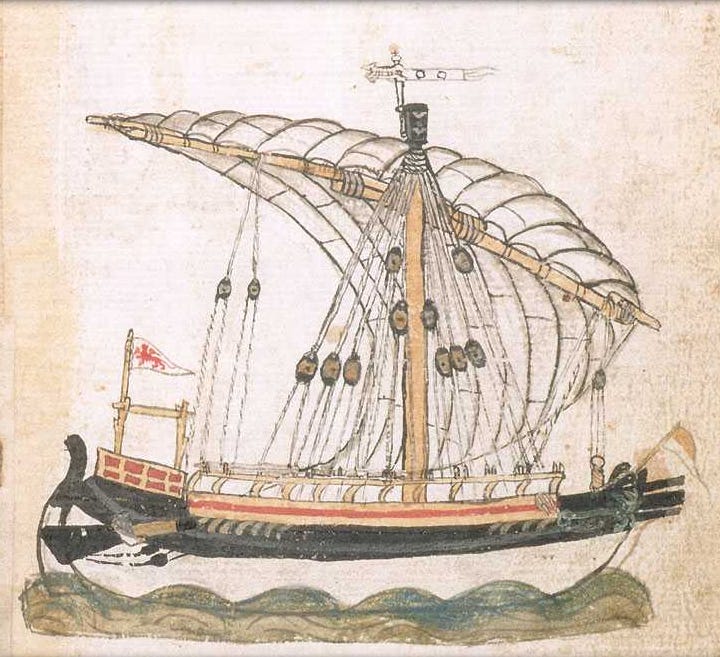
The opening of new maritime routes → humanity’s first global exchange of wills. Generated by ChatGPT 5.
The Overflow of Reason and Birth of Exploratory Spirit
As the medieval era drew to a close, Europe’s collective consciousness underwent unprecedented internal reconstruction. The invention of the printing press wasn’t just a technological innovation — it was a democratization of knowledge revolution. Information once monopolized by the clergy and nobility began to flow to ordinary people through books, transforming reason from a theological appendage into an active, seeking inner spirit.
This spirit shattered the geographical and intellectual boundaries that had confined Europe, directing its gaze toward unknown seas. The Age of Discovery wasn’t an accidental adventure; it was the inevitable overflow of this emerging rational force. For the first time in history, “reason as principle” guided epic voyages — calculating precise navigation routes through mathematics, mapping star charts through scientific observation, and confronting storms through logical reasoning.
This marked humanity’s transition from introspective religious exploration to outward, material, and geographical pursuits.
The Dawn of Globalization: First Systematic Connection
The opening of new maritime routes ended the long era of independent civilizational evolution, inaugurating the first true “globalization.” This grand process was driven by three converging forces:
1. The Columbian Exchange: Global Migration of Life and Species
This unprecedented “biological exchange” involved far more than trade — it represented a complete reshuffling of Earth’s ecosystem. Corn, potatoes, and tomatoes from the Americas revolutionized European agriculture and demographics. Potatoes, with their high yield and cold resistance, became staple foods in Ireland and Northern Europe, feeding rapidly growing populations and providing the labor foundation for the coming Industrial Revolution. Similarly, corn’s spread through Africa alleviated local food crises.
However, this exchange had its dark side. European livestock and crops disrupted America’s ecological balance, while European viruses — smallpox, measles, and influenza — caused devastating impacts among indigenous populations lacking antibodies, leading to dramatic population decline. This marked the first time global ecology and economics entered comprehensive interaction, creating an interconnected world where pulling one thread affected the entire fabric.
2. Marco Polo’s Echo: Materializing Eastern Desires
Since The Travels of Marco Polo spread throughout Europe, the East — “Cathay (China)” and “Cipangu (Japan)” — that land filled with gold, spices, silk, and exotic crafts became an endless European imagination and desire. These aspirations were no longer ethereal dreams but transformed into concrete, measurable commercial interests.
New maritime routes provided an efficient “pipeline of desire” for cross-civilizational longing. Previously, the spice trade relied on lengthy overland routes with multiple intermediary markups. Now, Portuguese and Spanish fleets could bypass middlemen, bringing cinnamon, cloves, and pepper directly from the Spice Islands to Europe. This fervent desire for Eastern materials and culture — from royalty to merchants — became the powerful engine driving maritime adventures, propelling fleet after fleet toward the unknown.
3. Technology and Capital Fusion: From Individual Adventure to National Enterprise
If desire provided motivation, then the combination of technology and capital supplied the skeleton and flesh for this grand adventure. Eastern-origin compass and gunpowder changed naval warfare and navigation rules, providing technical safeguards for oceanic voyaging. More crucially, Europe’s emerging financial systems — joint-stock companies and banks — provided unprecedented massive capital for these ventures.
This represented an entirely new collaborative model: bankers and wealthy merchants provided funding while bearing enormous risks; explorers used their courage and knowledge to seek new routes and lands. Returns materialized through spice trade, gold, and slave commerce. Maritime activity transformed from romantic individual heroism into precisely calculated, high-risk, high-reward “national enterprise.” A nation’s rise or fall became directly linked to its oceanic hegemony, foreshadowing centuries of colonialism and imperialism.
The perfect convergence of these three forces marked humanity’s first “systematic connection” on a global scale. Civilizations were no longer isolated islands but began collectively shaping a new, dynamic world order through collision, exchange, and transformation.

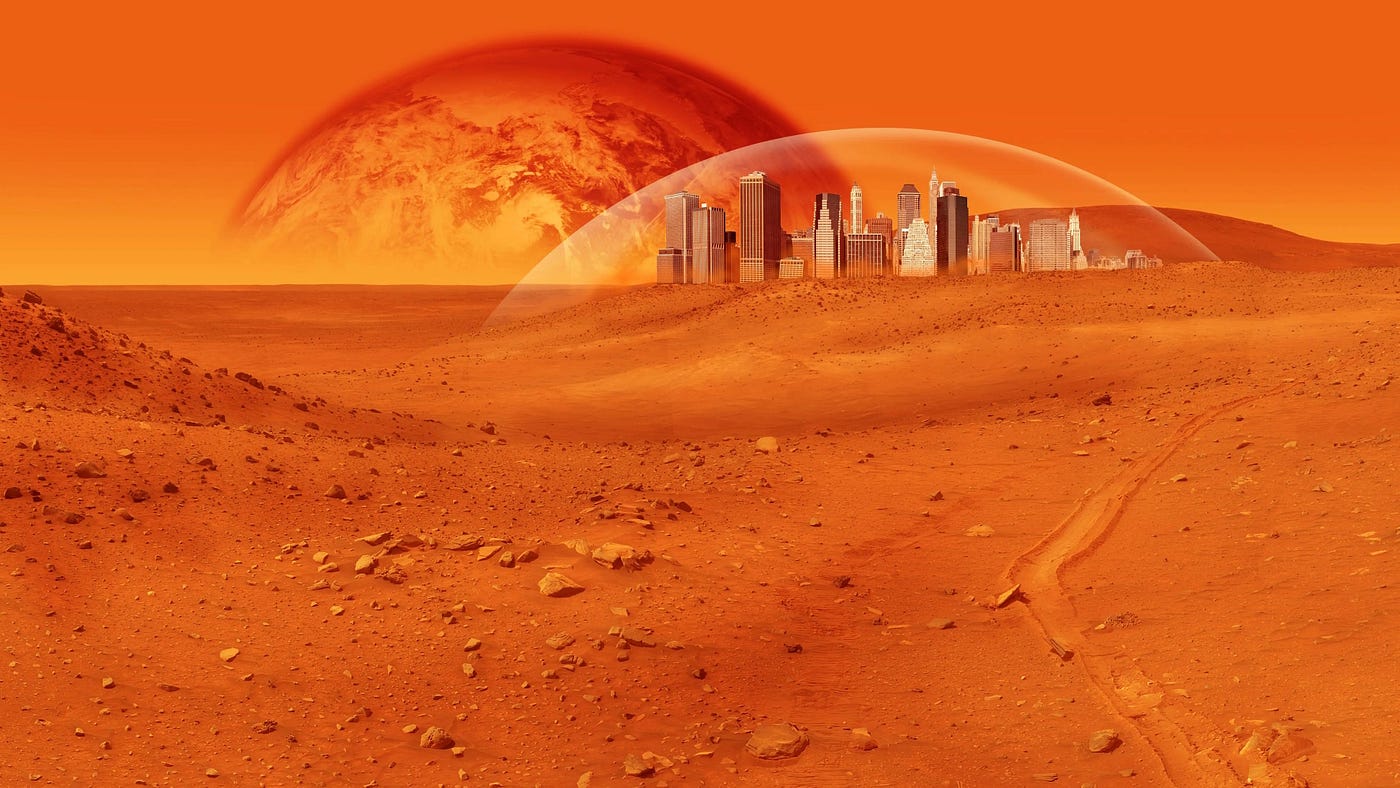
The first clash between Eastern and Western civilizational wills. Generated by ChatGPT 5.
Tension: Freedom’s Beginning and Oppression’s Shadow
The Age of Exploration was like an enormous double-sided mirror, reflecting both the brightest and darkest aspects of human will. It nurtured the desire for freedom while simultaneously spawning the deepest oppression. This historical process wasn’t unidirectional progress but a tension-filled dance of internal contradictions.
Freedom’s Beginning: Individual Will Breaking Chains
For the old world, oceans were no longer barriers but gateways to infinite possibility. Medieval European society was rigid, with individual destiny often determined by birth, offering minimal upward mobility. However, maritime exploration’s call shattered this deadlock:
Intellectual Liberation: Maritime exploration challenged existing geographical and cosmological views, proving the Earth wasn’t flat and that biblical world descriptions weren’t comprehensive. This prompted people to question traditional authority, reexamine their beliefs and reason, accelerating intellectual liberation movements.
Economic Fluidity: New routes’ enormous profits provided unprecedented opportunities for non-noble merchants. They could accumulate wealth through fleet investment and trade participation, even challenging established aristocratic classes. Oceans offered individuals and groups possibilities to escape identity constraints and achieve social mobility.
Personal Agency Awakening: For sailors, explorers, and farmers seeking new lives, new continents represented utopian fresh starts. Oceans granted unprecedented mobility, enabling escape from feudal constraints to create their own lives.
Oppression’s Shadow: Will’s Degradation and Objectification
However, freedom’s other side was bloody exploitation’s shadow. When “exploration” Will lost ethical constraints in new territories, it rapidly degraded into “conquest” and “plunder.”
Colonial Plunder: New World wealth — gold, silver, and land resources — sparked colonizers’ greedy desires. Indigenous lands were violently seized, their cultures destroyed, and their lives viewed as disposable cheap labor. This represented complete disregard and trampling of others’ will.
Black Slave Trade: To satisfy American plantations’ enormous labor demands, European colonizers initiated history’s most cruel slave trade. Millions of Africans were forcibly removed from their homelands and transported to the New World under extremely harsh conditions. Within colonial systems, they were no longer human but merely buyable, sellable, objectified “resources.”
Double Standards’ Birth: The Age of Exploration’s core contradiction lay in this: those who championed “reason” and “freedom” in Europe simultaneously implemented the most barbarous exploitation of other civilizations overseas. The coexistence of “exploration” and “conquest” exposed the human will’s fragility and degradation when lacking reflexive checks and balances.
This historical contradiction made “first global connection” not a simple progress story but a dual tension of coexisting freedom and oppression. It marked not only globalization’s beginning but also revealed deep flaws in human will: while pursuing self-liberation, we might unconsciously push others into the abyss.
Will Dynamics: Initial Appearance of External Tension
The Age of Exploration’s “first global connection” represented more than geographical expansion — it was humanity’s first comprehensive collision of collective will-circuits on a global scale. Within the WCAT (Will Circuit Activation Theory) framework, this historical drama reveals how will overflows from internal reflection to material world construction, ultimately falling into profound contradictions within power and exploitation’s disciplinary mechanisms.
1. Reflexive Circuit 3.0: Transition from Internal Reflection to External Action
Everything began with Europe’s internal will awakening. The Renaissance and Reformation first liberated the individual rational spirit from divine authority and doctrinal constraints. This force, in WCAT terms, was a powerful Reflexive Circuit 3.0. People no longer blindly followed old worldviews but began reflecting and questioning:
- Geographical Boundaries: Is the Earth truly flat? What exists beyond distant seas?
- Knowledge Boundaries: Do traditional Biblical or classical texts encompass all truth?
- Individual Capability: Can humans, through their own power, explore and understand an unknown world?
This self-doubt and unknown longing became the core driving force enabling new maritime routes. It was a “heart-driven” will, motivating people to risk their lives breaking through old geographical and intellectual boundaries.
2. Constructive Circuit 4.0: Will’s Initial Construction in Global Fields
When will transitioned from internal reflection to external action, it began operating the Constructive Circuit 4.0. New maritime routes provided humanity with a fresh “blank canvas” for creating various new orders:
New Economic Model Construction: Multinational corporations, joint-stock systems, and banking credit systems — modern financial models were “constructed” on this foundation, organizing scattered capital and adventurous behavior into an efficient, global profit-seeking machine.
Geopolitical Reshaping: Colonialism as an entirely new political and economic system was “constructed,” marking the first time national will crossed oceans to directly dominate and shape other continents’ destinies.
Cultural and Knowledge Re-weaving: New World flora, fauna, maps, and cultures were incorporated into European knowledge systems, entering a new constructive phase of human world understanding.
However, this new order’s construction carried duality from the beginning. It represented the pinnacle of human organizational capability and creativity while being achieved at the cost of completely overturning and exploiting other civilizations.
3. Disciplinary Circuit 2.0: Free Will’s Alienation and Regression
This process’s core contradiction lay in how will originally sourced from “freedom” and “exploration” ultimately alienated into the cruelest Disciplinary Circuit 2.0 within new orders.
Reason’s Instrumentalization: Europeans used rational tools — precise navigation charts, advanced cannons — to explore the world. However, these tools were ultimately used for the most irrational purposes: the slave trade and colonial plunder. Will utilized reason but served the most primitive greed and power desire.
Freedom’s Regression: Within colonial systems and slavery, human free will was completely stripped away. The enslaved will was no longer free but violently rewritten into an oppressive normative order. Their very existence became the most ruthless mockery of “freedom” ideals.
Therefore, “first global connection” wasn’t a simple progress narrative. It was a historical drama revealing will’s first collision on a global scale. This collision demonstrated the enormous potential of wills transitioning from reflection to construction while simultaneously exposing how easily it regressed from “freedom” to “oppression” when confronted with power and greed. This inseparable contradiction planted profound seeds for later Enlightenment reflection, Marxist criticism, and other intellectual movements.
Transitional Significance: Explosive Transition Period
This chapter plays an extremely crucial role in the entire civilizational narrative framework as the core of the “2.5th Transition.” It neither simply continues old orders nor represents a completely new stable state, but serves as a transition period of inheritance and explosion.
It inherited the rational liberation brought by the Renaissance and Reformation, pushing this force onto globalization’s stage, transforming it from a European internal intellectual movement into a material and geographical change affecting the entire world. Simultaneously, it exploded with unprecedented oppression and contradictions. Colonial violence and the slave trade’s brutality were not merely historical stains but the first strong refutation of Enlightenment ideals.
This history teaches us that when human will breaks through old boundaries and gains enormous freedom, it might simultaneously nurture the deepest oppression. This first global connection was an explosive display of historical human will, whose consequences continue to profoundly influence us today.
This article explores how the Age of Exploration represents humanity’s first global collision of consciousness, revealing the complex dynamics between liberation and oppression that continue to shape our interconnected world.
Further Reading
- The Printing Press and Knowledge Democratization See Elizabeth Eisenstein’s The Printing Press as an Agent of Change (1979). She argues that the advent of print radically transformed the speed and scale of knowledge circulation, fueling the Reformation and the Scientific Revolution, and laying the groundwork for the “overflow of reason.”
- The Columbian Exchange Alfred W. Crosby’s The Columbian Exchange: Biological and Cultural Consequences of 1492 (1972) introduced this concept, emphasizing how the transfer of crops, livestock, and diseases between the Old and New Worlds reshaped global ecology and demographics.
- Marco Polo and the Eastern Imagination The Travels of Marco Polo circulated widely in the 14th century, inspiring Europe’s boundless imagination of the East. This projection was essentially a “materialization of desire.” See Frances Wood’s Did Marco Polo Go to China? (1995) for debates on its authenticity.
- Maritime Technology and Financial Systems Europe’s breakthroughs in oceanic navigation partly drew from Chinese and Islamic innovations (compass, gunpowder, shipbuilding). At the same time, the emergence of joint-stock companies — such as the Dutch East India Company (VOC, founded in 1602) — created a “risk-dispersing” capital model for transoceanic trade. See Fernand Braudel’s Civilization and Capitalism series.
- Colonialism and the Atlantic Slave Trade The freedom of new maritime routes was shadowed by systemic oppression. The Transatlantic Slave Trade (16th–19th centuries) forced more than 12 million Africans into the Americas. See David Eltis and David Richardson’s Atlas of the Transatlantic Slave Trade (2010).
- The Tension Between Freedom and Oppression This paradox of “internal freedom vs. external oppression” was later explored in depth by postcolonial theory. Edward Said’s Orientalism (1978) reveals how “knowledge” functions simultaneously as a tool of understanding and domination.
- WCAT and the Dynamics of Will In the framework of the Will Circuit Activation Theory (WCAT), the Age of Discovery exemplifies a pattern: the Reflexive Circuit (3.0) spilling outward → the Constructive Circuit (4.0) generating new meaning → followed by the Disciplinary Circuit (2.0) striking back. This demonstrates the structural tensions of civilizations undergoing large-scale transitions.
A Guide to *A Brief History of Will*, you can click to explore the other Chapters.
A note from the author:
This piece was originally written in **Traditional Chinese**, and translated into English with the help of AI. While I’ve tried to preserve its core spirit, I know that some things may feel subtly different.
If you read Chinese, you’re warmly invited to experience the original version too — it might hit differently.
메타데이터
- post_id
- d3ac3bfd0f46
- slug
- the-first-global-connection-how-the-age-of-exploration-transformed-human-will-d3ac3bfd0f46
- url
- https://medium.com/will-circuit-journal/the-first-global-connection-how-the-age-of-exploration-transformed-human-will-d3ac3bfd0f46
- canonical_url
- https://medium.com/will-circuit-journal/the-first-global-connection-how-the-age-of-exploration-transformed-human-will-d3ac3bfd0f46
- author_url
- https://medium.com/@jiawei-meta
- status
- ok
- fetched_at
- 2026-07-31 09:52:23