What I told 15 Boeing finalists (first-time founders) the day before their pitch
This was my third year running the mentor session for Boeing BUILD at IISc Bengaluru — and every year I walk in thinking I know what to…
What I told 15 Boeing finalists (first-time founders) the day before their pitch
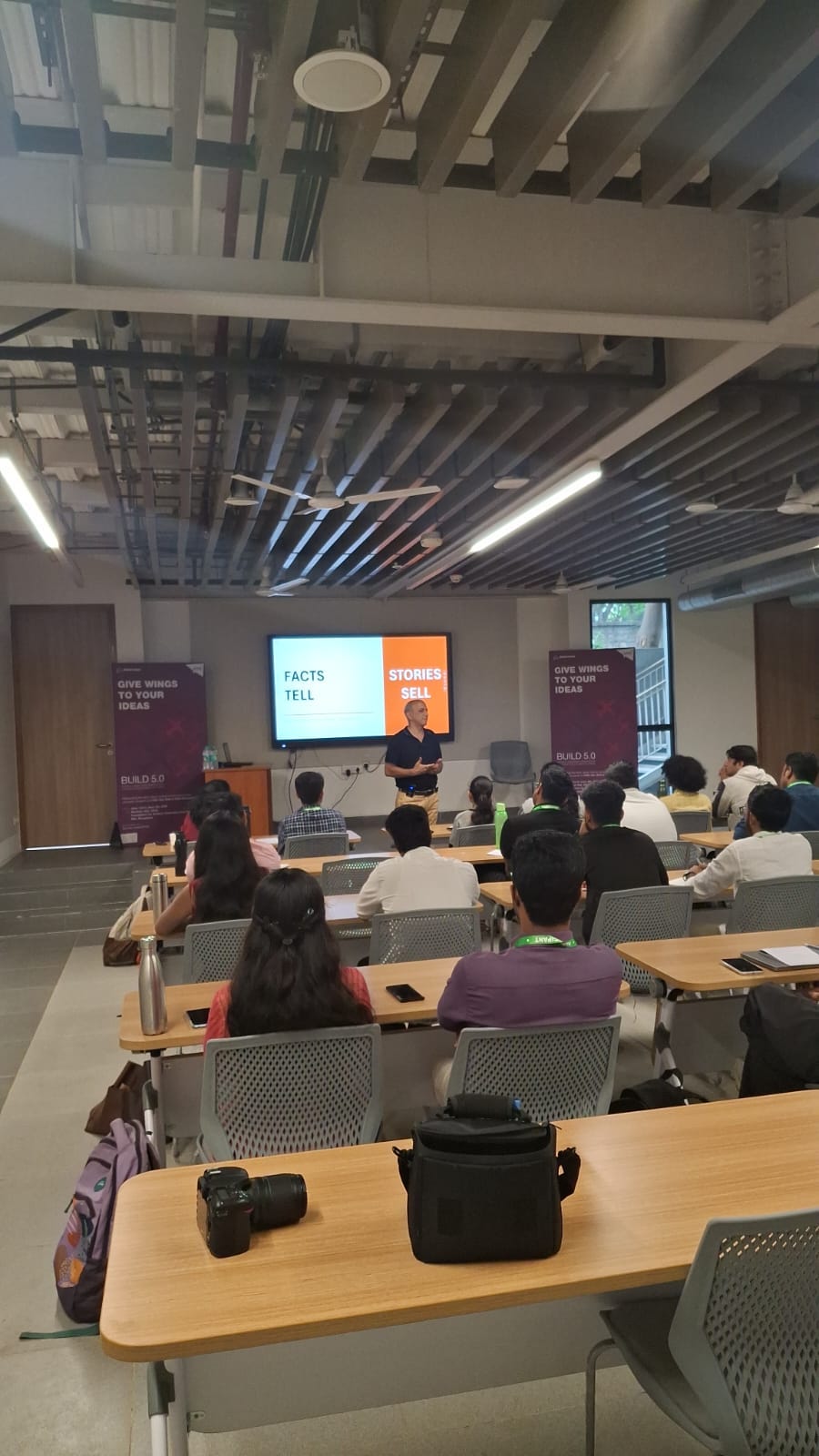
This was my third year running the mentor session for Boeing BUILD at IISc Bengaluru — and every year I walk in thinking I know what to expect, and every year the founders surprise me in some way.
Boeing BUILD 5.0 is not a typical startup competition. The teams that make it to the finals are building in aerospace, defence, deep technology, and sustainability — serious domains, serious ambition, and in most cases, serious technical depth. This year, there were 15 finalists, mostly first-time founders, mostly engineers, and almost all of them had spent months getting their business plan battle-ready for the Boeing jury.
I had the morning session — storytelling for the final pitch — and then the afternoon for one-on-one mentor reviews.
The gap that showed up in the first ten minutes
When I asked the first founder to tell me their story in 90 seconds without slides, what came back was a feature list dressed up with some connective tissue. Impressive technology, clear problem statement, solid market sizing — but no story. No founding moment. No sense of who this person was and why they, specifically, were the right person to be building this thing.
I asked three more founders the same question. Same pattern.
Every team had done the work. Every team knew their technology cold. But the gap between what they had built and why anyone sitting across a table should genuinely care — that gap was wide open, and nobody had told them it was there.
That’s the gap where most pitches die. Not in the financials, not in the product, not even in the market size. In the story.
Facts Tell Stories Sell
That’s the line I opened the session with. Said it once, paused, and let it sit in the room for a moment before moving on — because it needed to land before anything else could.
Here’s what I mean by it. Your business plan is the map — it shows the jury where you’re going, how you’ll get there, what it will cost and what it could return. But a map doesn’t make anyone feel anything. Boeing’s jury has seen hundreds of maps. What they haven’t seen is your specific terrain, your specific wound, your specific reason for being in that room. The story is what makes the map matter.
Data gives scale. The story gives stakes. You need both — but the story has to come first, because without it, the data is just noise.
The framework I gave them
I’ve been using a four-part structure for pitch storytelling for a while now, and it works because it forces founders to answer the questions a jury is already asking in their heads, in the order they’re asking them.
THE BEFORE — What is broken in the world right now? Not the market gap in your pitch deck language, but the actual human experience of the problem. The wound. The daily frustration. The thing your customer lives with every single day that shouldn’t exist.
THE TRIGGER — What made you see this problem? Every founder has a founding moment — a personal experience, something they witnessed, a conversation that wouldn’t leave them alone. This is your most underused asset in a pitch, and most founders never say it out loud.
THE AFTER — What does the world look like when you fix it? Not your product roadmap, not your feature set — the actual human future you’re building toward. Make it concrete, make it specific, make it feel.
YOUR ROLE — Why are you the ones to build this bridge? What combination of skills, obsession, background, and unfair advantage makes you the right people for this specific problem at this specific moment?
The rule I left them with: if you can’t tell your story in 90 seconds without slides, you don’t own it yet. The slides are evidence. The story is the case.
I needed an example that would actually land in that room — not Airbnb, not Uber, not some decade-old Silicon Valley story that these founders had already heard fifty times in startup workshops. These were Indian founders, most of them students or very early in their careers, working the kind of hours where dinner is whatever you can get at 9:30 pm when you’ve finally looked up from your laptop.
So I used Swiggy
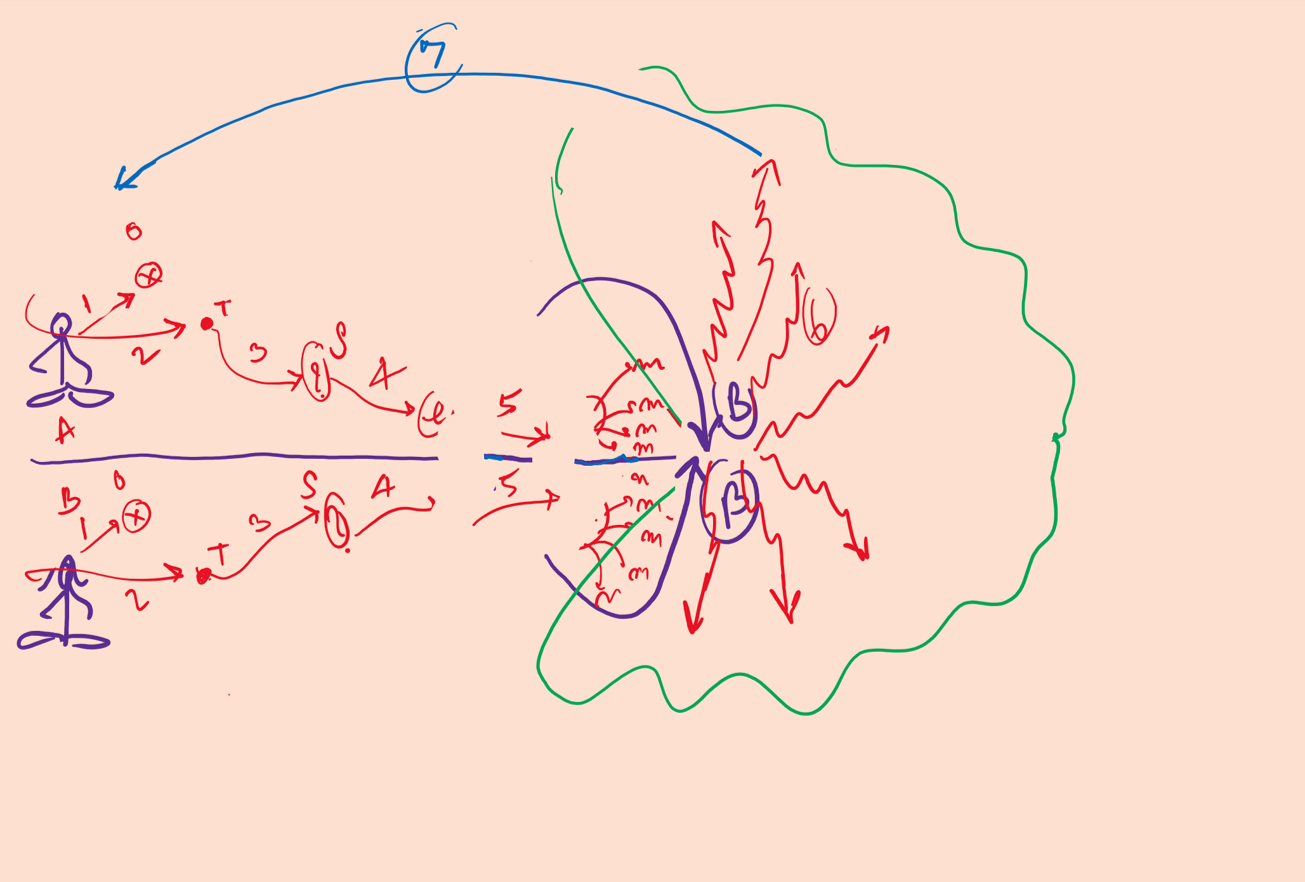
It’s 8 pm in Bangalore. You’re exhausted after a long day, and you want biryani from that one place three kilometres away that does it properly. You call them — engaged. You call again — they say they don’t deliver to your area. So you settle for whatever’s within reach, which is not what you wanted, and you’ve now spent twenty minutes on a problem that shouldn’t exist. That was urban India’s dinner story, every night, for millions of people.
That’s the Before.
The Trigger was watching a co-founder — a smart, capable person — spend 45 minutes trying to sort out a meal one evening. 45 minutes on a basic human need. If this is broken for us, it’s broken for 50 million people in Indian cities.
The After was simple: any restaurant, any cuisine, at your door in 30 minutes — not just the big chains, but your favourite small thali place, the cloud kitchen doing Chettinad at midnight.
Their eyes lit up the moment I got into the Before. Not because Swiggy is a new story — everyone in that room uses Swiggy — but because they had lived that before themselves, probably the previous night. They didn’t just understand the framework intellectually; they felt it in their own experience. And that’s exactly what a good story does. It doesn’t inform people of something new; it reminds them of something they already know is true.
What the afternoon looked like
The one-on-one reviews in the afternoon were where the real work happened. Each team ran their pitch, and I pushed on the story gaps — where was the Before, where was their founding moment, what was the After they were painting, and critically, had they addressed the doubt villain, which is the question already forming in the jury’s head that most founders leave unanswered.
By the time the day ended, the same founders who had given me feature lists in the morning were giving me scenes. One of them — Vedang — came back after his Boeing pitch the next day and wrote on LinkedIn: “Your session was one of the most helpful ones I’ve attended. I used a comparative narrative, and it really helped me stand out.”
That’s what the whole thing is for. Not the framework, not the slides, not the session itself — but the story they walked into that room with.
Three questions worth keeping
Before you walk into any pitch room, ask yourself whether you can tell your story in 90 seconds without slides, whether you’ve named all three villains — the market villain, the timing villain, and the doubt villain — and whether you know the one line you want the jury to repeat to someone else after you leave. If the answer to any of those is no, the story isn’t ready yet.
Facts tell. Stories sell. Go tell yours.
If you liked this story, you will love my weekly newsletter, dropping in your Inbox every week + Free AI GTM Prompts. Subscribe here or forward to someone who may need it.
If you want to try a new GTM Readiness free tool to find out how ready you are to go to market as a founder? Check this:
Sridhar Pai Tonse is a 3x founder, GTM consultant, and faculty member at TAPMI Business School. He mentors early-stage founders through Tonse Pai Academy and writes the Prompt to Market newsletter on AI-powered GTM for founders.
A new tool for early founders is dropping soon — follow this space for more!
메타데이터
- post_id
- d3d6c325a321
- slug
- what-i-told-15-boeing-finalists-first-time-founders-the-day-before-their-pitch-d3d6c325a321
- url
- https://medium.com/@tonsepai/what-i-told-15-boeing-finalists-first-time-founders-the-day-before-their-pitch-d3d6c325a321
- canonical_url
- https://medium.com/@tonsepai/what-i-told-15-boeing-finalists-first-time-founders-the-day-before-their-pitch-d3d6c325a321
- author_url
- https://medium.com/@tonsepai
- status
- ok
- fetched_at
- 2026-07-10 05:19:05