The Murder of Mercy
Lamentations for Gaza, Lebanon, and every body broken beneath the machinery of state violence
The Murder of Mercy:
Lamentations for Gaza, Lebanon, and every body broken beneath the machinery of state violence
There are days when language feels like a small, embarrassed thing.
There are days when the words we reach for — tragic, complex, regrettable, proportionate, security, defence — stand around the dead like badly paid officials, checking clipboards whilst children are carried from the rubble.
This is one of those days…
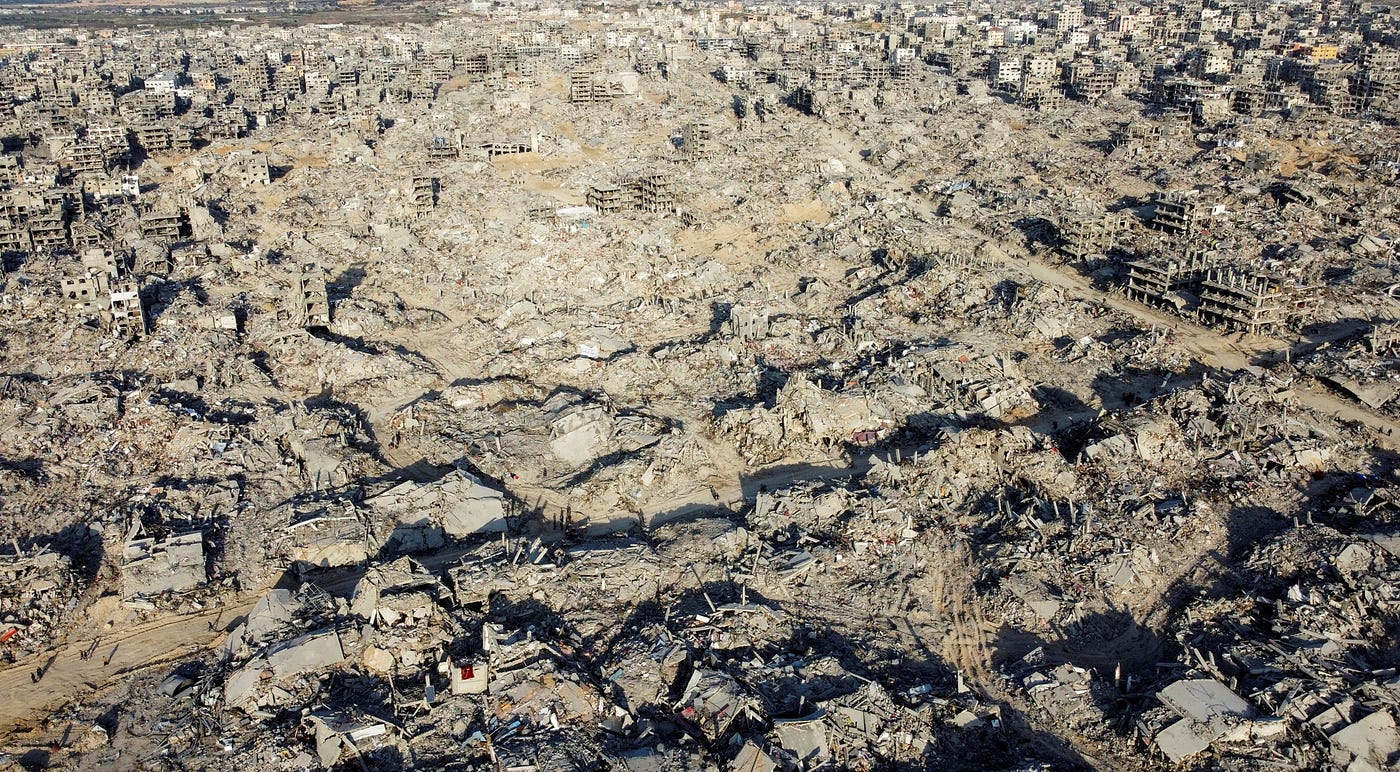
Reports this week speak of Israeli attacks in Gaza during Eid, including children amongst the dead, with widespread continuing violence reported despite the so-called “ceasefire”. For Palestinians to be killed on Eid al-Adha (‘Feast of the Sacrifice’) — a day when Muslim families should be praying, eating, visiting, giving, laughing, remembering Ibrahim’s trust in God — is a cruelty so obscene it almost defeats speech.
Almost… but that silence would be worse. Silence would be the second death.
For this to happen while a “ceasefire” is supposedly in effect is not merely hypocrisy; it is sacrilege against the very idea of peace. A ceasefire that still permits children to be killed is not peace; it is a pause in grammar, not in violence. It is a political fig-leaf placed over a wound that is still being widened.
Nor is Gaza an isolated wound.
In Lebanon, Reuters reported two successive Israeli strikes on Majdal Zoun which killed five people, including three rescuers who had gone to help those wounded in the first attack. Lebanese officials called it a war crime. Just weeks later, they reported six Lebanese paramedics killed in two Israeli strikes within 24 hours in what Sky News described as a “double-tap” strike. This in particular chills my blood, as an ambulance clinician…
So let us say plainly what that means: A bomb falls. The wounded cry out. Rescue workers come — the people whose vocation is to run towards the torn-open place — then the second strike comes. Not only the victim, but the neighbour. Not only the wound, but the hand reaching into it.
This is the murder of mercy. It is violence against compassion itself.
And then there are the Global Sumud Flotilla allegations: people kidnapped whilst trying to bring aid to Gaza, detained, reportedly beaten, humiliated, injured, and — according to organisers and survivor accounts — sexually assaulted, including allegations of rape.
If survivors of sexual violence are left taking 28 days of medication to prevent possible HIV infection; if women must take emergency contraception and wait in dread; if the body itself becomes the afterlife of custody, then the violence has not ended. It has merely changed address. It continues in blood tests, side effects, nightmares, missed periods, bruises, flashbacks, and the terrible administrative coldness of having to prove what was done to you.
Israel, of course, denies this; Reuters say they could not verify it independently. But denial is not investigation; is not transparency; is not justice.
If a state controls the soldiers, the cameras, the port, the transport, the custody site, and the records, then the burden of clarity lies heavily upon that state: Release the full recordings. Preserve the evidence. Let independent investigators do their work. Anything less reeks of the old imperial habit: conceal the cell, polish the podium. That is not security: it is state terror wearing paperwork as armour.
I write as a Christian. I write as someone formed by Franciscan faith, by the poor Christ, by the wounds of the Crucified, and by the insistence that God is found not in imperial banners but among the broken, the hungry, the displaced, and the frightened.
I write with anger. Not the theatrical anger of social media performance, but the old biblical anger of the prophets: anger that tastes of salt, dust, and grief; anger with tears in its beard.
Let me be utterly clear: I abhor antisemitism. I abhor it as a Christian, as a human being, and as someone who knows that Christian history is soaked in Jewish suffering. Every insult spat at Jewish neighbours, every synagogue threatened, every conspiracy theory dressed up as politics, every attempt to make Jewish people collectively answerable for the actions of the Israeli state — all of it is vile. It is sin. It is poison. It must be resisted.
But that moral clarity cannot be weaponised to silence horror at what Israel is doing to Palestinians.
Jewish safety does not require Palestinian dispossession. Jewish dignity does not require Gaza’s starvation. Jewish grief does not sanctify Palestinian graves. The memory of one people’s persecution must never become the machinery of another people’s oppression.
And when Itamar Ben-Gvir can celebrate death-penalty legislation with champagne — legislation widely criticised as applying in practice solely to Palestinians — we are no longer dealing with mere hardline policy: we are yet again staring into the grinning face of state-sanctioned systemic dehumanisation.
There is something spiritually diseased about raising a glass to death. It is Herod with a corkscrew; Pilate with confetti. No Christian can look at that and shrug.
No Franciscan can look at Gaza, Lebanon, or the Flotilla allegations, and talk first about “strategic necessity”. Francis did not kneel before the Sultan because he thought war was tidy. He crossed a battlefield because he believed the enemy still had a face. He believed that peace begins where propaganda fails: in the stubborn recognition of another human being as beloved of God.
So yes: anti-Zionism, understood as opposition to an ideology and state-system that privileges one people’s domination over another’s life, land, movement, dignity, and future, now seems not only reasonable but morally necessary.
Not hatred of Jews. Not denial of Jewish humanity. Not indifference to Israeli civilians killed or traumatised. Not ignorance of the horrors of the 7th of October for the terror they were. Rather, a refusal to accept that any nation-state has a divine licence to crush another people beneath its founding myth and call the result security.
If Zionism means Jewish flourishing alongside Palestinian flourishing, equal rights, mutual safety, shared land, and no supremacy, then let those who use the word prove it by dismantling apartheid, occupation, siege, and slaughter. But if Zionism in practice means that Palestinian children may be buried, Lebanese rescuers may be targeted, detainees may be abused, and politicians may toast the gallows, then Christians must say no. Muslims must say no. Jews of conscience must say no. Everyone with an unmutilated conscience must say no.
Eid al-Adha remembers sacrifice…

Gaza is being made into sacrifice. Lebanon’s medics are being made into sacrifice. Flotilla detainees — if these allegations are borne out — have had their bodies made into evidence of state cruelty. Not holy sacrifice, freely offered in love, but forced sacrifice: children, rescuers, prisoners, aid workers, and the displaced, all offered to the idols of nationalism, vengeance, militarism, racism, and cowardice. And Christians should recognise those idols: we have bowed before them often enough…
There must be a real ceasefire. There must be accountability. There must be an end to occupation, siege, and collective punishment. There must be independent investigation of the Flotilla abuse allegations. There must be protection for rescue workers. There must be freedom for Palestinians, safety for Jews, and truth spoken plainly enough that no minister can drown it out with champagne.
Until that day comes — and it will — let our prayer be angry enough to be honest:
God of Ibrahim, God of Hagar and Sarah, God of the child spared from the knife, look upon the children not spared from bombs. Look upon the rescuers killed while mercy was still in their hands. Look upon those whose bodies carry the aftershock of custody, assault, and fear. Break the weapons. Expose the lies. Shame the powerful. Comfort the bereaved. Strengthen the peacemakers. And do not let us become fluent in the language of acceptable murder. Amen.


Gyda heddwch, a phob bendith. Pax et bonum.
메타데이터
- post_id
- d3ecc6dd8d52
- slug
- the-murder-of-mercy-d3ecc6dd8d52
- url
- https://medium.com/@rhodriwilliams92/the-murder-of-mercy-d3ecc6dd8d52
- canonical_url
- https://medium.com/@rhodriwilliams92/the-murder-of-mercy-d3ecc6dd8d52
- author_url
- https://medium.com/@rhodriwilliams92
- status
- ok
- fetched_at
- 2026-07-27 12:02:22