Building a Modern Multi-Step Form with React JS
Building a Modern Multi-Step Form with React JS
Building a Modern Multi-Step Form with React JS
Building a Modern Multi-Step Form with React JS
Multi-step forms have become an essential component of modern web applications, providing users with a more digestible and less overwhelming experience when dealing with complex data collection. Whether you’re building a user registration flow, a checkout process, or a comprehensive survey, breaking down lengthy forms into manageable steps can significantly improve user engagement and completion rates.
Why Multi-Step Forms Matter
In today’s fast-paced digital world, user attention spans are shorter than ever. When faced with a long, intimidating form, users often abandon the process before completion. Multi-step forms address this challenge by presenting information in bite-sized chunks, making the overall experience feel less daunting and more achievable.
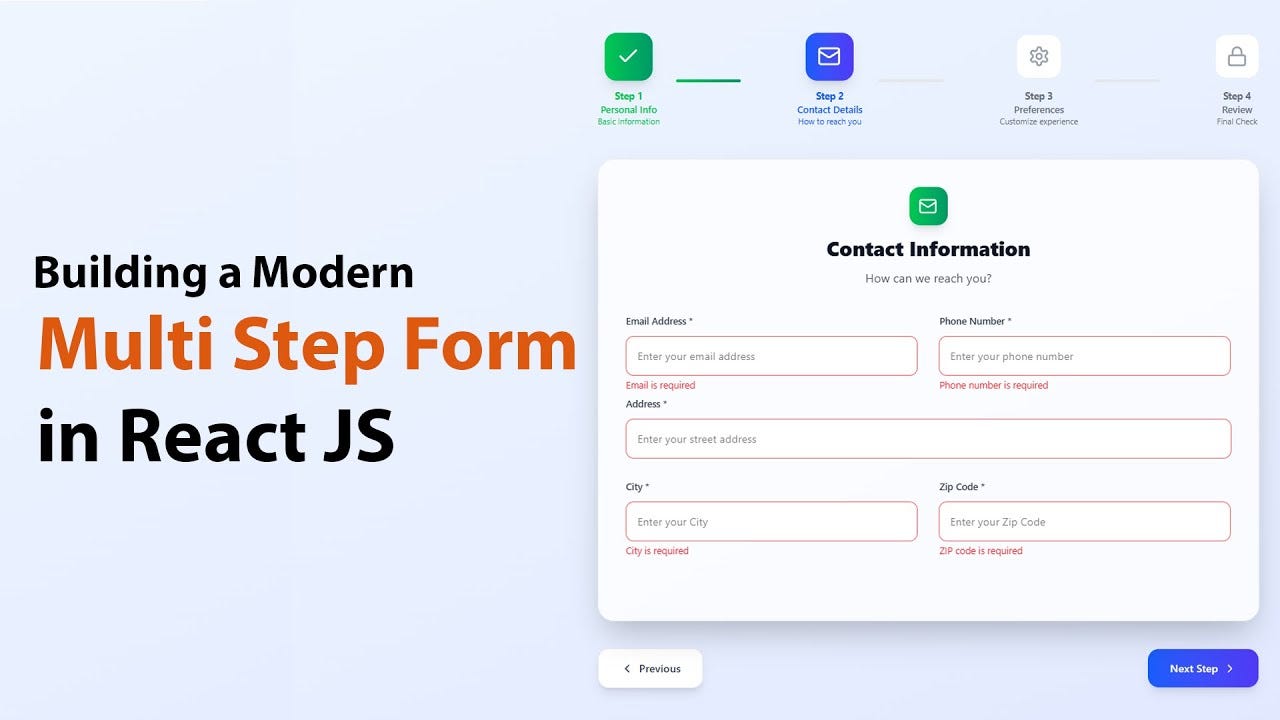
The psychological impact of progress indicators cannot be understated. When users can see they’re making tangible progress through a series of steps, they’re more likely to continue until completion. This approach also allows for better data validation at each stage, preventing users from discovering errors only after filling out an entire lengthy form.
The Power of React for Form Management
React’s component-based architecture makes it an ideal choice for building multi-step forms. The framework’s state management capabilities allow developers to maintain form data across different steps while keeping the user interface responsive and interactive. React’s declarative nature also makes it easier to handle complex form logic, validation, and user interactions.
The virtual DOM ensures smooth transitions between form steps, while React’s ecosystem provides numerous libraries and tools specifically designed for form handling. This combination of built-in capabilities and community support makes React an excellent foundation for creating sophisticated multi-step form experiences.
Planning Your Multi-Step Form Architecture
Before diving into development, it’s crucial to plan the structure and flow of your multi-step form. Consider the logical grouping of related fields and the natural progression a user would expect when providing information. Each step should have a clear purpose and contain fields that relate to a specific aspect of the data collection process.
Think about the user journey from start to finish. What information do you need to collect first? Which fields are dependent on previous answers? How will you handle validation and error states? These considerations will inform your component structure and state management strategy.
Essential Features to Include
A well-designed multi-step form should include several key features to ensure a smooth user experience. Progress indicators are fundamental, showing users exactly where they are in the process and how much remains. Navigation between steps should be intuitive, allowing users to move forward and backward as needed.
Validation plays a critical role in multi-step forms. Rather than waiting until the final submission, implement step-by-step validation to catch and correct errors early in the process. This approach prevents frustration and reduces the likelihood of users abandoning the form due to unexpected validation failures at the end.
Data persistence is another crucial consideration. Users should be able to navigate between steps without losing their previously entered information. This requires careful state management and potentially local storage implementation to handle page refreshes or accidental navigation away from the form.
Designing for User Experience
The visual design of your multi-step form significantly impacts user engagement and completion rates. Clean, uncluttered layouts with plenty of white space help users focus on the current step without feeling overwhelmed. Consistent styling across all steps creates a cohesive experience that builds user confidence.
Consider the use of animations and transitions between steps. Subtle animations can make the form feel more polished and provide visual feedback that helps users understand the progression through the process. However, avoid overly complex animations that might slow down the form or distract from the primary task.
Responsive design is non-negotiable in today’s mobile-first world. Your multi-step form should work seamlessly across all device sizes, with touch-friendly controls and appropriately sized form fields for mobile users.
Handling Complex Validation Logic
Multi-step forms often involve complex validation requirements that go beyond simple field-level checks. Cross-step validation, where information from one step affects the validation of another, requires careful planning and implementation. Conditional fields based on previous answers add another layer of complexity that needs to be managed effectively.
Real-time validation feedback enhances the user experience by providing immediate confirmation that entered data is correct. This approach builds user confidence and reduces the cognitive load associated with remembering validation requirements across multiple steps.
State Management Strategies
Effective state management is the backbone of any successful multi-step form implementation. You’ll need to decide how to store and update form data as users progress through the steps. React’s built-in state management might be sufficient for simpler forms, while more complex implementations might benefit from state management libraries.
Consider how you’ll handle data persistence across browser sessions. Local storage can provide a safety net for users who accidentally close their browser or navigate away from the form, allowing them to resume where they left off.
Performance Considerations
As multi-step forms can become complex, performance optimization becomes increasingly important. Lazy loading of form steps can improve initial page load times, especially for forms with many steps or complex validation logic. Efficient re-rendering strategies ensure that the form remains responsive as users interact with various elements.
Consider the impact of large forms on mobile devices with limited processing power and slower internet connections. Optimizing for these constraints ensures that your form provides a good experience for all users, regardless of their device or connection speed.
Accessibility and Inclusivity
Building accessible multi-step forms ensures that all users, including those using assistive technologies, can successfully complete your form. Proper labeling, keyboard navigation support, and screen reader compatibility are essential considerations throughout the development process.
Focus management between steps helps users with visual impairments understand when they’ve progressed to a new section. Clear error messaging and validation feedback ensure that all users can understand and correct any issues with their input.
Testing and Optimization
Thorough testing is crucial for multi-step forms due to their complexity and the various paths users might take through the process. User testing can reveal pain points and areas for improvement that might not be apparent during development. A/B testing different approaches to step organization, validation timing, and visual design can provide valuable insights into what works best for your specific use case.
Monitor form completion rates and identify steps where users commonly abandon the process. This data can inform optimizations and help you refine the user experience over time.
[embed]
Conclusion
Building a modern multi-step form with React JS requires careful planning, thoughtful design, and attention to user experience details. The investment in creating a well-structured, user-friendly multi-step form pays dividends in improved completion rates, better data quality, and enhanced user satisfaction.
The key to success lies in balancing functionality with simplicity, ensuring that the technical complexity remains hidden while presenting users with an intuitive and engaging experience. With React’s powerful capabilities and the right approach to design and implementation, you can create multi-step forms that not only collect the data you need but also provide a pleasant experience that users appreciate.
Remember that great multi-step forms are the result of iterative improvement based on user feedback and real-world usage data. Start with a solid foundation, then continuously refine and optimize based on how users actually interact with your form in practice.
메타데이터
- post_id
- d3f830ef34e5
- slug
- building-a-modern-multi-step-form-with-react-js-d3f830ef34e5
- url
- https://medium.com/@arhaanali/building-a-modern-multi-step-form-with-react-js-d3f830ef34e5
- canonical_url
- https://medium.com/@arhaanali/building-a-modern-multi-step-form-with-react-js-d3f830ef34e5
- author_url
- https://medium.com/@arhaanali
- status
- ok
- fetched_at
- 2026-07-24 16:06:45