Serpents go rogue
This is review of a favourite childhood natural history book is a few years old now, and used to be posted on the Caught By The River blog…
Serpents go rogue
This review of a favourite childhood natural history book is a few years old now, and used to be posted on the *Caught By The River *blog but appears to have been taken down now. I present it here for your edification and enlightenment …
A Hunter’s Story by C J P Ionides: an appreciation
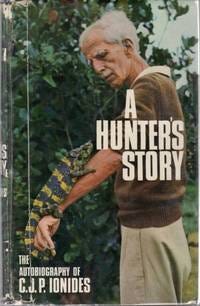
The very edition I bought as a teenager.
You can’t pick your influences too wisely as a teenager and with restricted spending money and a wide-ranging literature jones to take care of, charity shops became my department stores. And a yellowing cover photograph of a well-worn Hellenic face looking down at a large chameleon perched on a leathery forearm virtually forced one book directly into my schoolbag.

Self-taught snake-handler Ionides in his natural habitat.
Already the subject of two biographies when he decided to set the story straight, C J P “Snake Man” Ionides was one of those late colonial enigmas that are always a somewhat vicarious thrill to read about. The prep-schooled offspring of a family of merchants and doctors from Hove, East Sussex, he had the sense of entitlement one finds enthralling in historical characters, but naturally infuriating in the modern upper middle class. An “awkward young swine”, he moved to a Kenya which had parallels to the American ‘wild west’. For example, in Dar es Salaam, a character called ‘Dynamite Dan’ attempts to blow up a bar and Ionides recounts that “you could walk into your bank with a pair of elephant tusks and lodge them into your account as you would a cheque”.

Books about Ionides kept on coming in the 1950s and 1960s.
He kills his first rogue elephant in India while serving in the army, becomes an ivory poacher in the Congo river basin, then has a Pauline conversion to conservation in 1933 and becomes a game warden. He assuages his more atavistic instincts by hunting man-eating lions and child-killing leopards. This is the meat of the book: “One man-eater, on finding a man lying drunk outside a hut, merely nipped a chunk out of his behind, rather as you might take a passing bite from an apple and leave the rest”. His native game scouts are effectively armed policeman but brutally flogged if they transgress, behaviour which was becoming problematic even at the time. Emphasising an eternal colonial dichotomy, he then extends his heartfelt respect for their tracking skills.
He continues to hypocritically hunt rare antelope species as trophies away from his entrusted reserves and spends the war trying to recapture the retreating Italian army’s rifles from errant Somalians, already lawless and ungovernable.
Ionides gained fame in Britain in the 1950s and 1960s by reports of him teaching himself snake-handling from scratch. And even serpents go rogue: we hear of single ten-foot Black Mambas chasing goats and killing 11 people. He ends up becoming a full-time snake-catcher, providing specimens for museums and antivenin for hospitals, and still has a formidable and respected reputation today as a self-taught herpetologist.
This is the ultimate boy’s own tale: he never married, saying: “My expeditions would be shopping ones … The very thought fills me with horror”. He forfeits wife, security and culture for his love of wildlife, but it’s a tough love to say the least.
However, for a teenager like myself about to enter the dole-drums, this tale of unflagging commitment to nebulous ambitions presented some level of escapism from pragmatic reality and — to an extent — a psychological example to follow, if not a reasonable or practical one.
But we don’t all have Ionides’ advantages and discipline. As the man himself says: “You can’t have jam on it.”

Also recommended:
The Wilderness Home of the Giant Panda by William G Sheldon

Avian Survivors: the History and Biogeography of Palearctic Birds by Clive Finlayson

메타데이터
- post_id
- d4005bda188f
- slug
- serpents-go-rogue-d4005bda188f
- url
- https://medium.com/@davidcallahan/serpents-go-rogue-d4005bda188f
- canonical_url
- https://medium.com/@davidcallahan/serpents-go-rogue-d4005bda188f
- author_url
- https://medium.com/@davidcallahan
- status
- ok
- fetched_at
- 2026-07-29 19:51:06