What Happens When Global AI Vendors Face Two Legal Realities
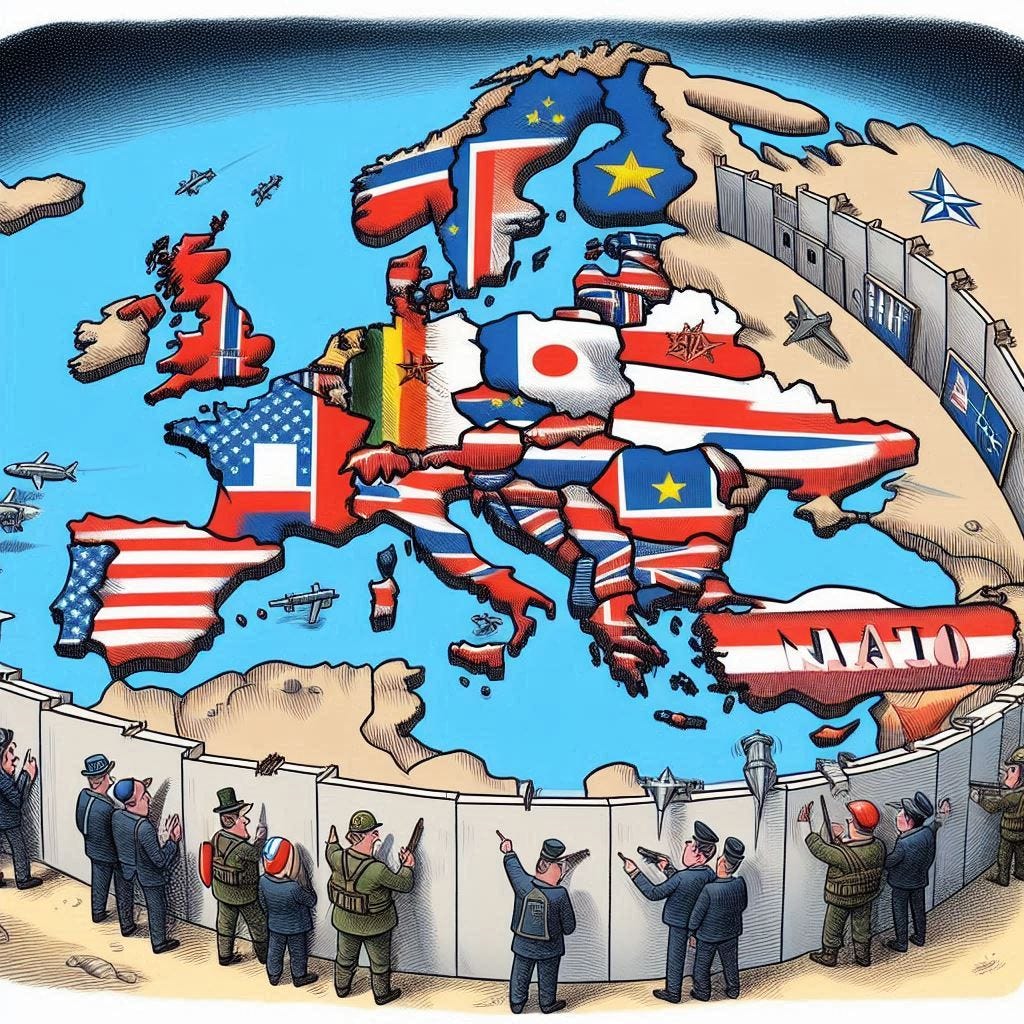
Regulatory guardrails in Europe. Litigation volatility in the United States. One product, two exposure models
What Happens When Global AI Vendors Face Two Legal Realities
Regulatory guardrails in Europe. Litigation volatility in the United States. One product, two exposure models

This article was originally published on Substack.
The debate over AI governance is no longer confined to Washington or Brussels. This past week, it made global headlines again — specifically, the contretemps between the U.S. government and the two leading American AI companies, OpenAI and Anthropic, over how the technology can be used, what limits can be imposed on it, and whether it is firms or the federal government who can determine how this technology can be used.
That fight matters beyond its immediate context. Global AI vendors now operate in a divided legal environment — and the division is structural, not temporary.
In the European Union, the regulatory architecture is explicit. The EU AI Act formalizes risk categories, documentation duties, human oversight obligations, conformity assessments, and supervisory fines. In the United States, no comprehensive federal AI framework exists. Instead, risk has surfaced through consumer protection enforcement, civil rights litigation, state attorney general investigations, class action exposure, and sector-specific oversight.
At first glance, this looks like asymmetry. Europe regulates. America innovates. In practice, global vendors face something more complex: one product, two accountability models — and exposure in both.
Europe: Structured Accountability Before Harm Materializes
The European model is built around ex-ante responsibility. Systems are classified before deployment. Roles are defined. Providers and deployers are distinguished. Documentation is required. Oversight must be demonstrable — not merely asserted.
This architecture mirrors what happened with GDPR. Initially framed as a compliance burden, GDPR ultimately reshaped global privacy practice. Vendors who adapted early built defensible governance models. Those who treated it as a regional inconvenience faced enforcement shocks later.
The EU AI Act operates the same way. Guardrails create predictability — but they also create evidence. Classification decisions become part of the record. Oversight mechanisms become reviewable. Risk acceptance becomes attributable.
In Europe, accountability is formalized before the dispute begins.
The United States: No Unified Framework, Significant Downstream Risk
In the United States, exposure develops differently — and often more unpredictably.
Without a harmonized federal AI statute, liability crystallizes through FTC enforcement under unfair or deceptive practices standards, civil rights statutes, negligence and product liability theories, state-level regulatory initiatives, and private litigation. The absence of a unified framework does not reduce risk. It redistributes it.
Legal standards here are often clarified after disputes arise. The inquiry is not whether a system was properly categorized at deployment. It is whether outcomes were lawful. That distinction creates volatility: no single regulator, no harmonized classification standard, but significant downstream liability potential — and no advance warning of where it will land.
The Provider–Deployer Boundary Is Under Strain
Under the EU AI Act, the distinction between provider and deployer is conceptually clean. Providers design and develop systems. Deployers integrate and operationalize them. In practice, the boundary is porous — and that porousness is becoming legally significant.
Vendors supply default configurations, pre-set thresholds, model architectures, update cadences, monitoring dashboards, and documentation frameworks. Deployers embed those choices into operational systems. When AI becomes deeply embedded, courts may not treat providers as neutral toolmakers. They may treat them as co-architects of outcomes — particularly where default settings materially influence downstream decisions.
This is already surfacing in high-stakes procurement contexts. The recent competition among frontier model providers for U.S. defense contracts — including the ongoing fight at the Pentagon over AI use in surveillance and weapons systems — illustrates how embedded AI infrastructure is becoming in sovereign operations. At that level of integration, the provider–deployer distinction becomes both politically and legally charged. Even without specific regulation, accountability questions follow. Embedded systems do not remain invisible.
GDPR as Precedent: What Comes After Regulatory Absence
GDPR offers a cautionary comparison for the current U.S. landscape.
Initially, many U.S.-based firms assumed limited extraterritorial impact. Over time, enforcement actions, fines, and cross-border data transfer disputes forced structural redesigns across entire product lines. Companies that treated GDPR as a documentation exercise struggled. Those who integrated privacy into architecture proved more resilient.
AI governance will likely follow the same trajectory. The absence of U.S. federal AI regulation does not mean absence of global exposure. Multinational vendors will default to the stricter regime — because systems deployed globally cannot be cleanly segmented by jurisdiction. The risk is not regulatory burden alone. It is regulatory misalignment: building to one standard, then discovering that a different standard applies where your product operates.
Does Less Regulation Actually Create Competitive Advantage?
This is the question the industry keeps asking. Some argue that the U.S. environment — lacking a comprehensive AI statute — creates an innovation edge. Fewer ex-ante constraints can accelerate deployment.
In the short term, that may be true.
But there is a counterargument that the optimists underweight. Regulatory absence may actually increase litigation unpredictability, reputational volatility, contractual risk-shifting, insurance costs, and post-hoc redesign expenses. Ex-ante guardrails create cost. Ex-post litigation creates instability. And consumer boycotts do not wait for regulatory clarity.
For global vendors, predictability can be a competitive advantage in itself. Firms that can demonstrate traceable oversight, clear provider-deployer boundaries, version control transparency, update accountability, and risk allocation clarity will likely be better positioned across both systems — not just the more permissive one.
The real competitive differentiator may not be lack of regulation. It may be governance maturity.
Guardrails and Vacuums Converge
Regulatory guardrails in Europe and regulatory fragmentation in the United States do not cancel each other out. They converge — and global vendors are caught in the middle.
A system compliant under the EU AI Act may still face U.S. litigation. A system deployed rapidly in the U.S. may later encounter European supervisory scrutiny. Neither scenario is hypothetical. Both are already in motion.
Global AI vendors cannot treat these regimes as isolated silos. They operate in a blended exposure landscape where classification becomes litigation evidence, defaults become normative commitments, documentation shapes liability boundaries, and embedded influence blurs contractual risk allocation.
The question is not whether a product complies in one jurisdiction. It is whether its governance architecture can withstand scrutiny in both.
I focus on AI governance and institutional accountability — particularly where provider design and deployer authorization intersect under regulatory scrutiny.
메타데이터
- post_id
- d406418fb8a7
- slug
- what-happens-when-global-ai-vendors-face-two-legal-realities-d406418fb8a7
- url
- https://medium.com/x-patriot-the-fifth-column/what-happens-when-global-ai-vendors-face-two-legal-realities-d406418fb8a7
- canonical_url
- https://medium.com/x-patriot-the-fifth-column/what-happens-when-global-ai-vendors-face-two-legal-realities-d406418fb8a7
- author_url
- https://medium.com/@margueritearnold
- status
- ok
- fetched_at
- 2026-08-31 10:24:55