U.S. Transcontinental Railroad Completed
Central Pacific and Union Pacific Railroads joined in Utah
DAY IN HISTORY-MAY 10, 1869
U.S. Transcontinental Railroad Completed
Central Pacific and Union Pacific Railroads joined in Utah
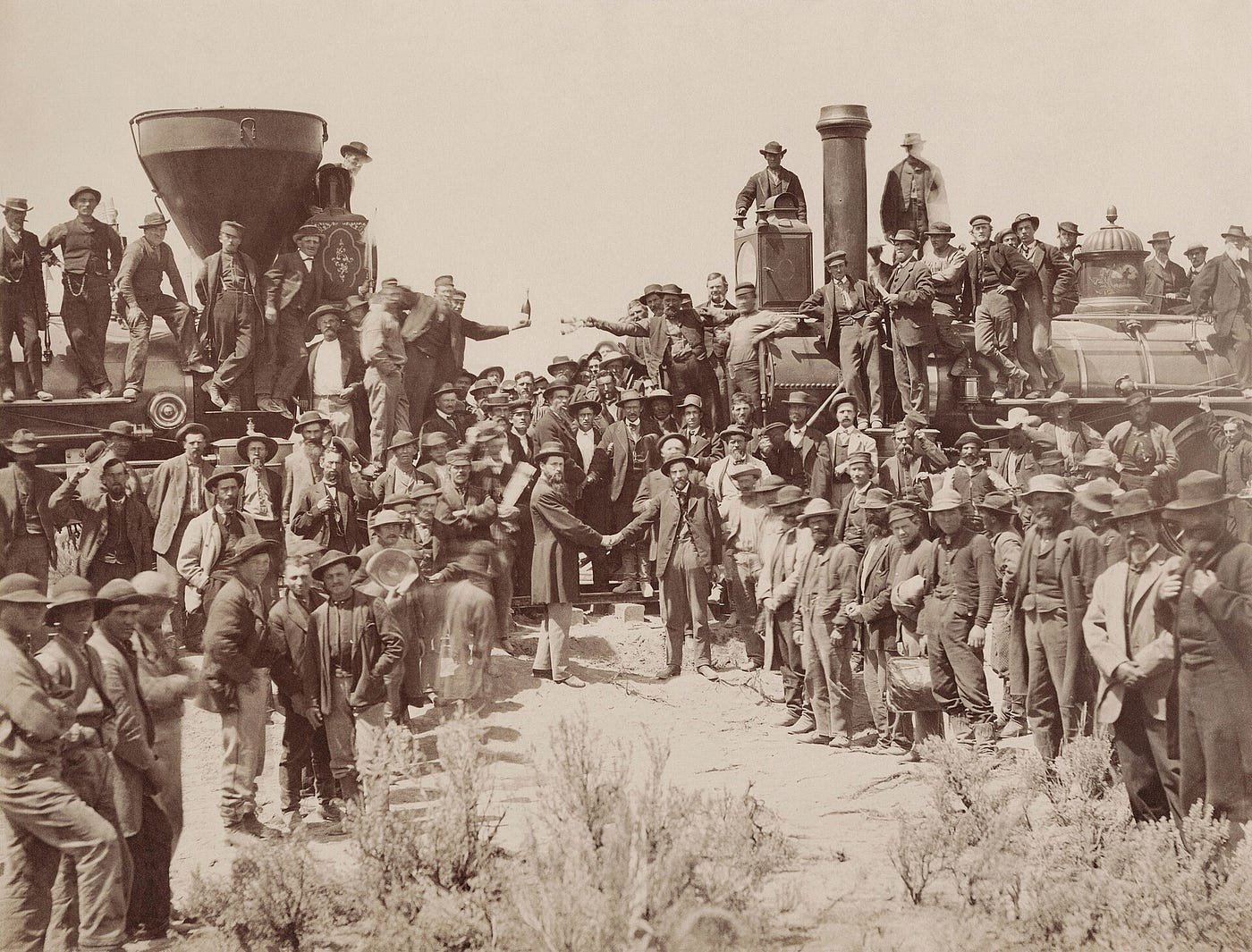
Andrew J. Russell / Adam Cuerden — Yale University Libraries, Public Domain, via Wikimedia Commons
The United States was a country heavily dependent on railroads for interstate travel in the 1860s. But to reach the West Coast from the East or Midwest, travelers had to endure long and dangerous trips via stagecoach or wagon train.
This was about to change when Congress passed the Pacific Railroad Act in 1862, during the Civil War. Loans and public land grants were guaranteed to the Central Pacific Railroad and the Union Pacific Railroad to build a transcontinental line, with work beginning in 1866. Three years later, on May 10, 1869, the first transcontinental railroad was officially opened when Leland Stanford, the president of Central Pacific Railroad, drove the last spike, made from gold and known as the “Golden Spike,” into the ground at Promontory Summit, Utah.
The “Overland Route” connected the existing railroad network in the eastern U.S. to the Pacific. Central Pacific Railroad built eastward from Sacramento, California to Promontory Summit, Utah (690 miles) and Union Pacific Railroad built westward from Omaha, Nebraska to Promontory Summit (1,085 miles). The Western Pacific Railroad added 132 miles of track from Oakland, California to Sacramento in the next six months to complete the last leg of the line.
The first transcontinental railroad in the U.S. had a dramatic impact on the country. Both freight and passengers were now able to cross the land from East to West in just days by rail instead of months by stagecoach or wagon train. The transportation cost also dropped significantly — by as much as 90 percent. As a result, more people headed West and economic development of the western part of the country accelerated.
Still, the construction of the railroad came with a human cost, as indicated on History.com:
Harsh winters, staggering summer heat and the lawless, rough-and-tumble conditions of newly settled western towns made conditions for the Union Pacific laborers — mainly Civil War veterans of Irish descent — miserable. The overwhelmingly immigrant Chinese work force of the Central Pacific also had its fair share of problems, including brutal 12-hour work days laying tracks over the Sierra Nevada Mountains (they also received lower wages than their white counterparts). On more than one occasion, whole crews would be lost to avalanches, or mishaps with explosives would leave several dead.
While railroads remain part of the country’s transportation system today, their importance has diminished due to reliance on passenger travel and moving freight by road and by air. Unlike Canada and nations in Europe and Asia, the United States has failed to adequately maintain and expand its national rail service, so railroads are not seen as a convenient, fast transportation method.
Today, two major projects in the U.S. highlight the country’s high-speed rail challenges:
- Brightline West is a high-speed railway running for 218 miles between Las Vegas and Southern California. It has had several different developers and investors delaying its progress but is expected to begin service in late 2029.
- The California High-Speed Rail project is a two-phase publicly funded project designed to first connect Los Angeles and San Francisco and then extend the line south to San Diego and north to Sacramento. Construction began in 2015, but phase 1 is seriously behind schedule and over budget by billions of dollars. The project has been highly controversial because of delays and cost overruns.
Read more of my Day in History stories here.
[embed]Day in History-Guidlines Please read the guidelines and submit!aslynn-roe.medium.com
[embed]New Writers Welcome Day in History is a new publication on Medium!medium.com
메타데이터
- post_id
- d45443f972de
- slug
- u-s-transcontinental-railroad-completed-d45443f972de
- url
- https://medium.com/day-in-history/u-s-transcontinental-railroad-completed-d45443f972de
- canonical_url
- https://medium.com/day-in-history/u-s-transcontinental-railroad-completed-d45443f972de
- author_url
- https://medium.com/@barrydsilverstein
- status
- ok
- fetched_at
- 2026-06-09 15:37:30