Everything You Need to Know About Form 990 Schedule N
Schedule N protects the integrity of the charitable sector. When nonprofits dissolve or transfer substantial assets, those resources must…
Everything You Need to Know About Form 990 Schedule N
Schedule N protects the integrity of the charitable sector. When nonprofits dissolve or transfer substantial assets, those resources must continue serving exempt purposes
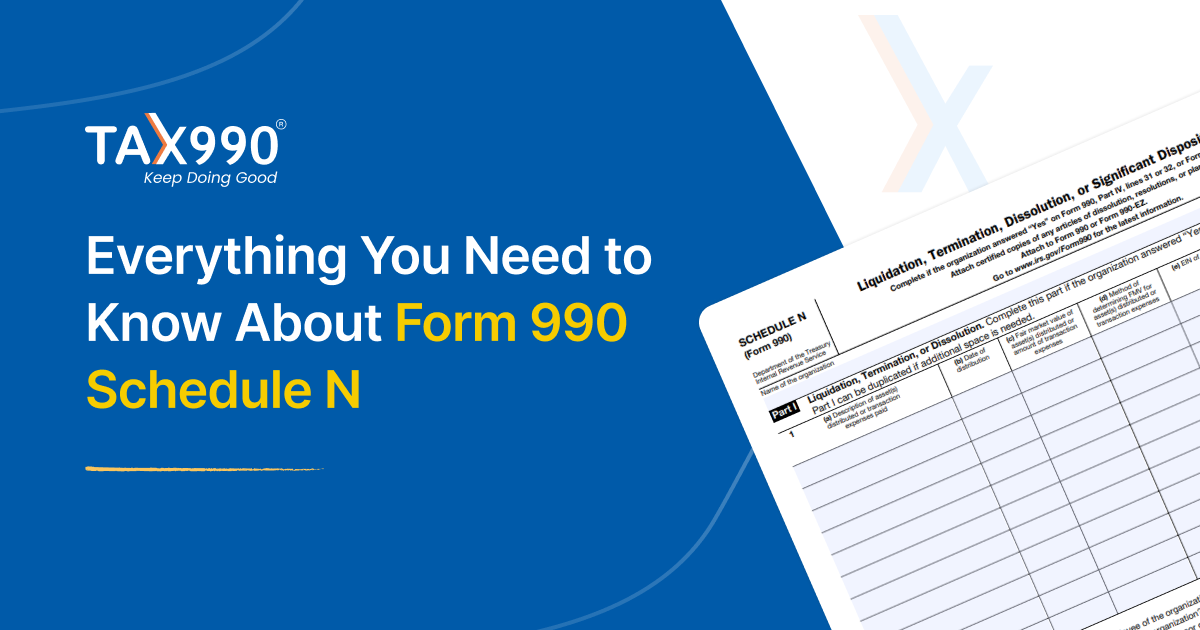
When a nonprofit organization undergoes a major structural change, such as liquidation, dissolution, termination, or a significant disposition of assets, the IRS requires additional disclosure. That disclosure is made through Form 990 Schedule N.
Although not every organization will need to complete this schedule, those that do must provide detailed information about what happened, how assets were distributed, and whether the organization complied with federal requirements. Understanding Schedule N is critical for nonprofits navigating significant transitions.
What is Form 990 Schedule N?
Form 990 Schedule N, titled “Liquidation, Termination, Dissolution, or Significant Disposition of Assets”, is a supplemental schedule filed with Form 990 or Form 990-EZ.
Its purpose is to ensure transparency when a nonprofit winds down operations, legally dissolves, merges or transfers substantial assets, or disposes of a significant portion of its resources. The IRS uses this schedule to confirm that charitable assets were properly distributed in accordance with tax-exempt rules.
When is Schedule N required?
An organization must file Schedule N if it answers “Yes” to certain questions in Form 990, Part IV, indicating that during the tax year it:
- Liquidated, terminated, or dissolved
- Underwent a substantial contraction
- Disposed of more than 25% of its net assets
- Distributed assets to one or more related or unrelated organizations as part of a wind-down
Even if the organization continues operating after a major asset transfer, Schedule N may still be required if the disposition meets the reporting threshold.
Organizations filing Form 990-N (e-Postcard) do not complete Schedule N, but entities filing 990 or 990-EZ must attach when applicable.
What is considered a significant disposition of assets?
A significant disposition general occurs when an organization transfers a substantial portion of its assets, typically more than 25% of its net assets, to another entity during the tax year.
This may happen in situations such as:
- A merger with another nonprofit
- A spin-off of a program into a separate organization
- The sale of a major program or division
- A large grant distribution as part of winding down operations
The IRS observes these transactions closely to ensure charitable assets remain dedicated to exempt purposes.
What information does Schedule N require?
Schedule N is divided into separate parts depending on the type of event that occurred. If an organization has liquidated, terminated, or dissolved, it must report:
- A description of the transaction
- The date of the event
- Whether state notification requirements were met
- Whether the organization distributed all net assets in accordance with its governing documents
The organization must also list receipts of distributed assets, including the recipient’s name, EIN (if applicable), and the amount distributed.
If the organization experienced a significant disposition of assets, it must disclose:
- A detailed description of the assets transferred
- The fair market value of those assets
- The identity of the recipient organization(s)
- Any relationship between the transferring and receiving entities
This section ensures that asset transfers are transparent and consistent with charitable purpose requirements.
Common mistakes to avoid
Organizations navigating major transitions often focus heavily on legal and operational logistics, sometimes overlooking tax reporting requirements. Common errors include failing to report all asset recipients, underreporting fair market value, or neglecting to attach Schedule N when required.
Another frequent issue is the inconsistency between state dissolution filings and federal reporting. Information provided to the IRS should align with governing documents and state submissions.
Why Schedule N matters
Schedule N protects the integrity of the charitable sector. When nonprofits dissolve or transfer substantial assets, those resources must continue serving exempt purposes. The schedule ensures that charitable assets are not diverted for private benefit and that distributions are properly documented.
Although many organizations may never need to file Schedule N, those undergoing structural change should approach it with care. Accurate, transparent reporting not only satisfies IRS requirements but also reinforces accountability to donors, regulators, and the public.
By understanding Schedule N and planning ahead, nonprofits can navigate transitions confidently while maintaining full compliance with federal tax law.
메타데이터
- post_id
- d45db8314a8a
- slug
- everything-you-need-to-know-about-form-990-schedule-n-d45db8314a8a
- url
- https://medium.com/nonprofits-tax-filing/everything-you-need-to-know-about-form-990-schedule-n-d45db8314a8a
- canonical_url
- https://medium.com/nonprofits-tax-filing/everything-you-need-to-know-about-form-990-schedule-n-d45db8314a8a
- author_url
- https://medium.com/@Tax990
- status
- ok
- fetched_at
- 2026-06-14 17:09:17