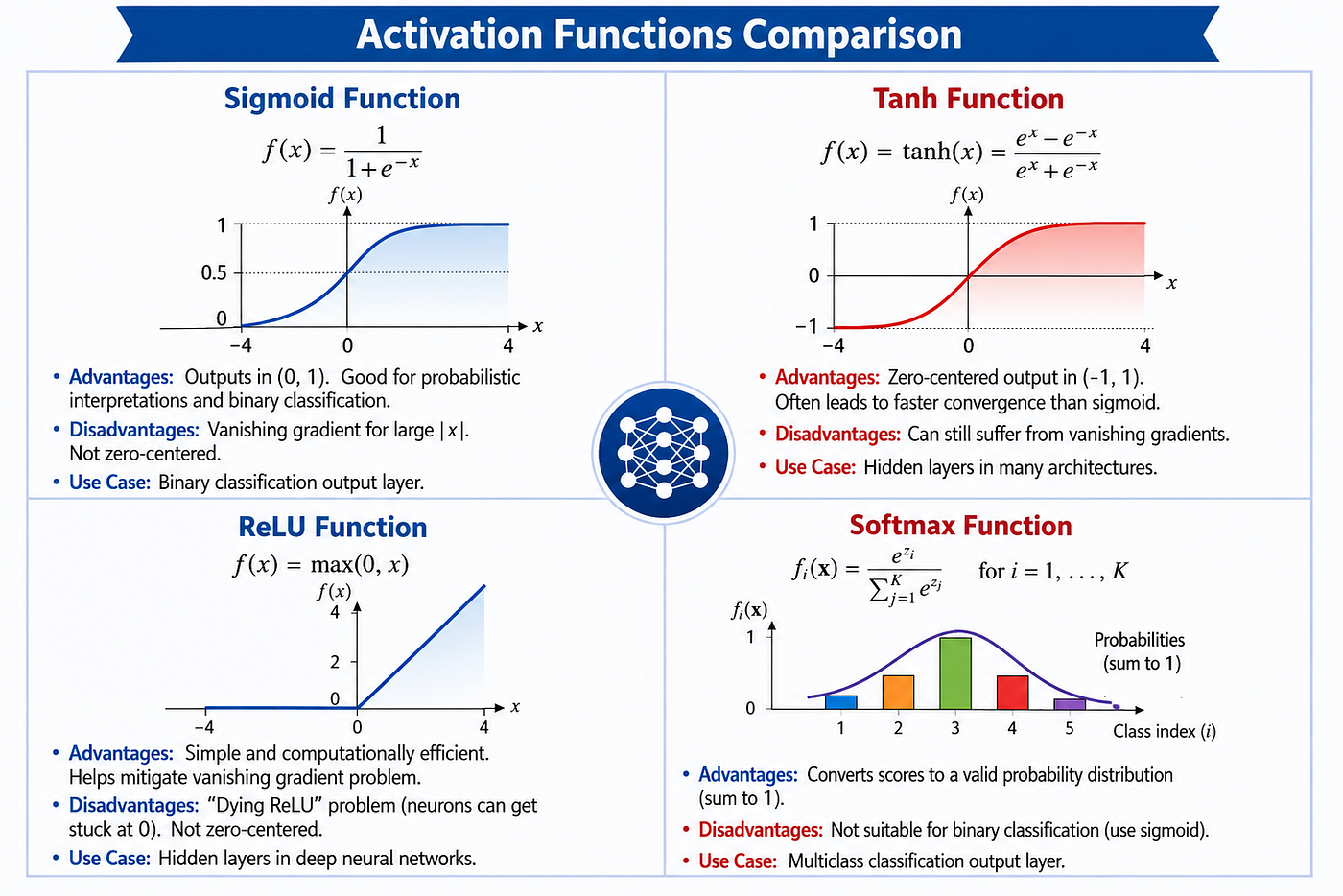
Introduction to Deep Learning and Neural Networks
Understanding the Biological Neuron: The Building Block of Human Intelligence
Introduction to Deep Learning and Neural Networks
Understanding the Biological Neuron: The Building Block of Human Intelligence
The journey of Deep Learning begins with the human brain. Our brain is made up of billions of neurons, each acting as a tiny processor.
Structure of a Neuron
Dendrites → Receive signals from other neurons.
Cell Body (Soma) → Processes signals and decides whether to pass them on.
Axon → Transmits signals to other neurons.
Signal Transmission
When the input signal is strong enough, the neuron “fires,” sending an electrical impulse down the axon. This communication is the foundation of thought, memory, and learning.
Learning in the Brain
Learning happens through synaptic plasticity — connections between neurons strengthen or weaken based on experience. This adaptability is what makes human intelligence possible.
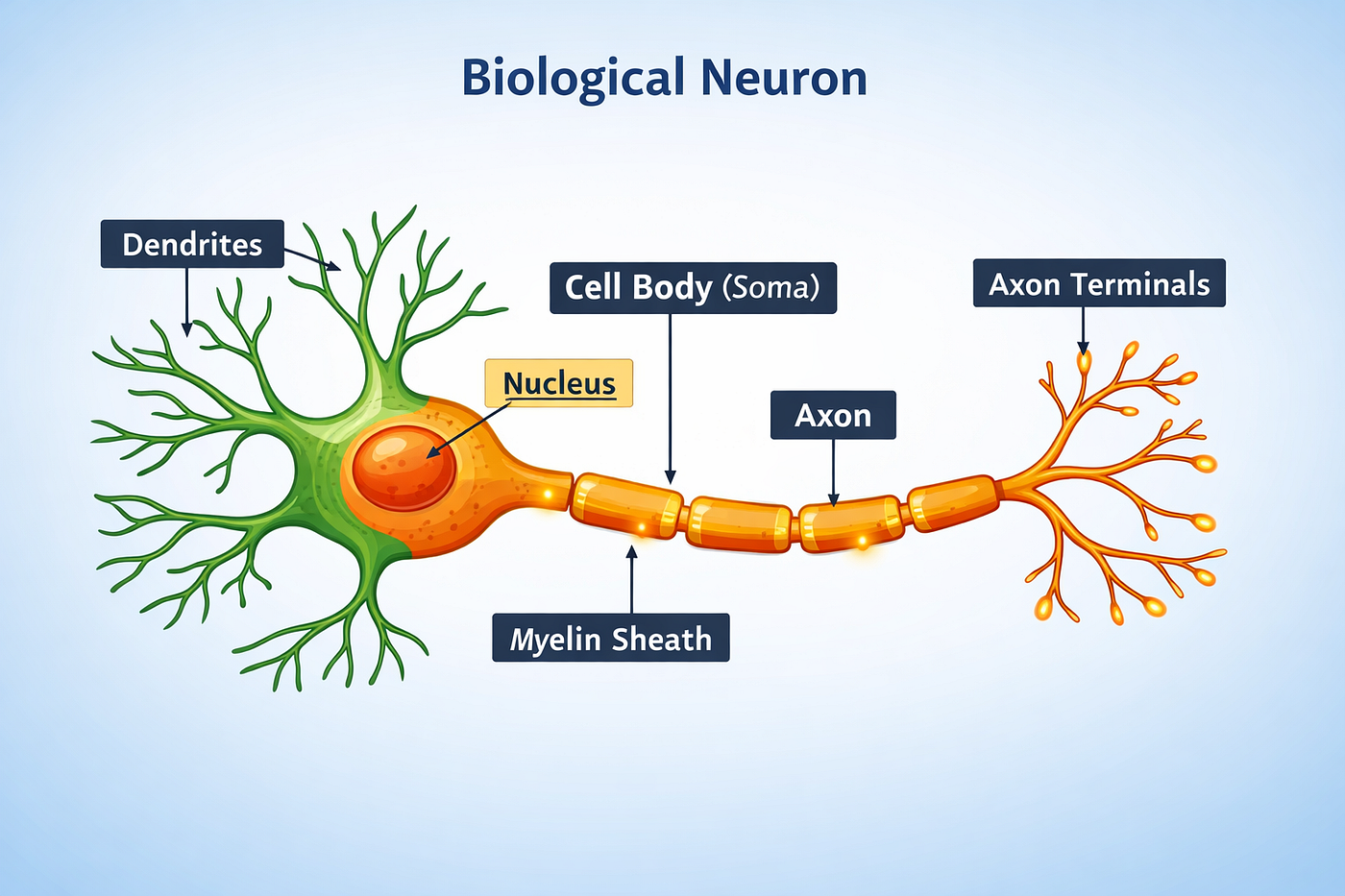
Structure of a Biological Neuron
From Brain to Machine: Analogy Between Biological and Artificial Neurons
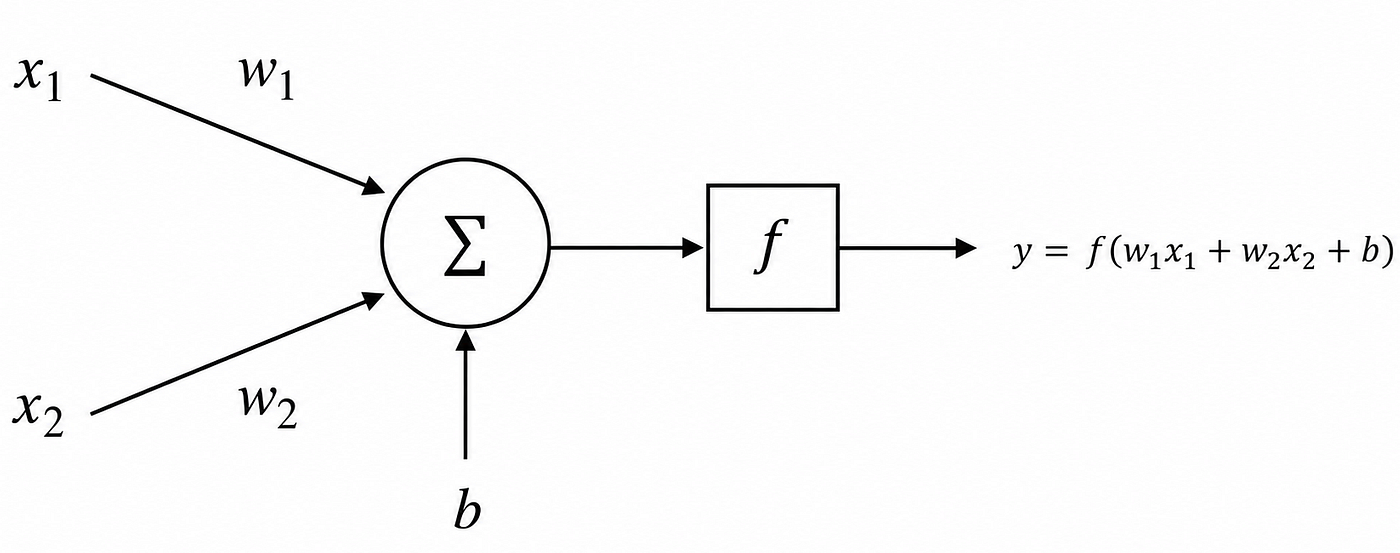
Artificial neurons attempt to mimic the way biological neurons process information. Instead of dendrites receiving signals, ANNs take in input features. Each input is assigned a weight, similar to how synaptic strength determines the importance of a signal in the brain. These weighted inputs are then combined into a summation function, and passed through an activation function that decides whether the artificial neuron “fires” or not.
This design allows ANNs to learn patterns, adapt to data, and make decisions — just as the brain learns from experience. By stacking many artificial neurons together, we create layers of computation that can capture increasingly complex relationships, forming the foundation of Deep Learning.
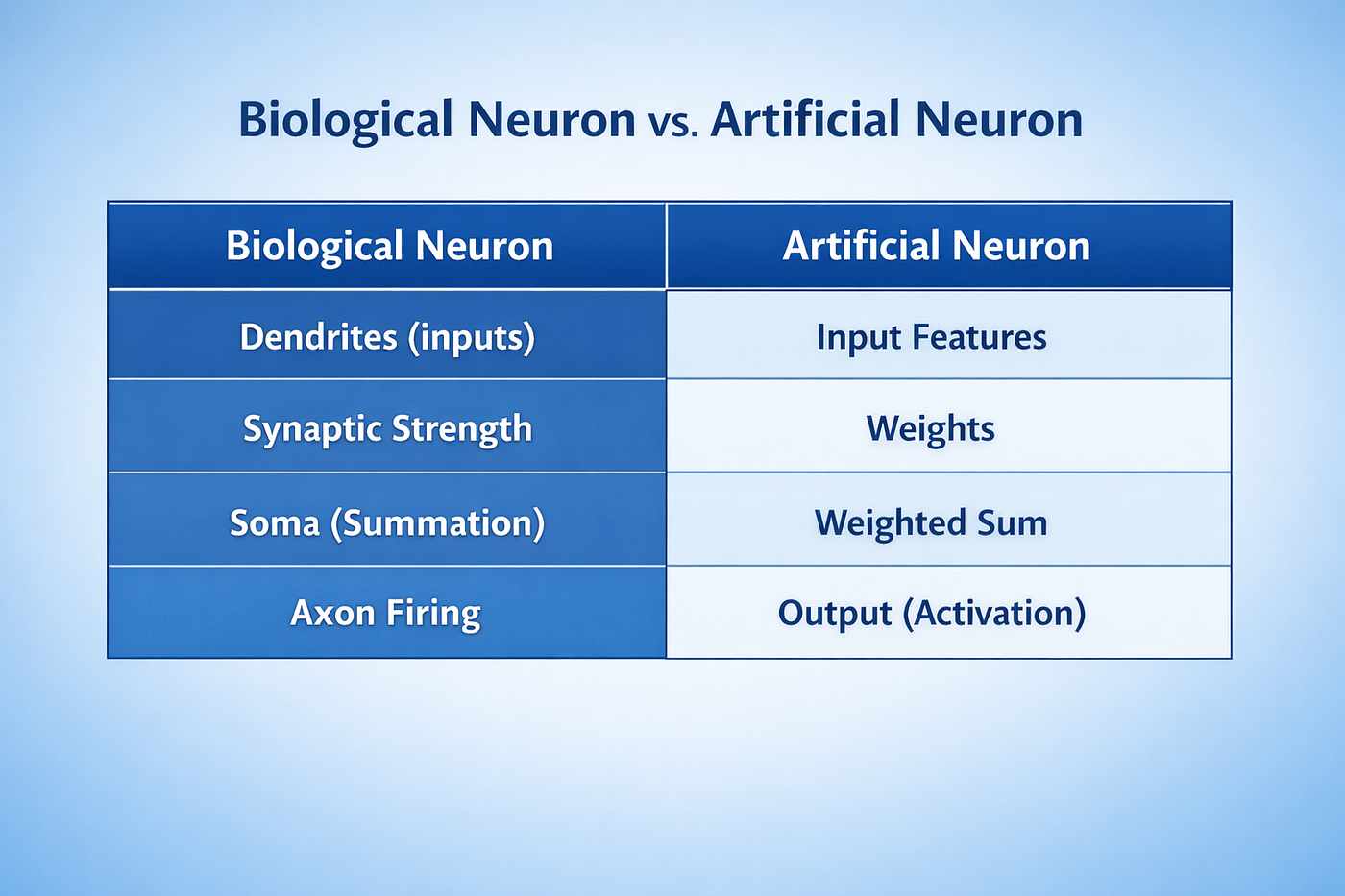
Neuron Analogy Comparison Table
Why ANN was Inspired by the Brain
Just like neurons combine signals to make decisions, artificial neurons combine inputs with weights, apply a threshold or activation function, and produce an output. This analogy gave birth to the field of neural networks.
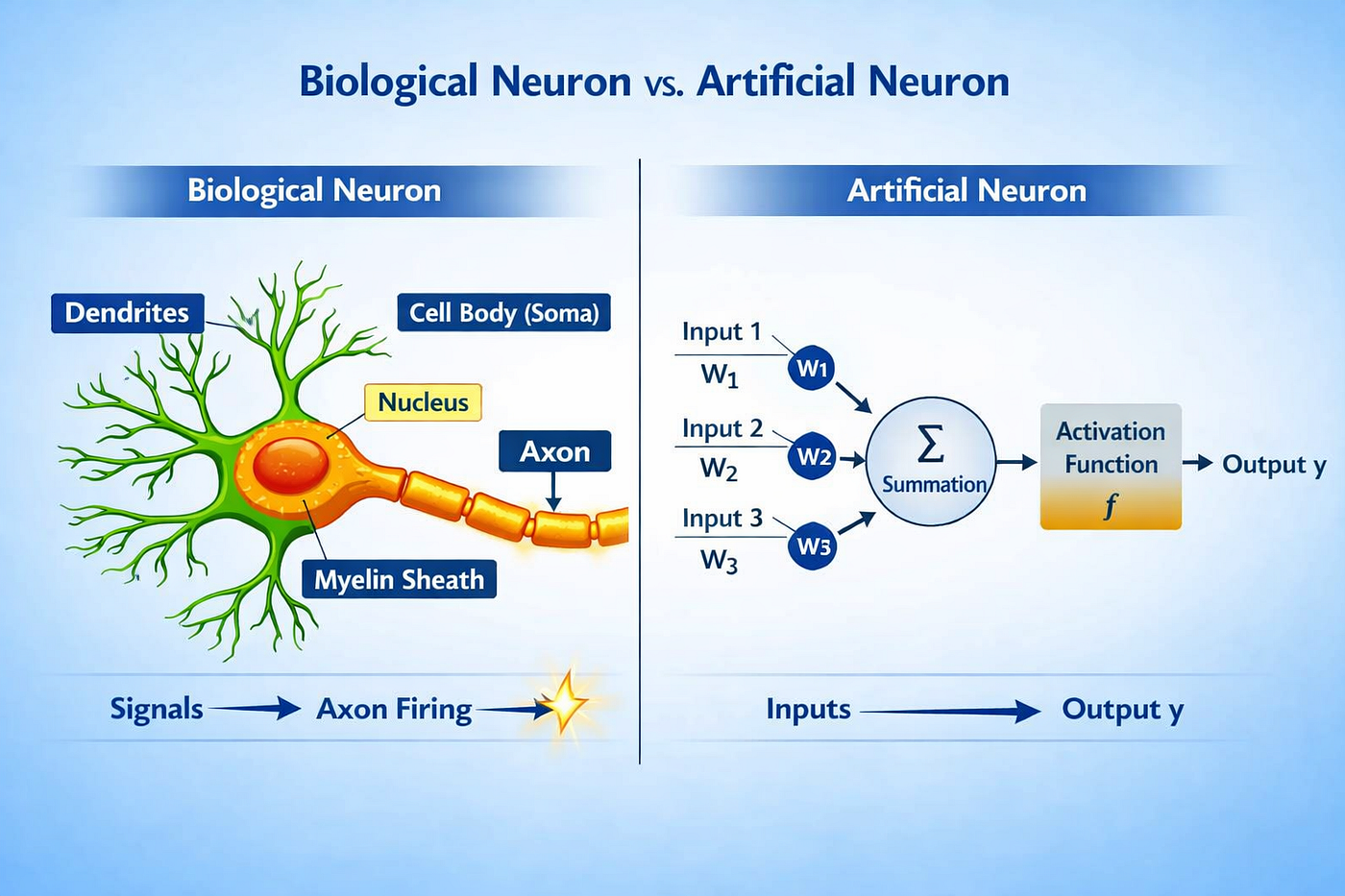
Biological Neuron vs Artificial Neuron
The McCulloch-Pitts (MCP) Neuron Model: The First Artificial Neuron
History : In 1943, Warren McCulloch and Walter Pitts proposed the first mathematical model of a neuron.
Two-Input Neuron Model: Takes binary inputs (0 or 1).
Threshold Concept: If the weighted sum ≥ threshold → neuron fires (output = 1). Otherwise → output = 0.
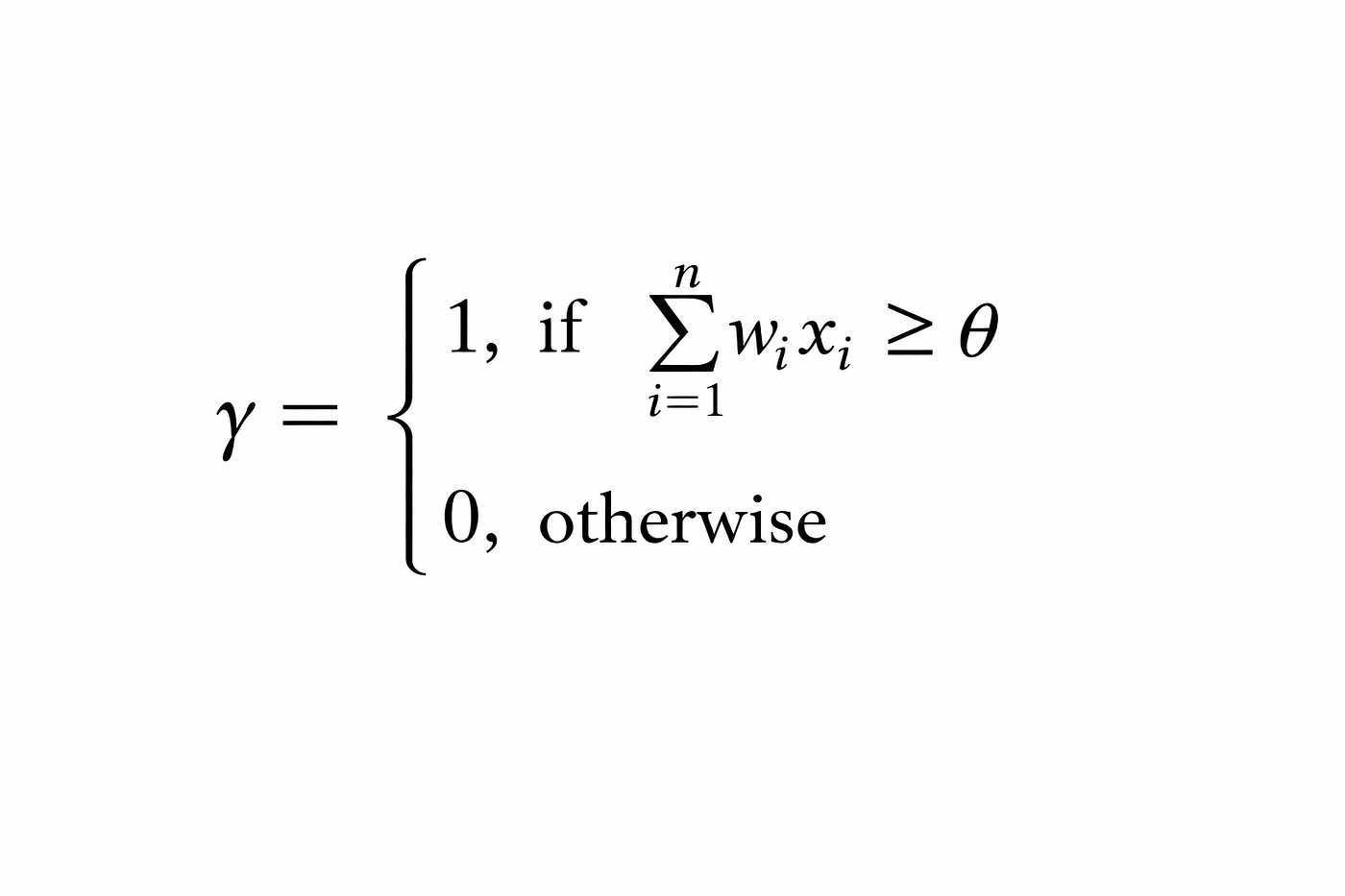
Mathematical Representation of Perceptron Activation Function
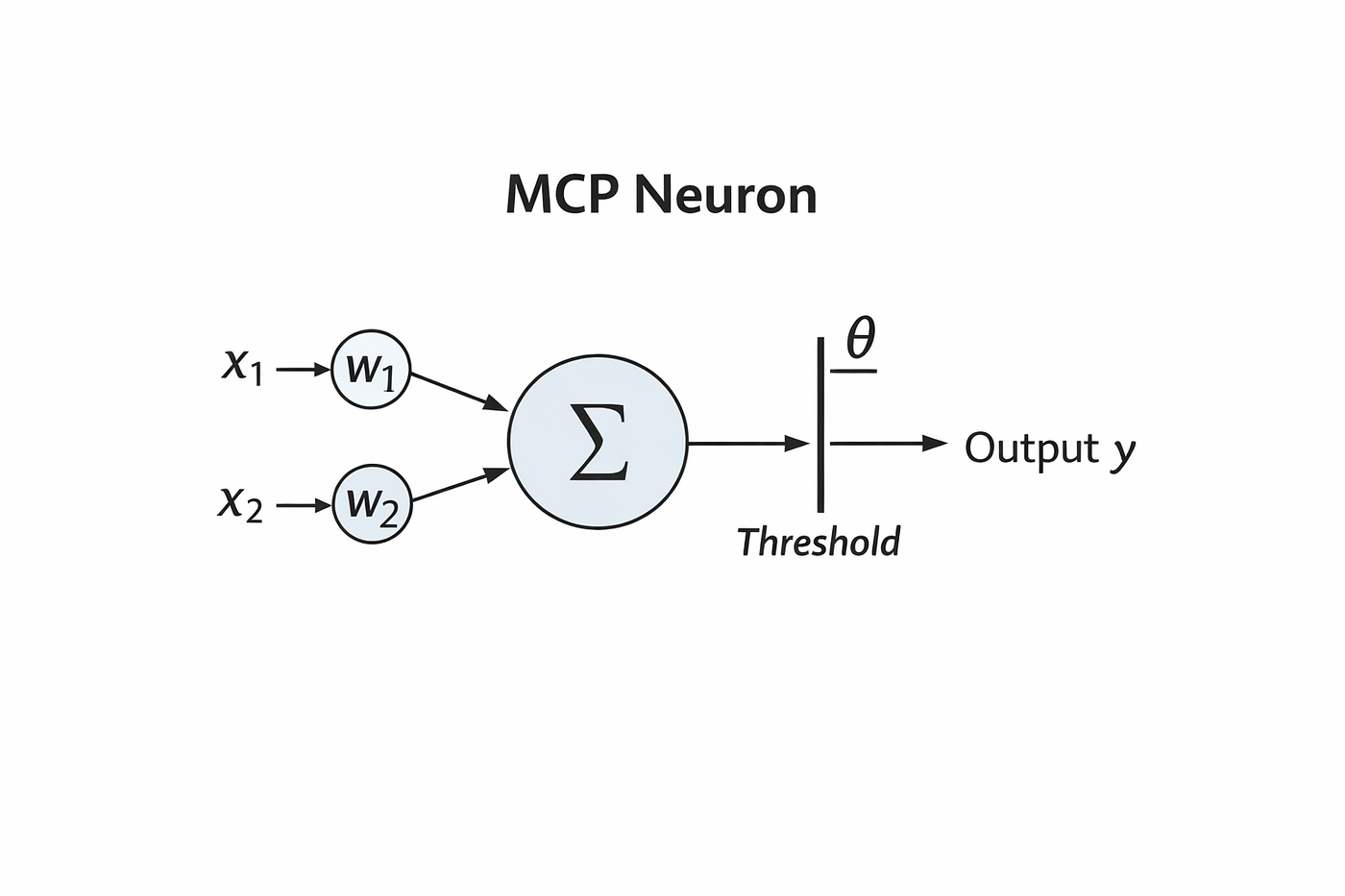
McCulloch–Pitts (MCP) Neuron Model with Two Inputs
Implementing Logic Gates Using MCP Neurons
The MCP neuron can mimic basic logic gates:
AND Gate: Fires only if both inputs are 1.
OR Gate: Fires if at least one input is 1.
NAND Gate: Fires unless both inputs are 1.
Why XOR cannot be implemented by a single MCP neuron
A single MCP neuron can’t implement XOR because XOR is not linearly separable. The MCP neuron draws only one straight decision boundary, but XOR needs two — one for each diagonal case. Hence, it requires multiple neurons or layers to correctly classify the XOR pattern.
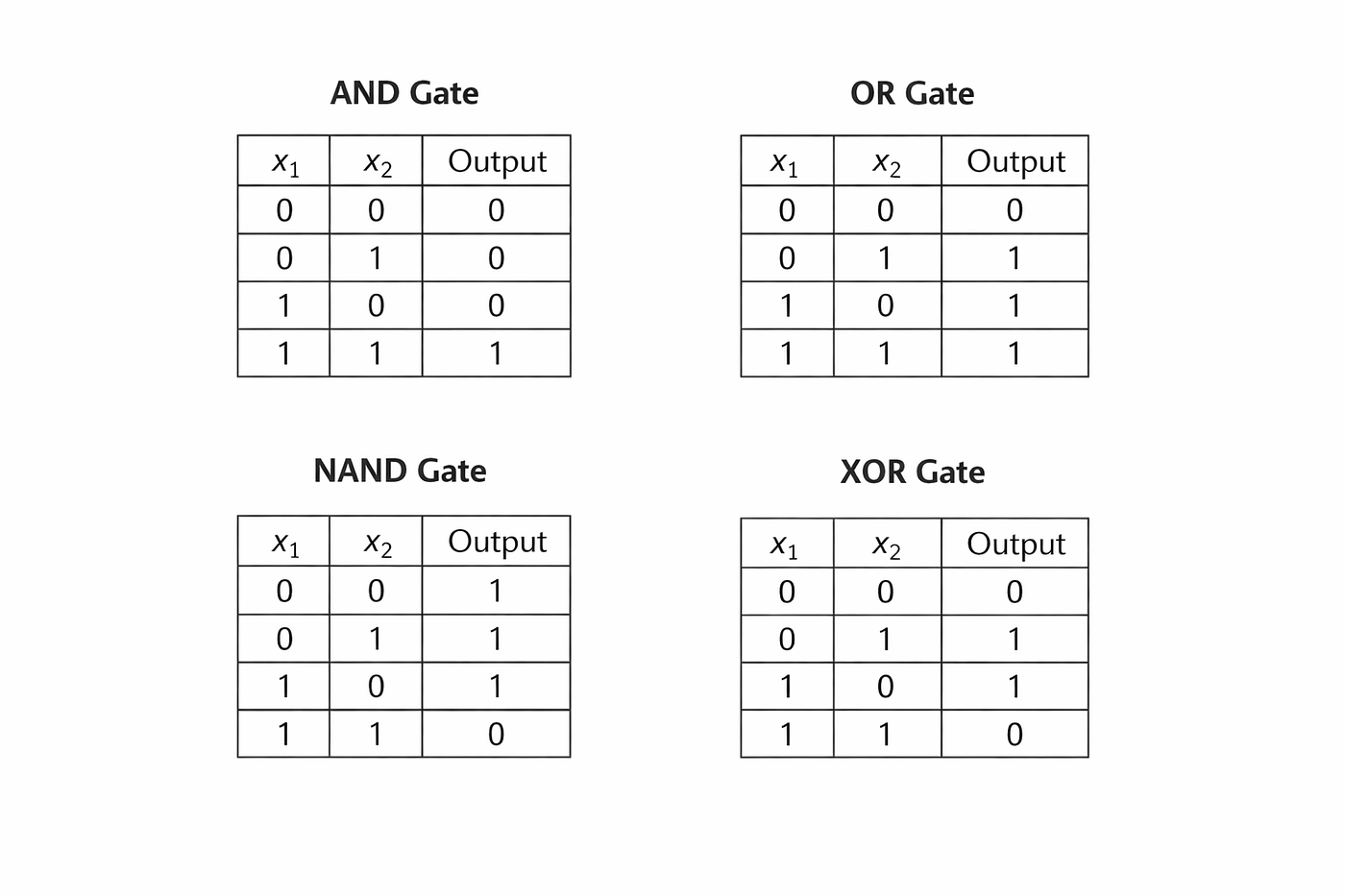
Truth tables for MCP neuron logic gates (AND, OR, NAND) and XOR — highlighting why XOR fails with a single neuron.
Why This Matters for Deep Learning
Deep Learning is essentially the evolution of these early neuron models into multi-layered, highly complex networks capable of recognizing patterns in images, speech, and text.
Applications Today
Image recognition (self-driving cars)
Natural language processing (chatbots, translators)
Healthcare (disease detection)
Finance (fraud detection)
Conclusion
Deep Learning started with the simple idea of mimicking the brain’s neurons. From the MCP model to today’s deep architectures, the journey shows how biology inspired technology — and how artificial neurons now power intelligent systems across industries.
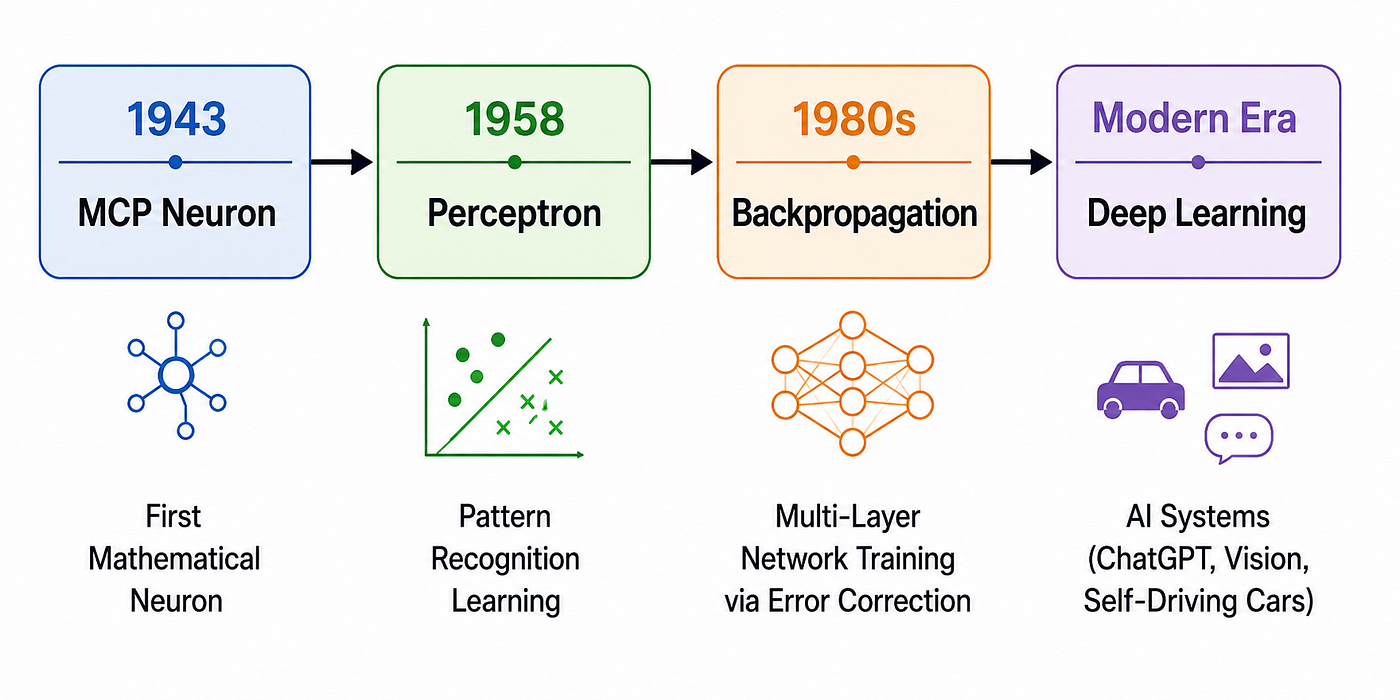
Evolution of Neural Network Models — from MCP Neuron to Deep Learning.
메타데이터
- post_id
- d46e9dca2c01
- slug
- introduction-to-deep-learning-and-neural-networks-d46e9dca2c01
- url
- https://medium.com/@greeshmareddy0708/introduction-to-deep-learning-and-neural-networks-d46e9dca2c01
- canonical_url
- https://medium.com/@greeshmareddy0708/introduction-to-deep-learning-and-neural-networks-d46e9dca2c01
- author_url
- https://medium.com/@greeshmareddy0708
- status
- ok
- fetched_at
- 2026-06-18 07:02:39