The Perimeter is Dead: Why Identity is the New Control Plane in 2026
There was a time when corporate cybersecurity could be visualized as a medieval castle. You built a thick moat (firewalls), raised a…
The Perimeter is Dead: Why Identity is the New Control Plane in 2026
There was a time when corporate cybersecurity could be visualized as a medieval castle. You built a thick moat (firewalls), raised a drawbridge (VPNs), and assumed everyone inside the walls was a trusted ally.
If you are still operating your enterprise under this architectural assumption, you aren’t just vulnerable — you are actively being outpaced by modern threat landscapes.
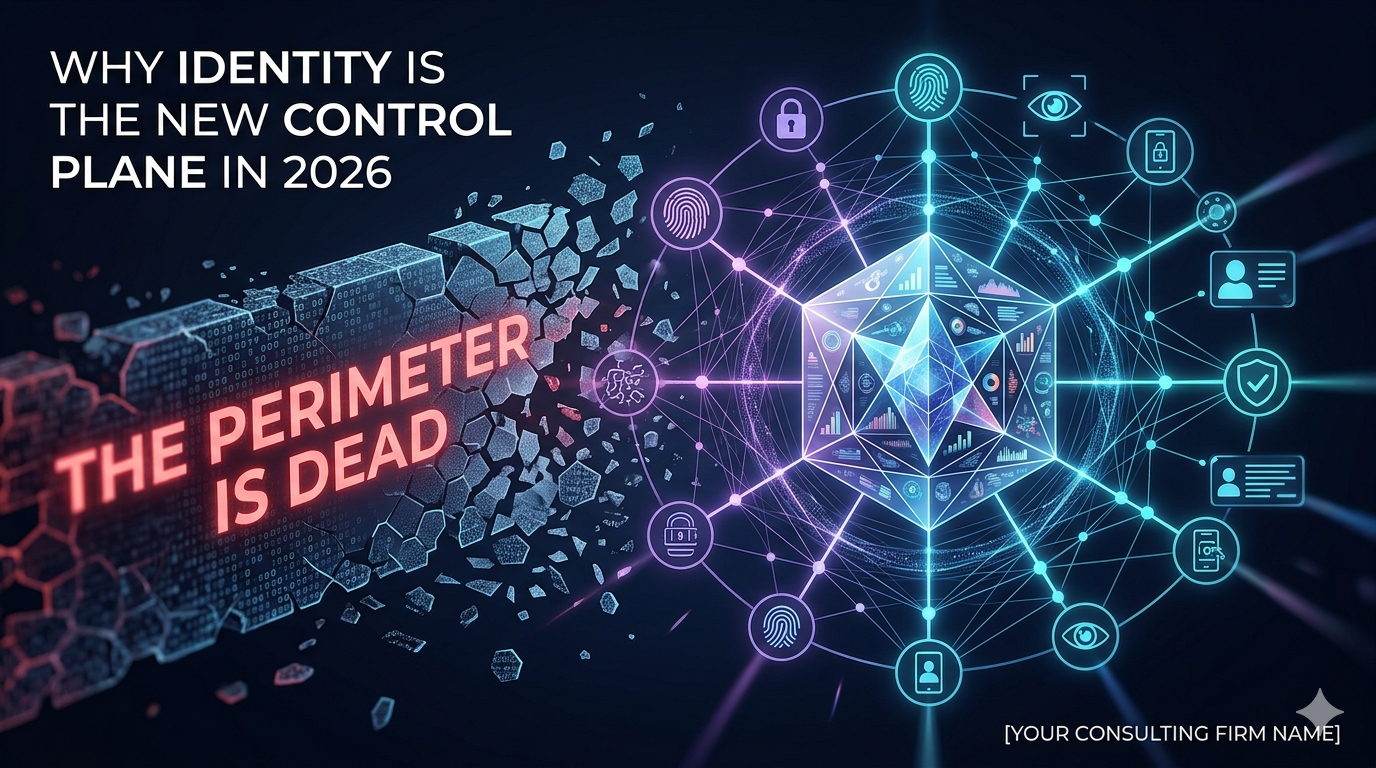
As multi-cloud environments, decentralized workforces, and autonomous applications converge, the traditional network perimeter has completely dissolved. In its place stands a new, harsher operational reality: Identity is your only true security control plane.
Attackers Don’t Break In. They Log In.
The latest threat intelligence data underscores a massive structural shift in attacker behavior. Adversaries are heavily exploiting deployment errors, public-facing applications, and unauthenticated access points.
Rather than deploying complex, signature-based malware that triggers endpoint detection systems, modern threat actors prefer a path of least resistance: stolen, leaked, or misconfigured credentials.
“Attackers have figured out that they don’t need to break through your carefully guarded front door when they can walk right in through your supplier’s back door with valid credentials,” notes Nick Bradley, Threat Intelligence Manager at IBM X-Force.
The cascading risks are clear. When a third-party vendor integration or an over-privileged SaaS OAuth token is compromised, an outsider instantly inherits legitimate, trusted access to your core infrastructure. To your automated defenses, the attacker looks exactly like an internal employee or an authorized application pipeline.
The Cost of Decision Overload and Slower Detection
For enterprise leadership, the stakes have never been higher. While advanced AI and automation are helping global organizations detect threats faster, localized environments face unique headwinds.
Complex IT footprints, widespread engineering talent shortages, and extreme alert fatigue frequently delay breach identification. When an attacker — rather than your internal team — discloses a breach, the average global cost of the incident surges by nearly 20%.
The friction is no longer just technical; it’s an operational bottleneck. Security teams are drowning in point-tool telemetry, leaving organizations reactive instead of proactive.
Operationalizing Zero Trust: The Executive Playbook
Transitioning from an aspirational “Zero Trust” slide deck to an operational, identity-centric architecture requires three definitive structural pivots:
1. Converge Identity Signals with Deep Telemetry
Do not rely on static Multi-Factor Authentication (MFA) alone. True identity verification must combine user behavior analytics, authentication context, and real-time endpoint health before granting system access. If an engineer logs in from an unrecognized device or unusual geographic location, access parameters must dynamically contract.
2. Eliminate Privilege Creep and Static Tokens
Modern microservices and interconnected APIs suffer from severe credential sprawl. Organizations must ruthlessly implement Just-In-Time (JIT) access and strict least-privilege guardrails. Applications and personnel should only possess the minimum rights required to execute their immediate task, destroying the lateral movement capabilities of an intruder.
3. Continuous Configuration Governance
A single misconfigured cloud storage bucket or an unmonitored third-party API integration can render millions of dollars of security software useless. Continuous verification and automated posture management must replace the obsolete model of annual or semi-annual penetration testing.
Designing Your Next Move
Securing a modern, decentralized enterprise is no longer about keeping people out; it’s about explicitly governing how data, users, and automated services interact.
At **Cyborgenic**, we specialize in transforming legacy perimeter defenses into high-assurance, identity-first security programs. We partner with enterprise leadership to eliminate configuration debt, secure complex cloud interfaces, and build resilient infrastructure that thrives in a zero-trust world.
Is your security architecture still relying on network perimeters, or have you shifted your focus to identity control planes? Let’s discuss your engineering challenges in the comments below.
메타데이터
- post_id
- d495a2940e7b
- slug
- the-perimeter-is-dead-why-identity-is-the-new-control-plane-in-2026-d495a2940e7b
- url
- https://medium.com/@cyborgenic/the-perimeter-is-dead-why-identity-is-the-new-control-plane-in-2026-d495a2940e7b
- canonical_url
- https://medium.com/@cyborgenic/the-perimeter-is-dead-why-identity-is-the-new-control-plane-in-2026-d495a2940e7b
- author_url
- https://medium.com/@cyborgenic
- status
- ok
- fetched_at
- 2026-06-09 15:37:30


