Why Am I Bloated All the Time? 9 Possible Reasons Your Stomach Feels Swollen
You finish eating, and your stomach suddenly feels tight.
Why Am I Bloated All the Time? 9 Possible Reasons Your Stomach Feels Swollen
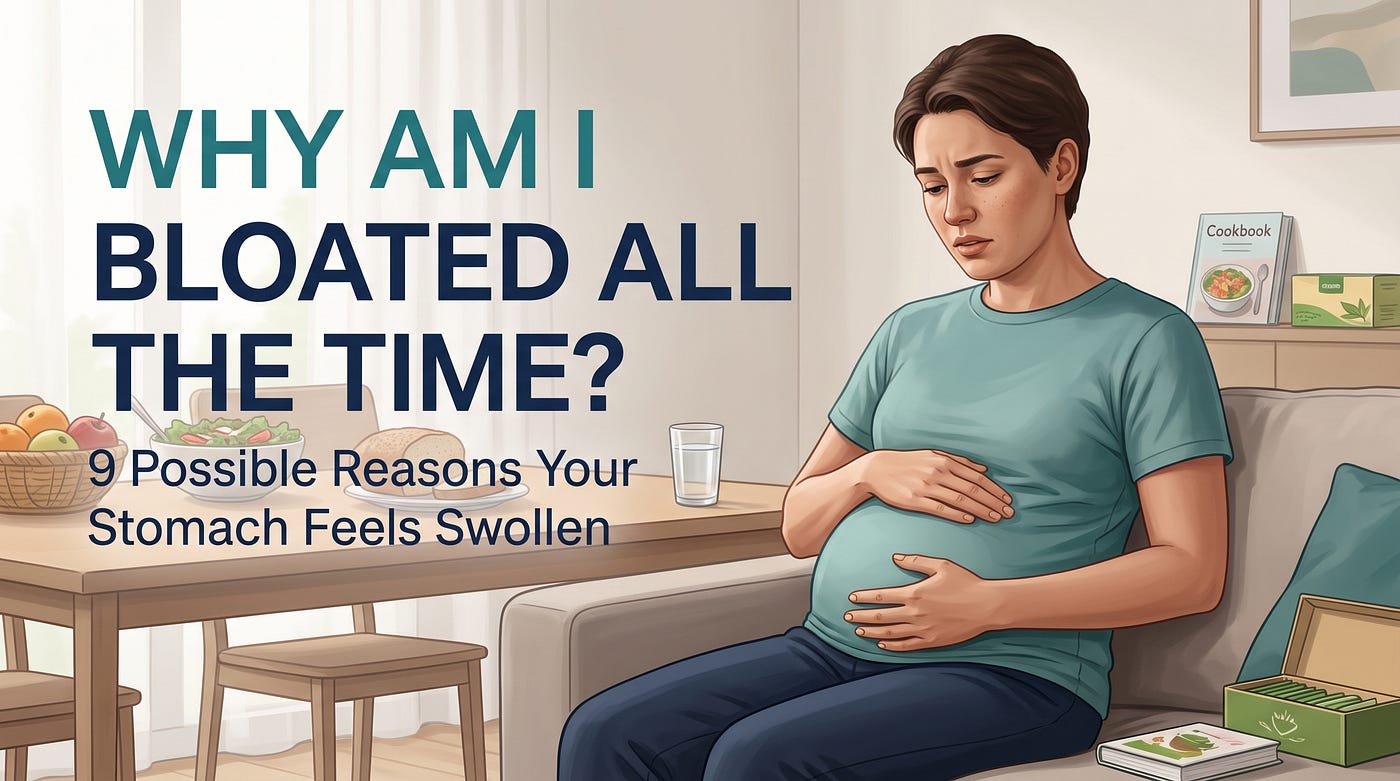
You finish eating, and your stomach suddenly feels tight.
Your clothes feel more uncomfortable than they did an hour ago. You may feel unusually full, gassy, or as though your abdomen has expanded.
Then the next morning, it happens again.
If this sounds familiar, you may be wondering:
Why am I bloated all the time?
Bloating is extremely common, but persistent bloating isn’t something you should automatically dismiss as “just gas.” It can be related to eating habits, constipation, food intolerances, digestive disorders, or other health conditions. And importantly, feeling bloated doesn’t always mean there is a large amount of gas in your digestive tract. The sensation can also be influenced by how sensitive your digestive system is to normal intestinal activity.
The good news is that there are several common explanations.
Here are nine possibilities — and the signs that can help you tell when it is time to speak with a healthcare professional.
First, What Exactly Is Bloating?
Before looking at the causes, it helps to understand what doctors mean by “bloating.”
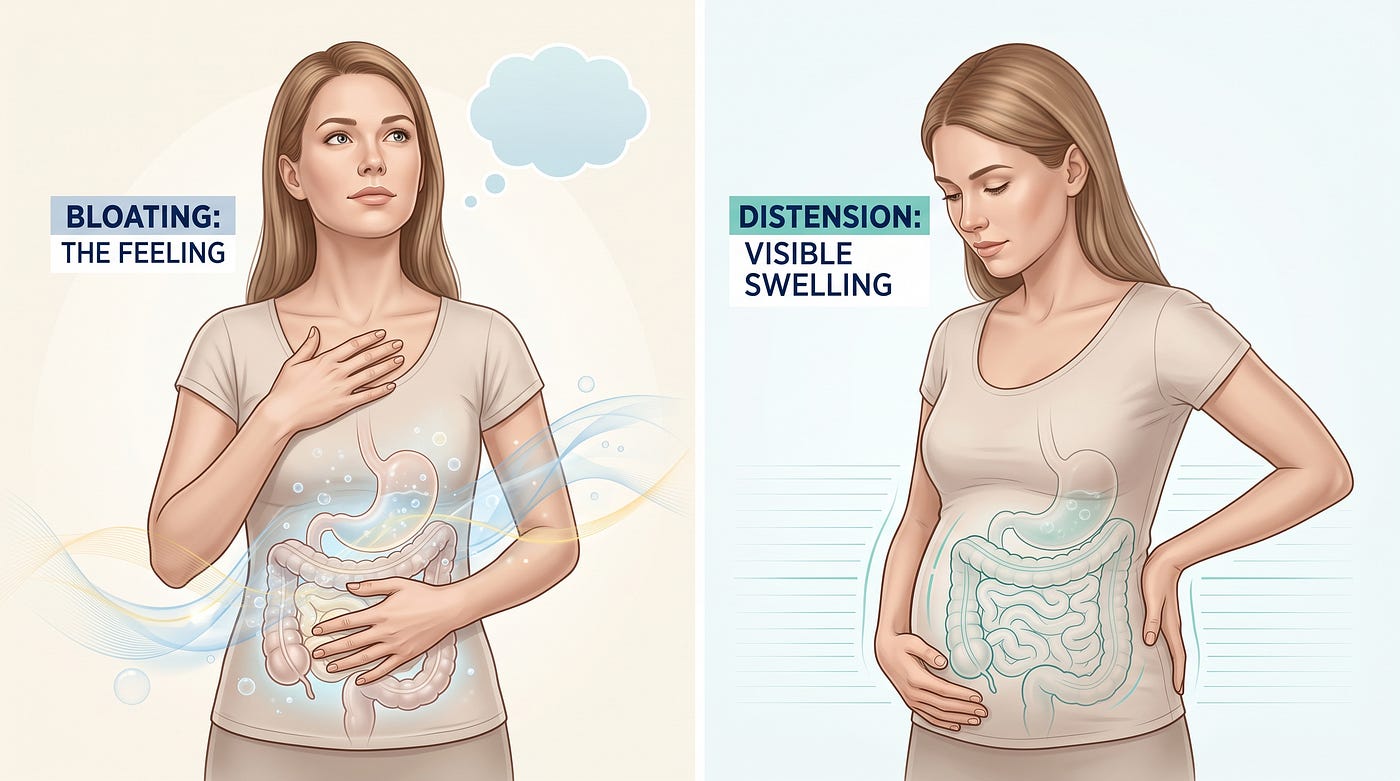
Bloating is usually a feeling of fullness, pressure, swelling, or tightness in the abdomen.
A related term is abdominal distension, which means the abdomen actually becomes visibly or measurably larger.
They are not exactly the same thing.
NIDDK notes that only about half of people who report bloating also have visible abdominal distension.
So you can feel extremely bloated even when your stomach doesn’t look dramatically different.
That distinction matters because the cause of the sensation isn’t always simply “too much gas.”
1. You May Be Swallowing More Air Than You Realize
Sometimes bloating begins with something surprisingly ordinary: swallowing air.
You swallow small amounts of air throughout the day. That’s completely normal.
But certain habits can cause you to swallow more.
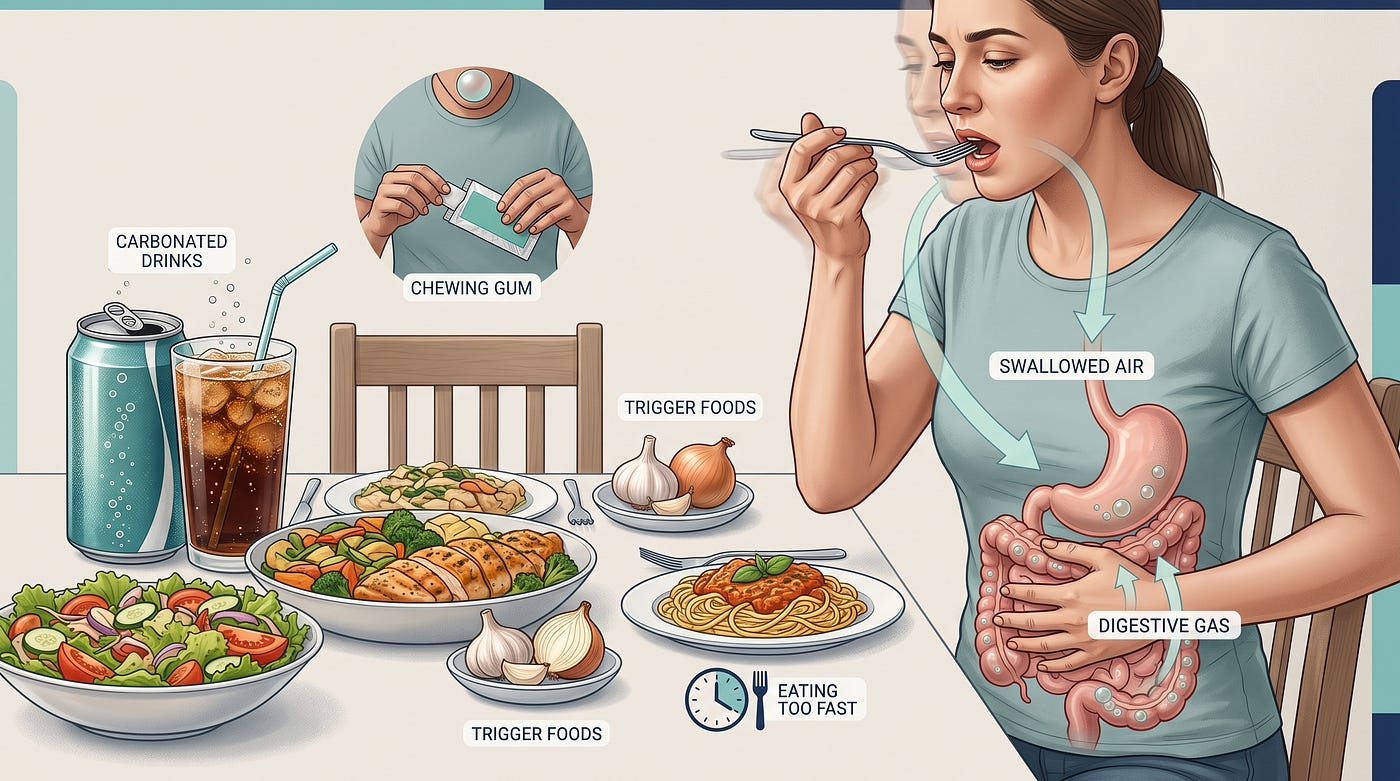
Eating very quickly, drinking through straws, chewing gum, sucking on hard candy, drinking carbonated beverages, and talking while chewing can all increase the amount of air entering your digestive tract.
That extra air may contribute to:
- Burping
- Abdominal fullness
- Gas
- Bloating
If you notice that bloating is especially noticeable after fizzy drinks or rushed meals, your eating and drinking habits may be part of the explanation.
The simple lesson isn’t to become afraid of normal foods.
It is to pay attention to patterns.
2. Constipation Could Be Making You Feel Bloated
Constipation doesn’t always announce itself with dramatic pain.
Sometimes the main clue is a stomach that feels persistently full or swollen.
When stool moves slowly through the digestive tract, gas may also become harder to pass. That can contribute to abdominal pressure and bloating. Mayo Clinic lists constipation among conditions that can contribute to gas, bloating, and abdominal discomfort.
Signs that constipation may be involved include:
- Fewer bowel movements than usual
- Hard or lumpy stools
- Straining
- Feeling that you haven’t completely emptied your bowels
- Bloating or abdominal discomfort
If your bloating tends to improve after a bowel movement, constipation may be an important clue.
3. Certain Foods May Trigger Your Symptoms
One of the most frustrating things about bloating is that the food causing it isn’t necessarily “bad” or unhealthy.
Some carbohydrates aren’t fully digested in the small intestine. When they reach the large intestine, bacteria break them down and produce gas. For some people, this contributes to significant bloating or other digestive symptoms.
Common examples of foods that can cause more gas for some people include certain beans and legumes, some fruits and vegetables, whole grains, carbonated drinks and products containing certain sugar substitutes.
But here’s an important point:
A food causing bloating does not automatically mean you’re intolerant or allergic to it.
Your digestive system is individual.
A food that causes no problems for one person may cause considerable discomfort for another.
That’s why paying attention to your own symptom patterns can be more useful than blindly copying someone else’s “bloating foods” list.
4. You Could Have a Food Intolerance
Sometimes the issue isn’t simply that a food produces more gas.
Your digestive system may have trouble processing a particular component of the food.
One well-known example is lactose intolerance, in which the body has difficulty digesting lactose, the natural sugar found in milk and other dairy products.
Another example involves fructose, a sugar found naturally in many foods.
NIDDK notes that problems digesting certain carbohydrates can cause symptoms such as bloating, abdominal pain and diarrhea.
This can create a frustrating pattern:
You eat something.
You feel fine initially.
Then later, your abdomen becomes uncomfortable and swollen.
The timing can make it difficult to identify the trigger, especially when several foods are eaten together.
5. Irritable Bowel Syndrome Can Cause Persistent Bloating
Irritable bowel syndrome (IBS) is one of the conditions commonly associated with bloating.
IBS is a disorder of gut-brain interaction. Its symptoms can include abdominal pain, changes in bowel habits, bloating and gas. Some people experience constipation, some diarrhea, and some alternate between the two.
The interesting part is that IBS isn’t simply a problem of “too much gas.”
The communication between the brain and digestive system can affect how intestinal activity is experienced. NIDDK notes that disorders affecting the gut-brain interaction can influence bloating and the movement of gas through the intestines.
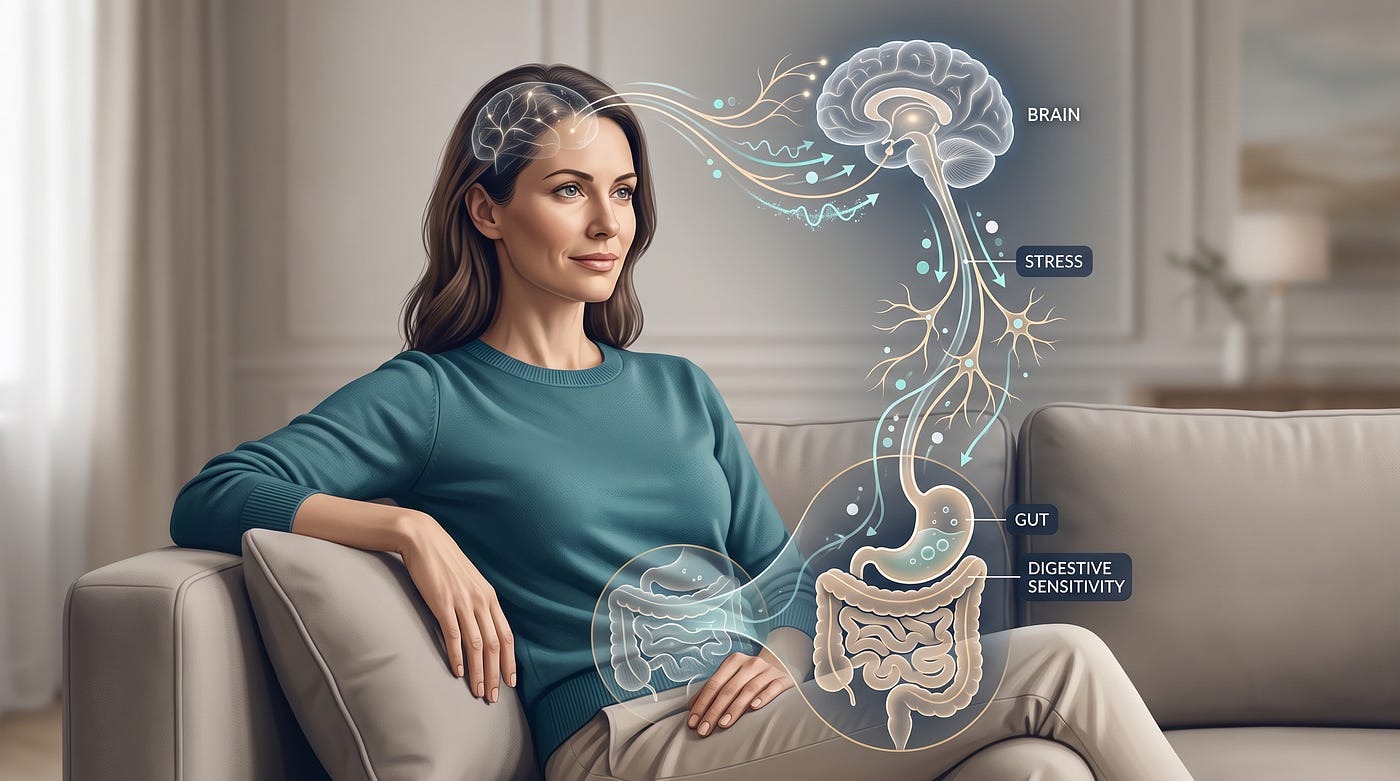
This helps explain why two people can have similar amounts of intestinal gas but experience very different levels of discomfort.
If bloating occurs alongside recurring abdominal pain and noticeable changes in bowel habits, IBS is one possibility a healthcare professional may consider.
6. Indigestion Could Be Behind the Full, Swollen Feeling
Sometimes what feels like “bloating” is actually part of indigestion, also called dyspepsia.
Indigestion can cause:
- Upper abdominal discomfort
- Feeling full too quickly
- Uncomfortably prolonged fullness after eating
- Bloating
- Nausea
- Belching
NIDDK explains that chronic indigestion is often diagnosed as functional dyspepsia, a disorder involving the interaction between the digestive system and the brain.
That means someone might eat a relatively normal meal and still feel uncomfortably full afterward.
If your bloating is concentrated in the upper abdomen and comes with early fullness, nausea or frequent belching, indigestion may be worth discussing with a healthcare professional.
7. Small Intestinal Bacterial Overgrowth May Be Contributing
You may occasionally encounter the term SIBO, short for small intestinal bacterial overgrowth.
In this condition, there is an increase in bacteria or a change in the type of bacteria present in the small intestine. These bacteria can produce additional gas and may contribute to bloating and other digestive symptoms.
Mayo Clinic lists SIBO among possible causes of chronic abdominal bloating and distension.
However, this is an area where internet self-diagnosis can easily become misleading.
Bloating alone cannot tell you that you have SIBO.
Many different conditions can produce similar symptoms, so a healthcare professional needs to consider the entire pattern before deciding whether testing or treatment is appropriate.
8. Your Gut and Brain May Be Interacting Differently
This can sound surprising, but your digestive tract doesn’t operate independently from your nervous system.
The brain and gut communicate continuously.
That communication can influence digestion, intestinal movement, and how strongly you perceive sensations in your abdomen.
For some people, normal digestive activity can feel unusually uncomfortable. Mayo Clinic notes that people with conditions such as IBS or anxiety may have increased sensitivity to normal intestinal gas and digestive sensations.
This doesn’t mean that bloating is “all in your head.”
The sensation is real.
It means that the nervous system can influence how the digestive system functions and how those sensations are experienced.
That connection is one reason digestive symptoms can sometimes become more noticeable during periods of stress.
9. A Digestive or Other Medical Condition Could Be Responsible
Most bloating is not caused by something dangerous.
But persistent bloating can occasionally occur alongside a medical condition that deserves evaluation.
Possible causes can include celiac disease, gastroparesis, thyroid problems and other gastrointestinal disorders. Mayo Clinic’s review of chronic abdominal bloating lists a broad range of digestive and non-digestive conditions that can sometimes contribute.
The point is not to read a long list of diseases and become frightened.
It is to understand why persistent, unexplained symptoms shouldn’t always be self-treated indefinitely.
Your other symptoms matter.
A person with occasional bloating after a large meal has a very different situation from someone with months of bloating accompanied by weight loss, vomiting or significant changes in bowel habits.
Why Am I Bloated After Eating?

This is one of the most common questions people ask.
Bloating after eating can happen for several reasons.
You may have:
- Eaten quickly and swallowed more air
- Consumed carbonated drinks
- Eaten a large meal
- Consumed foods that produce more gas for you
- Eaten something you have difficulty digesting
- Experienced indigestion
- Had an underlying digestive condition
NIDDK notes that gas is a normal part of digestion, particularly when intestinal bacteria break down carbohydrates that weren’t fully digested earlier in the digestive tract.
The goal, therefore, isn’t to eliminate all gas.
Some gas is normal.
The goal is to understand when your symptoms are excessive, persistent, uncomfortable or accompanied by other concerning changes.
Why Do I Wake Up Bloated?
Morning bloating can be particularly confusing.
You haven’t eaten anything yet, so why does your abdomen already feel swollen?
Overnight, your digestive system continues moving and processing its contents. Bowel movements, constipation, accumulated gas and individual digestive patterns can all influence how your abdomen feels when you wake up.
If morning bloating is occasional and improves as the day progresses, it may not indicate a serious problem.
But if you are regularly waking up bloated, particularly when the symptom is persistent or getting worse, it’s worth discussing with a healthcare professional.
What Can You Do About Frequent Bloating?
The best approach depends on the cause.
But several general habits may help reduce everyday gas and bloating.
Slow down when you eat
Eating quickly can increase the amount of air you swallow. Slowing down may help.
Pay attention to your personal food patterns
Rather than eliminating huge numbers of foods, notice whether particular meals repeatedly trigger symptoms.
Be careful with carbonated drinks
Fizzy drinks can increase the amount of gas in the digestive tract.
Stay physically active
Regular movement can support normal digestion and bowel function.
Address constipation
If constipation is contributing to your bloating, treating the constipation may help reduce the abdominal pressure.
Don’t make extreme dietary changes without a reason
Bloating can tempt people into increasingly restrictive diets.
That’s not always helpful.
A healthier approach is to identify patterns systematically and seek professional advice when symptoms persist.
When Should Bloating Worry You?
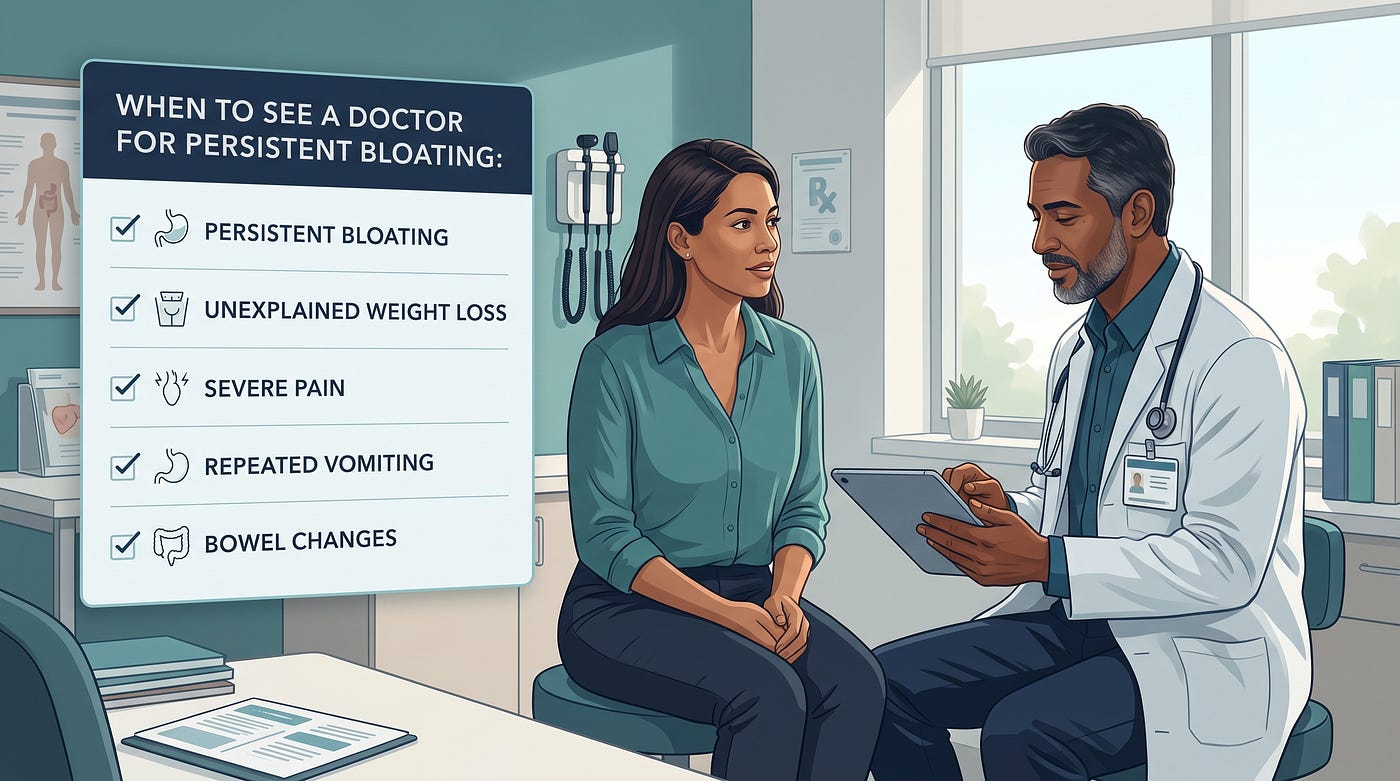
This is perhaps the most important part of the article.
Occasional bloating is common. Persistent unexplained bloating deserves more attention.
NIDDK recommends speaking with a doctor when gas symptoms are bothersome, change suddenly, or occur alongside symptoms such as abdominal pain, constipation, diarrhea or weight loss.
Seek medical advice particularly if bloating occurs with:
- Unexplained weight loss
- Persistent or severe abdominal pain
- Repeated vomiting
- Blood in the stool
- Black, tar-like stools
- Significant changes in bowel habits
- Difficulty swallowing
- Loss of appetite
- Shortness of breath
- Persistent abdominal swelling
NIDDK specifically identifies long-lasting abdominal bloating or swelling, unexplained weight loss, severe constant abdominal pain, frequent vomiting and black stools among symptoms that warrant medical attention in the setting of indigestion.
These symptoms do not automatically mean something serious is happening.
They simply mean it is better to be evaluated than to keep guessing.
A Simple Way to Understand Your Bloating
Instead of asking only:
“How do I get rid of bloating?”
Try asking:
“When does my bloating happen, and what happens along with it?”
Does it appear after dairy?
After large meals?
After fizzy drinks?
When you’re constipated?
During periods of stress?
Alongside diarrhea?
Alongside abdominal pain?
At night?
In the morning?
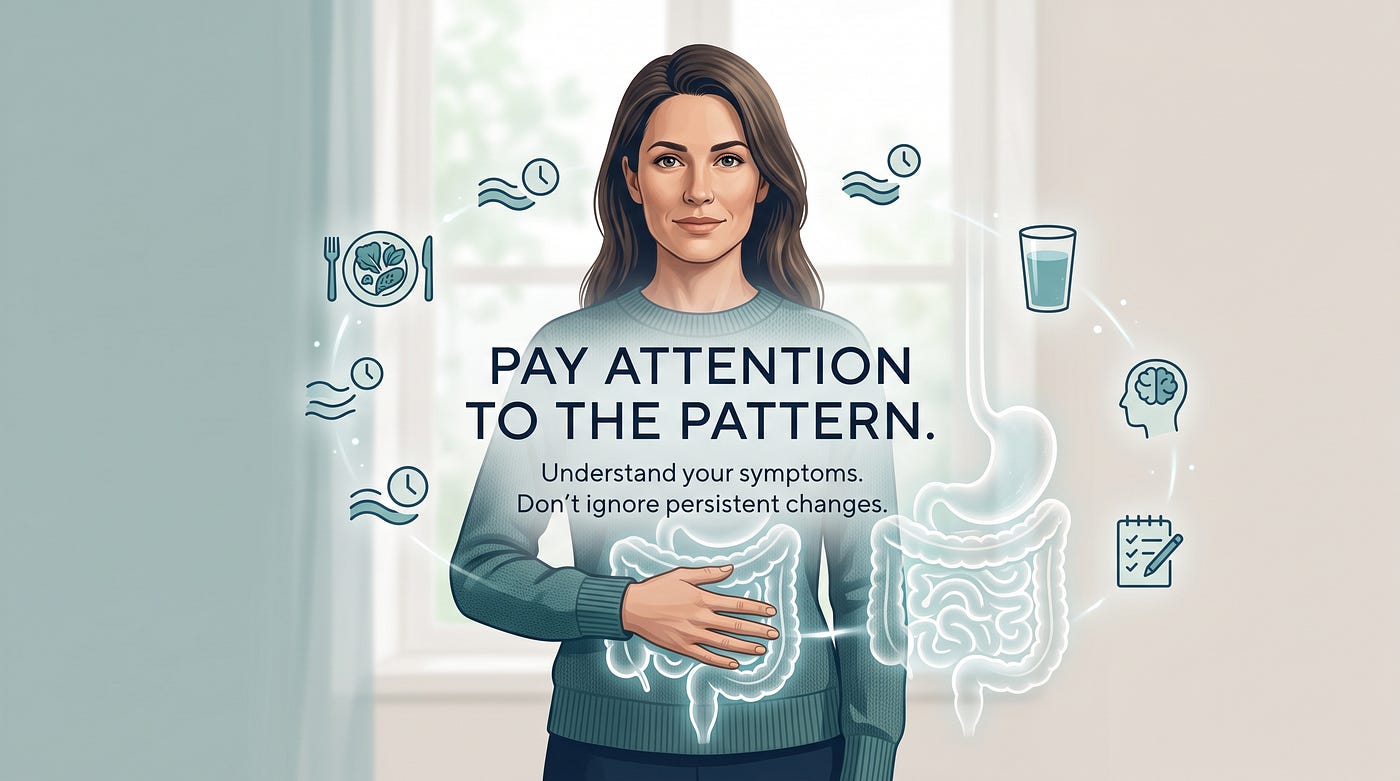
Keeping track of these patterns can provide useful information for a healthcare professional.
It also helps separate a one-off digestive reaction from a symptom pattern that keeps repeating.
The Bottom Line
Bloating is common, but constant bloating isn’t something you have to simply accept without understanding it.
Sometimes the explanation is straightforward: swallowed air, constipation, carbonated drinks or a food that doesn’t agree with you.
Other times, persistent bloating can be associated with IBS, indigestion, food intolerance, SIBO or another digestive or medical condition.
The important thing is not to panic — and not to ignore a persistent change either.
Your digestive system gives you information all day long.
A little gas after a meal can be completely normal.
But when your stomach feels swollen or uncomfortable again and again, especially when other symptoms appear, it’s worth finding out why.
Because the goal isn’t simply to have a flatter stomach.
It’s to understand what your body is trying to tell you.
메타데이터
- post_id
- d4b33dbb0e95
- slug
- why-am-i-bloated-all-the-time-9-possible-reasons-your-stomach-feels-swollen-d4b33dbb0e95
- url
- https://medium.com/@danielakunekwu111/why-am-i-bloated-all-the-time-9-possible-reasons-your-stomach-feels-swollen-d4b33dbb0e95
- canonical_url
- https://medium.com/@danielakunekwu111/why-am-i-bloated-all-the-time-9-possible-reasons-your-stomach-feels-swollen-d4b33dbb0e95
- author_url
- https://medium.com/@danielakunekwu111
- status
- ok
- fetched_at
- 2026-08-20 05:22:18



