When Respect Disappears Among the Respectable
Faith, Character, Metaphysics, and the Moral Failure of Public Discourse
When Respect Disappears Among the Respectable
Faith, Character, Metaphysics, and the Moral Failure of Public Discourse

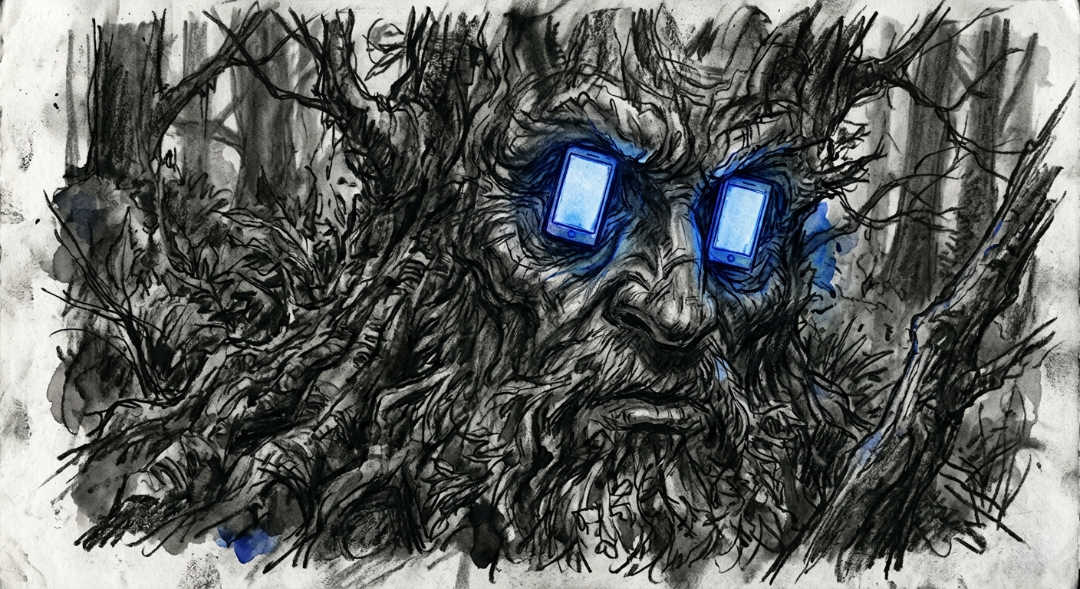
A soul standing between contempt and conviction, choosing faith, humility, and the path back to God. (Photo illustration by the Author)
The Disturbing Contradiction
Some contradictions do not merely surprise us. They expose the inadequacy of the categories by which we judge people.
I have spent time around individuals involved in organized crime, serious violence, and other forms of criminal life. I do not mention this to romanticize them or excuse what they have done. Violence remains violence. Intimidation remains intimidation. Crime does not become honorable merely because it operates according to a private code.
Yet honesty requires me to acknowledge what I have observed. Even in circles marked by brutality, there was sometimes a recognizable discipline surrounding speech and personal conduct. Words carried weight. Disrespect had consequences. People understood, however inconsistently, that dignity was not something to be mocked casually.
What troubles me is that I have sometimes encountered less restraint among people who present themselves as educated, professional, progressive, religious, or morally refined. I have seen this in professional settings, public commentary, and on Medium, where disagreements that might have become thoughtful exchanges instead collapse into insult, provocation, and contempt.
I no longer engage with comments made in bad faith, and I take appropriate steps to prevent repeated abuse. This is not fear of criticism. It is a refusal to mistake abuse for argument or vulgarity for intellectual courage.
The contradiction raises a difficult question: What does education produce when it develops competence without forming character?
The Failure of Status as a Moral Measure
Modern society often mistakes status for moral development. Credentials, titles, institutional affiliations, and polished language create an appearance of refinement. Yet refinement of expression is not the same as refinement of the soul.
A person may speak the language of justice while treating actual people unjustly. A person may defend compassion in theory while practicing contempt in conversation. A person may appear civilized because the surrounding environment rewards the performance of civility, not because the inner life has been disciplined.
This is why the contrast between criminal circles and professional settings can be philosophically revealing. The point is not to suggest that criminality carries moral superiority. It does not. The point is that social polish must never be confused with virtue. Some people behave well only when reputation, advancement, or institutional consequence requires it. Others, even within morally compromised environments, retain some recognition that words carry weight and that habitual disrespect corrodes the conditions of human interaction.
Professionalism without character is etiquette under supervision.
The deeper issue, then, is not manners alone. It is moral formation.
My Own Path Through Belief, Disbelief, and Return
I write about faith because my own path toward it has never been a straight one.
My journey has passed through Catholicism, atheism, agnosticism, an exploration of Buddhism, and finally Islam. I did not arrive at faith because I had never questioned belief. I arrived after questioning, resisting, wandering, and failing. That journey left me with sympathy for sincere doubt, but it also made me unwilling to treat disbelief as inherently courageous or belief as inherently naïve.
Even after embracing Islam, my faith has fluctuated. I have struggled with persistent sins, spiritual inconsistency, and the painful distance between what I have written publicly and what I have not always managed to live privately. I have spoken before about returning to Islam. I have made sincere intentions before. I have also lost my footing and fallen away from the discipline those intentions required.
That is why this return is not decorative language for me. It is a line drawn within the soul.
I have resolved to renew my commitment to God with complete seriousness and to strive sincerely to remain on the path. This is not a performance, a temporary emotional moment, or a religious identity without obedience. I mean a genuine return that requires repentance, prayer, discipline, study, moral reform, and righteous companionship.
For this reason, I traveled across the globe seeking the company of friends, family, and communities grounded in strong belief. I sought people whose faith was neither harsh nor arrogant, but humane, disciplined, and rooted in reverence. I wanted to be near Muslims who respect people of every faith and recognize the dignity of all humanity, people who understand that conviction does not require cruelty.
This essay emerges from that struggle.
The Human Being Is Never Neutral
The question of faith cannot be separated from the question of what a human being is.
Judaism, Christianity, and Islam do not merely ask whether one accepts a set of doctrines. They ask what man loves, what he worships, what he obeys, what he becomes through habit, and what he will ultimately answer for when reputation and public performance can no longer protect him.
Modern secular culture often treats disbelief as a neutral position and faith as an additional commitment imposed upon it. I find that distinction too thin. No person lives without some ultimate concern. When God is rejected, something else tends to occupy the center. It may be reputation, ideology, pleasure, intellect, resentment, tribe, status, or public approval.
St. Augustine understood this with unusual depth. The human person is not merely a reasoning instrument. He is a creature defined by love. The disorder of a life begins not only when one thinks falsely, but when one’s loves become disordered. What we love most shapes what we defend, what we excuse, what we pursue, and ultimately what we become.
This is why public discourse is never only an exchange of ideas. It also reveals what people revere, what they serve, and what they are becoming.
Knowledge Can Serve the Ego
Al-Ghazali deepens the problem. He understood that knowledge can become spiritually dangerous when it is placed in the service of the ego. A person may possess arguments, vocabulary, credentials, and confidence while lacking sincerity and discipline of intention. In that condition, knowledge does not humble the person. It becomes another instrument of superiority.
This insight matters because modern discourse often rewards the performance of intelligence more than the discipline of wisdom. Cleverness can be used to humiliate. Sarcasm can become a means of domination. Technical language can conceal moral emptiness. A person can sound educated while still speaking from vanity.
For Al-Ghazali, the question is not merely whether I possess knowledge. The deeper question is what that knowledge is doing to me. Is it making me more truthful, humble, accountable, and careful in my treatment of others, or merely more skilled at protecting my ego and defending what I already wish to believe?
That question should trouble every writer, scholar, believer, skeptic, and public commentator.
Character Is the Shape of Repeated Action
Aristotle helps move the argument from speech to moral formation. Virtue is not a claim, a brand, or a public identity. It is cultivated through repeated action until good conduct becomes a settled disposition of character.
A person’s real philosophy becomes visible in conduct. It appears when he is contradicted, when he is corrected, and when no audience is watching. It appears in how he treats those who cannot reward him, elevate his status, or advance his interests.
That is why discourse matters. Speech is not morally harmless. The more frequently a person speaks with contempt, the more natural contempt becomes. The more consistently a person practices restraint, the more deeply restraint becomes embedded in his character.
We become, in part, what we repeatedly permit ourselves to say.
Moral Order and the Weight of the Person
St. Thomas Aquinas helps explain why these matters cannot be reduced to personal preference. If human beings are naturally ordered toward genuine forms of flourishing that reason can recognize, then moral conduct is not merely a matter of style. Arrogance, cruelty, dishonesty, and contempt are not simply unattractive habits. They are disorders of character because they violate truths about human nature and frustrate the ends toward which human beings are properly directed.
This does not make every moral question simple. It does mean that human dignity is not created or conferred by social agreement alone. If the human person possesses a created nature and bears moral responsibility, then we are accountable for our speech, our conduct, and even the intentions from which they arise.
The metaphysical question beneath the entire article is therefore unavoidable: What is a human being?
If man is nothing more than appetite, power, status, and the instinct for survival, then contempt is unsurprising. If man is a creature of God, endowed with reason and moral agency and accountable before his Creator, then every word and action carries moral weight.
Islam and the Discipline of Speech
Islam does not allow me to treat speech as entertainment without consequence. The Qur’an instructs believers to invite others with wisdom and good instruction and to argue in the best manner. That is not decorative etiquette. It is a moral discipline.
The Prophet Muhammad, peace and blessings be upon him, taught that whoever believes in God and the Last Day should speak what is good or remain silent. This teaching is simple enough to remember, yet demanding enough to expose our failures.
Not every thought deserves expression. Not every disagreement requires a comment. Not every insult deserves an answer.
I welcome serious disagreement. I do not fear sincere atheists, Christians, Jews, Muslims, Buddhists, agnostics, philosophers, scientists, or skeptics. My own search has passed through doubt, uncertainty, and intellectual change, and I know that doubt can be sincere. A principled critic can sharpen thought. A serious opponent can reveal weakness. A person outside my faith may still possess honesty, courage, restraint, and moral seriousness.
What I refuse is contempt masquerading as critique.
Stewardship of Public Discourse
On Medium, that refusal takes a practical form. Thoughtful disagreement remains welcome, but derogatory remarks, vulgarity, personal attacks, and bad-faith provocation do not. Such comments will be removed, and users who persist in this conduct may be blocked or reported.
This is not an attempt to silence serious criticism. It is an act of stewardship intended to preserve the conditions under which serious criticism can still take place.
Companionship and Character
A person is shaped not only by what he professes, but also by what he repeatedly permits, excuses, and keeps near him.
Continual exposure to contempt gradually makes contempt seem ordinary. Cruelty becomes humor. Vulgarity becomes candor. Disrespect becomes strength. By contrast, the company of principled people reminds us that dignity, restraint, and moral seriousness remain possible. This is why companionship matters in religion, scholarship, and life. The people around us do not merely accompany us. They help form our standards of thought, speech, and conduct.
I do not seek people who always agree with me. Agreement is not evidence of character, and disagreement is not evidence of hostility. I would rather sit with a principled opponent than stand beside a disrespectful ally. I would rather debate someone who rejects my theology but honors truth than associate with someone who bears my religious label while lacking honesty, humility, and integrity.
Shared belief is not enough. Character must give that belief visible form.
Yunus Emre expressed this moral vision with characteristic simplicity:
Gelin tanış olalım İşi kolay kılalım Sevelim, sevilelim Dünya kimseye kalmaz
Come, let us truly know one another. Let us make the burden lighter. Let us love and be loved. This world belongs to no one forever.
— Yunus Emre Translated by the author
These lines do not ask us to abandon conviction or pretend that profound differences do not exist. They remind us that disagreement unfolds within the brevity of a shared human life. The world belongs to none of us forever. What may endure is the character we formed, the hearts we wounded or restored, and the dignity with which we treated those who stood across from us.
Why I Will Continue to Speak About Faith
My defense of the Abrahamic faiths is not a call for shallow unity. Judaism, Christianity, and Islam differ in deep and consequential ways. Those differences should not be blurred for the sake of comfort. Honest dialogue requires the courage to name disagreement without turning the other person into an enemy.
I will continue to speak about faith because the question of God remains inseparable from the question of the human person. Faith refuses to let man shrink into impulse, image, ideology, or applause. It reminds us that the soul is not a metaphor, death is not an abstraction, and knowledge without humility can corrupt the one who possesses it.
I have lived through belief, disbelief, searching, failure, repentance, and return. I know the temptation to reject God, and I know the mercy of being called back. These experiences have taught me that the deepest moral divisions do not always fall neatly between the religious and the secular, the educated and the uneducated, or those who appear respectable and those who do not.
Sometimes the deeper divide is between those who retain a sense of reverence and those for whom nothing remains sacred: reverence for God, for truth, for the human person, and for the weight of words.
That is why I will continue to welcome principled debate without mistaking disrespect for intellectual depth. The most honorable form of argument does not seek humiliation. It disciplines the ego, clarifies what is true, and reminds everyone involved of the moral weight carried by claims of knowledge.
A society may produce professionals, experts, and endless commentary while still failing to produce wisdom, character, or understanding.
The crisis before us is not merely a lack of knowledge. It is the failure to unite knowledge with humility, conviction with character, and speech with moral responsibility.
Sources and Further Reading
Kraut, Richard. “Aristotle’s Ethics.” The Stanford Encyclopedia of Philosophy, Fall 2022 edition. Edited by Edward N. Zalta and Uri Nodelman. Metaphysics Research Lab, Stanford University, 2022. This entry provides a scholarly introduction to Aristotle’s account of virtue, habituation, moral character, practical wisdom, and human flourishing.
Hursthouse, Rosalind, and Glen Pettigrove. “Virtue Ethics.” The Stanford Encyclopedia of Philosophy, Summer 2026 edition. Edited by Edward N. Zalta and Uri Nodelman. Metaphysics Research Lab, Stanford University, 2026. This entry offers a broader account of virtue ethics, including the relationships among character, emotion, practical reason, moral judgment, and human flourishing.
Tornau, Christian. “Augustine of Hippo.” The Stanford Encyclopedia of Philosophy, Summer 2024 edition. Edited by Edward N. Zalta and Uri Nodelman. Metaphysics Research Lab, Stanford University, 2024. This entry provides an overview of St. Augustine’s philosophy, particularly his treatment of knowledge, will, freedom, love, sin, grace, and the interior life.
Pasnau, Robert. “Thomas Aquinas.” The Stanford Encyclopedia of Philosophy, Winter 2024 edition. Edited by Edward N. Zalta and Uri Nodelman. Metaphysics Research Lab, Stanford University, 2024. This entry introduces St. Thomas Aquinas’s metaphysics, theology, philosophical anthropology, ethics, natural law, virtue theory, and account of human reason.
Murphy, Mark. “The Natural Law Tradition in Ethics.” The Stanford Encyclopedia of Philosophy, Summer 2025 edition. Edited by Edward N. Zalta and Uri Nodelman. Metaphysics Research Lab, Stanford University, 2025. This entry explains the natural law tradition, including the relationships among human nature, moral goods, practical reason, moral obligation, and Aquinas’s ethical framework.
Al-Ghazali, Abu Hamid. Deliverance from Error. Translated and annotated by R. J. McCarthy. Fons Vitae, 1999. This autobiographical and philosophical work examines knowledge, doubt, certainty, spiritual crisis, sincerity, purification of intention, and the search for truth.
The Qur’an, 16:125. This verse is central to the article’s discussion of moral speech and disagreement. It instructs believers to invite others with wisdom and good instruction and to argue in the best manner.
Al-Bukhari, Muhammad ibn Isma‘il. Sahih al-Bukhari, no. 6136. Muslim ibn al-Hajjaj. Sahih Muslim, no. 47a. These reports preserve the Prophetic teaching that whoever believes in God and the Last Day should speak what is good or remain silent.
© 2026 Dr. Bekim Belica. All rights reserved.
메타데이터
- post_id
- d4b47f8966bf
- slug
- when-respect-disappears-among-the-respectable-d4b47f8966bf
- url
- https://medium.com/illumination-philosophy-and-metaphysics/when-respect-disappears-among-the-respectable-d4b47f8966bf
- canonical_url
- https://medium.com/illumination-philosophy-and-metaphysics/when-respect-disappears-among-the-respectable-d4b47f8966bf
- author_url
- https://medium.com/@drbekimbelica
- status
- ok
- fetched_at
- 2026-07-08 18:29:56