What Lies of P And Elden Ring Can Teach Us About Good DLC
Are gaming companies actually doing something good for once?
What Lies of P And Elden Ring Can Teach Us About Good DLC
Are gaming companies actually doing something good for once?

Image Made Using Canva
DLCs have a long and storied history in the gaming industry. And, of course, they haven’t been without controversy. From all the way back in 2006, when Bethesda infamously released an entirely cosmetic horse armor DLC for $2.50, to today, where you can buy a $70 Call of Duty game and expect to spend much more on cosmetics and a battle pass, DLC has a somewhat negative connotation in most people’s minds. But there are also a lot of good DLCs out there; in fact, some of my favorite moments in gaming have resulted from DLC.
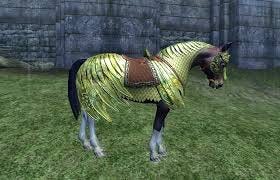
The Original Infamous Elder Scrolls: Oblivion Horse Armor DLC (Photo:https://elderscrolls.fandom.com/wiki/Horse_Armor)
DLC can come in two different forms: microtransactions and larger DLC. Microtransactions are the sort of thing you see in free-to-play games like Fortnite; small cosmetic items that usually only cost a couple of dollars at most, but can get pricier. These aren’t the sort of downloadable content I’m praising; in fact, I think microtransactions are having a primarily negative impact on the industry.
The other type of DLC is the substantial type. They add large levels and whole new sections to the games they are a part of. In the late 2000s and early 2010s, these became extremely popular. Games could extend their life by providing 2 or 3 smaller DLC packs over the year or so after the game's initial release.
When DLC Works
These DLC packs are one of the big precursors to today's modern DLC expansions. Anyone who played Call of Duty during its golden age probably remembers these fondly. Back when I was a kid, I would pick up the new CoD game every November, and throughout the year, the new DLC drops would be a massive event.
Each one would include several new maps for multiplayer, along with a zombies map — if the game included zombies. These kept a game that I may have put down a few months after release, fresh until the following year when the next game came out. And it seemed like a decent deal for me at the time. To an 11-year-old $14.99 was a lot of money, but I was always happy to pay that for the new maps, because I knew I would get hours of enjoyment out of the content.
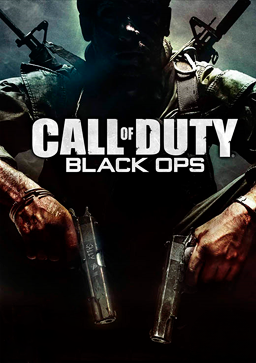
Call of Duty Black Ops Cover (Photo: https://en.wikipedia.org/wiki/Call_of_Duty:_Black_Ops#/media/File:CoD_Black_Ops_cover.png)
Another, even better, example of this era of DLC packs are the ones offered with From Software Games. I was really into the Dark Souls series, especially Dark Souls 2. And within months of that game releasing, they offered three additional DLC packs back-to-back. These packs were priced at $9.99 each or $24.99 for all three. A great deal, as they each added multiple new areas and bosses to a game that I just wanted to play more of. And when put together, you could pay less than half of the price of the base game to add 20+ hours of playtime. It seemed like an amazing deal at the time and an even better one now.
Dark Souls 2 and many other games would often release a few DLC packs in the months after a game's initial release, and then in the following year or so, they would release an ‘Ultimate edition’ that usually included all of the DLC and the base game for the price of just the base game. To me, this business model always seemed like the best of both worlds. Gamers get extra content in their favorite games, and studios get to make more money. But at the same time, those who were more patient could come back to a game a year or so after release and get a bigger experience at a reduced price.
[embed]A Video Showing How Extensive The DLC Levels Are For Dark Souls 2
DLC at this time felt truly additive. Experiences like the DLC from Dark Souls 2 may have never existed without the ability to have players download the content onto their PlayStation. If this were the old days — the 2000s — they may not have deemed the content worthy of being an expansion that players would have to go buy at the store, and the fact that they could be released and purchased separately likely helped as well.
Expansions
Before I move on to the modern-day equivalent of good DLC, I want to look back even further into the past at expansions. Expansions were additions to games that would be bought separately. They would usually be released a year or so after the game came out. My experience with these was with games like Age of Empires 2. The conquerors expansion came out a year later and added a massive amount of new content to the base game.
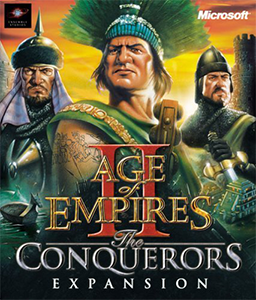
The Age of Empires 2 Expansion (Photo: https://en.wikipedia.org/wiki/Age_of_Empires_II:_The_Conquerors#/media/File:Age_of_Empires_II_-_The_Conquerors_Coverart.png)
The downside to expansions mainly seemed to be the limitations of physical media. Games would mostly be relegated to larger expansions rather than the drip-feed approach some companies took in the 2010s. This wasn’t necessarily a bad thing, though, and with many modern DLCs, companies have moved back to something more similar to the expansions approach.
The “New Way” To Do DLC
I’m calling this the ‘new way’ ironically because it seems we have come full circle. Games moved away from the expansion in the 2010s, and now, in the 2020s, we are seeing some of the more honest game studios move back to the original expansion model.
My favorite examples of this are from Lies of P and Elden Ring. Both of these games received massive DLCs that came out a couple of years after their initial release. And these DLCs are both incredible in scope. And they both offer players a lot more of what they loved about the base game.
[embed]A Trailer For The Massive Elden Ring Expansion, Shadow of the Erdtree
In the past, neither of these games would have gotten DLCs as they did in the 2020s. If this were 10 years ago, these games would have either gotten a sequel that came out a little later at full price or the more likely option of a much smaller, more limited DLC pack. Either way, the experience would have been much worse for the players and probably the game studios as well.
Major DLC for massively popular games allows studios to market that new content to an already existing player base. And if the player base enjoyed the base game, they are bound to revisit it and purchase the DLC when it is available. It’s a lot easier to sell a DLC than an entirely new sequel. Plus, sequels have the expectation of major changes, while with a DLC, there is an expectation of more familiarity. This encourages developers to work with the tools they have, rather than being focused on building new ones.
Games take forever now
Another issue with modern gaming is the development times. We all anticipate that most new games won't get a sequel for the next five or so years. And that’s assuming the studio immediately begins development on that next game. Just look at these few examples:
- Horizon: Zero Dawn — Horizon: Forbidden West — 5 Years
- FF7:Remake — FF7: Rebirth — 4 years
- Death Stranding — Death Stranding 2: On The Beach — 6 Years
These are all great games, but it can be hard waiting between releases. And sometimes those smaller DLC packs are just little add-ons and don’t help to really extend the life of the game very much.
The Examples listed above aren’t perfect, but they do demonstrate the problem. And I’m sure you can think of several games that you’ve been waiting on for many years now.
Modern Expansions
On top of the ‘New way’ to do DLC, games are also getting expansions again, just like in the old days. A great example of this is Final Fantasy 7: Remake. It came out in early 2020, and then around a year and a half later, a new, enhanced PS5 version of the game came out with an entirely new name — Final Fantasy 7: Remake Intergrade — and a new, fairly large DLC area focused around a side character that had not yet been introduced in the base game.
[embed]A Video Showcasing The Yuffie DLC (Expansion) In Final Fantasy 7: Remake Intergrade
Another great example is Spider-Man: Miles Morales. It came out on PS5 several years after the release of the original Spider-Man game on PS4. It offered an entirely new experience that was much closer to a full standalone game, but still heavily based on the content from the original game. And of course, it also included an enhanced version of the original game for PS5.
These two examples are limited to games that focused on giving new content exclusively to next-generation consoles, but I think you see my point here. These new experiences gave fans stuff to enjoy between major releases, rather than forcing them to wait to jump back into their favorite worlds.
A Beacon of Hope
Good games, by good studios, have really started to jump on this new trend. Not only do they see that there is money to be made, but also that the goodwill of their brand can dramatically increase by more consistently dropping content.
I have hope that as many games continue to see their development time increase, they will also see the quality and length of their DLC — or expansions — increase alongside it. In the future, we may expect games to continue to take 5 or more years to release, but maybe we could also expect to see smaller experiences released in between to hold us over.
메타데이터
- post_id
- d4b59da5901a
- slug
- what-lies-of-p-and-elden-ring-can-teach-us-about-good-dlc-d4b59da5901a
- url
- https://medium.com/@cedionaum/what-lies-of-p-and-elden-ring-can-teach-us-about-good-dlc-d4b59da5901a
- canonical_url
- https://medium.com/@cedionaum/what-lies-of-p-and-elden-ring-can-teach-us-about-good-dlc-d4b59da5901a
- author_url
- https://medium.com/@cedionaum
- status
- ok
- fetched_at
- 2026-06-15 20:49:13