the man who changed the world
From Saul to Paul.
the man who changed the world
From Saul to Paul.
History remembers kings and conquerors, but one man changed the world with letters written from prison. Few names in history carry as much spiritual weight as the Apostle Paul. He wrote nearly half of the New Testament, yet his story began not in faith, but in fierce opposition to it. His life is a mirror of divine transformation, from persecutor to preacher, from self-righteous scholar to humble servant, from a man bound by law to one freed by grace.
Who Was Paul?
Paul, originally named Saul of Tarsus, was a Jew from the tribe of Benjamin, born in the city of Tarsus (modern-day Turkey). He was a Roman citizen by birth, fluent in Greek, educated under the famous Jewish teacher Gamaliel, and zealous for the law of Moses.
Before meeting Christ, Saul was a Pharisee — deeply religious, highly educated, and utterly convinced that Christians were heretics who needed to be silenced. He oversaw the imprisonment and execution of believers (Acts 8:1–3). His identity was built on religious pride and human achievement.
The Radical Turning Point
Everything changed on the road to Damascus. Saul was traveling there to persecute more Christians when a light from heaven struck him down. He heard the voice of Jesus saying,
“Saul, Saul, why are you persecuting Me?” (Acts 9:4)
Blinded and humbled, Saul spent three days in darkness — both physical and spiritual — until a disciple named Ananias was sent by God to restore his sight. In that moment, the persecutor became a preacher. Saul took on the name Paul, symbolizing his new mission: to proclaim Christ, not destroy His followers.
This was more than a conversion; it was a calling. Paul became the apostle to the Gentiles (non-Jews), chosen to carry the gospel across the Roman Empire.
His Conviction Was Not Instant Emotion — It Was a Collapse of His Worldview
Before Damascus, Saul believed he was serving God by hunting down Christians. His conviction was built on law, intellect, and zeal. But when the light appeared and Jesus spoke, everything crumbled in a single moment:
“I am Jesus, whom you are persecuting.” (Acts 9:5)
This was not just a supernatural sight. It was the realization that he had been fighting against the very God he thought he was defending. That broke him. His blindness was a physical sign of his inner blindness — and his healing became the start of true sight.
His Hatred Didn’t Vanish — It Was Transformed
Paul’s zeal, passion, and determination didn’t disappear; they were redirected. The same fire that once persecuted now proclaimed. The conviction that once fueled violence became a force for love and endurance.
He didn’t become softer in personality — he became clearer in purpose. His hatred melted not by emotional persuasion, but by truth colliding with grace.
His Change Was Rooted in Revelation
Paul’s conversion wasn’t about guilt or fear; it was about revelation. He saw Christ’s divinity, his mercy, and the futility of self-righteousness.
“For I received from the Lord what I also passed on to you.” (1 Corinthians 11:23)
Paul wasn’t taught the gospel by men — he received it directly from Christ (Galatians 1:11–12). That’s why his conviction ran so deep: it wasn’t secondhand faith. It was a firsthand encounter.
His Mission Became His Lifelong Proof
Paul’s new conviction was proven through suffering. He didn’t just say he believed — he lived it.
He endured prison, flogging, rejection, and betrayal because he had touched truth itself. He wrote from chains not with despair but with confidence:
“For me, to live is Christ and to die is gain.” (Philippians 1:21)
His conviction was so strong that comfort, freedom, and even life itself no longer mattered. His goal was singular — to know Christ and make Him known.
What Truly Changed Him
It wasn’t the light that converted Saul; it was love that confronted his pride.
It wasn’t blindness that humbled him; it was grace that opened his eyes.
It wasn’t a voice that terrified him; it was truth that redefined him.
He realized that all his religion, all his learning, and all his zeal had missed the point — that righteousness was not achieved by the law but received through faith.
How Many Books Did Paul Wrote in the Bible?
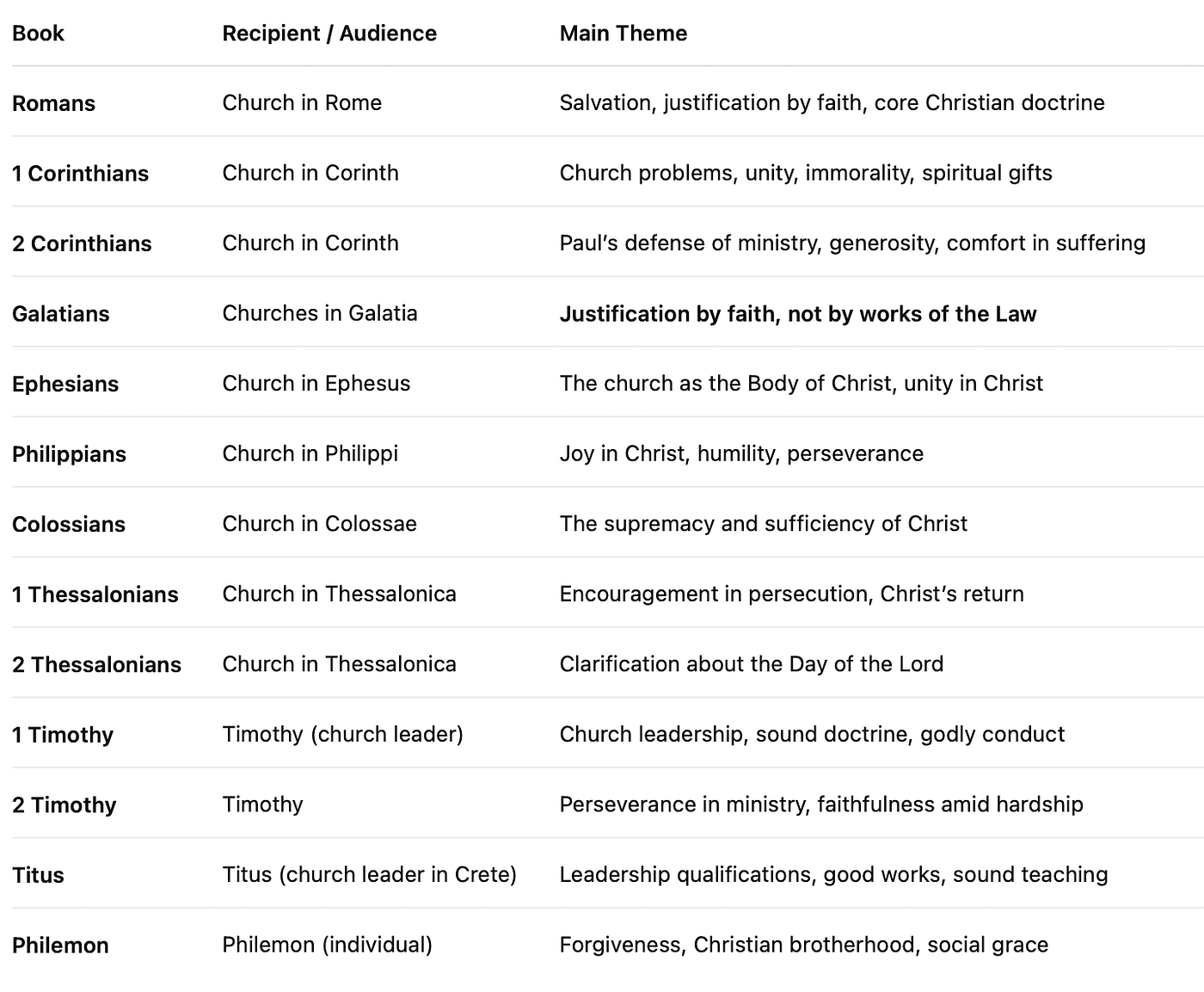
Paul wrote 13 letters (or “epistles”) in the New Testament, and possibly 14 if we include Hebrews (though authorship is debated).
His letters include:
- Romans
- 1 Corinthians
- 2 Corinthians
- Galatians
- Ephesians
- Philippians
- Colossians
- 1 Thessalonians
- 2 Thessalonians
- 1 Timothy
- 2 Timothy
- Titus
- Philemon
Each letter addresses the spiritual, moral, and practical challenges faced by early Christian communities — and continues to guide believers today.
Why Did He Write So Many Books?
Paul’s writings were born out of pastoral urgency and deep love for the churches he helped establish. He couldn’t always visit them in person, so he wrote letters to:
- Teach sound doctrine
- Correct false teachings
- Encourage faith under persecution
- Strengthen unity between Jews and Gentiles
- Explain salvation by grace through faith in Christ
In essence, Paul’s writings explain how to live out the gospel in a broken world. His letters are not theory — they are theology made practical.
Why Was Paul in Prison?
Paul was imprisoned multiple times because of his bold preaching of Jesus as the risen Messiah. He refused to stop proclaiming Christ even when it meant chains or death.
He was imprisoned in several locations:
- Philippi (Acts 16) — for casting out a spirit.
- Caesarea — for two years under Roman guard (Acts 23–26).
- Rome — twice, where he wrote letters like Ephesians, Philippians, Colossians, and Philemon (called the Prison Epistles).
During his last imprisonment in Rome (around AD 66–67), Paul wrote 2 Timothy, his final letter, knowing execution was near.
How Long Was Paul in Prison?
In total, Paul spent about five to six years imprisoned over the course of his ministry. Yet his confinement never silenced him. Instead, it amplified his message. Some of his most powerful writings came from behind bars — a reminder that you can’t chain the gospel (2 Timothy 2:9).
Why Was Paul Chosen?
God chose Paul precisely because of who he was — zealous, intelligent, and relentless. God didn’t erase those traits; He redirected them. The man who once hunted Christians became the one who spread Christianity farther than anyone else in his time.
Paul himself said it best:
“Christ Jesus came into the world to save sinners — of whom I am the worst.” (1 Timothy 1:15)
His life was proof that grace can rewrite any story.
The Thematic Core of Paul’s Writings
Paul’s message can be summed up in one word: grace.
He taught that:
- Salvation is a gift, not something earned (Ephesians 2:8–9).
- The old life of sin is dead, and believers now live in Christ (Romans 6:4).
- The Holy Spirit empowers new life (Galatians 5:22–25).
- The Church is one body united in Christ (1 Corinthians 12).
His ultimate theme:
Jesus Christ is enough.
Enough to save, enough to change, enough to sustain.
Paul’s Character and Legacy
Paul was brilliant yet humble, bold yet compassionate, unwavering yet tenderhearted. He wept for the lost, encouraged the weak, and stood firm in faith no matter the cost.
His letters reveal a man of deep prayer, relentless endurance, and unmatched love for both God and people.
He didn’t just talk about faith — he lived it through shipwrecks, floggings, betrayals, and imprisonment, all for one purpose:
“That I may know Him and the power of His resurrection.” (Philippians 3:10)
Did Paul Die?
Yes. According to early church tradition, Paul was executed in Rome under Emperor Nero around AD 67, likely by beheading because he was a Roman citizen. He faced death not as defeat but as fulfillment. He wrote before his death:
“I have fought the good fight, I have finished the race, I have kept the faith.” (2 Timothy 4:7)
His Conviction in One Line
Paul’s entire conviction can be summarized in his own words:
“I count everything as loss because of the surpassing worth of knowing Christ Jesus my Lord.” (Philippians 3:8)
That’s not fanaticism. That’s a man who found the real thing after a lifetime of chasing shadows.
Conclusion: The Message Paul Still Speaks
Paul’s story is not about perfection; it is about redemption.
He shows that no one is beyond God’s reach. He shows that truth is worth suffering for. And he reminds us that grace is not a concept; it is a Person.
From Saul the persecutor to Paul the preacher, one man’s transformation became the spark that lit the early Church. And that same grace that changed him still changes lives today.
메타데이터
- post_id
- d4cbc27e14aa
- slug
- the-man-who-changed-the-world-d4cbc27e14aa
- url
- https://medium.com/@hey.shybutfun/the-man-who-changed-the-world-d4cbc27e14aa
- canonical_url
- https://medium.com/@hey.shybutfun/the-man-who-changed-the-world-d4cbc27e14aa
- author_url
- https://medium.com/@hey.shybutfun
- status
- ok
- fetched_at
- 2026-06-24 11:06:28