The Hypocrisy Behind Trans Erasure in the LGBTQ+ Movement
🏳️⚧️ From the frontlines to the firing line
The Hypocrisy Behind Trans Erasure in the LGBTQ+ Movement
🏳️⚧️ From the frontlines to the firing line
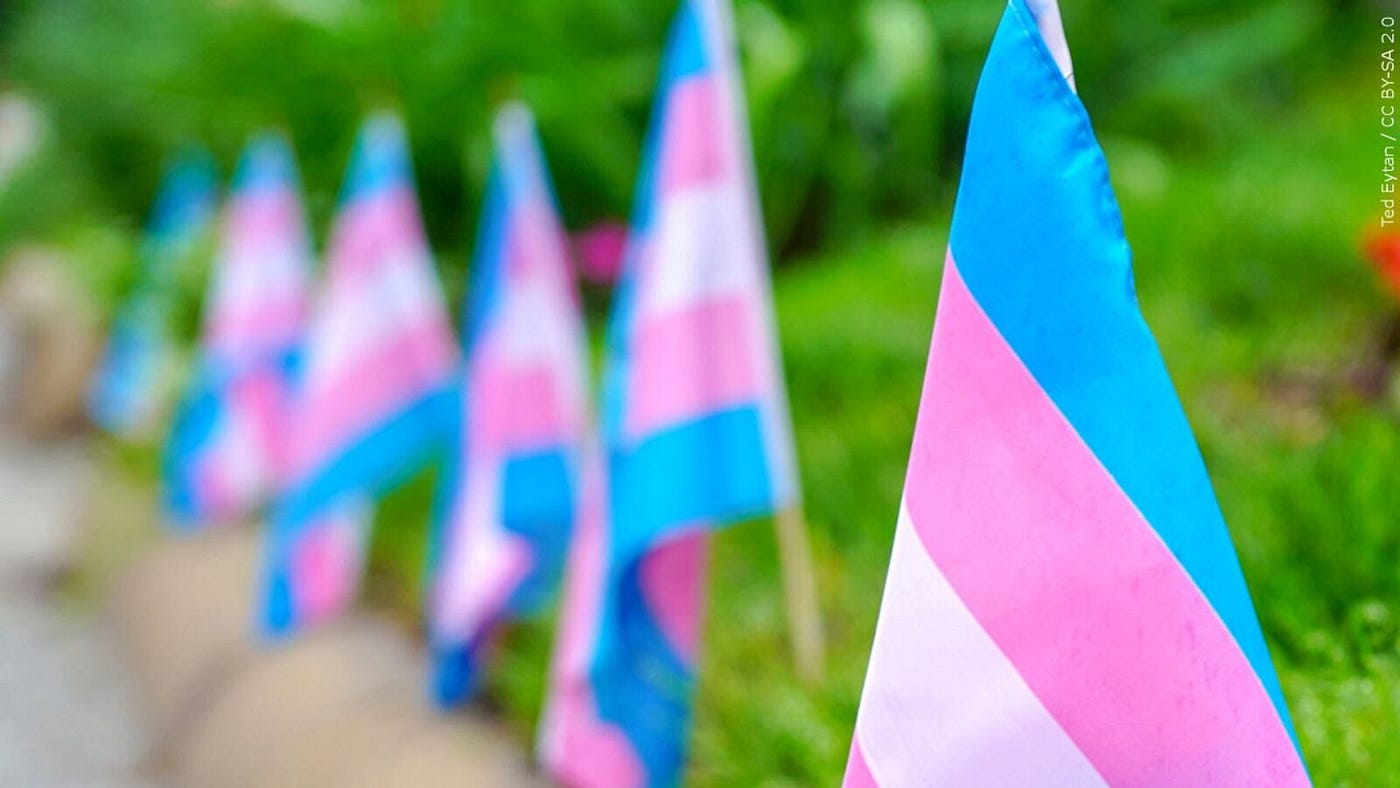
Transgender flags, May 19, 2018. Photo by Ted Eytan. (CC BY-SA 2.0)
✦ Introduction
Stonewall didn’t start with a rainbow. It began with a brick thrown in defiance, by those who refused to be erased. At the origin of queer liberation stood trans women, drag queens, sex workers, and other gender-nonconforming people who risked everything to stand against state violence.
Half a century later, the very people who led the fight are being erased from its legacy. In public discourse, in community organizing, and even within the broader LGBTQ+ movement, the “T” has become uncomfortable. It is tolerated in slogans but neglected in substance.
This article sheds light on the dissonance between symbolic inclusion and structural exclusion. It doesn’t seek pity. It demands clarity.
✦ 1. Trans People Were Never Side Characters
History likes to sanitize its rebels. Queer history is no exception.
The world remembers the spark of Stonewall but forgets the kindling. Black trans women like Marsha P. Johnson and radical activists like Sylvia Rivera weren’t included as an afterthought. They were the nucleus. Their resistance carved the way for the rights others now enjoy.
Yet in the years that followed, the movement was mainstreamed. And with that came a cost. To become “acceptable,” the faces of the LGBTQ+ struggle were whitened, cis-normativized, and stripped of discomfort. Trans people didn’t disappear. They were deliberately pushed out of the spotlight they had created.
Today, while rainbow flags cover corporate offices and Pride parades stretch across city avenues, the lives of trans people — especially those facing poverty, racial discrimination, and gendered violence — remain precarious and politically disposable.
✦ 2. The T as a Political Liability
For some within the LGBTQ+ umbrella, the “T” is a source of tension rather than unity. Campaigns to “drop the T” from the acronym have gained traction in various countries, often under the guise of protecting “women’s rights” or preserving “gay identity.” These movements are not fringe. They have entered public debates, media panels, and even the platforms of political parties.
Trans exclusion doesn’t always come with slurs. It comes with bureaucracy. It comes with panel discussions that forget to invite trans voices. With “LGBT events” where no one is gender-diverse. It comes with the silent assumption that queer rights begin and end with cis gay and lesbian people.
Within supposedly inclusive spaces, trans people report being tokenized, fetishized, or made to feel like burdens. Discussions about gender identity are dismissed as divisive or “too political.” There are “safe spaces” where trans people don’t feel safe at all.
The truth is simple. A movement that excludes its most marginalized is not a movement. It’s a brand.
✦ 3. Rainbow-Washing and Controlled Visibility
June rolls around, and suddenly trans people are invited to speak, perform, or pose. For Pride campaigns. For photo shoots. For marketing initiatives. The trans experience is welcome, but only when curated, controlled, and convenient.
Corporations scramble to showcase diversity, often choosing individuals who match the aesthetic of rebellion but pose no threat to the status quo. Trans faces are used for visibility, but their realities are left in the shadows: lack of access to healthcare, high unemployment, housing insecurity, hate crimes.
There is a difference between representation and extraction. True representation challenges. It disrupts. But most mainstream Pride initiatives aren’t interested in disruption. They’re interested in optics. Trans people become symbols. Powerful, glamorous, consumable — and politically inert.
The paradox is cruel. Those who are most at risk are made most visible, but only in ways that leave power untouched.
✦ 4. When the Community Mirrors the System
It would be comforting to believe that the worst discrimination trans people face comes from the outside. But the truth is more complex. Sometimes, exclusion comes from within the very communities that claim to be progressive.
Cis-led queer spaces can reproduce the same hierarchies that dominate the wider world: racism, classism, transphobia. Token trans presence is often used to deflect criticism, while actual trans leadership remains rare. In many organizations, the power remains concentrated in the hands of cisgender individuals.
Language of inclusion is not the same as praxis. “You’re welcome here” means nothing when there are no gender-neutral bathrooms, no pronoun introductions, and no defense against transphobic microaggressions.
When trans people challenge these structures, they are often met with fragility, deflection, or outright dismissal. The very communities that once demanded space now struggle to make space for others.
✦ 5. History Is Being Rewritten — and We Are Watching
Trans histories are being erased retroactively. The identities of key historical figures are contested or stripped of their gender complexity. Marsha P. Johnson is still sometimes labeled simply as a “drag queen.” Others, like Lucy Hicks Anderson or Albert Cashier, are excluded from mainstream LGBTQ+ history entirely.
There is a political cost to this erasure. If the past can be rewritten to exclude trans people, so can the present. So can the future.
Every time the “T” is reduced to a symbol, a costume, or an inconvenience, the legacy of resistance is betrayed. Every time trans struggles are downplayed, the community fractures a little more.
The danger lies not just in hate. It lies in forgetfulness.
✦ Conclusion: Trans Liberation Is Not Optional
Trans people are not footnotes. They are not guests. They are not aesthetic additions to queer culture. They are foundational.
Any movement that claims to fight for queer liberation must center those who have always been at the frontline of that fight. That means resources, leadership, protection — not just platforms during Pride.
It’s not about visibility. It’s about viability. The right to live, not just to be seen.
And above all: trans liberation is not a negotiation. It is a non-negotiable.
Júlia Rosell Saldaña is an AI educator, cultural writer, and post-humanist voice based in Barcelona. Through poetry, essays, and symbolic narratives, she explores the digital condition and the future of intelligences. More here.
메타데이터
- post_id
- d4f124d33e89
- slug
- the-hypocrisy-behind-trans-erasure-in-the-lgbtq-movement-d4f124d33e89
- url
- https://medium.com/prismnpen/the-hypocrisy-behind-trans-erasure-in-the-lgbtq-movement-d4f124d33e89
- canonical_url
- https://medium.com/prismnpen/the-hypocrisy-behind-trans-erasure-in-the-lgbtq-movement-d4f124d33e89
- author_url
- https://medium.com/@juliarscat
- status
- ok
- fetched_at
- 2026-08-18 03:11:42