Where Languages Meet: Arabic, Persian, Turkish, and Hebrew in Conversation
by Nayeba Nawab
Where Languages Meet: Arabic, Persian, Turkish, and Hebrew in Conversation
by Nayeba Nawab
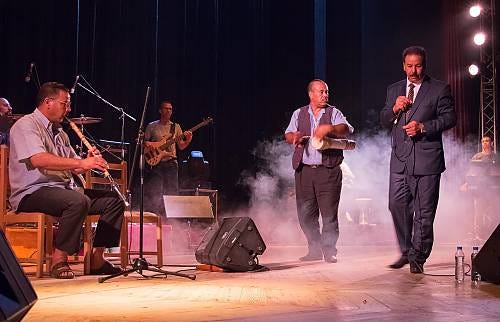
Photo by zhendong wang on Unsplash
The Geography of Language
Languages do not merely coexist; they travel. They cross deserts with merchants, enter courts with scholars, survive conquests, and kneel in prayer beside unfamiliar tongues. The linguistic history of the Middle East is therefore not a collection of isolated traditions, but a long conversation conducted across centuries. Arabic, Persian, Turkish, and Hebrew did not remain confined within their own borders; they entered one another’s vocabularies, literature, and memory. If language is a river, then the Middle East has long been its confluence.
Yet these languages are not born of the same origin. Arabic and Hebrew belong to the Semitic family, sharing grammatical structures and cognates that reveal an ancient kinship.[1] Persian emerges instead from the Indo-Iranian branch, while Turkish belongs to the Turkic family.[2] Their similarities, therefore, are not always genealogical. Many were acquired through contact: through empire and commerce, scholarship and faith.
The Prestige of Arabic
The rise of Islam transformed Arabic from a regional language into a civilizational force. By the eighth century, Arabic had become the language of administration, theology, philosophy, astronomy, and medicine across vast territories stretching from Iberia to Central Asia.[3] To write in Arabic was not merely to communicate; it was to participate in intellectual authority.
Persian absorbed thousands of Arabic loanwords during this period, particularly in theology and governance.[4] Words such as ketāb (book), derived from the Arabic kitāb, and elm (knowledge), from ʿilm, became inseparable from Persian literary expression itself.[5] Turkish, especially during the era of the Ottoman Empire, inherited this layered inheritance in turn. Ottoman Turkish developed into a courtly language where Turkic grammar carried an immense Persian and Arabic vocabulary like silk embroidered with gold thread.[6]
The vocabulary of Ottoman administration reveals this fusion clearly. Turkish kalem, meaning pen or bureaucracy, emerged from the Arabic qalam, while hukuk (law) descended from huqūq.[7] Even ordinary commodities carried linguistic traces of exchange: the Arabic sukkar became Persian and Turkish şeker, preserving centuries of trade within a single word.[8]
The influence was not one-sided. Persian literary traditions profoundly shaped Islamic culture, particularly poetry. The works of Rumi and Hafez circulated across Arabic- and Turkish-speaking societies, demonstrating that prestige in the medieval Middle East belonged not to a single language, but to a constellation of them.[9]
Hebrew and Arabic: Sister Tongues
Among these linguistic relationships, Hebrew and Arabic possess a particularly intimate connection. Their shared Semitic ancestry is visible in grammar, pronunciation, and vocabulary.[10] The Arabic salaam and Hebrew shalom, both denoting peace, emerge from the same triconsonantal root. Likewise, Arabic īmān and Hebrew emunah each concern faith and belief, reflecting parallel theological structures inherited from older Semitic traditions.[11]
Other similarities reveal themselves through daily language. Arabic kitāb and Hebrew ketav derive from roots associated with writing, while countless expressions concerning law, ritual, and kinship reveal echoes of common ancestry.[12] Such resemblances are not coincidence but residue: traces of an older linguistic world from which both languages descended.
During the medieval period, Jewish scholars living under Islamic rule often wrote in Arabic while preserving Hebrew script.[13] In cities such as Cairo and Jerusalem, intellectual life moved fluidly between the two languages. The boundary between them was porous, shaped less by vocabulary than by community and ritual.
The Archive of Human Contact
Languages preserve history with greater honesty than monuments. Within a borrowed word survives the memory of a traveler, a dynasty, a marketplace, or a scripture. The Middle East’s languages, therefore, resemble neither isolated kingdoms nor perfectly blended forms; they resemble instead an old bazaar, where voices overlap without losing themselves entirely.
To study Arabic, Persian, Turkish, and Hebrew together is to encounter not linguistic purity, but exchange. Their histories reveal that civilizations are rarely built through silence between cultures. More often, they are built through translation.
Footnotes
[1] A Short History of the Hebrew Language — Chaim Rabin (https://archive.org/details/shorthistoryofhe0000rabi?)
[2] The World’s Major Languages — Bernard Comrie (https://www.routledge.com/The-Worlds-Major-Languages/Comrie/p/book/9781138355191?)
[3] A History of the Arab Peoples — Albert Hourani (https://www.hup.harvard.edu/books/9780674395654?)
[4] Arabic Elements in Persian — Encyclopaedia Iranica (https://iranicaonline.org/articles/arabic-iv?)
[5] Persian Vocabulary of Arabic Origin (https://iranicaonline.org/articles/persian-language-i?)
[6] The Turkish Language Reform — Geoffrey Lewis (https://global.oup.com/academic/product/the-turkish-language-reform-9780199256690?)
[7] Ottoman Turkish and Arabic Influence] (https://www.britannica.com/topic/Turkic-languages?)
[8] Etymology of Sugar Across Languages (https://www.etymonline.com/word/sugar?)
[9] Mystical Dimensions of. Islam- Annemarie Schimmel (https://uncpress.org/book/9780807841270/mystical-dimensions-of-islam/?)
[10] Semitic Languages Overview — Encyclopaedia Britannica (https://www.britannica.com/topic/Semitic-languages?)
[11] Shared Hebrew and Arabic Cognates (https://www.myjewishlearning.com/article/hebrew-and-arabic/?)
[12] A Grammar of Biblical Hebrew — Joshua Blau (https://yalebooks.yale.edu/book/9780300106012/a-grammar-of-biblical-hebrew/?)
[13] A Mediterranean Society — S.D. Goitein (https://www.ucpress.edu/books/a-mediterranean-society/paper?)
메타데이터
- post_id
- d501f0cfee65
- slug
- where-languages-meet-arabic-persian-turkish-and-hebrew-in-conversation-d501f0cfee65
- url
- https://medium.com/ypla/where-languages-meet-arabic-persian-turkish-and-hebrew-in-conversation-d501f0cfee65
- canonical_url
- https://medium.com/ypla/where-languages-meet-arabic-persian-turkish-and-hebrew-in-conversation-d501f0cfee65
- author_url
- https://medium.com/@teresachiran00444
- status
- ok
- fetched_at
- 2026-06-09 15:37:30