From Siloed Knowledge to Shared Impact: How We Built Our Design Research Repository
For years, designers across our organization were conducting valuable user research — but the insights often stayed locked in individual…
From Siloed Knowledge to Shared Impact: How We Built Our Design Research Repository
For years, designers across our organization were conducting valuable user research — but the insights often stayed locked in individual documents or development tools. Without a centralized place to store, search, or share findings, we lost opportunities to build on what we already knew.
In early 2021, we set out to change that by creating an enterprise design research repository. But we didn’t start with tools — we started by listening.
Our goal was simple: understand what our UX community needed so that our research would have lasting impact. What followed was a multi-year effort involving dozens of interviews, extensive documentation, cross-functional collaboration, and a lot of careful coordination.
This is the story of how we built our repository — from discovery to documentation, from taxonomy to tooling.
1. Listening First: Understanding Our Community
We began by conducting in-depth interviews with members of our Design Department. Each conversation was tailored, but we consistently asked:
- Who are your users?
- Do you have access to customers?
- What are your most important research questions?
- How do you summarize and share insights?
- What research tools do you use?
- What’s your process for integrating research into design?
We also asked about tools, workflows, and skills — trying to map both individual practices and systemic challenges.
What We Learned
Inconsistent processes. There was no single process for tracking usability issues, documenting personas and use cases, or capturing research findings. Most efforts were focused on immediate product needs, not long-term knowledge-building.
Limited customer access. Nearly half of our department’s research projects relied on internal users. Few designers had advocates helping them get into customer conversations, and conferences weren’t a reliable substitute.
Time and support constraints. Research often took a back seat in Agile workflows. Designers lacked time, support, and infrastructure for synthesis and follow-up. And even when research was conducted, it was rarely documented in a way others — outside of the immediate product team — could use.
Enablement needs. Designers wanted help finding users, synthesizing results, using research tools, and handling logistics like scheduling, agendas, and communications. Many also expressed a desire for templates, training, and mentorship.
A strong foundation. Despite these challenges, the team had deep research experience — over 100 years of collective experience in usability testing, interviews, field research, card sorting, surveys, journey mapping, and more. The raw capability was there. What was missing was shared infrastructure.
2. Choosing the Right Tool
Once we understood the challenges our design community faced, we began evaluating third-party research repository platforms.
We explored the marketplace and narrowed our focus to four candidates. Each tool was assessed in detail across a set of practical, researcher-driven criteria:
Our Evaluation Criteria Included:
- Project-level features: Structure of research projects, support for templates, participant tracking, and session metadata
- Collaboration support: Real-time note-taking, shared annotations, integrated comments, and tagging workflows
- Media and transcription: Uploading and tagging of audio, video, and images; automatic transcription; and highlight creation
- Data organization and synthesis: Grouping of tags, highlights, and findings; support for sentiment analysis; visualizations and counts
- Reporting capabilities: In-tool reporting with explanatory text, embedded quotes, highlights, and visual summaries
- Privacy and sharing: Access controls for raw data and the ability to share curated findings with non-repository users
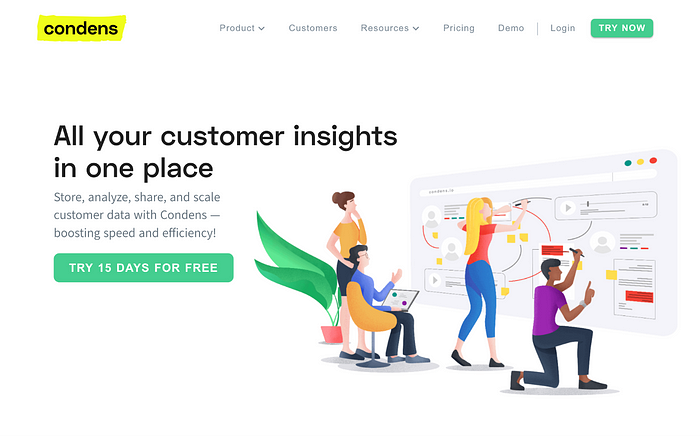
Ultimately, we selected Condens as the platform that offered the best balance of structure, usability, and flexibility for our growing research practice.
3. Responding with Resources
With a platform in place, we focused on enabling our teams to use it effectively — starting with practical documentation and tools to support every stage of the research process.
Comprehensive Documentation
We used the rich knowledge within our team to build a centralized knowledge base filled with practical, actionable guidance. This documentation addresses the full lifecycle of a research effort — from planning to sharing:
- Planning research projects
- Recruiting and working with participants
- Collecting and analyzing data
- Wrapping up and sharing findings
We also included best practices by method — interviews, surveys, usability evaluations — and created checklists and how-to guides for common activities.
Templates and Samples
To reduce the burden of starting from scratch, we offered templates for common research needs:
- Interview guides and survey questions
- Background questionnaires
- Customer access and recruitment messages
- Scheduling tools and thank-you emails
- Research findings reports and presentation slides
Tool Training
We also rolled out detailed guidance for using our research repository platform:
- Setting up profiles
- Analyzing and organizing research data
- Using tags and metadata to make findings discoverable
- Ensuring privacy and access controls were correctly applied
4. Supporting Stakeholders Beyond Design
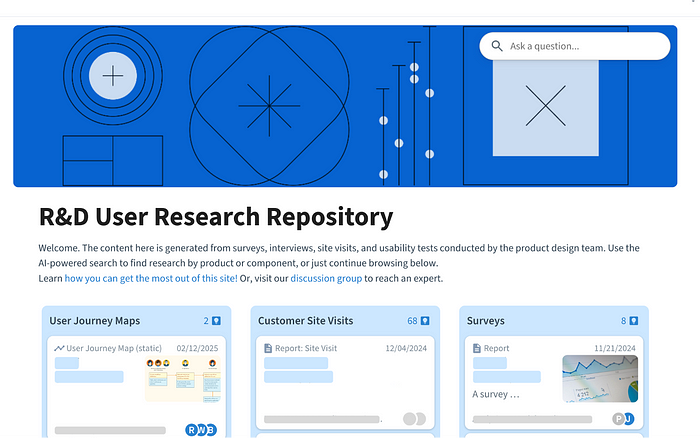
While the repository was created to support our design team, we knew from the start that its value would grow exponentially if it could serve a broader audience. Researchers and designers weren’t the only ones who needed access to insights — product managers, engineers, support teams, and other stakeholders also needed to find and apply user research findings in their work.
To support these non-research users, we created a simplified set of onboarding materials that focused on how to navigate the repository, not contribute to it.
Key Topics Included:
- What is the R&D User Research Repository? A short overview explaining the purpose and structure of the repository, emphasizing that it was a living library of user insights — not just a file storage space.
- How to Access Research Results Step-by-step instructions on how to log in, browse by project, and explore research outputs such as interview summaries, journey maps, personas, and findings reports.
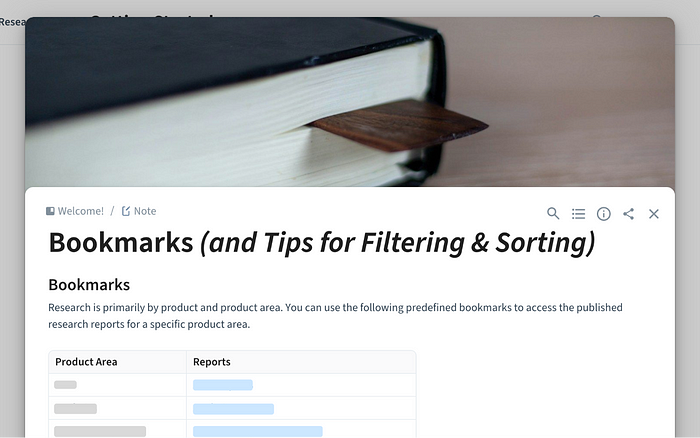
- Bookmarks, Filtering & Sorting Tips Practical guidance on how to save relevant findings, use tags to narrow results, and search effectively within the research repository.
By making the repository approachable and intuitive for occasional users, we expanded its utility — and gave researchers a better shot at having their work reused.
5. Partnering with Legal: Building a Compliant Foundation
Creating a repository for user research isn’t just about documentation and design — it’s also about responsibly managing data. From the beginning, we recognized the importance of working closely with our Legal department to ensure compliance with privacy laws, consent requirements, and internal policies.
What We Worked Through Together
- Consent and release forms. We collaborated with multiple legal representatives across several meetings to refine the documents used for participant consent.
- Signature requirements. We defined clear guidelines for when formal signatures were required and when consent could be documented through other means.
- Privacy obligations. We worked to understand and apply principles around data minimization, limited retention, purpose specificity, and secure access — ensuring that the repository supported responsible research.
Vendor Transitions and Approval Hurdles
We also partnered with Legal during a lengthy vendor review process. Moving from one research repository platform to another required:
- Security and privacy reviews
- Contract negotiation
- Risk and compliance signoffs
It was a long and often arduous process — but essential to ensure that our tools met company and regulatory standards. Without Legal’s involvement, we wouldn’t have had the confidence or clearance to move forward.
6. Structuring for Scale: Taxonomy, Metadata, and Templates
As the repository began to take shape, we turned our attention to making it sustainable and searchable at scale. This meant going beyond uploading research results — we needed to create a structure that would support consistent tagging, meaningful organization, and long-term discoverability.
Global Tags and Metadata
We created a set of global tags to describe research content in a standardized way. Each tag came with a definition and usage guidelines to ensure consistency across teams. This helped prevent duplication and misinterpretation, and it laid the groundwork for cross-project synthesis later.
Defining Metadata for Search & Organization
To make research entries easy to filter and find, we developed a clear set of metadata fields. These included:
For research projects:
- Method of inquiry (e.g., survey, interview, usability test)
- Product area and product name
- Project status (e.g., planned, in progress, completed)
For user sessions within each project:
- Session date
- Participant name and ID
- Researcher name
- Company name (if applicable)
This structured metadata made it easier to audit the repository, connect related efforts, and support search and filtering for both designers and stakeholders.
Project and Output Templates
We also developed a library of templates to streamline common research tasks and standardize documentation. These included:
Project templates for different types of research:
- Site visits
- Surveys
- Meta-studies
- Interviews
Output templates for commonly shared results:
- Persona definitions
- Affinity maps
- Journey maps
- Research findings reports
The result was a repository that not only stored research, but actively supported repeatable, reusable, and reliable practices.
7. What We Learned
Building our design research repository wasn’t just a tooling project — it was an organizational change effort. Through interviews, documentation, collaboration, and iteration, we learned some key lessons:
- Listen before you build. Starting with interviews helped us prioritize the right problems and gain early buy-in. We didn’t assume — we asked.
- Documentation matters. Tools are only useful when people know how to use them. Providing process guidance, samples, and templates helped unblock designers and made research feel more approachable.
- Legal partnership is essential. Compliance isn’t a roadblock — it’s part of the foundation. Working with Legal took time, but it ensured that our repository was scalable, secure, and compliant.
- Structure enables reuse. A shared taxonomy, clear metadata, and standardized templates made it easier for everyone to contribute to and benefit from the repository.
- Research enablement adds value. Operational support doesn’t just remove barriers — it elevates the quality and reach of research across the organization.
What’s Next
The repository is now a cornerstone of how we work — but we’re not done. We’re continuing to:
- Expand access and visibility: We’re continuing to onboard more teams across the organization and encourage use of the repository in product planning and decision-making.
- Synthesize insights across projects: With our taxonomy in place, we’re exploring ways to synthesize themes and patterns across studies.
- Gather feedback and iterate: As usage grows, we’re listening to what’s working, what’s not, and where our support materials can evolve.
We set out to make research easier to conduct, easier to find, and easier to act on. And while we still have more to learn, we’re proud of what we’ve built — and excited about where this will take us.
메타데이터
- post_id
- d5673dd2700a
- slug
- from-siloed-knowledge-to-shared-impact-how-we-built-our-design-research-repository-d5673dd2700a
- url
- https://medium.com/sas-software-design/from-siloed-knowledge-to-shared-impact-how-we-built-our-design-research-repository-d5673dd2700a
- canonical_url
- https://medium.com/sas-software-design/from-siloed-knowledge-to-shared-impact-how-we-built-our-design-research-repository-d5673dd2700a
- author_url
- https://medium.com/@julierd
- status
- ok
- fetched_at
- 2026-06-14 11:28:49