7 one-hit wonders … with a twist [Pt2]
They got one shot and nailed it. And that’s worth celebrating.
7 one-hit wonders … with a twist [Pt2]
They got one shot and nailed it. And that’s worth celebrating.
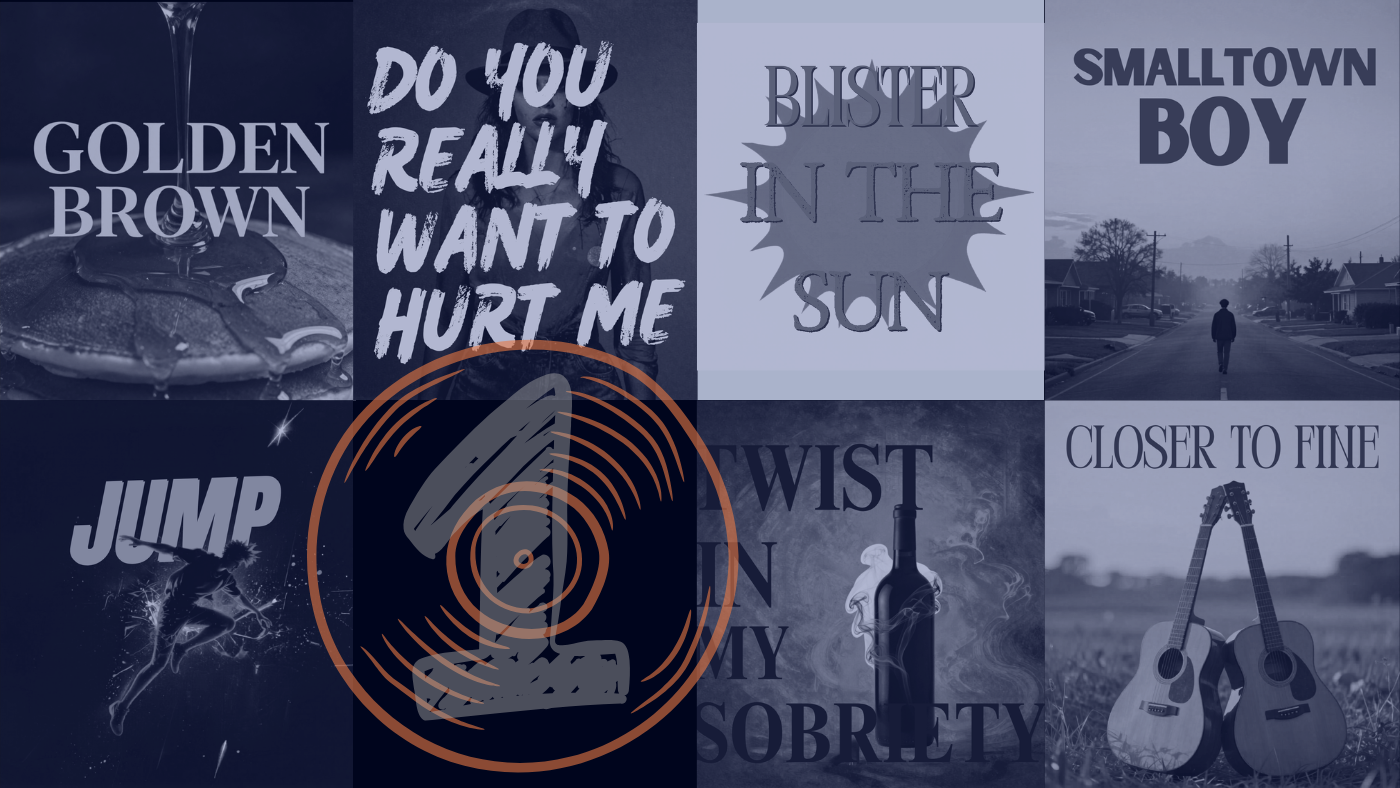
Image: Canva AI generated.
The first instalment made the case for the one-hit wonder as accidental genius — a song that arrives without warning, takes what it needs, and disappears. Its accompanying covers made a second case: a great song doesn’t permanently belong to whoever recorded it first.
Part two operates on the same terms. Seven more one-hit wonders, seven more covers chosen for what they bring rather than what they borrow.
Some originals are well-remembered; others have spent decades in the softer regions of collective memory, the kind of song you’d recognise within two bars but couldn’t name under pressure.
These covers carry no obligation to improve on what came before. The better ones find a different angle on familiar material. The rest simply remind you why the song was worth writing in the first place.
1. Golden Brown, The Stranglers [1981]
The Stranglers spent the late 70s being deliberately difficult — abrasive, confrontational, uninterested in your approval. Which makes Golden Brown rock’s most startling pivot. A harpsichord waltz in irregular 13-beat time, lyrics working as both love song and heroin hymn, reaching №2 in the UK. Nobody saw it coming.
That was the point. Bassist Jean-Jacques Burnel called it two fingers up at their detractors, defiance disguised as beauty rather than noise. Built by Dave Greenfield and Jet Black from a discarded fragment, the music carries a stateliness entirely alien to the punk era around it.
Hugh Cornwell’s lyric holds its double meaning with perfect composure, never resolving, content to let both readings sit side by side.
It remains their highest-charting UK single. Years spent trying to unsettle people, and the moment they genuinely surprised everyone, they accidentally wrote the most elegant song of their career.
Cover: Cage The Elephant, 2017
Cage The Elephent is a Kentucky rock band who relocated to London, broke through on their debut, and spent the next 15 years and six albums proving it wasn’t a fluke. This cover is off their second live album, Unpeeled.
[embed]Source: YouTube
2. Do You Really Want To Hurt Me, Culture Club [1982]
Culture Club’s first three singles disappeared without trace. Their fourth existed only because Shakin’ Stevens pulled out of Top of the Pops the night before broadcast, leaving a slot to fill. Boy George walked on, and by morning the papers were full of him — the androgynous clothes, the ambiguous sexuality, the face that refused categorisation. The song almost didn’t matter. Except it did.
Because stripped of the spectacle, Do You Really Want To Hurt Me is simply a very good ballad — a lover’s plea over a reggae-inflected groove, with genuine vulnerability at its centre. Boy George had a voice that made emotional directness sound effortless, and the lyric gave him nowhere to hide. The ache is real. It was written about the drummer.
The song reached №1 in the UK, two in America. Culture Club released other singles, but none arrived with quite this mix of accident and conviction — needing one cancelled booking and one extraordinary voice to find its audience.
Cover: Violent Femmes, 1991
Violent Femmes is … well, see below. This cover is off their fifth album, Why Do Birds Sing?
[embed]Source: YouTube
3. Blister In The Sun, Violent Femmes [1983]
Gordon Gano wrote it about drugs. He wrote it for a female vocalist. Victor DeLorenzo played the drum part on his first day in the band. None of this is what most people associate with the song because most people spent decades assuming it was about something else entirely [masturbation] — a misreading so widespread that Gano himself didn’t encounter it until a decade later, and found it more baffling than flattering.
That gap between intention and reception is part of what makes the song work. The lyric stays oblique enough to sustain multiple readings, and the performance — nervy, twitchy, held together by DeLorenzo’s insistent drumming and the barest acoustic arrangement — creates an anxious energy that could plausibly attach to almost any compulsion.
The Violent Femmes sounded like nobody else in 1983. The song found its audience slowly, through word of mouth and mixtapes, then the 1997 movie Grosse Pointe Blank, which starred John Cusack, introduced it again.
Some songs take the long route. This one took 14 years to become a single and never stopped arriving.
Cover: Trixie Mattel, 2021
Brian Firkus is a Wisconsin drag queen, folk-country singer, and autoharp player who won RuPaul’s Drag Race All Stars, built a comedy empire with Katya, and somehow makes all of it feel coherent. This cover was released as a standalone single.
[embed]Source: YouTube
4. Smalltown Boy, Bronski Beat [1984]
It began as an attempt to cover the Sex Pistols’ *Pretty Vacant* on a Roland synthesiser, which tells you something about how the best accidents happen. What emerged bore no resemblance to the Pistols — instead, an electro-pop pulse beneath a falsetto that sounded like grief trying to hold itself together, and a lyric about a young man with nowhere left to go.
The video made explicit what the song left implied: a gay-bashing, a boy on a train, a door that wouldn’t open again. In 1984, with Section 28 two years away and AIDS beginning its terrible work, Smalltown Boy arrived as both document and rallying point.
The line about love never being found at home wasn’t metaphor — it was a direct rebuke to family values rhetoric that treated homosexuality as something to correct or conceal. Jimmy Somerville’s falsetto, reaching notes that seemed to come from somewhere beyond ordinary distress, made the argument better than any polemic could.
Somerville later called the lyrics inferior, and felt embarrassed by them. He was wrong. The song reached №3 in the UK, №1 in the Netherlands and Belgium and, 40 years on, it still sounds written for the exact moment it was needed.
Cover: Orville Peck, 2020
Daniel Pitout, aka Orville Peck, is a masked South African country musician with a deep baritone, haunting guitar, and studied mystique. This was recorded for Spotify Singles.
[embed]Source: YouTube
5. Jump, Van Halen [1984]
Eddie Van Halen wrote the synth riff in 1981 and the rest of the band rejected it. Two years later, producer Ted Templeman pulled it off the shelf, handed it to David Lee Roth in the back of a car and asked him to listen.
Roth had watched a news report the night before about a man threatening to jump from a building. He noticed someone in the crowd always shouted what would become the title. The lyric wrote itself that afternoon. They finished vocals and mixed it the same evening.
The band’s resistance to the riff makes sense in retrospect — Van Halen was a guitar band, and Jump runs almost entirely on keyboard. Eddie still gets his solo, but the song’s identity belongs to that synth figure, bright and insistent, sounding less like a departure than a band stumbling on to what they’d always been capable of.
It reached №1 in the US, their only single to do so — built on a riff nobody wanted, a lyric inspired by a potential suicide, and a production wrapped in a single afternoon. Van Halen were many things. Efficient wasn’t usually one of them.
Cover: The Bird & The Bee, 2019
The Bird & The Bee is an LA indie-pop duo pairing Inara George’s airy vocals with the production instincts of Greg Kurstin — a nine-time Grammy winner who moonlights here in something considerably more delicate than his day job. This was recorded for a Van Halen tribute album.
[embed]Source: YouTube
6. Twist In My Sobriety, Tanita Takaram [1988]
This British musician was 18 when she wrote it, and the song knows exactly how that feels — the particular isolation of standing at the edge of adulthood, watching the world move around you with a coldness you can’t quite account for.
The lyrics stay deliberately obscure, the refrain more imagistic than explanatory, and Tikaram has always resisted pinning the meaning down too precisely. What she has said is that it’s about not feeling things, about emotional distance, about the strange numbness of being newly grown.
For a debut single from a teenager, it’s a remarkably unsentimental piece of self-examination.
The production gives it room to breathe. Malcolm Messiter’s oboe carries the chorus with a gravity most pop songs wouldn’t risk — mournful, slightly ancient-sounding, entirely at odds with what was charting around it in 1988. The video was filmed in Bolivia, adding another layer of remoteness. Nothing here is trying to meet you halfway.
It reached №2 in Austria and West Germany, scraping into the UK Top 40. Europe, perhaps, had more patience for its particular kind of beautiful desolation.
The song opens with a line borrowed from Maya Angelou, closes with an image you can’t quite translate. In between is a voice that sounded, fully formed, like nobody else.
Cover: Paul Dempsey, 2021
Dempsey was the lyrical engine behind Australia’s Something for Kate. He’s put out four solo albums since 2009, two of them full of covers. This is off the second, 2025’s Shotgun Karaoke Vol II.
[embed]Source: YouTube
7. Closer To Fine, Indigo Girls [1989]
Emily Saliers wrote it as a refusal — not of the question [what is the meaning of life?], but of the idea that the question has a single answer. The lyric moves through doctors, mountains, children, fountains, arriving not at resolution but at a working philosophy: the less you demand a definitive source, the closer you get to something sustainable.
Quietly, it’s one of the more honest things anyone’s written about how meaning actually works.
The arrangement earns that honesty. Two acoustic guitars, two voices — Saliers on melody, Amy Ray on countermelody — building through four repeated chords to a chorus that opens up rather than closes down. Nothing resolves. That’s the point. The song doesn’t promise answers; it recommends the search.
It was a modest hit in 1989, the kind of understatement that needs a footnote. Over three decades, it became the Indigo Girls’ signature song, absorbed into the repertoire of anyone needing music that took their uncertainty seriously. In 2023, it appeared in Barbie, reaching an audience that hadn’t been born when it was written, and held its ground without effort.
Some songs are timely. Closer To Fine turned out rarer — a song that gets more useful as you get older.
Cover: Ingrid Michaelson, 2023
Michaelson is an American singer-songwriter who built a loyal following across eight independent albums, with two platinum singles. This was recorded for Hulu’s Tiny Beautiful Things.
[embed]
Seven songs, seven different ways of arriving. None of these acts planned for a single song to outlive everything else they made. That’s not a consolation prize. It’s the job description. The one-hit wonder doesn’t get a body of work to hide behind, no deep cuts to soften the verdict — just one shot, fully exposed, and somehow enough. The covers gathered here prove the songs were never really about the bands that made them famous. They were about the songs.
Related reading
7 one-hit wonders … with a twist [Pt1]
7 one-hit wonders … with a twist [Pt3]
메타데이터
- post_id
- d596e4913e1a
- slug
- 7-one-hit-wonders-with-a-twist-pt2-d596e4913e1a
- url
- https://medium.com/rock-on/7-one-hit-wonders-with-a-twist-pt2-d596e4913e1a
- canonical_url
- https://medium.com/rock-on/7-one-hit-wonders-with-a-twist-pt2-d596e4913e1a
- author_url
- https://medium.com/@sacott66
- status
- ok
- fetched_at
- 2026-07-09 08:27:28