Proxies Vs. Reverse-Proxies in nutshell
Ever wondered about the difference between a proxy and a reverse proxy? This is a common question, especially when bridging to backend…
Proxies Vs. Reverse-Proxies in nutshell
Ever wondered about the difference between a proxy and a reverse proxy? This is a common question, especially when bridging to backend systems, and understanding it is crucial for any backend engineer. Let
Here’s a quick breakdown:
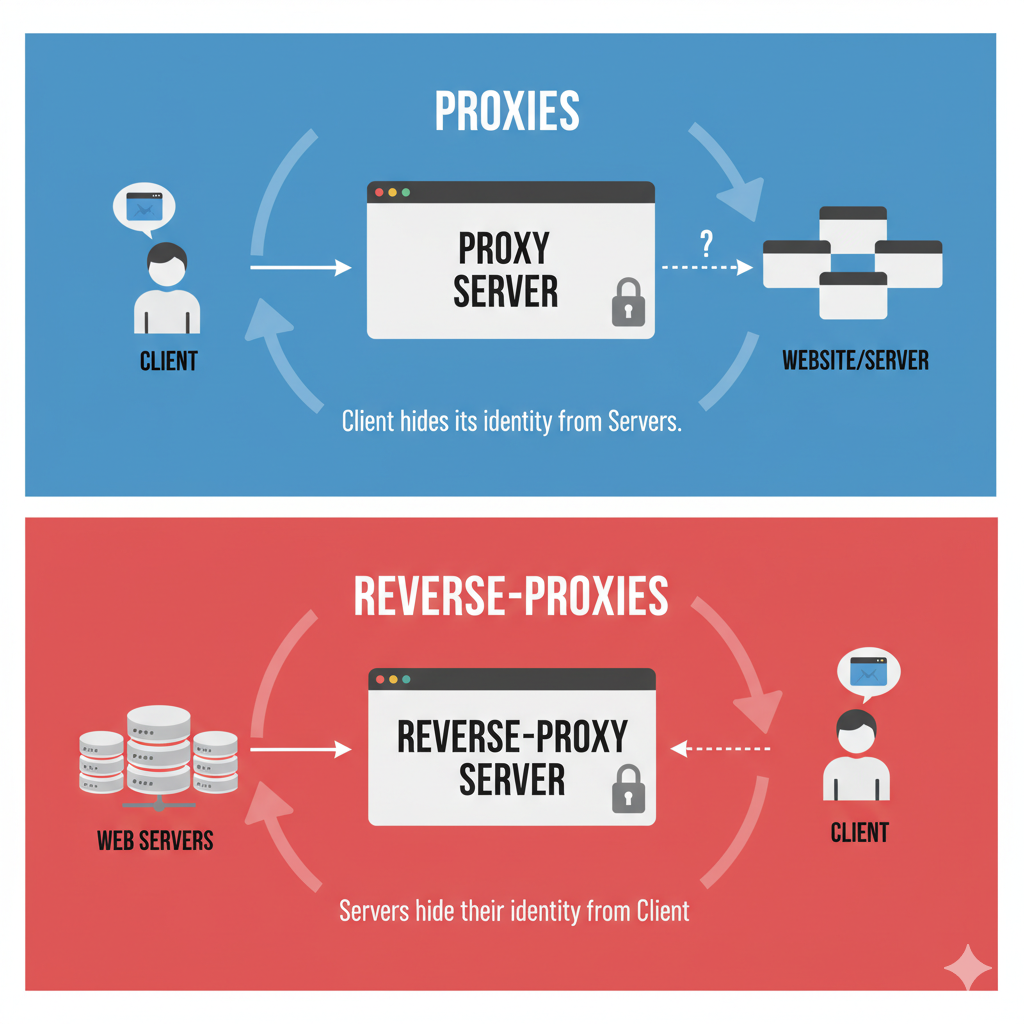
- What is a Proxy? A proxy acts as a server that makes requests on your behalf.
• How it works: As a client, you configure your system to use a proxy. Your TCP connection is established with the proxy first, and the proxy then establishes a new connection to the final destination (e.g., Google.com).
• Key Characteristic: The client knows the final destination server, but the server typically doesn’t know the client’s actual IP address (from a Layer 4 perspective).
• Use Cases:
◦ Anonymity: Hiding your IP address from the destination server.
◦ Caching: Storing frequently accessed content to speed up future requests within an organization.
◦ Logging & Monitoring: In architectures like service mesh, proxies (sidecar containers) log and trace all requests between services.
◦ Debugging: Tools like Fiddler act as proxies to monitor application requests.
◦ Blocking Websites: Organizations use them to control access to certain sites.
2. What is a Reverse Proxy? A reverse proxy is exactly the reverse.
• How it works: You, as a client, talk to the reverse proxy as if it’s your final destination (e.g., Google.com). The reverse proxy then decides which actual backend server will fulfill your request.
• Key Characteristic: The client does NOT know the true final destination server; it only sees the reverse proxy. The reverse proxy knows the client’s IP address.
• Use Cases:
◦ Load Balancing: Distributing incoming client requests across multiple backend servers to prevent overload and ensure high availability.
◦ API Gateways: Routing requests to different microservices based on the request path (e.g., /post goes to one server, /read to another).
◦ Content Delivery Networks (CDNs): CDNs are essentially “glorified reverse proxies” that cache content closer to users, improving delivery speed.
◦ Canary Deployments: Directing a small percentage of user traffic to new feature deployments to test in production before a full rollout.
◦ Security & Ingress: Providing a single entry point for external traffic, often handling authentication and other security policies.
Key Takeaways:
• Client Configuration: You configure a regular proxy on the client side.
• Server Transparency: Reverse proxies are configured on the server side and are transparent to the client.
• Both are incredibly powerful concepts in modern networking and software architecture, from microservices to cloud deployments. Tools like Nginx and Envoy can function as either.
Understanding these fundamentals helps to “unconfuse” many concepts in software and network engineering
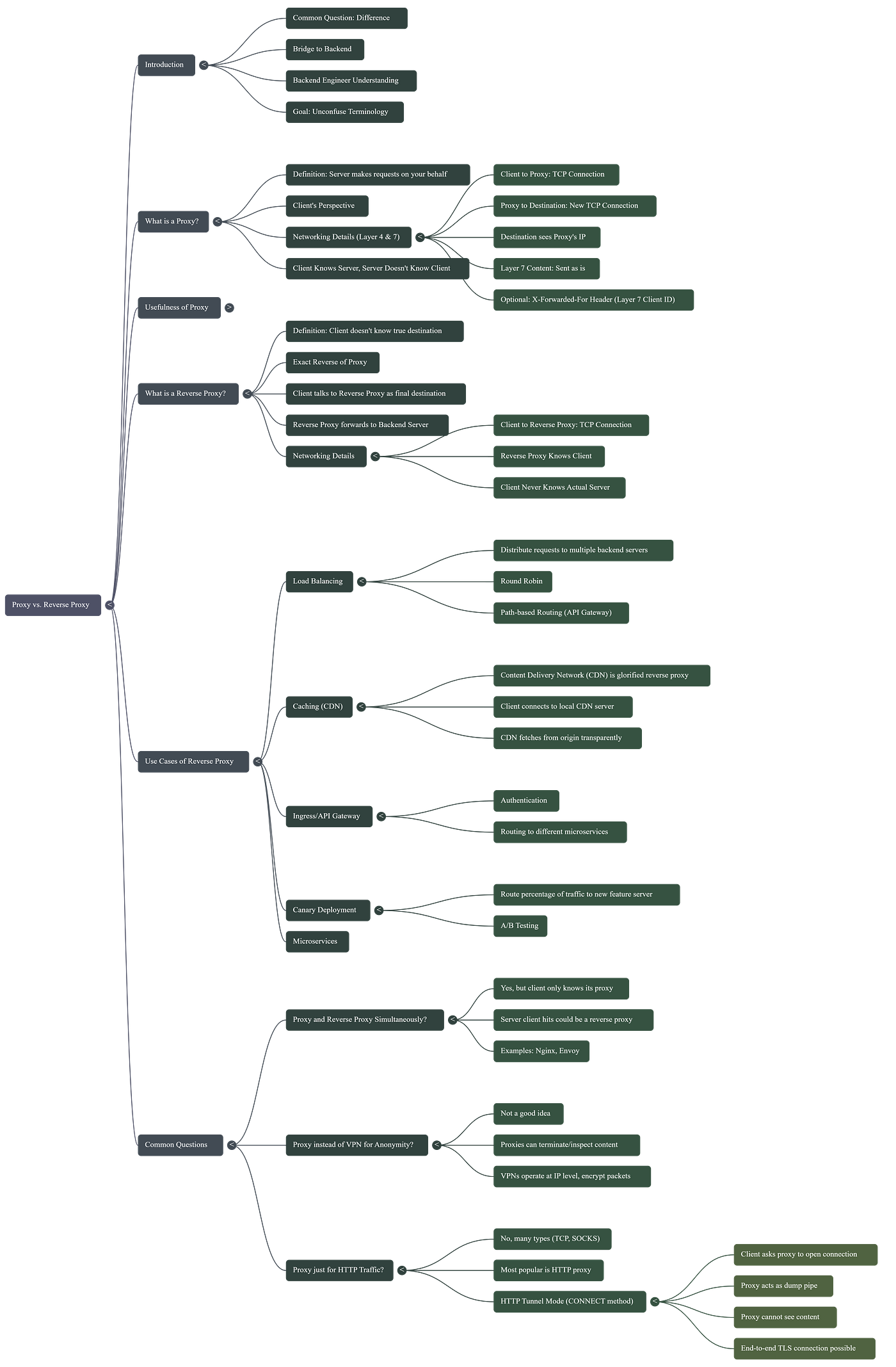
And at the end i have small mind map that can be very useful for recap

Thank you for being a part of the community
Before you go:
- Be sure to clap and follow the writer ️👏️️
- Follow us: LinkedIn | Medium | GitHub 🐙
- Join our Developers Global Community on Discord 🧑🏻💻

메타데이터
- post_id
- d5bad6620fe6
- slug
- proxies-vs-reverse-proxies-in-nutshell-d5bad6620fe6
- url
- https://javascript.plainenglish.io/proxies-vs-reverse-proxies-in-nutshell-d5bad6620fe6
- canonical_url
- https://javascript.plainenglish.io/proxies-vs-reverse-proxies-in-nutshell-d5bad6620fe6
- author_url
- https://medium.com/@aba884682
- status
- ok
- fetched_at
- 2026-07-17 13:39:17