Micro Inverter: Enhancing Solar Energy Efficiency Through Intelligent Power Conversion Technology
The global renewable energy industry is experiencing rapid expansion, and one of the key technologies supporting this growth is the Micro…
Micro Inverter: Enhancing Solar Energy Efficiency Through Intelligent Power Conversion Technology
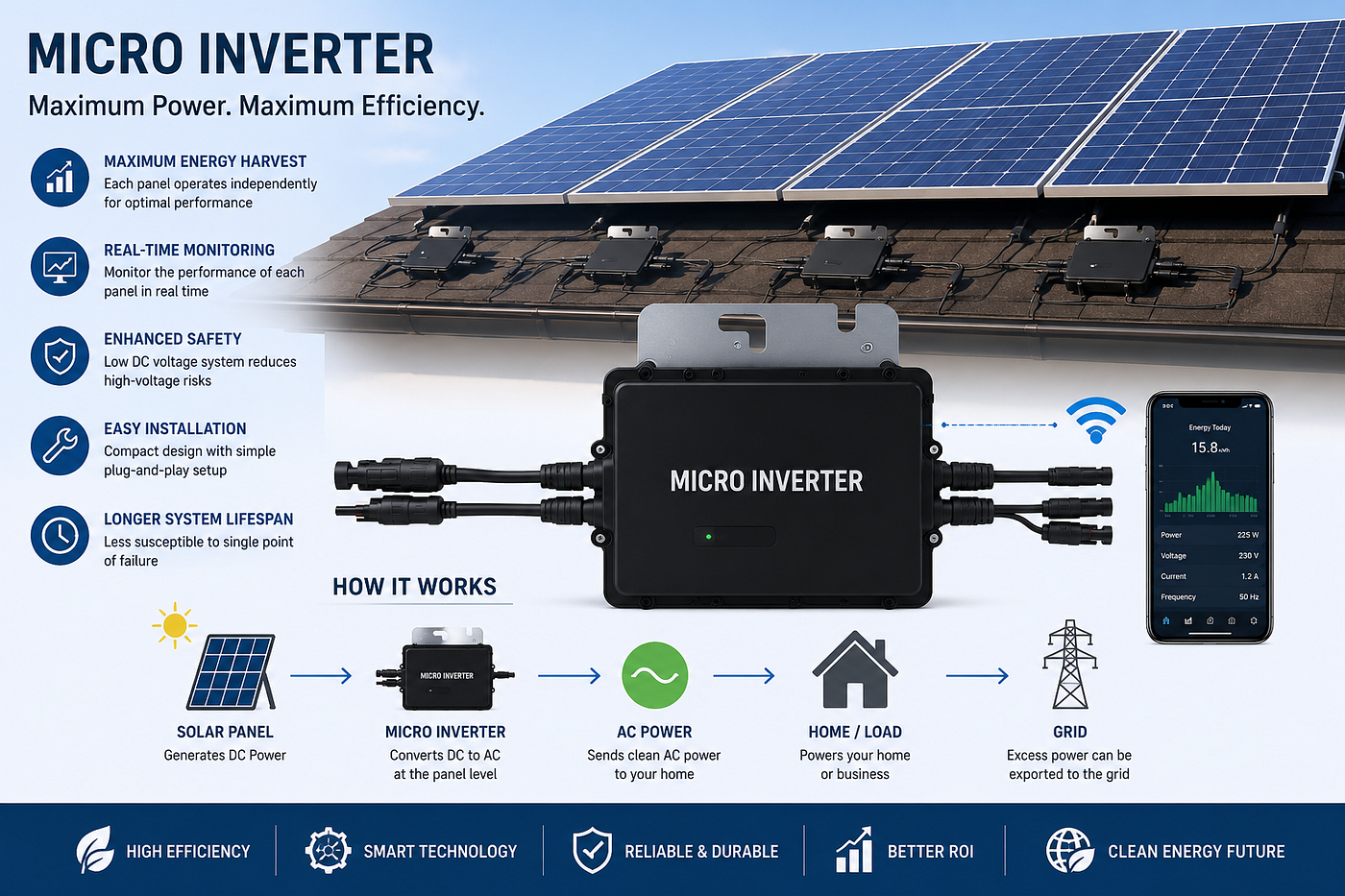
The global renewable energy industry is experiencing rapid expansion, and one of the key technologies supporting this growth is the Micro Inverter. As solar energy systems become increasingly popular across residential, commercial, and industrial sectors, the demand for efficient and reliable power conversion solutions continues to rise. A micro inverter is a compact electronic device installed directly on individual solar panels to convert direct current (DC) electricity generated by photovoltaic modules into alternating current (AC) electricity that can be used by homes, businesses, and utility grids. Unlike traditional string inverters that manage multiple panels simultaneously, micro inverters operate independently on each solar panel, enabling improved performance, greater energy harvest, and enhanced system reliability.
The growing adoption of solar energy worldwide has significantly increased the importance of micro inverter technology. Traditional inverter systems can experience performance limitations when one panel in a solar array is shaded, dirty, or malfunctioning, causing the entire system’s output to decrease. Micro inverters eliminate this issue by optimizing the performance of each individual panel. This panel-level optimization allows solar installations to maximize energy production even when environmental conditions vary across different sections of the array. As a result, homeowners and businesses can generate more electricity from the same number of solar panels, improving the overall return on investment of solar energy systems.
One of the most significant advantages of micro inverter technology is enhanced energy efficiency. Since each solar panel operates independently, micro inverters continuously track the maximum power point of individual modules, ensuring optimal energy conversion throughout the day. This capability is particularly beneficial in locations where shading from trees, buildings, or other obstacles can affect solar panel performance. By reducing energy losses associated with mismatched panels, micro inverters help increase overall system output and improve long-term energy generation. These benefits have made micro inverters an increasingly attractive choice for residential rooftop solar installations and distributed energy projects.
Another important factor driving the adoption of micro inverters is improved system monitoring and maintenance. Modern micro inverter systems are equipped with advanced communication capabilities that allow users to monitor the performance of each solar panel in real time. Through cloud-based software platforms and mobile applications, system owners can access detailed information regarding energy production, panel efficiency, and operational status. This level of visibility enables faster detection of faults and simplifies maintenance activities. If a panel experiences reduced performance, operators can quickly identify the issue without inspecting the entire solar array, reducing maintenance costs and minimizing downtime.
Safety is also a major advantage associated with micro inverter deployment. Traditional string inverter systems often operate with high-voltage DC wiring, which can present electrical hazards during installation, maintenance, or emergency situations. Micro inverters convert DC power into AC power directly at the panel level, significantly reducing high-voltage DC exposure across the solar system. This design enhances electrical safety for installers, maintenance personnel, and property owners. As safety regulations continue to evolve across global solar markets, the demand for safer inverter technologies is expected to contribute to increased adoption of micro inverter solutions.
The integration of micro inverters with smart energy management systems is further expanding their role in modern renewable energy infrastructure. As smart homes and distributed energy resources become more common, micro inverters are increasingly being connected with battery storage systems, energy management platforms, and intelligent grid networks. These integrated systems enable homeowners and businesses to monitor energy consumption, optimize electricity usage, and participate in grid-support programs. Advanced micro inverter technologies can also support future applications such as virtual power plants, demand response programs, and decentralized energy trading, contributing to the development of more resilient and flexible energy ecosystems.
The role of micro inverters extends beyond residential solar installations. Commercial buildings, educational institutions, healthcare facilities, and industrial sites are increasingly adopting solar power systems equipped with micro inverter technology to improve energy efficiency and sustainability performance. Large-scale distributed solar projects often benefit from the flexibility and scalability offered by micro inverters, particularly in environments where panel orientation, shading conditions, or system expansion requirements vary. Their ability to provide panel-level optimization makes them suitable for complex installations where traditional inverter configurations may not deliver optimal results.
Despite numerous advantages, the widespread implementation of micro inverter technology faces certain challenges. Initial installation costs can be higher compared to traditional string inverter systems because each solar panel requires its own inverter unit. Additionally, managing large numbers of electronic components across extensive solar arrays may increase system complexity. However, ongoing advancements in semiconductor technology, manufacturing processes, and power electronics are helping reduce costs while improving reliability and performance. As production volumes continue to increase and technological innovation accelerates, micro inverters are becoming increasingly cost-effective for a wider range of solar applications.
Market Research Future states that the market’s upward trajectory is supported by growing demand from sectors such as healthcare, manufacturing, retail, and telecommunications.
메타데이터
- post_id
- d5c4edb2684a
- slug
- micro-inverter-enhancing-solar-energy-efficiency-through-intelligent-power-conversion-technology-d5c4edb2684a
- url
- https://medium.com/@piyushband2002/micro-inverter-enhancing-solar-energy-efficiency-through-intelligent-power-conversion-technology-d5c4edb2684a
- canonical_url
- https://medium.com/@piyushband2002/micro-inverter-enhancing-solar-energy-efficiency-through-intelligent-power-conversion-technology-d5c4edb2684a
- author_url
- https://medium.com/@piyushband2002
- status
- ok
- fetched_at
- 2026-06-26 03:39:16