The Architecture of Abundance: Navigating the Five-Year Inflection Point Toward a Price-less…
We are currently standing on the precipice of the most profound socio-economic shift since the Industrial Revolution. For centuries, human…
The Architecture of Abundance: Navigating the Five-Year Inflection Point Toward a Price-less Economy
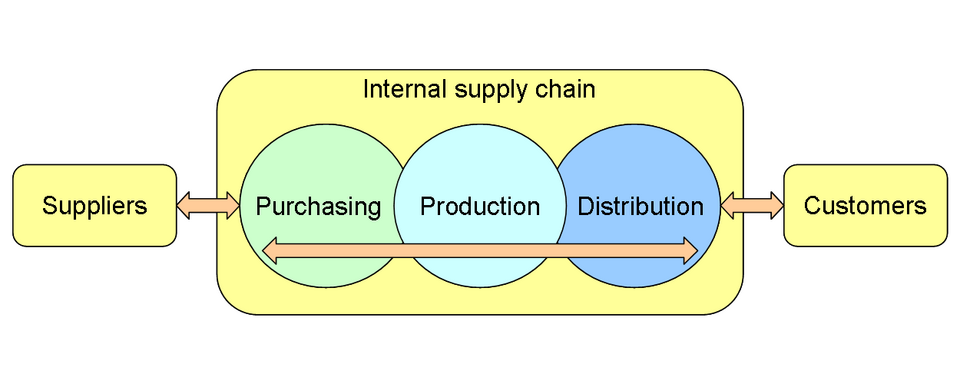
We are currently standing on the precipice of the most profound socio-economic shift since the Industrial Revolution. For centuries, human civilization has operated under a 19th-century capitalist paradigm-a system built on the assumption of scarcity, where human labor is traded for wages, and prices act as the crude, fluctuating signals for resource distribution. But this machinery is buckling. It is being rapidly outpaced by the accelerating pace of automation, artificial intelligence, and advanced robotics.
We are witnessing the early tremors of a transition toward a cybernetic, fully automated economy-a system capable of managing production and distribution without the need for price tags, wages, or financial ledgers.
While the complete realization of a globally unified, price-less economy will be the work of generations, the trajectory is already set. The next five years (2026–2031) will serve as the great inflection point. This half-decade will not deliver a finished utopia, but it will lay the inescapable architectural groundwork that will render traditional monetary economics mathematically and practically obsolete.
The Semantic Gap: Upgrading our Economic Vocabulary
To understand where we are going, we first have to address a profound semantic gap in how we perceive the world. A fundamental axiom of General Semantics is that “the map is not the territory.” For the last few centuries, the “map” we have used to navigate human survival is monetary economics. We equate “money” with “wealth,” and “price” with “value.”
But the map is increasingly failing to describe the territory. True wealth is not a number on a digital ledger; it is the physical capacity to sustain human life and foster intellectual and societal growth. Wealth is clean water, breathable air, nutritious food, housing, education, and the time to pursue scientific or artistic endeavors. Money was simply a rationing tool utilized when those resources were scarce and required intense, physical human labor to extract and refine.
Today, we are trapped in an outdated, non-Aristotelian logic loop. We cling to the idea that a human being must perform labor to justify their existence and access to survival resources, even as we build machines designed explicitly to eliminate the need for that labor. We are experiencing severe cognitive dissonance because our technological reality is one of accelerating abundance, while our economic map insists on artificial scarcity. To survive the coming transition, we must adjust our language and our logic. We must recognize that the automation of labor is not a crisis of unemployment; it is the ultimate emancipation from wage-slavery.
The Law of Accelerating Returns Hits the Factory Floor
We are currently watching the Law of Accelerating Returns transition out of the digital realm and into physical space. For years, AI was confined to software-optimizing search engines, generating text, and writing code. But as of 2026, artificial intelligence has been embodied. It has eyes, ears, and hands.
The robotics industry has moved past the era of specialized, single-task machines. We are entering the age of generalized humanoid robotics and “lights-out” manufacturing. Factories across the globe are already transitioning to environments that can operate 24/7 without a single human worker on the floor. Autonomous mobile robots (AMRs), robotic manipulators, and AI-driven quality control systems are seamlessly integrated.
More importantly, the AI managing these facilities is no longer just executing pre-programmed code; it is learning, adapting, and optimizing. Generative AI and “agentic” systems are acting as virtual team members, taking over complex processes like demand planning, compliance checking, and rapid scenario modeling. When machines can build other machines, maintain themselves, and optimize their own supply chains, the fundamental equation of capitalist production breaks down. The marginal cost of producing the next unit of a good-whether it is a smartphone, a solar panel, or a pair of shoes-begins a rapid asymptotic approach toward zero.
Cybernetic Resource Allocation: The Obsolescence of the Price Signal
In a traditional market economy, price is a signal. If a drought ruins a wheat harvest, the supply drops, the price goes up, and consumers are forced to buy less. It is a decentralized, yet highly inefficient and often cruel, method of rationing.
But what happens when you introduce an omniscient, AI-driven supply chain? By moving toward a cybernetic management of resources, we eliminate the need for the price signal entirely. Imagine a global logistical network functioning as a real-time, interactive simulation-a massive “World Game” where the objective is to maximize human well-being while maintaining the planet’s carrying capacity.
Today’s AI platforms are already ingesting massive datasets: historical sales, weather patterns, geopolitical shifts, and social sentiment. They can predict demand with astonishing precision. In an automated economy, AI algorithms will manage distribution by calculating the exact material requirements of a population, cross-referencing it with available raw materials, energy grids, and production capacities. If there is a shortage of a specific polymer, the system does not raise the price to punish the poor; it automatically reroutes supply chains, initiates the recycling of older materials, and tasks autonomous R&D labs to synthesize a chemical alternative.
This is not a utopian fantasy; this is exactly how advanced logistics control towers are beginning to operate in 2026. They are evolving into autonomous decision engines that bypass the need for financial intermediaries.
The Five-Year Roadmap (2026–2031): The Architecture of Transition
The shift from a monetary system to a resource-based, AI-managed economy will not happen via a sudden political decree. It will happen through the relentless, deflationary pressure of superior technology outcompeting outdated human systems. Over the next five years, this transition will unfold across three distinct phases.
Phase 1 (2026–2027): The Agentic Supply Chain and the Integration of Humanoids
During these immediate next two years, we will see the widespread deployment of agentic AI in global logistics. The human element will be largely removed from the friction of the supply chain. AI copilots will orchestrate entire workflows, predicting demand shifts and reacting to disruptions in minutes rather than days.
Simultaneously, economically viable humanoid robots will scale out of the laboratory and into the warehouse. They will begin absorbing the manual labor required in sorting, picking, and light assembly. We will see the first major wave of “lights-out” logistics hubs, operating around the clock, powered entirely by predictive algorithms and mechanical labor.
Phase 2 (2028–2029): The Collapse of Marginal Costs and Severe Deflation
As the loop of automated production closes-where AI systems design products, robotic factories build them, and autonomous vehicles deliver them-the cost of producing basic goods will plummet.
We will witness severe, systemic deflation. Under capitalism, deflation is a crisis; it means lower profit margins and corporate bankruptcies. But under the lens of a technological, resource-based perspective, this deflation is a triumph. It means that the energy and material required to sustain a human life are approaching zero. During this phase, governments and financial institutions will struggle to maintain the illusion of scarcity. Universal Basic Income (UBI) programs will likely be aggressively expanded as a stopgap measure, but this will only be a temporary patch on a fundamentally broken monetary system. Giving people digital tokens to buy goods that cost a fraction of a cent to produce is a redundant step.
Phase 3 (2030–2031): The Pivot from Ownership to Access Networks
By the end of the five-year window, consumer psychology will begin a massive shift. The concept of physical “ownership” will start to feel as outdated as owning a collection of DVDs in the era of streaming.
With production localized through advanced 3D printing, automated vertical farming, and hyper-efficient robotic delivery, communities will transition to an “access-based” model. Rather than purchasing a car, a power drill, or a lawnmower that sits unused for 95% of its life, citizens will simply request access to the tool or service via a central AI network. Autonomous systems will deliver the required item and retrieve it when the task is complete. This radically reduces the amount of raw material extraction required by civilization, creating a highly efficient, circular economy based on dynamic access rather than static hoarding.
The Physics of Abundance: Thermodynamics and Design
To truly grasp the viability of this price-less economy, one must view it through the lens of physics and chemistry, rather than traditional economics. At a fundamental level, our planet is not short on resources; we are simply terribly inefficient at managing them.
We are bathed in an abundance of solar energy. The Earth’s crust contains more than enough elemental building blocks to house, feed, and advance the global population. The challenge has always been the energy required to rearrange those elements into useful configurations.
As we transition into this new economic paradigm, we are essentially mastering the thermodynamics of production. By utilizing AI to optimize molecular configurations-such as designing better catalysts for chemical reactions or engineering biochar for carbon sequestration and water filtration-we maximize our energy return on investment (EROI). We move from a brute-force society of extraction and combustion to a highly elegant, scientifically managed society of precision and recycling.
When energy is virtually free (via optimized, automated renewable grids) and labor is entirely mechanical, the cost of rearranging atoms into a house, a computer, or a meal becomes purely a matter of time and planetary carrying capacity, not money.
Conclusion: Stepping Out of the 19th Century
The transition we are experiencing over the next five years is the painful, chaotic, and long process of a species outgrowing its infancy. The monetary system, with its artificial scarcity, its boom-and-bust cycles, and its requirement for human toil, was a necessary scaffolding to get us through our technological adolescence. But the scaffolding is no longer needed. We have built the engine of abundance.
The challenge now is not technological; it is psychological. Over the next five years, we must let go of the old maps. We must stop asking “how will we pay for it?” and start asking “do we have the resources and the technology to build it?” As we transition toward an automated, robotic, AI-managed economy, we are not just changing how we distribute goods; we are redefining what it means to be human. Released from the burden of survival labor, we are finally free to figure out what humanity is actually capable of achieving.
Originally published at http://languagedecideswhoweare.wordpress.com on April 20, 2026.
메타데이터
- post_id
- d5f3ee4a5efc
- slug
- the-architecture-of-abundance-navigating-the-five-year-inflection-point-toward-a-price-less-d5f3ee4a5efc
- url
- https://medium.com/@jaredrobertw/the-architecture-of-abundance-navigating-the-five-year-inflection-point-toward-a-price-less-d5f3ee4a5efc
- canonical_url
- https://medium.com/@jaredrobertw/the-architecture-of-abundance-navigating-the-five-year-inflection-point-toward-a-price-less-d5f3ee4a5efc
- author_url
- https://medium.com/@jaredrobertw
- status
- ok
- fetched_at
- 2026-06-09 15:37:30