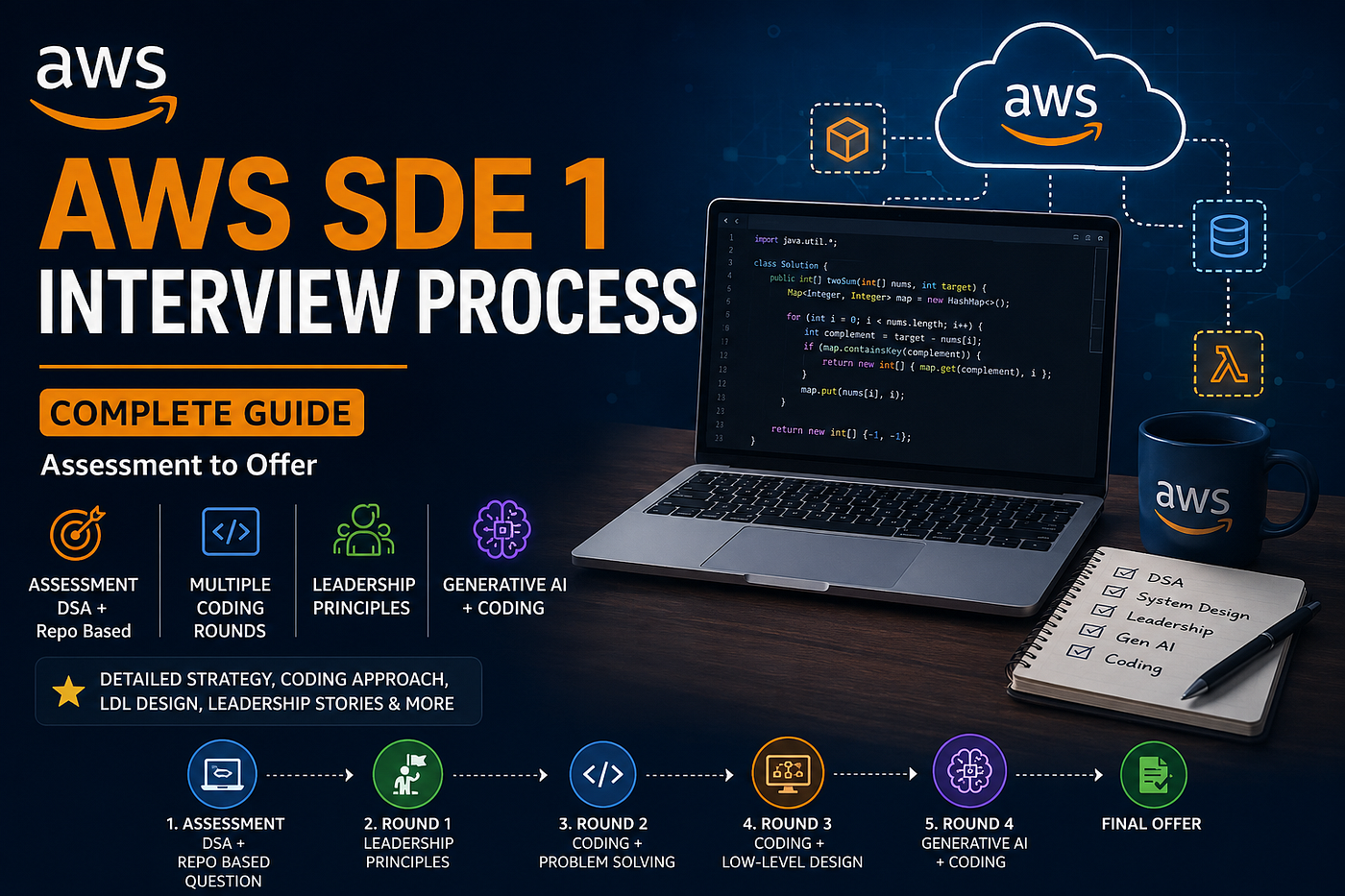
Adobe Interview Process Explained — Complete Preparation Guide for Experienced Engineers
Adobe has one of the most balanced interview processes among top product companies. The interviews are designed not only to test coding…

Adobe Interview Process
Adobe Interview Process Explained — Complete Preparation Guide for Experienced Engineers
Adobe has one of the most balanced interview processes among top product companies. The interviews are designed not only to test coding ability, but also your system design thinking, cloud expertise, distributed systems knowledge, and leadership qualities.
Recently, I came across Adobe’s complete interview structure for senior engineering roles, and one thing became very clear:
👉 Adobe is looking for engineers who can build scalable systems, understand AI-powered architectures, and drive technical direction across teams.
In this blog, I’ll break down:
- The complete Adobe interview process
- What each round focuses on
- Important topics to prepare
- How to stand out in the interview loop
Let’s get started.
📌 Adobe Interview Process Overview
The interview process usually starts with a screening round followed by a full interview loop.
Process Structure
- Screening Round
- Coding Round
- System Design Round 1
- System Design Round 2
- AI & Cloud Technologies Round
- Hiring Manager Round
Most rounds are around 55–60 minutes long.
🔹 Screening Round (1 Hour)
The screening round usually contains:
- 1 Coding Problem
- 1 System Design Discussion
This round acts as an elimination stage where Adobe checks your problem-solving skills and communication clarity.
What Adobe Evaluates
- Coding fundamentals
- Approach clarity
- Optimization thinking
- Basic system design understanding
- Communication skills
Preparation Strategy
Focus heavily on:
- Arrays
- Graphs
- Trees
- Sliding window
- Dynamic programming
- LRU/LFU cache design
- Rate limiter
- Messaging systems basics
For system design, be prepared to explain trade-offs clearly.
💻 Coding Round (55 Minutes)
This round is much deeper than normal DSA interviews.
Adobe expects candidates to be comfortable with:
- Distributed systems thinking
- Real-world backend engineering
- Complexity optimization
- Production-quality coding
Important Topics
1. Data Structures & Algorithms
Expect medium to hard level problems involving:
- Graph traversal
- Heap-based optimization
- Concurrency-related logic
- Backtracking
- Trie
- System-oriented DSA questions
You should be able to:
- Analyze time complexity
- Improve brute-force solutions
- Discuss scalability concerns
2. Coding Languages & Backend Skills
Adobe heavily values backend engineering experience.
Preferred technologies:
- Java
- Scala
- Spring Boot
- NoSQL databases
You should know:
- REST APIs
- Async processing
- Transaction handling
- Retry mechanisms
- Event-driven architectures
3. Edge Cases & Testing
One major differentiator at Adobe is testing mindset.
Interviewers expect you to:
- Identify edge cases proactively
- Write clean modular code
- Discuss unit testing approaches
- Explain failure scenarios
A candidate who writes “production-aware” code usually performs much better.
🏗️ System Design Rounds (2 Rounds)
These are the most important rounds in the process.
Adobe focuses heavily on:
- Scalability
- Reliability
- Distributed systems
- Cloud architecture
- AI system understanding
The expectation is closer to Staff Engineer level thinking.
What Adobe Looks For in System Design
1. Deep Distributed Systems Knowledge
You should understand:
- CAP theorem
- Replication
- Sharding
- Eventual consistency
- Leader election
- Distributed locking
- High availability
Real-world examples matter a lot.
2. Cloud Expertise (AWS / Azure)
Be comfortable discussing:
- Kubernetes
- Docker
- ECS/EKS
- API Gateway
- Lambda
- Azure Functions
- Autoscaling
- Multi-region deployments
Adobe values engineers who understand cloud cost optimization and operational trade-offs.
3. Designing Large-Scale Systems
Possible design questions:
- Notification systems
- Real-time analytics platform
- Distributed caching layer
- AI workflow orchestration
- Multi-tenant SaaS platforms
- Streaming pipelines
Interviewers usually expect:
- API design
- Database selection
- Scalability planning
- Failure handling
- Monitoring strategy
🤖 AI & Agentic System Design
One of the most interesting parts of Adobe’s interview process is the focus on AI-powered architectures.
Adobe expects engineers to understand:
- LLM fundamentals
- Agentic AI patterns
- AI orchestration
- Tool calling
- Guardrails
- Reliability in AI systems
This is becoming increasingly important across modern engineering teams.
Agents vs Deterministic Systems
A strong candidate should understand:
- When to use AI agents
- When deterministic workflows are better
- How to add safety guardrails
- How to monitor hallucinations
- Measuring non-deterministic behavior in production
This is a major differentiator for senior-level candidates.
☁️ AI & Cloud Technologies Round
This round tests practical engineering experience.
Focus Areas
Cloud Technologies
- AWS
- Azure
- GCP
Distributed Infrastructure
- Kafka
- RabbitMQ
- Redis
- CDN systems
- Monitoring & logging
CI/CD & DevOps
- Jenkins
- GitHub Actions
- Deployment pipelines
- Canary deployments
- Rollback strategies
🧠 OS & Concurrency Concepts
Adobe also evaluates low-level system understanding.
Important topics:
- Processes vs Threads
- Locks & synchronization
- Deadlocks
- Live locks
- Context switching
- Scheduling
- Race conditions
You should understand how these concepts affect distributed applications in production.
🤝 Hiring Manager Round
This round focuses less on technical implementation and more on leadership, ownership, and collaboration.
Adobe evaluates candidates based on their internal values.
✨ Create The Future
They assess:
- Innovation mindset
- Ability to drive change
- Big-picture thinking
- Continuous learning
- Inspiring teammates
Use real project examples here.
🎯 Own The Outcome
Focus on:
- Accountability
- Decision making
- Driving results
- Measuring success
- Stakeholder management
Strong ownership stories work extremely well.
💙 Be Genuine
Adobe values collaborative engineers.
Expect questions around:
- Team conflicts
- Communication challenges
- Inclusion
- Trust
- Feedback handling
Authenticity matters more than “perfect” answers.
🚀 Raise The Bar
This section focuses on:
- Quality improvements
- Prioritization
- Process optimization
- Mentorship
- Engineering excellence
Show how you improved systems, teams, or processes.
📚 Final Preparation Tips
If you are preparing for Adobe, prioritize these areas:
✅ Strong DSA fundamentals ✅ Distributed systems mastery ✅ Cloud architecture experience ✅ AI/LLM system understanding ✅ Production debugging experience ✅ Concurrency & OS concepts ✅ Leadership & ownership stories
The interview process is challenging, but highly rewarding for engineers who enjoy solving large-scale engineering problems.
Final Thoughts
Adobe is not just hiring coders.
They are looking for engineers who can:
- Build scalable systems
- Lead technical direction
- Understand modern AI architectures
- Make sound engineering decisions
- Elevate the entire team
If your preparation combines coding, distributed systems, cloud, and communication skills, you’ll have a strong chance of succeeding.
📞 For Help / Guidance: https://wa.me/919649224523
메타데이터
- post_id
- d610c8dad87b
- slug
- adobe-interview-process-explained-complete-preparation-guide-for-experienced-engineers-d610c8dad87b
- url
- https://medium.com/@proxyinterview980/adobe-interview-process-explained-complete-preparation-guide-for-experienced-engineers-d610c8dad87b
- canonical_url
- https://medium.com/@proxyinterview980/adobe-interview-process-explained-complete-preparation-guide-for-experienced-engineers-d610c8dad87b
- author_url
- https://medium.com/@proxyinterview980
- status
- ok
- fetched_at
- 2026-06-09 14:34:10