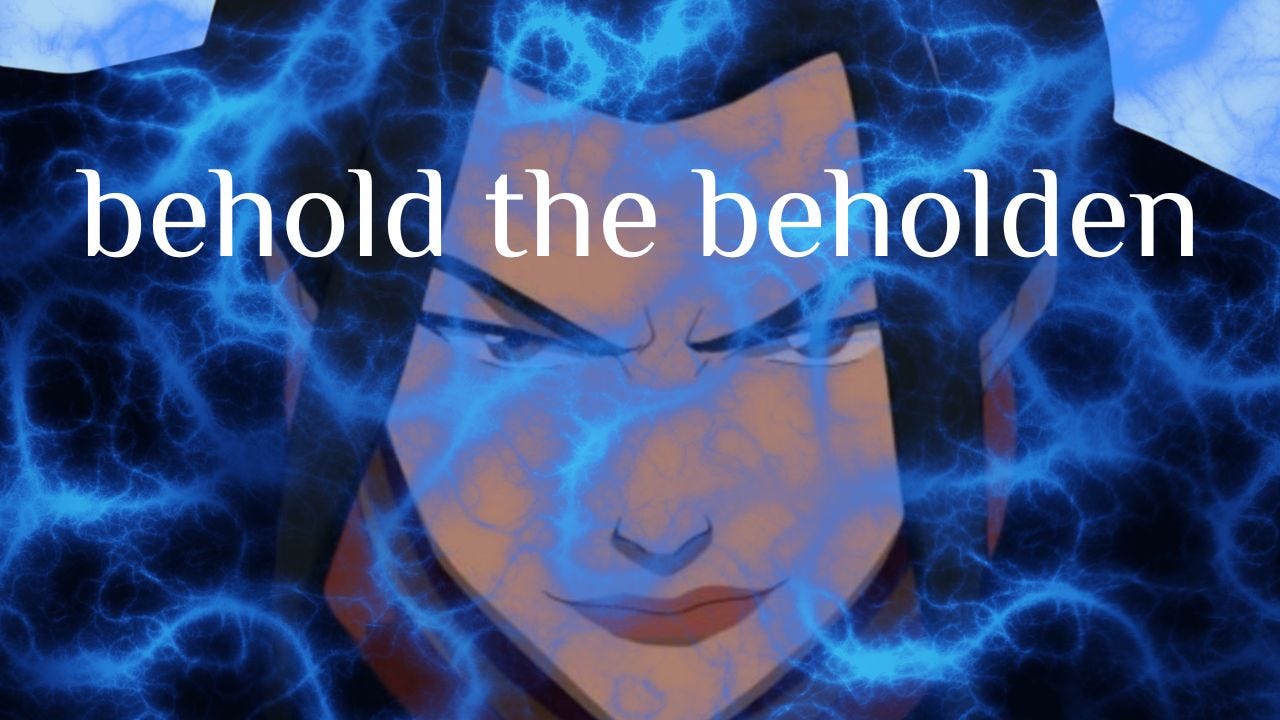
HOW TO BE WHO YOU ARE — The Legend of Korra Review
And yes . . . Zhu Li is an icon
Korra on How To Be Who You Are: Stop Comparing Her To Aang
Throughout the series, we watched Korra and her crew, grow. Her journey was a fusion of the hero’s adventure and the heroine’s inward spiritual journey. And yes . . . Zhu Li is an icon
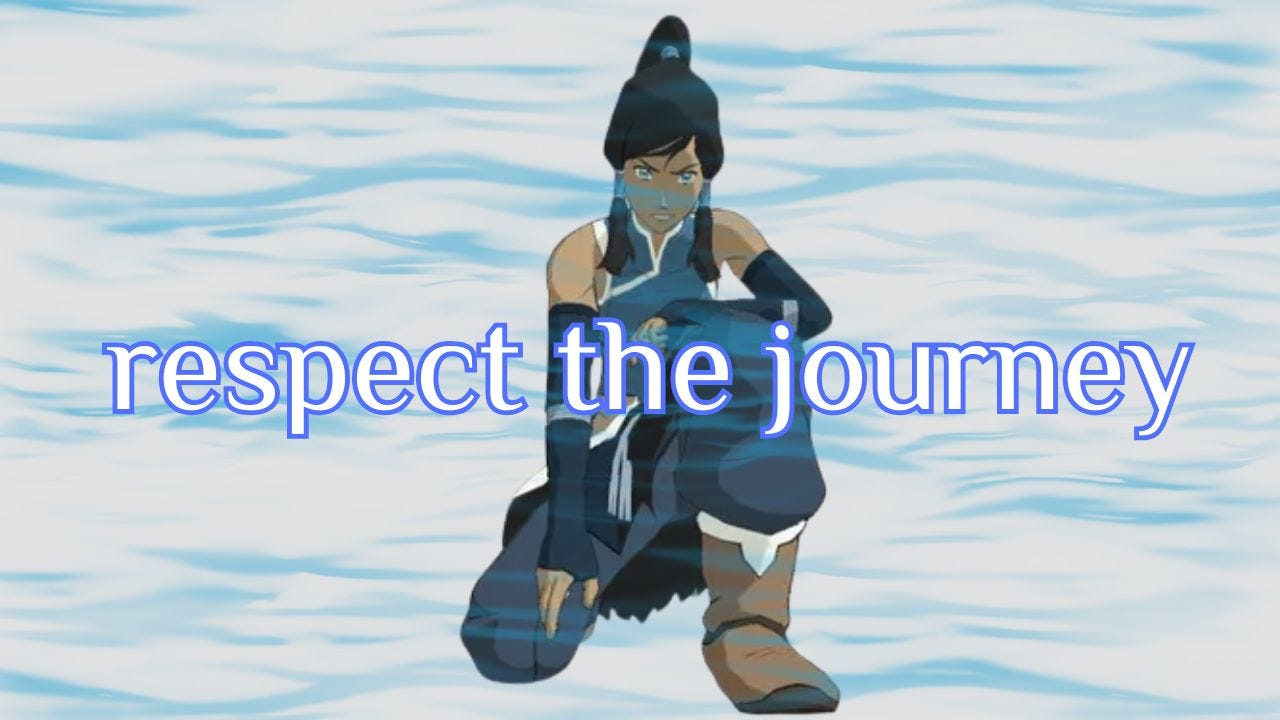
Original picture before modification is from Nickelodeon via Vulture
Avatar Korra is from the water tribe, but her temperament is closer to what one would expect from a teen of the fire nation. Hotheaded and impulsive, with a brave spirit that was tested throughout the series.
I still had a soft spot for “The Last Airbender,” when I started this new Avatar series, which was set in Republic City, decades after Avatar Aang’s adventure. While watching Legend of Korra, it was difficult to refrain from making comparisons between teenage Korra and Aang, Sokka and Mako, Asami and Katarra, Bolin and Toph. However, it stopped at the unequal comparisons.
In the Legend of Korra, the characters were quite different. The consequences of mistakes, severe and almost immediate. The antagonists were more memorable and nuanced. Some, like Varrick, had a believable redemption arc, although I sometimes felt like he got off easily. Others like Zaheer, Unalaq, and Amon (to a certain extent), left quite an impression on me, the avatar and their world.
Because of the dangers surrounding the role of the Avatar, and the young age when her ability to bend different elements was discovered, Korra was protected by her parents, and her teacher Tenzin. This led to her being and feeling sheltered, during her earlier training years. So much so, that she was eager to break out of that bubble, hungry for the adventures and real-world experiences that shape the Avatar.
And the villains of this series were ready to pressure-cook her all the way.
Legend of Korra existed in a different social climate, with the growing rift between benders and non-benders, the warring water tribe (personal to Korra because of family), permanent opening of the spirit portal and the conquering of the earth tribes to create the earth empire by the autocratic Kuvira.
All around, themes of freedom and equality abound. Themes that were important to Korra, which many of her tribulations centered around. Many of the villains she faced held these values to the extreme. From Zaheer’s push for Anarchy and lawlessness, to Kuvira’s quest for dictatorship of the earth kingdom, to Amon’s equality movement that included taking away the bending power from benders.
This series asks the question: “What makes you special?”
Not in the sense of what powers you have been bestowed, for example, people born with innate bending powers. But more on “who you are.”
In addition, it interrogates “usefulness” under the same lens.
This we witnessed through the trials that the team experienced. From Chi Blockers, to Amon, to multiple trips to the spirit world, to the face off, with Combustion and Lava Benders of the Red Lotus. Korra experienced one of her bending abilities taken away by Amon. Police chief Lin Beifong had her bending taken away too. The rest of Korra’s friends were also at the risk of losing their bending powers. At one point or another, Korra and her friends were put in situations where their bending powers were either; not working or working against them. Situations that made them confront their limits and develop other methods to navigate.
Throughout the series, we watched Korra and her crew, grow. Her journey was a fusion of the hero’s adventure and the heroine’s inward spiritual journey.
We also watched Tenzin grow as a guide (I feel like he is more of a guide than a teacher).
There were times when I found her extremely annoying. And the times she made bad decisions from charging in first, not listening to reason and putting others in a tough spot;
I wanted her to learn her lesson.
But seeing her struggle, after Zaheer poisoned her and beat her around like a ragdoll, I came to two realizations:
- The experience of watching someone grow can be uncomfortable and annoying, as much as it can be rewarding. When Toph called her the worst Avatar, I echoed the sentiment. But was she really? Or is it because we are watching her grow in real time, with tougher circumstances and consequences. Where everything was not always fine at the end of an episode. If I watch a series or movie, way into the future, and she becomes my perfect image of an all-powerful Avatar, will I still feel the same? To put this in context, it is like a great leader that is praised worldwide for their leadership ability, but the first few groups of people they led, described them as the worst. Now, they have grown and become better leaders, but being the first that was practiced on, is not fun for those people. The same goes with parents who do a great job with the kids, but the first child still harbors some anger because they experienced a worse upbringing at the hands of those same parents. This is the battle of my feelings while watching and my reflection afterwards. I found Korra annoying sometimes, especially when she stubbornly moved forward with actions that put everyone at risk. Also, if we watched the stories of the other Avatars as they grew into the role, Korra may not be that annoying.
- This is how someone’s fire is doused. This is how the “who you are” or your “spirit” is squashed like a stray black ant, before it even has a chance to blossom into its fullest potential. In the time between Vaatu and Unalaq’s saga, Zaheer’s debacle and the last battle with Kuvira, I watched Korra lose; her connection to the other Avatars and her spark. Then work to rebuild her confidence and come back stronger. And her bravery morphed into courage. If she had just given up, then it would be that she lost her spark. But since she came back, I can only call it growth. Korra’s character arc also made me understand why Tenzin (who at first, I thought was a pushover) was indeed a good choice for a guide. I am not opposed to actions (positive or negative) having consequences. Or the repercussions that one must face when mistakes or bad decisions are made. But imagine if every mistake made by us, in our youth, was met with a punishment? Or worse, if what we labeled as great risks did not pay off, but led to a greater punishment instead. Especially around the time when it is normal to have that fire and zest for life, that feeling that you have figured it out and nothing can touch you. While a lot of the actions of our teenage to young adult years may have been brash, we had some tough lessons, but there was also providence or luck and sometimes reward for the risk. Some people had a soft spot for us, our tantrums, attitude, and arrogance. And while they let us learn our lessons, they also gave us second chances to get it right. Tenzin always did this for Korra.
It is a great feeling to not be written off.
Also, check out my new poetry collection titled Tasteful Hypocrisy — paperback and ebook on Amazon, and ebook on Google Play.
메타데이터
- post_id
- d64e0ce5c0f5
- slug
- how-to-be-who-you-are-the-legend-of-korra-review-d64e0ce5c0f5
- url
- https://medium.com/@thecurvycauldron/how-to-be-who-you-are-the-legend-of-korra-review-d64e0ce5c0f5
- canonical_url
- https://medium.com/@thecurvycauldron/how-to-be-who-you-are-the-legend-of-korra-review-d64e0ce5c0f5
- author_url
- https://medium.com/@thecurvycauldron
- status
- ok
- fetched_at
- 2026-08-16 16:57:12