The Two Gretas of the Western World
By Sehaj Sahni
The Two Gretas of the Western World
By Sehaj Sahni

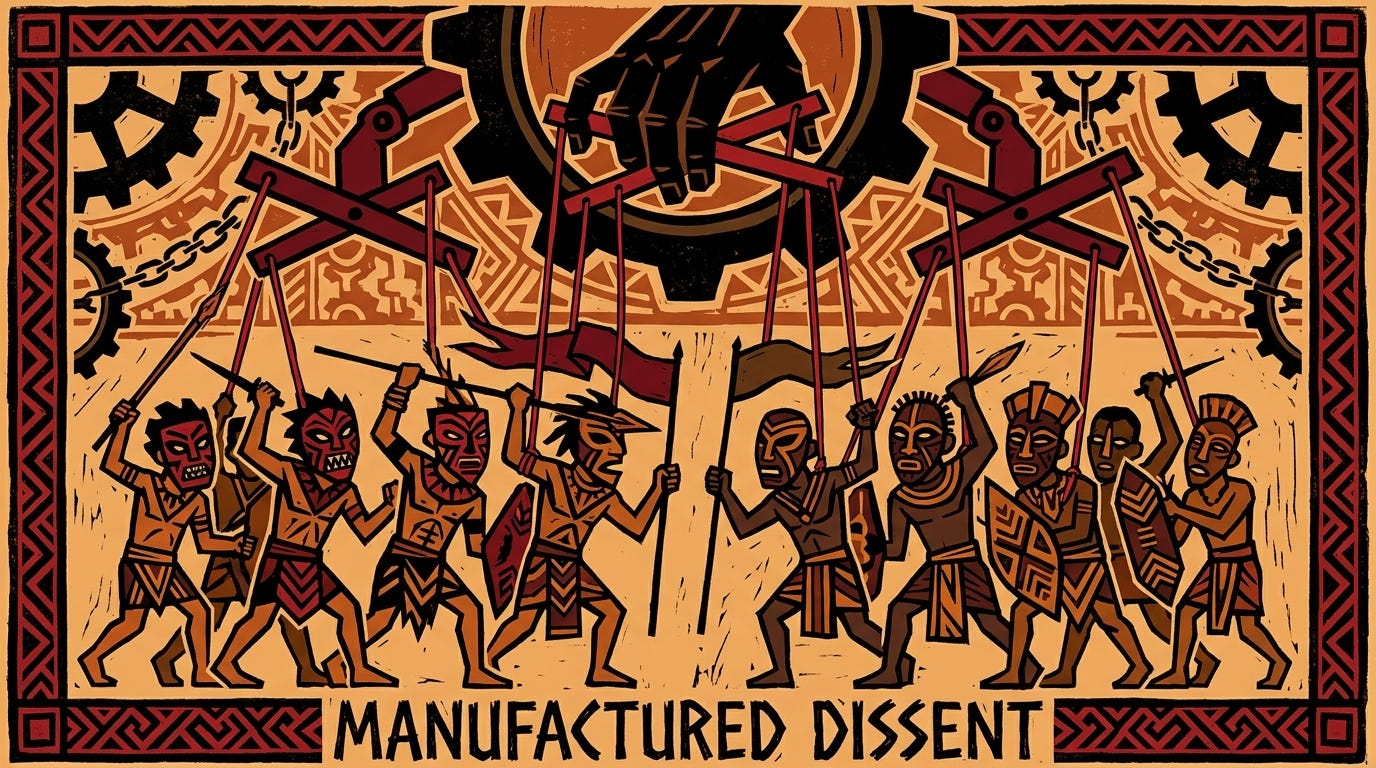
Source: Leonardo.ai ( Image from prompt generated through the article summary )
In today’s fragmented world of narratives, there exist not one but two Gretas — not necessarily individuals, but symbols representing a carefully orchestrated duality crafted by the Western propaganda machine. On one side, we see the face of moral conscience: a young activist speaking truth to power. On the other, the very machine she claims to fight continues to profit and expand, often with silent endorsement or soft opposition. It’s a theatre — one side exploits, and the other protests — and both roles are cast and curated by the same hand.
This is not just about Greta Thunberg, though she becomes the perfect allegory for this phenomenon.
Manufacturing Both Sides: The Exploiter and the Rebel
Western soft power doesn’t merely colonize economies; it colonizes causes. In doing so, it ensures it owns the narrative from both ends. While corporations plunder natural resources, pollute, and greenwash, the media elevates sanitized rebellion — one that rants at Davos yet rarely challenges the system’s root structure.
Why is this done? Simple: Control. If you dominate both the “problem” and the “solution”, no real disruption ever occurs. It’s a brilliant loop. The system gets to “listen” to critiques that never threaten it — critiques it choreographs and funds — and people feel represented, empowered, deceived.
This system isn’t limited to climate activism. It permeates education, peacebuilding, social media regulation, and even narratives around innovation.
Do You Know the Indian or African ‘Greta’?
While Greta Thunberg became a global household name, have you ever heard of Yugratna Srivastava, who addressed the UN Climate Summit at just 13, representing the same constituency Greta later did?
[embed]Source: Youtube
I’ve had the privilege of working with Yugratna as part of my engagement in the youth constituency within the United Nations Environment Programme — and I can say with honesty that brilliance, grit, and dedication are not confined to borders. Yet global visibility is. And in Yugratna’s case, even national recognition in India was scarce.
Later, she faced serious allegations — of breaking protocol, of harassment at global events. While I do agree she was often aggressive, and perhaps even naive in her confrontational approach, the truth remains: she burned her youth spreading light where darkness is often rewarded. I worried about her health; she mistook me for a villain in her environmental story. But my intentions, rooted in care, remain.
The Infinite Time Loop: A Trap for Indian Youth Advocates
Young advocates in India must learn to recognize a dangerous pattern — a pattern that mimics a time loop, where you rise, shine, and suddenly vanish. The system builds the stage under your feet and celebrates you, until you begin to question its boundaries.
Start questioning things like the Gaza genocide, or ask tough questions on why deindustrialization has no real check, and you’ll find the rug pulled out — swiftly and brutally. Voices that once trended are drowned. Support evaporates. And the options narrow down to just two:
- Accept comfort and compromise, lowering your voice in exchange for visibility and safety.
- Cease to exist in the public narrative — forgotten, isolated, or worse, discredited.
This isn’t hypothetical. It’s happening — not only globally, but increasingly within India itself. In the past decade, we’ve seen a systemic installation of narrative management. You’ll find hardcore defenders of the establishment, and you’ll find “critics” of the same system — often funded by it. Both sides work like mirrors of each other. The effect? An illusion of debate, but never real disruption.
For Indian youth entering advocacy, this is the new battlefield. You are offered two chairs. Pick one — but remember: both may belong to the same table.
Innovation and the Ownership of Stories
Let’s take innovation as an example. Consider BYD vs Tesla.
BYD (Build Your Dreams), the Chinese EV giant, predates Tesla. It’s efficient, profitable, and arguably more impactful in transitioning millions toward clean energy — especially in developing economies. Yet Tesla dominates the headlines, the awards, the cultural imagination.
Why? Because the innovation narrative, like activism, is curated.
The West prefers Elon Musk’s techno-theatrics over silent Chinese efficiency. Visibility again trumps viability. Even Europe is beginning to tire of this narrative monopoly and is slowly shifting economic loyalties — perhaps even “marrying” with China. Quietly. Strategically.
Back home, however, Indian inventors like the young man in Bihar who built a helicopter from scrap parts don’t even get headlines. He reportedly lost his life — beheaded, quite literally, by the same societal neglect that praises innovation only when it’s exported, sanitized, and Western-approved.
Beyond Environment: The Pattern Repeats Everywhere
The same duality of narrative plays out in:
- Peacebuilding: Where global powers talk of peace while profiting from war.
- Education: Where Western institutions absorb youth from the Global South, only to export their own ideology.
- Social Media: Where dissent is allowed — until it isn’t.
Choosing Your Own Exit Door
If you’re hoping that “The Greta” will respond to your solidarity one day — she may not. Not because she doesn’t care, but because she, too, is part of a system that decides who gets to speak and who gets silenced.
The real battle lies in creating our own Gretas. Our own systems. Our own platforms that don’t require Western endorsement to feel validated.
We must rise — not as reactionaries, but as creators. Let us prepare Indian youth not to be caught in the infinite loops, but to break the algorithm itself.
Let us begin to see: the stage, the spotlight, and even the applause are sometimes traps.
Let us choose our battles — but more importantly, let us choose our exits from this endless theatre of managed dissent.
Footnote: This article is both political and personal. My experiences within international youth environmental platforms, the relationships that broke and those that still linger in my heart, remind me that the fight for justice isn’t just outside — it’s also within. And it’s far from over.
메타데이터
- post_id
- d67056a27e5e
- slug
- the-two-gretas-of-the-western-world-d67056a27e5e
- url
- https://medium.com/@sehajsahni/the-two-gretas-of-the-western-world-d67056a27e5e
- canonical_url
- https://medium.com/@sehajsahni/the-two-gretas-of-the-western-world-d67056a27e5e
- author_url
- https://medium.com/@sehajsahni
- status
- ok
- fetched_at
- 2026-08-03 08:17:31