Multiliteracies and the Portfolio as a Tool For Assessment
Recently, while reading The Pearl out loud to my 7th graders, I, a middle-grade English Language Arts educator, encountered this passage…
Multiliteracies and the Portfolio as a Tool For Assessment
Recently, while reading The Pearl out loud to my 7th graders, I, a middle-grade English Language Arts educator, encountered this passage: “They had spoken once, but there is not need for speech if it is only a habit anyway. Kino sighed with satisfaction — and that was conversation.” This passage gave me pause. Steinbeck, in 1947, was speaking about what would later be termed “multiliteracies” by the New London Group 50 years later.
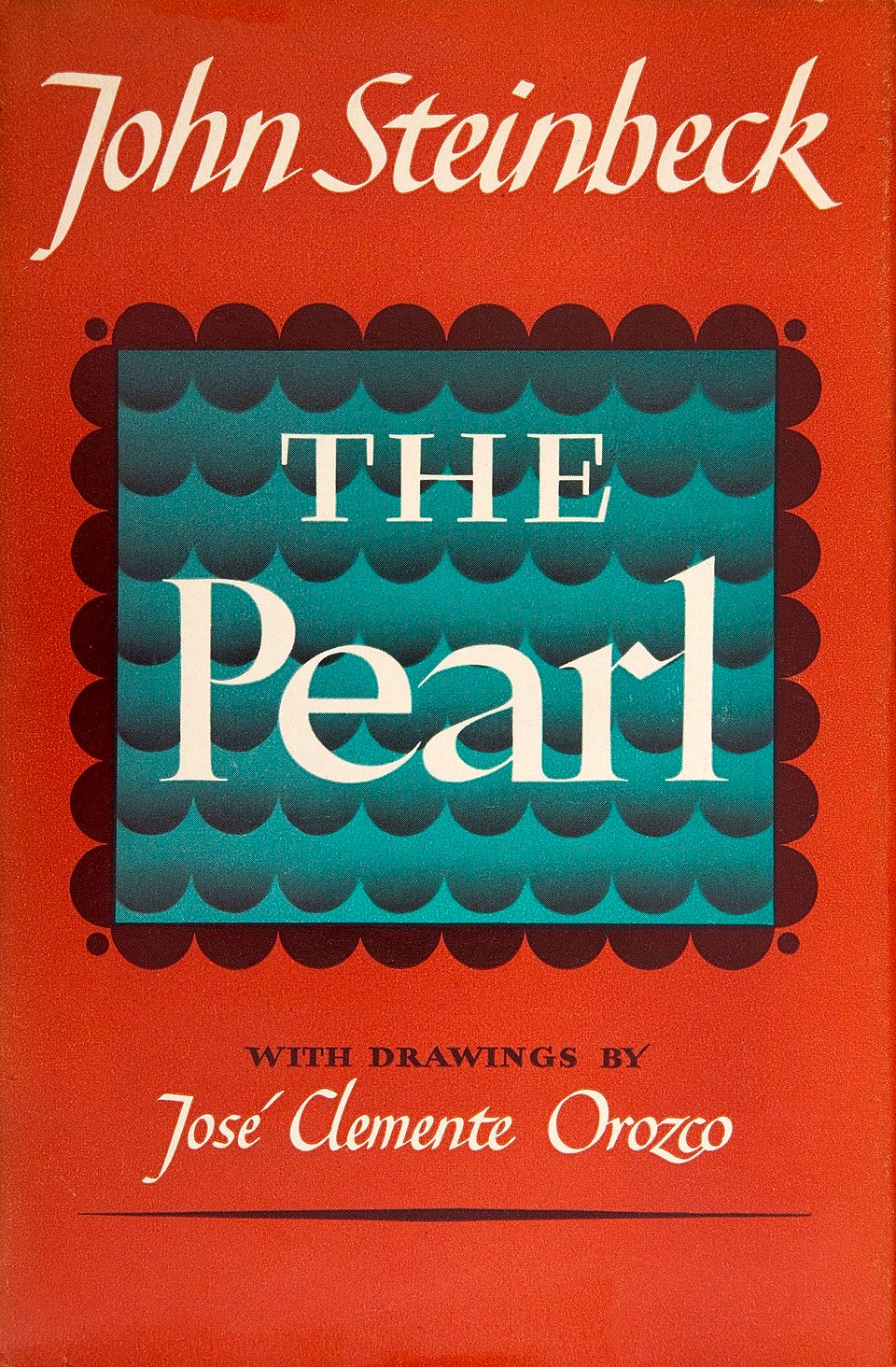
Original 1947 dust jacket cover of The Pearl
Let me provide some context. In 1994, literacy educators, linguists, and educational researchers met in New London, New Hampshire. The New London Group, as they called themselves, or the NLG’s goal, was to discuss literacy education in the United States and abroad. Two years later, they published “A Pedagogy of Multiliteracies: Designing Social Futures,” and the term multiliteracies was born.

The 2017 seminal work on multilitercies
According to Frank Serafini and Elizabeth Gee in Remixing Multiliteracies, “Multiliteracies was designed to challenge views of literacy primarily written language and the mastery of rules and conventions for the use of this language.” In other words, the NLG recognized the importance of “multiple modalities” in communication.
Returning to The Pearl. Kino, the main protagonist, is seemingly a simple fisherman in La Paz, Mexico, lacking formal education. However, he and his wife, with whom he is spare with verbal language, have a communication style that transcends verbal language; they are a couple practicing multiliteracies without being aware of it. Each understands the other in alternative forms of communication, such as Kino’s sigh. They engage in meaning-making and comprehension by utilizing modalities outside of written or spoken language.
As a secondary school ELA educator, assessing for meaning is an ongoing issue. Many of the current assessment tools available, the 5 paragraph essays, standardized tests, and rote vocabulary quizzes, for example, are restrictive and do not account for students’ situated knowledge, cultural backgrounds, or learning styles. The curriculum is static. Studies suggest students are in dire need of alternative assessments. A 2024 report from the nationsreportcard.gov (NEAP) is a distressing picture. According to the report, reading scores continue to drop: “In 2024, the average reading score for the nation at grade 8 was 2 points lower than 2022 and 5 points lower compared to 2019.” Students are struggling with reading. While this is only a single type of literacy, it is suggestive that schools and students are at a breaking point. In the article “The Extent and Consequences of Risk in U.S. Education” from 2002, Deborah Land and Nettie Legters suggest schools are not meeting student needs, especially in low-income and marginalized communities. Twenty years later, little progress has been made. Student outcomes are not improving. A curriculum needs to be developed that bridges the student/teacher divide. Pedagogy needs to be created for the lives of modern students — a curriculum where students feel seen and heard.
What can be done? A good starting point is how educators assess mastery or student understanding. My teaching credential program introduced me to the constructivist educational theorist Lev Vygotsky. Vygotsky’s philosophy was that learning is an internal process, meaning that learners actively participate in their learning. The teacher acts as a “More Knowledgeable Other” (MKO) who scaffolds learning while gradually reducing support. This space is known as the “Zone of Proximal Development” (ZPD), where students can achieve independently with minimal support from the MKO. Given Vygotsky’s principles, students should actively participate in their assessments. Creating a student-centered process where students are not outsiders in their learning. In a traditional ELA classroom, assessments are measured on achievement through quantitative measures, like standardized assessments, multiple-choice tests, and strict writing guidelines. In contrast, as with Vygotsky and the NLG, reciprocal interaction and feedback between the student and educator are essential.

Vygotsky’s Sociocultural Theory (ZPD)
One possibility for assessing and understanding outside formal assessments is peer grading; another is portfolios. The portfolio is a collection of student work over a set period. The format can be physical (a binder or folder) or a digital platform. The portfolio can include samples from various genres, such as reflective pieces expressing students’ experiences and exploring the students’ situated knowledge. The students could choose pieces that represent different genres and express how they have developed as thinkers.
The portfolio is an underutilized tool for learner assessment. An ELA portfolio showcases growth in literacy skills encompassing formal and informal writing or utilizing multiple modalities, such as raps, artwork, songs, oral presentations, short films, and performances. It can reflect a deeper understanding of the material and the student’s relationship with it and themselves. The portfolio works in alignment with both the constructivist and NLG ideas. Portfolios require that students be responsible for and reflect on their learning. Portfolios are an optimal tool for reflection and can utilize multiliteracies in a way that traditional assessments cannot. A portfolio assessment might support a student who struggles with standardized or traditional evaluations. Students can evaluate strengths and weaknesses and monitor their learning within the ZPD. Gaining deeper comprehension of meaning and understanding. Each student’s portfolio will reflect their unique knowledge and can support understanding using semiotic resources or traditional language. Students are given autonomy to create a distinct portfolio.
Assessing student understanding will remain an ongoing challenge in the ELA classroom, especially as students navigate challenges such as AI, larger class sizes, information banning, and a changing economic future. How do students from marginalized communities express their situated knowledge in a way that conforms to state ELA standards? What are the implications of portfolios putting more emphasis on formative assessments than summative assessments? How can we widen the gate rather than hold it open for a select few? The ELA classroom needs to adapt and evolve as modern students have. The old way of assessment is no longer effective, making portfolio exploration a worthy endeavor.
메타데이터
- post_id
- d670eb2d1c80
- slug
- multiliteracies-and-the-portfolio-as-a-tool-for-assessment-d670eb2d1c80
- url
- https://medium.com/@atwill32/multiliteracies-and-the-portfolio-as-a-tool-for-assessment-d670eb2d1c80
- canonical_url
- https://medium.com/@atwill32/multiliteracies-and-the-portfolio-as-a-tool-for-assessment-d670eb2d1c80
- author_url
- https://medium.com/@atwill32
- status
- ok
- fetched_at
- 2026-08-04 19:02:54