Moving Dirt on Your Property in Canton GA?
Thinking about grading your yard or prepping land for construction? Find out when a permit is required to move dirt in Georgia and how to…
Moving Dirt on Your Property in Canton GA?
Thinking about grading your yard or prepping land for construction? Find out when a permit is required to move dirt in Georgia and how to avoid fines before work begins.
You bought the land. You own it. So you should be able to move the dirt however you want, right?
Not exactly.

A lot of homeowners make this mistake every year. They hire someone to grade their yard, level a driveway area, or prep land for a new build without ever asking one simple question: do I need a permit for this? Then the fines arrive. Or the project gets shut down mid-way. Or they have to undo work they already paid for.
Why Moving Dirt Is Not as Simple as It Sounds
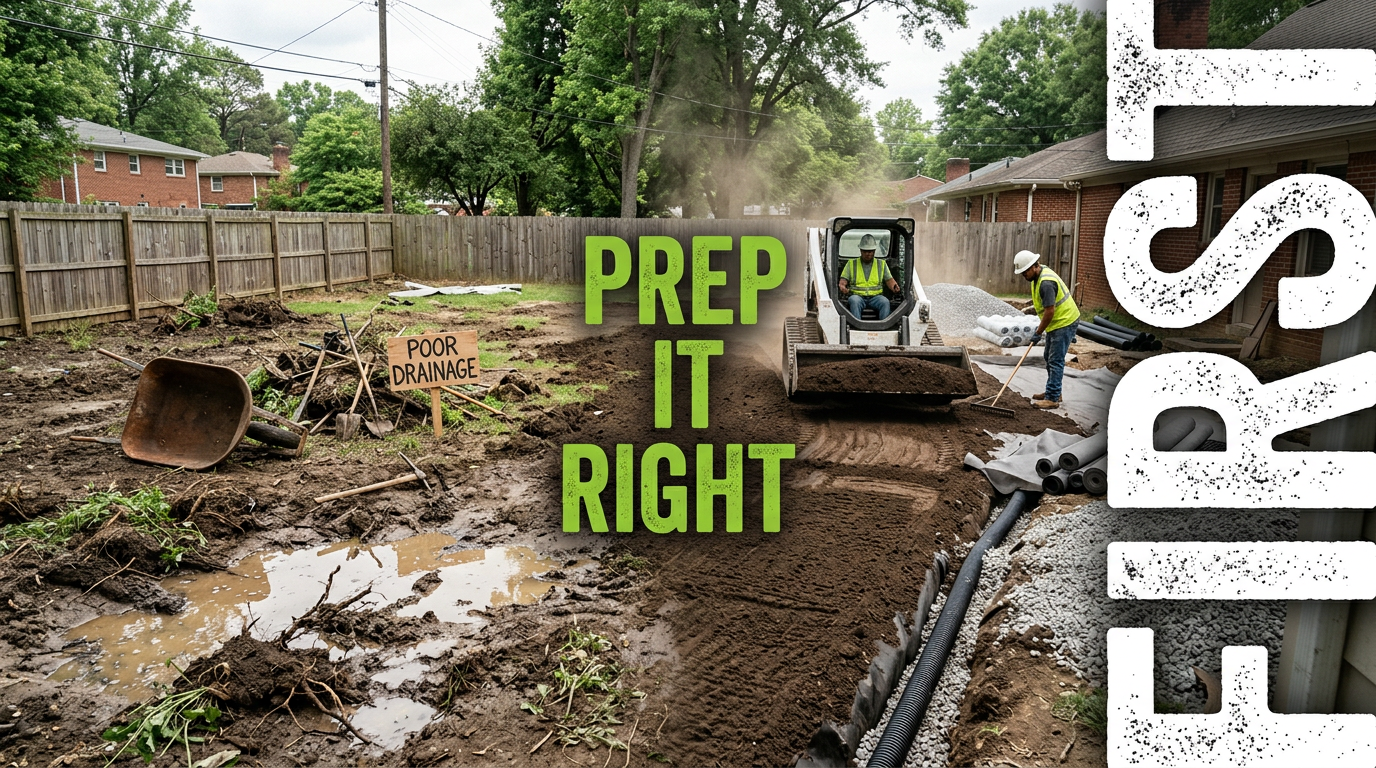
Changing the ground surface on your property can trigger problems far beyond your property line. Changing the slope or elevation of your property can redirect stormwater runoff, and without proper planning, this can cause flooding, erosion, or drainage issues for neighbors.
Beyond that, clearing land without proper authorization can lead to fines, stop-work orders, legal issues, and costly mitigation to restore the environment, all of which fall on the property owner.
Soil movement affects drainage patterns, soil stability, and nearby waterways. That is why local governments pay close attention to it.
When You Likely Need a Permit
The general rule across most jurisdictions is that you need a permit if you are disturbing 2,500 square feet or more of soil. But that threshold changes depending on where you live.
In Seattle, for example, you need a grading permit if your project will change the existing grade by more than 4 feet vertically and the combined volume of material moved exceeds 50 cubic yards, or if the result creates a permanent slope steeper than 3 horizontal to 1 vertical. Seattle Department of Construction & Inspections
In Los Angeles, the county does not require a grading permit for fills less than 3 feet deep at the deepest point, as long as the total fill does not exceed 50 cubic yards and does not block a drainage course. Los Angeles County Public Works
Projects that almost always require permits include grading for new construction, filling low areas with large amounts of soil, reshaping slopes near roads, and large-scale site preparation for residential or commercial development.
What Georgia Property Owners Need to Know
If you are in Georgia, the rules are more specific than most people realize.
Under the Georgia Erosion and Sedimentation Act, any project that disturbs one acre or more requires a Land Disturbance Permit and the filing of a Notice of Intent. Additionally, any grading or disturbance located within 200 feet of state water may trigger the permit requirement regardless of the disturbed area size.
At the county level, the rules get even more detailed. In Cherokee County, grading of land less than one acre is regulated under an Erosion Control Permit, while clearing and grading of one acre or more falls under the Land Disturbance Permit requirement.
Georgia does not issue statewide grading permits, but that does not mean property owners are off the hook. NPDES permits are required for any project disturbing over one acre, and extra permits are needed if the work is near wetlands or waterways.
If you are in a newer subdivision, the rules are even stricter. Any project involving a lot within a subdivision platted or recorded after January 1, 2000 often requires a Land Disturbance Permit even if the land disturbance is less than an acre, because newer subdivisions are typically regulated under post-construction stormwater requirements.
When You Probably Do Not Need a Permit
Small projects generally get a pass. Spreading soil along the side of your home to prevent a damp basement is usually fine, but bringing in a truckload of soil to elevate a section of your yard is more likely to trigger permit requirements.
Light landscaping like planting beds, small garden leveling, or minor regrading of a small corner of a flat yard usually falls below the threshold. The keyword here is small.
The Risks of Skipping the Permit Process
A contractor who says yes to everything you want may not be acting in your best interest. Any code violations are the responsibility of the property owner, not the contractor.
That means you carry the legal and financial risk. A quick phone call to your local planning or zoning office before work starts can save you thousands in fines and weeks of delays.
How to Stay Compliant
Contact your county planning or zoning office and ask specifically about thresholds for your project size. Ask whether your property sits near any waterways or protected areas. Get the answer in writing if you can.
If your project is in Georgia and covers significant acreage, working with a licensed grading and site prep contractor who already knows the local permit process is the fastest way to stay compliant and keep the project moving.
At Bucktown Grading and Construction in Canton, GA, our team handles grading, excavation, land clearing, demolition, site preparation, and hauling for residential and commercial projects across Cherokee County and beyond. We know the local permit landscape and help clients navigate it before the first machine rolls onto the site.
Call us at (706) 813–3736 or visit Bucktown Grading and Construction, LLC to talk through your project.
메타데이터
- post_id
- d67201bd84d2
- slug
- moving-dirt-on-your-property-in-canton-ga-d67201bd84d2
- url
- https://medium.com/@bucktowngradingandconstruction/moving-dirt-on-your-property-in-canton-ga-d67201bd84d2
- canonical_url
- https://medium.com/@bucktowngradingandconstruction/moving-dirt-on-your-property-in-canton-ga-d67201bd84d2
- author_url
- https://medium.com/@bucktowngradingandconstruction
- status
- ok
- fetched_at
- 2026-07-10 06:54:57