What Causes Enlarged Prostate (BPH)? Symptoms & Treatment Options
Benign Prostatic Hyperplasia (BPH), commonly known as an enlarged prostate, is one of the most common urological conditions affecting men…
What Causes Enlarged Prostate (BPH)? Symptoms & Treatment Options
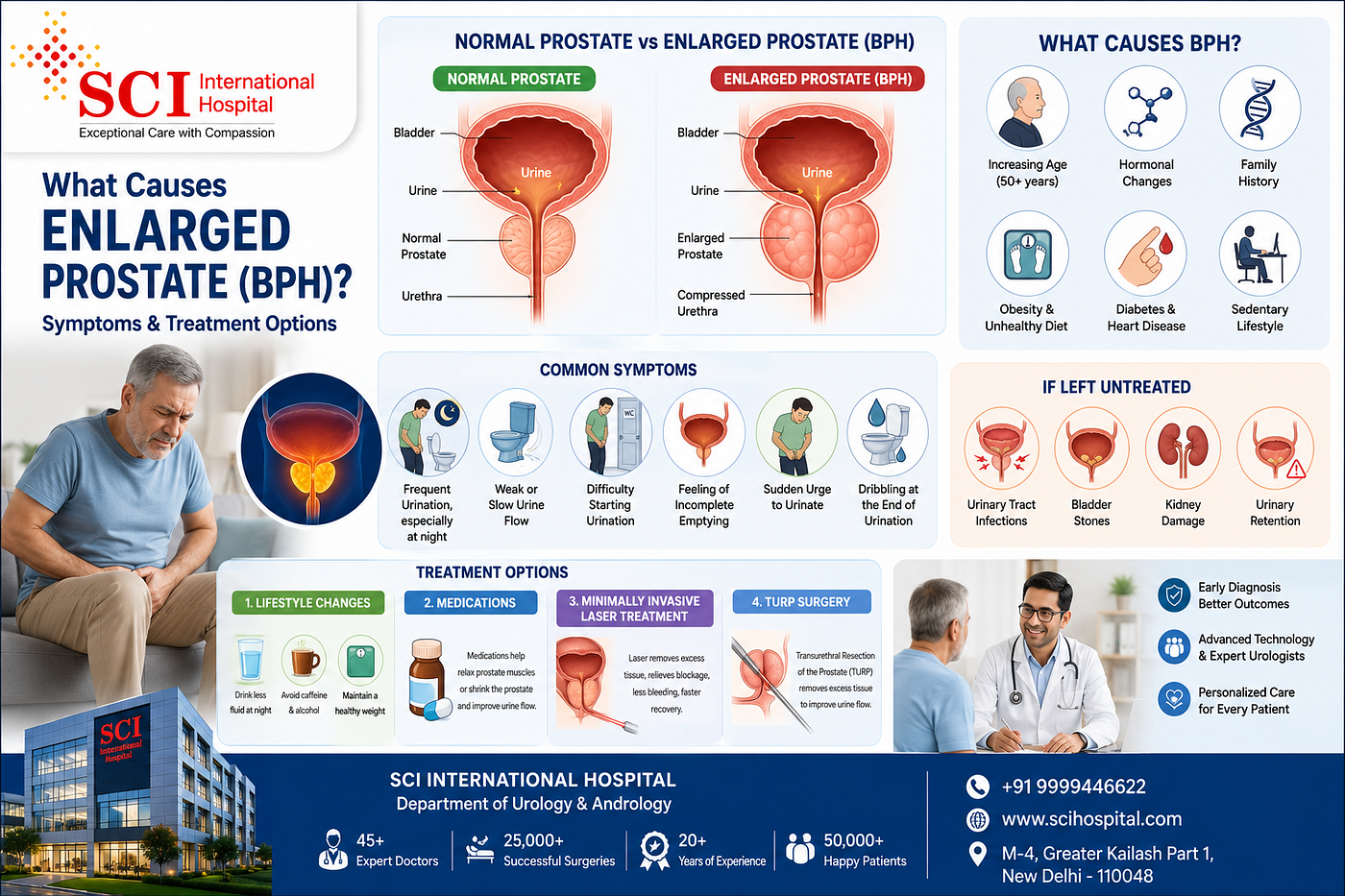
Benign Prostatic Hyperplasia (BPH), commonly known as an **enlarged prostate, is one of the most common urological conditions affecting men over the age of 50. Although BPH is not cancerous, it can significantly impact daily life by causing frequent urination, weak urine flow, and difficulty emptying the bladder. If left untreated, an enlarged prostate may lead to urinary tract infections, bladder stones, or even kidney damage. Fortunately, modern BPH treatment** options-including medications and minimally invasive laser procedures-can effectively relieve symptoms and improve quality of life.
In this guide, we’ll discuss the causes of prostate enlargement, its symptoms, diagnosis, treatment options, and why early consultation with a urologist is essential.
What Is an Enlarged Prostate (BPH)?
The prostate is a small gland located below the bladder that surrounds the urethra, the tube that carries urine out of the body. As men age, the prostate naturally grows in size. In some men, this growth becomes excessive, leading to Benign Prostatic Hyperplasia (BPH).
As the enlarged prostate presses against the urethra, it restricts the flow of urine, causing a range of urinary symptoms. While BPH is not prostate cancer and does not increase the risk of developing prostate cancer, it should still be evaluated and treated if symptoms interfere with daily life.
What Causes an Enlarged Prostate?
The exact cause of **prostate enlargement** isn’t fully understood, but several factors are known to contribute.
1. Aging
The biggest risk factor is age. BPH becomes increasingly common after the age of 50 due to natural hormonal changes that occur as men grow older.
2. Hormonal Changes
Changes in testosterone and dihydrotestosterone (DHT) levels can stimulate continued prostate growth over time.
3. Family History
Men with a family history of prostate enlargement are more likely to develop BPH.
4. Obesity
Being overweight is associated with a higher risk of prostate enlargement and worsening urinary symptoms.
5. Diabetes and Heart Disease
Metabolic disorders such as diabetes and cardiovascular disease may increase the likelihood of developing BPH.
6. Sedentary Lifestyle
Lack of regular physical activity may contribute to obesity and hormonal changes that affect prostate health.
Enlarged Prostate Symptoms
The severity of **enlarged prostate symptoms** varies from person to person.
Common symptoms include:
- Frequent urination, especially at night (nocturia)
- Weak urine stream
- Difficulty starting urination
- Dribbling at the end of urination
- Feeling that the bladder is not completely empty
- Sudden urge to urinate
- Interrupted urine flow
- Straining while urinating
In advanced cases, patients may experience:
- Blood in the urine
- Recurrent urinary tract infections
- Complete urinary retention
- Bladder stones
These symptoms should never be ignored, as they may worsen over time without treatment.
How Is BPH Diagnosed?
A urologist may recommend several tests to confirm the diagnosis and rule out other conditions.
These include:
- Medical history and symptom assessment
- Physical examination, including a digital rectal examination (DRE)
- Urine analysis
- Blood tests, including PSA (Prostate-Specific Antigen)
- Ultrasound of the prostate
- Uroflowmetry to measure urine flow
- Post-void residual urine measurement
Early diagnosis helps determine the most appropriate treatment plan.
Enlarged Prostate Treatment Options
The right **enlarged prostate treatment** depends on symptom severity, prostate size, and overall health.
1. Lifestyle Changes
Men with mild symptoms may benefit from:
- Reducing caffeine and alcohol intake
- Drinking less fluid before bedtime
- Maintaining a healthy weight
- Exercising regularly
- Avoiding delayed urination
2. Medications
Doctors may prescribe medications that:
- Relax the muscles around the prostate and bladder neck to improve urine flow.
- Reduce the size of the prostate over time.
Medication is often recommended for mild to moderate symptoms.
3. Minimally Invasive Laser Treatment
For patients with moderate to severe symptoms, laser prostate surgery offers a highly effective solution.
Laser treatment:
- Removes excess prostate tissue
- Improves urine flow
- Causes minimal bleeding
- Requires a shorter hospital stay
- Enables faster recovery
This approach is especially beneficial for older adults and patients taking blood-thinning medications.
4. TURP Surgery
Transurethral Resection of the Prostate (TURP) is considered the gold-standard surgical treatment for BPH. It removes obstructing prostate tissue through the urethra without external incisions, improving urinary flow and relieving symptoms.
Recovery After BPH Treatment
Recovery depends on the type of treatment.
Most patients undergoing minimally invasive laser procedures:
- Return home within 24–48 hours
- Resume light activities within a few days
- Notice improved urine flow soon after treatment
- Experience complete recovery within a few weeks
Following your urologist’s advice regarding hydration, medications, and follow-up appointments is important for optimal recovery.
When Should You See a Urologist?
Consult a urologist immediately if you experience:
- Difficulty urinating
- Blood in the urine
- Frequent nighttime urination
- Pain while urinating
- Recurrent urinary tract infections
- Sudden inability to pass urine
Early treatment helps prevent long-term complications and improves overall urinary health.
Why Choose SCI International Hospital for Enlarged Prostate Treatment?
If you’re searching for the best urologist in Delhi or a trusted urology hospital in Delhi, SCI International Hospital offers advanced diagnosis and treatment for prostate enlargement using modern medical and surgical techniques.
SCI International Hospital is a leading multispecialty hospital in Delhi NCR with 20+ years of experience, 45+ expert doctors, 25,000+ successful surgeries, and 50,000+ happy patients. The hospital specializes in minimally invasive urology procedures that focus on faster recovery, reduced pain, and improved patient outcomes.
The Department of Urology & Andrology offers:
- Advanced BPH treatment
- Laser prostate surgery
- TURP surgery
- Prostate enlargement treatment
- Kidney stone treatment
- Male infertility treatment
- Erectile dysfunction treatment
- Varicocele and hydrocele treatment
With experienced urologists, advanced laser technology, state-of-the-art modular operation theatres, and personalized treatment plans, SCI International Hospital provides comprehensive care for patients with prostate and urinary disorders. Every treatment plan is tailored to the patient’s condition to ensure safe procedures, faster recovery, and long-term relief.
To know more or book an appointment, visit **https://scihospital.com/**.
Frequently Asked Questions
Is an enlarged prostate the same as prostate cancer?
No. BPH is a non-cancerous enlargement of the prostate and does not mean you have prostate cancer, although both conditions can produce similar urinary symptoms.
Can BPH be treated without surgery?
Yes. Mild and moderate cases often respond well to lifestyle changes and medications. Surgery is usually recommended for severe symptoms or complications.
Is laser prostate surgery safe?
Yes. Modern laser prostate surgery is considered a safe and minimally invasive treatment that offers less bleeding, shorter hospital stays, and faster recovery compared to traditional surgery.
At what age does BPH usually occur?
BPH is most common after the age of 50, and the likelihood increases with age.
메타데이터
- post_id
- d67bc194c628
- slug
- what-causes-enlarged-prostate-bph-symptoms-treatment-options-d67bc194c628
- url
- https://medium.com/@socialmediaps2004/what-causes-enlarged-prostate-bph-symptoms-treatment-options-d67bc194c628
- canonical_url
- https://medium.com/@socialmediaps2004/what-causes-enlarged-prostate-bph-symptoms-treatment-options-d67bc194c628
- author_url
- https://medium.com/@socialmediaps2004
- status
- ok
- fetched_at
- 2026-07-28 08:53:04
