Holding Tension — When Portfolios Decide What Matters
How systemic design can work with, rather than smooth over, the conflicts inside portfolio approaches
Holding Tension — When Portfolios Decide What Matters
How systemic design can work with, rather than smooth over, the conflicts inside portfolio approaches

Portfolio thinking is often introduced as an antidote to single heroic projects. Instead of betting on one intervention, institutions assemble a mix of experiments, partnerships, policy shifts and investments that together explore a complex issue. Portfolios promise a way to navigate uncertainty, work with whole systems, and “learn our way” into transformation.
Very quickly, though, portfolios can start to feel like answers rather than questions. Once criteria are set and initiatives are arranged into neat categories, it becomes tempting to see the mix as the right one: balanced, evidence based, justified. Underneath, the conflicts that made a portfolio necessary in the first place are still there. They have simply moved into how the portfolio is constructed and read.
Tensions portfolios cannot escape
At the heart of most public or philanthropic portfolios sit a few stubborn tensions.
There is the pull between improving what already exists and questioning its premises. Between work that delivers visible results in the next funding cycle and work that reshapes conditions over a decade. Between concentrating effort where data, partners and capacity are strongest and reaching places and people who are hardest to see.
No portfolio can satisfy all of these fully at the same time. Emphasising “impact” and “feasibility” will naturally favour contexts where measurement is easy and delivery is predictable. Emphasising “emergence” and “learning” will mean backing strands of work that look ambiguous on paper and take time to show their value.
When these tensions are translated into selection criteria and scoring, it can feel as if they have been resolved.
In reality, choices have been made about whose timelines matter, which forms of value count, and which parts of the system will be allowed to remain messy.
What gets measured reliably is what gets selected consistently. And what is not selected, over time, is quietly defined as less valuable. It does not just slip to the edges of attention; it disappears from what the system learns to see, and therefore from what it learns to value, and eventually from what it considers real.
Consider a climate portfolio that leans heavily toward “bankable” mitigation projects: energy retrofits in central districts, technology pilots with well resourced partners. Adaptation work in flood‑prone or heat‑exposed neighbourhoods remains small, experimental and repeatedly delayed. On the spreadsheet, the mix looks defensible: strong numbers, solid pipelines, clear stories. On the ground, the places most exposed to heat, flooding or erosion see little structural change, so when the next extreme event arrives, it is the same households, the same streets, that absorb the impact again.

Communities, institutional reform, structural change: what is present, and what is persistently absent.
Similar dynamics appear even in portfolios explicitly designed to be systemic, for example those developed by organisations like the United Nations Development Programme. Development portfolios are often framed as spreads of pilots, partnerships and labs across themes and regions. Well‑instrumented projects in easier contexts accumulate evidence and visibility, while harder, institution‑shifting work in marginalised or politically sensitive settings remains thin: present as intent, but rarely as sustained investment. What appears as a diversified, learning‑oriented portfolio can in practice stabilise where power already sits, while continuing to describe itself as “transformative”. In that sense, the portfolio does not just reflect the system; it can end up reproducing the very inequalities it is trying to address.
The uncertainty does not vanish; it is pushed outward onto the people already carrying the most risk.
In philanthropic portfolios, measurable interventions with clear attribution tend to dominate, while long term, politically complex work, such as shifting land use, labour conditions or local governance, remains underfunded and precarious. Grants cluster around what can be seen, counted and reported within a funding cycle. The portfolio appears diversified, but systematically favours what can be turned into evidence on schedule, while the slow work of changing underlying power relations stays permanently at the edge.
Portfolios as mirrors
From a systemic design perspective, this is not a failure of portfolio approaches. It is a signal. Portfolios do not just organise projects; they reveal a system’s deep preferences.
A portfolio that steadily accumulates improvement and mission‑oriented work, while exploratory and anticipatory strands remain thin, is telling a story about comfort with the present. A portfolio that cycles small pilots on the periphery without ever shifting core institutions is telling a story about where power is allowed to remain untouched.
On the surface, these patterns can look neutral. The portfolio appears “balanced” across themes and geographies; everything has its place.
But behind that appearance sit decisions about how much uncertainty is acceptable and for whom, about which kinds of loss are tolerable and which are not, about whose lived experience shows up as knowledge and whose appears mainly as risk. A portfolio is not a neutral map of action. It is a record of what a system is willing to see, and what it can afford to ignore.
In that sense, portfolios are mirrors. They show where institutions have chosen to carry tension themselves and where they have pushed it outward into communities, future budgets or other parts of the system. The danger is not that portfolios contain conflict, but that they pretend they do not. When that happens, the conflicts do not go away; they simply become harder to name, and harder for those living with the consequences to contest.

Institutional comfort, portfolio mix, system edges: how deep preferences show up in what we fund.
Designing portfolios that hold tension
If portfolios already hold these tensions, the design question shifts. It is no longer “How do we optimise the mix?” but “How do we make the conflicts inside the mix visible and discussable?”
One move is to speak plainly about the tensions a portfolio is managing. Instead of framing everything in terms of balance and coverage, portfolios can be described in terms of the trade offs they lean into and the ones they postpone: short term versus long term, core versus edge, measurable versus emergent. Initiatives can be situated in that landscape, not just listed under themes. The portfolio then reads less like a neutral spread and more like a set of deliberate commitments and omissions.
A second move is to attend to what is missing, not only to what is present. Most portfolio artefacts highlight what is inside the frame. A systemic stance also asks: which parts of the system are persistently untouched, which kinds of work never move beyond exploration, which communities appear only as recipients, not as shapers? Over time, that pattern of absence may be the most important thing the portfolio is telling you.
A third move is to design for return rather than treat composition as a one off. Portfolios are often treated as something to be set, defended and reported on. A tension‑aware approach treats them as questions that must be revisited. At regular intervals, the conversation is not only “What did we deliver?” but “Which tensions did we lean into? Which did we defer? Who carried the cost of that deferral, and was that cost ever explicitly chosen, or simply allowed to fall where it always does?” The criteria themselves can be adjusted in light of that reflection, rather than remaining fixed background assumptions.
Some tensions should not be optimised away at all, but deliberately protected, because they are the only thing keeping certain futures in view.
Finally, portfolios can make room for more than one reading. In many institutions, a single official narrative forms quickly: the portfolio is “balanced”, “aligned”, “strategic”. Systemic work benefits from protected spaces where people can say, with legitimacy, “From here, this looks skewed.” That might take the form of short minority reflections attached to portfolio reviews, alternative storylines developed with partners, or conversations where those closest to the edge of a system are invited to redraw the map according to their experience. The aim is not endless dissent, but the ability to hold more than one truth about what the portfolio is doing.
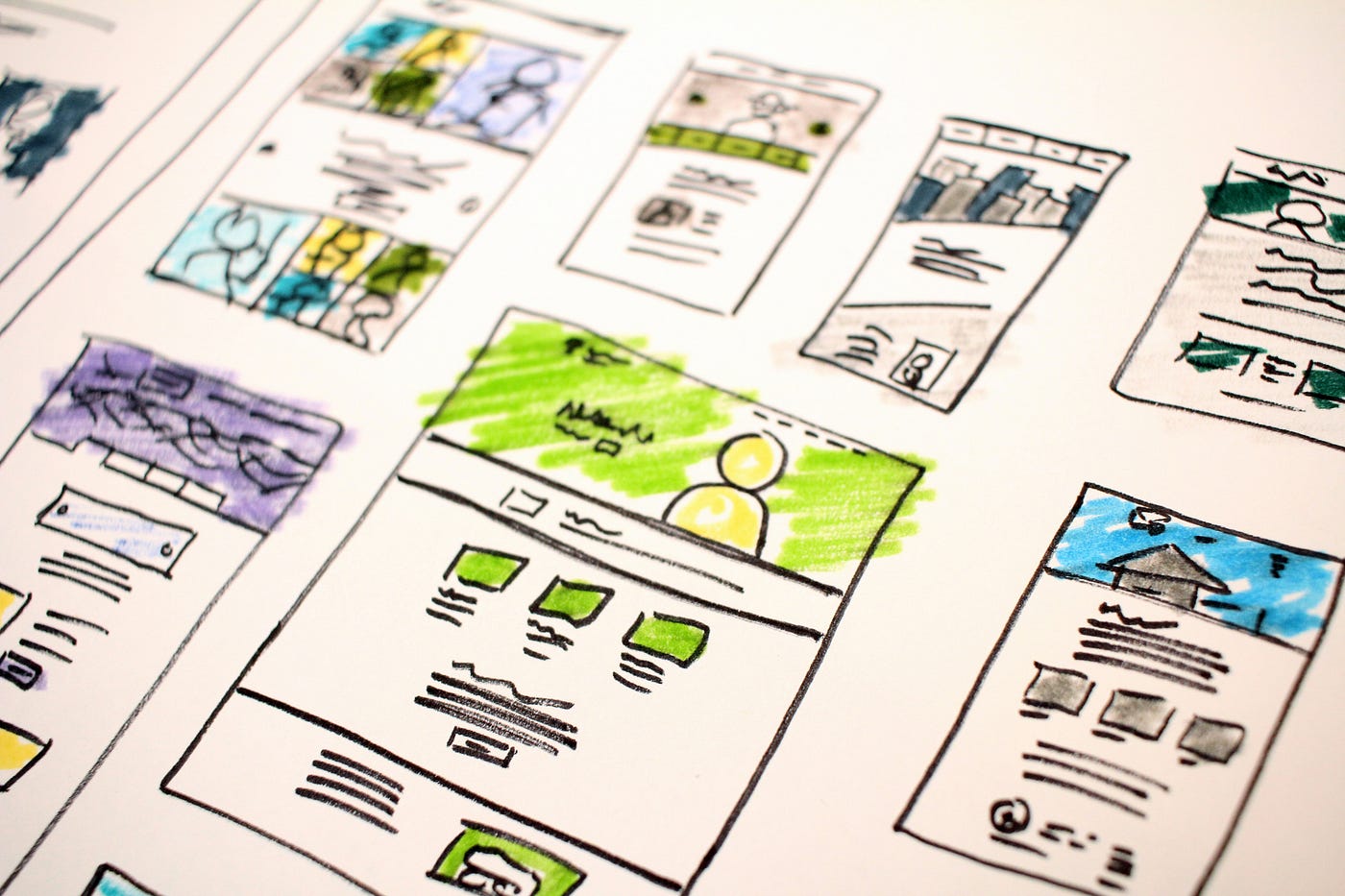
Who is missing? Whose risk is this? What never moves beyond pilot? What cannot be evidenced on time?
What systemic design can still ask
Portfolios will not resolve the contradictions at the heart of complex systems. They will not finally settle the tension between investing in what is legible now and caring for what is fragile, emergent or marginal. Expecting them to do so is asking the wrong thing.
What they can do, when shaped with systemic sensibility, is make those contradictions easier to work with honestly. They can help institutions say, in effect:
These are the futures we are investing in. These are the ones we are postponing or leaving to others. Here is who carries the uncertainty and the cost of that choice.
Without that clarity, portfolio approaches risk becoming a more sophisticated way of doing what systems have always done: optimising for what is already visible, and calling it strategy.
In this sense, portfolios are not just instruments of strategy, but sites of governance where unresolved conflicts are quietly decided, often without those most affected ever being in the room where that decision is made. Systemic design does not remove the need to choose. At its best, it keeps asking a simple, uncomfortable question: Who and what are we allowing to fade from the frame? And are we willing to hold that tension in view, rather than smoothing it away and calling it strategy?
메타데이터
- post_id
- d68f3013239b
- slug
- holding-tension-when-portfolios-decide-what-matters-d68f3013239b
- url
- https://medium.com/ren-m/holding-tension-when-portfolios-decide-what-matters-d68f3013239b
- canonical_url
- https://medium.com/ren-m/holding-tension-when-portfolios-decide-what-matters-d68f3013239b
- author_url
- https://medium.com/@neil_meka
- status
- ok
- fetched_at
- 2026-06-09 14:34:10