The Biggest AI Scam Isn’t the Technology. It’s the Words
They start by twisting the meaning of terms. Then they mislead investors. And then the crisis hits us right in the face.
The Biggest AI Scam Isn’t the Technology. It’s the Words
They start by twisting the meaning of terms. Then they mislead investors. And then the crisis hits us right in the face.

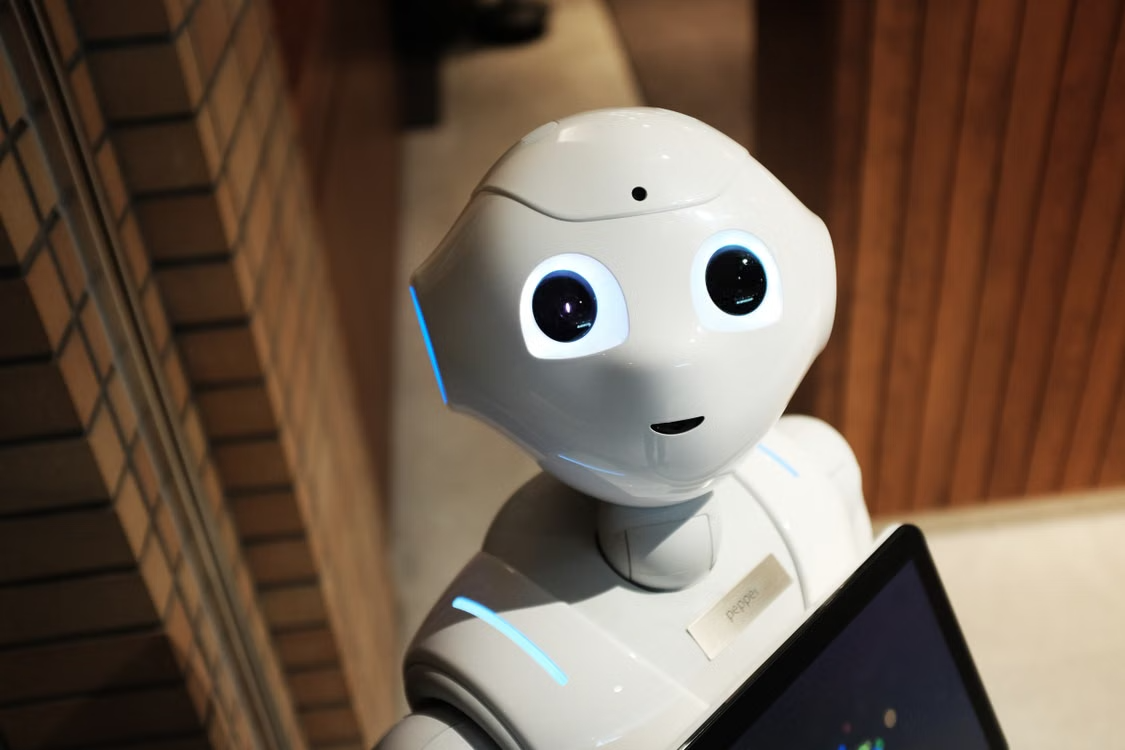
Photo by 小和尚 温柔的
In my previous articles, I have made a sincere effort to convey a simple idea to my readers: the generative AI industry is experiencing more than just a technological crisis. We are dealing with a system of interconnected and deliberate manipulations that consistently cover for one another.
First, we were sold statistical analysis under the guise of intelligence.
Then, the technological dead end began to be concealed behind new investment bubbles and increasingly expensive imitations of progress.
After that, we were led to believe that if America does not maintain its leadership in AI, China will crush it.
Fortunately, it’s not too hard to see through all this hype if you keep your eyes and ears open. However, there is another, far less obvious — and therefore more insidious — deception.
The most powerful tool of manipulation turned out to be not the technology itself. Nor even money. It all begins with redefining concepts.
What is AGI?
Ask any inexperienced startup founder anything about AGI. They’ll bombard you with a flood of profound-sounding arguments. And with eyes ablaze, they’ll insist that AGI is just around the corner. Well, no later than 2027, for sure.
But where did they get all this from? It all comes from the same place — from listening to the deliberately constructed nonsense that Sam Altman, Dario Amodei, and other apostles of the Brave New World churn out nonstop. And which the mainstream media, bloggers, and YouTubers eagerly repeat and amplify.
All these people possess a remarkably effective combination of a lack of conscience and an excess of eloquence. This skill makes them super-persuasive when it comes to capturing the attention of an audience that’s perpetually too busy or too lazy to do even basic fact-checking on what’s being fed to them as “expert opinion.”
The result? Crowds of shareholders, brainwashed by massive propaganda, are awaiting the IPOs of OpenAI and Anthropic with the same fervor as the hopelessly devout await the Second Coming of Christ.
The fact that both companies are hopelessly unprofitable doesn’t deter these people. After all, they believe that all that remains is to overcome the final hurdle before models emerge that will become “our final invention,” as prophesied by James Barrat.

Come on — if Sam Altman said that LLM-based AGI is possible, how can you not believe him? After all, he’s the CEO of the most valuable startup in history! Who needs all these philosophers, neuroscientists, and cognitive scientists with their endless grumbling? What do all these armchair theorists even know about real, hardcore AI?
The Language Trap
But you know what? We can partly excuse the short-sighted shareholders and investors blinded by greed. They’ve fallen into a language trap. For many years, The discourse has been distorted by the irresponsible use of terms whose original meanings few people remember anymore.
And that’s a shame! Because the AI bubble exists largely due to widespread ignorance regarding the technology that is now incorrectly referred to as “AI.”
Here’s how it all began. The term “Artificial Intelligence” was proposed in 1956 at the Dartmouth Workshop by American computer scientist and mathematician John McCarthy. But it had no scientifically grounded meaning. It was simply assumed that it would be a machine capable of thinking — in a broad sense. In fact, this event also marked the beginning of the research field bearing the same name.
The term “Artificial General Intelligence,” in turn, appeared in the late 1990s and became firmly established in public discourse in the early 2000s. Essentially, its emergence was an attempt to bring clarity to the field.
By that time, the original term “Artificial Intelligence” had become very vague and had effectively turned into a marketing label. It was used to describe just about anything in the field of machine learning when it came to identifying patterns in large datasets.
But in 2007, the book Artificial General Intelligence, edited by Ben Goertzel and Cassio Pennachin, was published, and the term entered widespread scientific use. This was followed by AGI conferences, the Journal of Artificial General Intelligence, and so on.
However, there is still no officially accepted definition of AGI. Goertzel defined it as “a system capable of performing a wide range of cognitive tasks at or above the human level.”
Shane Legg, Goertzel’s colleague and co-founder of DeepMind, spoke of a system capable of achieving goals across a wide range of environments.
Ilya Sutskever, former co-founder and chief scientist at OpenAI, speaking at a TED conference in November 2023, said (paraphrasing slightly) that AGI would be a system that could be taught to do everything humans do — and even do it better than humans themselves.
A Rough Consensus
So, a definitive definition of the essence of AGI has not yet been established. Nevertheless, most experts agree that AGI should be on par with human intelligence in every respect.
From this, we can conclude that it must possess, perhaps, the most important quality of our intelligence — adaptability to any environment as an inherent ability.
To make this vision as clear as possible, let’s imagine a humanoid robot controlled by AGI. For the sake of the experiment, let’s assume it possesses the most basic level of functionality — the drive for self-preservation and the ability to construct an internal model of its environment.
So, what kind of behavior could we expect from it?
AGI in the Real World
I believe — and I’m certainly not alone in this — that this robot would relentlessly explore the world around it. All information coming in from the outside through its sensors would be transformed into objects in its model of the world. It would study:
- Their physical parameters
- Their individual behavior
- Their interactions with other objects
Based on the knowledge it gains, it will construct not only a physical model but also a predictive model of reality.
In this sense, it will be very similar to a child born with a brain in a blank state, gradually filled with meaningful information about the surrounding world.
I emphasize that this drive to comprehend the surrounding world will be its intrinsic characteristic. Like a human child, it will be able to start from scratch, although in real life it will have something like a foundational model copied from other agents. But this model will be autonomously updated by the agent itself as it learns about its environment.
Note that in this example, intelligence is inextricably linked to the real physical world. This is called “grounding.” Such an agent does not need language as an intermediary. Of course, this does not mean that language is unnecessary at all. It serves as a bridge between such an agent and humans. The agent needs to link its internal representations of objects to a symbolic system for communication. But in this case, language is linked to real-world objects, whereas Generative AI operates on symbols, whose physical counterparts may simply not exist.
Words as a tool of manipulation
Naturally, Generative AI is incapable of producing a system that would implement such an agent. But the trillion-dollar flywheel of the AI industry has already been set in motion. For OpenAI and Anthropic to go public, they need to somehow conceal the fact that all their promises to create AGI are completely unfounded. And that’s where word manipulation comes into play.
Anthropic, of course, is putting on a masterclass here. Dario Amodei stated from the very beginning that he refuses to use the term “Artificial General Intelligence.” Instead, he uses another term: “Powerful AI.”
This is a big deal. After all, it’s up to Anthropic to define what this term means. Today it might mean one thing; tomorrow, something else.
At the same time, the claim to something that surpasses everything that has ever been created in the field of AI remains. Amodei backs up his vague definitions with several extensive essays of his own authorship. In a philosophical and poetic style, he paints a picture of the very world of AI created by his company, where all limitations imposed on human capabilities will be overcome.
But that’s not all. Backing him up is his sister and Anthropic co-founder Daniela. Her message is directed at those who might be confused by Dario’s rejection of the conventional term: she says, AGI is actually possible and has already been created — it’s simply a matter of terminology.
Well, you can guess for yourselves by whom it has already been created or will be created in the near future.
Still haven’t figured it out? Well then, listen to what she says:
AGI is such a funny term. Many years ago, it was kind of a useful concept to say, ‘When will artificial intelligence be as capable as a human?’ Today that framing is breaking down. By some definitions of that, we’ve already surpassed that
Really?
Does Claude understand the real world?
Does it have a persistent, self-updating model of this world?
Doesn’t it hallucinate?
Has it solved the problem of semantic inconsistency in inference (I discussed this problem in detail in one of my recent articles)?
Is it based on technology that isn’t a “black box”?
You know the answers to these questions, don’t you?
And that’s why you understand that all these “language games” (to borrow philosopher Ludwig Wittgenstein’s term) are a tool for misleading the public. The goal remains the same — milking money from investors who don’t understand the technology but are guided by the narrative shaped by AI hype.
Sam Altman, however, didn’t bother with elegant rhetoric. He simply equated intelligence with finances. According to The Information, in late 2024, OpenAI and Microsoft reached an agreement to define AGI as a system that can generate at least $100 billion in profits.
Summary
Many call today’s AI “jagged.” The idea is that it shows brilliant results in some tasks and fails in others.
But it doesn’t even deserve that label. Because it simply lacks intelligence. All these benchmarks used to evaluate generative models measure anything but intelligence.
When a system beats the world Go champion, it doesn’t do so because it’s smarter. It’s simply better at calculating probabilities. When an AI assistant explains a phenomenon to you, it doesn’t mean it understands it. It understands nothing and cannot understand anything, since it lacks a mechanism for understanding as such. It simply returns text synthesized from fragments of someone else’s statements. And it doesn’t even know how reliable those statements are.
That’s why it’s so easy to talk it into reversing its answer (I cited a real-life example in another article).
True intelligence is grounded in the real world and, figuratively speaking, forms a single system with it. Its very origin stems from an agent’s need to survive in this world. And to do that, it must understand how this world works and be able to predict future events.
Therefore, I ask you — don’t be taken in by grandiose claims. Follow the example of the Romans. In such cases, they always asked — cui bono? — who benefits?
Are we really any dumber than they were? Are we really so ignorant that we will continue to fail to notice that the emperor has no clothes?
Just accept the fact that for most of those profiting from inflating the AI bubble, terminology is not a means of expressing their intentions. As a rule, it’s a way to hide them.
And their intention remains the same — to catch as many fish as possible in murky waters.
For some reason, they seem to think they’ll be able to keep this up forever.
But I personally don’t think so.
What do you think?
Enjoyed the article? Follow my updates on what’s happening in AI and how it’s reshaping business and entrepreneurship.
You may like these stories:
- Simple Proof That LLM Is a Stochastic Parrot That Doesn’t Understand the Meaning of Text
- LLM Cargo Cult: Why My January Predictions About the AI Industry Crisis Have Become the New Reality
- 7 Reasons We’re Fundamentally Wrong About Artificial Intelligence
You can also read my **Selected Articles on Artificial Intelligence for Thoughtful Readers**.
메타데이터
- post_id
- d6a07edaf084
- slug
- the-biggest-ai-scam-isnt-the-technology-it-s-the-words-d6a07edaf084
- url
- https://medium.com/predict/the-biggest-ai-scam-isnt-the-technology-it-s-the-words-d6a07edaf084
- canonical_url
- https://medium.com/predict/the-biggest-ai-scam-isnt-the-technology-it-s-the-words-d6a07edaf084
- author_url
- https://medium.com/@sergeykleftzov
- status
- ok
- fetched_at
- 2026-07-15 05:23:04