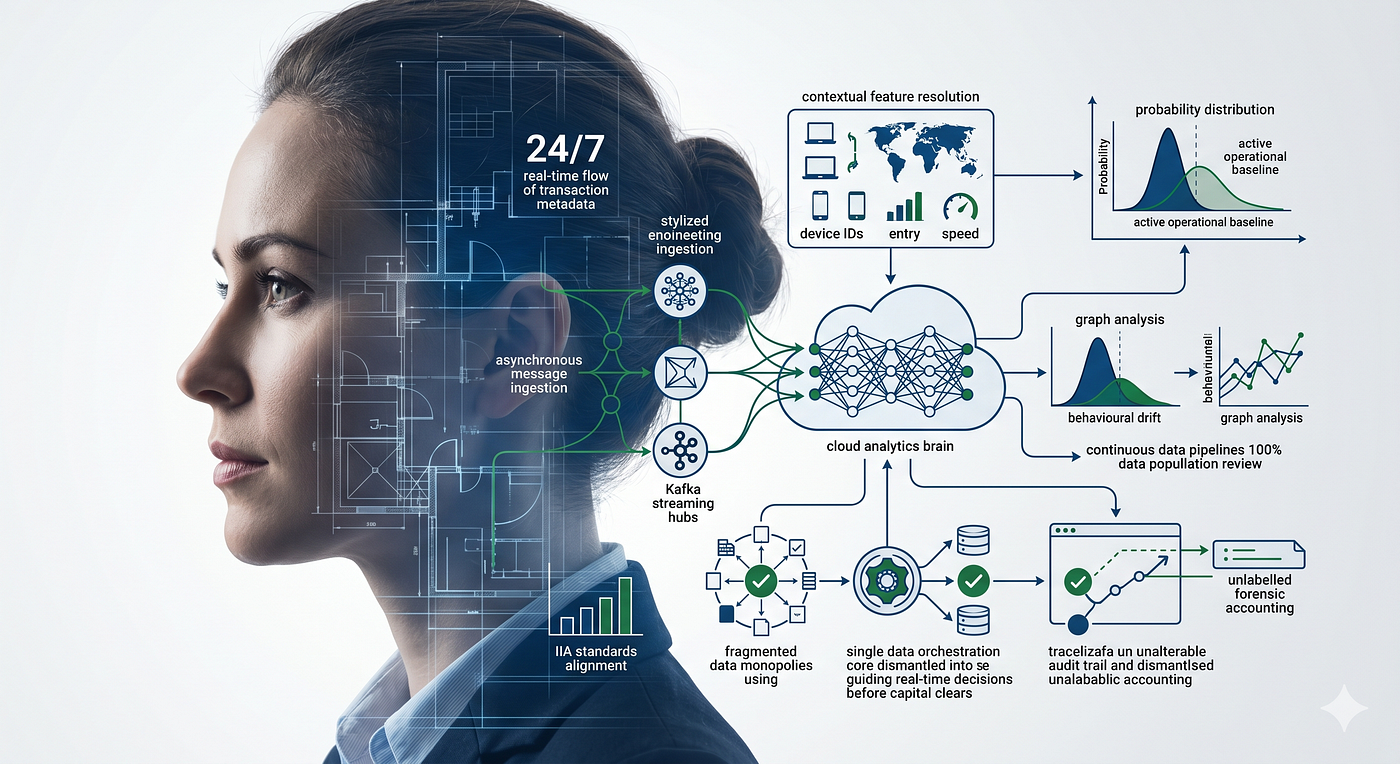
Why Tech Leaders Use Continuous Monitoring for 2026 Audits
Continuous compliance monitoring has transitioned from a progressive technical goal to a non-negotiable operational standard for…
Why Tech Leaders Use Continuous Monitoring for 2026 Audits
Continuous compliance monitoring has transitioned from a progressive technical goal to a non-negotiable operational standard for organizations managing complex global footprints in 2026. This shift is driven by the realization that traditional, point-in-time auditing is no longer sufficient to mitigate the velocity of modern regulatory changes or the scale of decentralized data.
By implementing systems that provide persistent oversight, technical decision-makers can automate global audit requirements, reducing manual intervention while increasing the accuracy of financial and operational reporting.
This proactive stance allows for the immediate identification of control failures, turning what was once a reactive, high-stress annual event into a streamlined, business-as-usual process.

continuous compliance monitoring
The Breakdown of Periodic Auditing
The legacy model of conducting quarterly or annual audits relies on sampling small percentages of data to infer the health of an entire system. In a landscape where transactions occur in milliseconds across multiple jurisdictions, this “snapshot” approach creates significant blind spots. Regulatory bodies have increased their expectations for data integrity, often requiring proof of control effectiveness that covers the entire reporting period, not just a curated sample. When technical debt and fragmented systems are factored in, the labor-intensive nature of gathering evidence manually becomes a primary source of operational risk.
Modern infrastructure demands a more fluid approach. The complexity of hybrid cloud environments and the proliferation of edge computing mean that data is constantly in motion. Relying on manual logs or retrospective reviews often results in discovering violations months after they occurred, leading to compounding fines and reputational damage. Transitioning to a model that emphasizes persistent oversight ensures that the integrity of the data remains intact from the moment of ingestion through its entire lifecycle.
Orchestrating Real-Time Risk Scoring
To move beyond the limitations of manual oversight, organizations are turning to real-time risk scoring as a foundational component of their governance strategy. This involves the application of sophisticated algorithms to live data streams to assign a risk value to specific transactions, user behaviors, or system changes. Instead of waiting for a post-mortem analysis, technical teams can receive immediate alerts when a threshold is breached, allowing for intervention before a minor anomaly evolves into a systemic failure.
- Dynamic Thresholding: Adjusting risk parameters based on geographic location, transaction volume, or specific regulatory jurisdictions.
- Behavioral Analytics: Identifying deviations from established patterns in user access or data movement that could indicate internal or external threats.
- Predictive Modeling: Utilizing historical data to forecast potential control weaknesses before they manifest in the production environment.
This level of granularity is essential for maintaining a competitive edge. When risk is quantified in real time, leadership can make more informed decisions regarding resource allocation and strategic investments. It moves the conversation from “what went wrong” to “how are we maintaining stability right now.” This transition is particularly critical for those managing global operations where different regions may have vastly different compliance mandates.
The Role of RegTech in System Harmonization
The emergence of specialized RegTech (Regulatory Technology) has provided the necessary toolkit to bridge the gap between complex legal requirements and technical execution. These solutions act as an intelligence layer that sits above existing infrastructure, translating regulatory language into executable code. By automating the mapping of controls to specific technical configurations, organizations can ensure that their systems are compliant by design rather than by happenstance.
Integration is the primary hurdle in this space. Most large-scale operations are dealing with a mix of legacy on-premises hardware and modern SaaS applications. A robust regulatory technology framework must be able to ingest data from these disparate sources and normalize it into a unified view. This normalization is what enables a consistent application of policy across the entire organization, regardless of where the data resides or which team owns the underlying asset. Without this unified layer, compliance remain siloed, leading to inconsistent enforcement and increased vulnerability.
Driving Efficiency Through ERP Integration
For most global organizations, the Enterprise Resource Planning (ERP) system is the heartbeat of financial and operational data. Achieving true automation in the audit process requires deep ERP integration to ensure that compliance checks are embedded directly into business workflows. When the systems governing procurement, payroll, and supply chain management are inherently linked to monitoring tools, the creation of automated audit trails becomes a secondary effect of standard operations.
- Native Control Embedding: Placing validation checks directly within the ERP workflow to prevent unauthorized transactions before they are finalized.
- Automated Reconciliation: Matching cross-platform data automatically to ensure financial records align with operational realities without manual spreadsheet manipulation.
- Direct API Connectivity: Reducing the reliance on flat-file exports by using secure, real-time data pipelines between the ERP and the compliance engine.
This integration eliminates the “sivel-chair” effect where employees must manually move data between systems to prove compliance. By making the audit trail a digital byproduct of the transaction itself, the margin for human error is virtually eliminated. This not only satisfies external auditors but also provides internal stakeholders with a much higher level of confidence in the data they use for strategic planning.
Strengthening Data Integrity via Automated Audit Trails
The value of an audit trail is fundamentally tied to its immutability and completeness. Manual logs are often incomplete, subject to alteration, or missing critical metadata. By contrast, automated audit trails capture every interaction, change, and access request in a tamper-evident format. This provides a chronological record that is indispensable during a formal review or an internal investigation. In 2026, the standard for evidence has shifted toward high-fidelity, machine-generated logs that can be independently verified.
Constructing these trails requires a deliberate architectural approach. It involves capturing not just the “who” and the “when,” but also the “how” and the “why.” This means logging the specific API calls, the logic used by automated systems, and the state of the system both before and after a change was implemented. When these logs are centralized and indexed, the time required to fulfill an audit request drops from weeks to hours. This efficiency gains back thousands of man-hours that can be redirected toward innovation rather than administrative maintenance.
Overcoming Implementation Friction
Shifting to a continuous model is not without its challenges. The primary friction points are typically found in data silos and resistant organizational cultures. Many teams are accustomed to the “crunch time” of an annual audit and may view continuous monitoring as an intrusive or unnecessary overhead. Overcoming this requires a clear demonstration of the long-term value: less disruption to daily work, fewer emergency remediations, and a more stable environment for everyone involved.
From a technical standpoint, the initial setup requires a significant investment in data engineering. Ensuring that data is clean, tagged, and accessible is a prerequisite for any automated monitoring effort. However, once the pipelines are established, the cost of maintaining the system is significantly lower than the recurring costs of manual audits and the potential costs of non-compliance. The goal is to build a self-sustaining ecosystem where compliance is an invisible but omnipresent feature of the technology stack.
Scaling Governance for Global Operations
Operating across international borders introduces a layer of complexity that can overwhelm manual processes. Different countries have different data residency laws, privacy requirements (such as GDPR or its successors), and financial reporting standards. Continuous compliance monitoring allows an organization to apply localized rulesets to specific data clusters while maintaining a global dashboard for oversight.
- Geographic Tagging: Automatically applying regional compliance rules based on the origin or storage location of the data.
- Localization of Controls: Tailoring specific security and privacy controls to meet local mandates without fragmenting the global governance framework.
- Centralized Visibility: Providing a “single pane of glass” view for leadership to monitor global health while allowing regional teams to manage their specific requirements.
This balance of global oversight and local agility is the hallmark of a mature digital organization. It allows for rapid expansion into new markets because the governance framework is already designed to scale. Instead of building a new compliance program for every country, the organization simply plugs a new data source into the existing monitoring engine and applies the relevant localized ruleset.
The Future of Governance as Code
The trajectory of industry standards is moving toward “Governance as Code.” In this model, compliance requirements are written into the deployment scripts and infrastructure configurations. If a proposed change to the environment violates a policy, the system simply refuses to deploy it. This is the ultimate realization of continuous compliance monitoring, where the system is physically incapable of falling out of alignment with the required standards.
As we move deeper into 2026, the distinction between “running the business” and “governing the business” will continue to blur. The most successful organizations will be those that treat compliance not as a hurdle to be cleared, but as a foundational element of their technical architecture. By embracing automation and real-time oversight, these organizations turn a traditional burden into a strategic asset, ensuring they remain resilient, transparent, and ready for whatever regulatory shifts the future holds.
This evolution is not merely a matter of following rules;
it is about building a more robust, trustworthy, and efficient foundation for the modern enterprise.
메타데이터
- post_id
- d6ca4cbd3128
- slug
- why-tech-leaders-use-continuous-monitoring-for-2026-audits-d6ca4cbd3128
- url
- https://medium.com/@manish.pandey27/why-tech-leaders-use-continuous-monitoring-for-2026-audits-d6ca4cbd3128
- canonical_url
- https://medium.com/@manish.pandey27/why-tech-leaders-use-continuous-monitoring-for-2026-audits-d6ca4cbd3128
- author_url
- https://medium.com/@manish.pandey27
- status
- ok
- fetched_at
- 2026-07-24 07:51:51