Album Review | ‘Confessions II’ by Madonna
The depths of dance music and the life of the artist inspired by it show why Confessions II is another milestone for Madonna.
Album Review | ‘Confessions II’ by Madonna
The depths of dance music and the life of the artist inspired by it show why Confessions II is another milestone for Madonna.
(Photo from Genius)
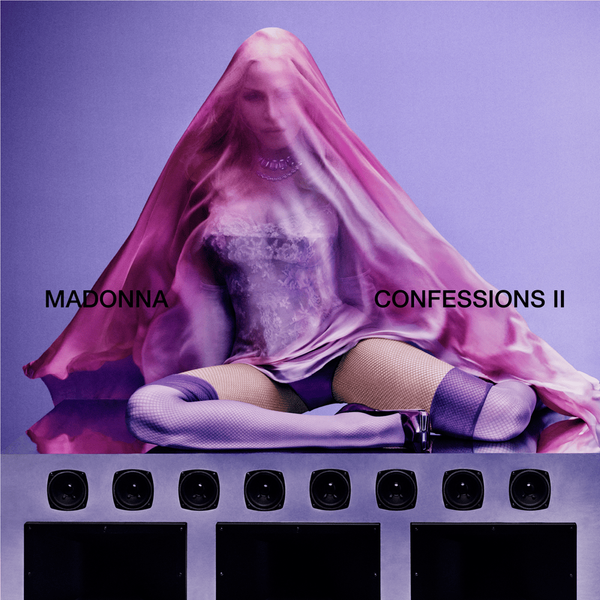
Madonna’s over 40-year career is marked by career highs, lows, and unwavering perseverance. Coming off her retrospective Celebration tour, Madonna took an introspective look and began work on an autobiographical film starring Julia Garner. Unfortunately, a theatrical release and Netflix series hit several snags that halted the process. Never phased, she poured that creativity into a part two of her iconic 2004 release, Confessions on a Dance Floor.
Reconnecting after 15 years, Madonna and Stuart Price mixed and weaved dance production that sparked movement with the depths of emotional hardships and healing Madonna has endured throughout her life:
“I reached out to Stuart [Price] because I thought the world is in a very dark place and people need to dance. I hadn’t worked with Stuart for a long time. We’d just done the Celebration Tour together, but besides that, I didn’t really see or speak to him for probably 15 years. I was living in New York and I reached out to him, thinking, ‘What if we tried to make Confessions on a Dance Floor: Part II, and reenter the world of inspirational dance music?’ So I came to London and went to his studio, and we were just playing around to see if there was magic between us. I had a lot of stuff going on in my life personally. My brother was very, very, very ill, and my stepmother, with whom I’d had a very traumatic relationship throughout my entire childhood, had just died… It’s hard for me to write a song about nothing. I have to tell a story. So I wrote about a lot of family trauma, and then we started making dance music.” — Madonna via Interview Magazine (2026)

(Photo from Genius)
The ecstasy of the dancefloor comes to life on the opening track “I Feel So Free.” Madonna’s sultry spoken verses evoke the unfettered bliss you feel losing yourself to the music. This boils and churns as tension rises and releases through Stuart Price’s euphoric dance production. This sets the scene for the space Madonna feels secure to tell her truths and be herself. I love the subtle nod to “Bedtime Story” in the song’s rapturous arrangement.
[embed]The official visualizer for “I Feel So Free” directed by Special Offer.
“Good For The Soul” absorbs us into the joyous release of letting go. Stuart’s production blankets the thumping beat with atmospheric synths and swirling strings, bridging disco and modern dance music. Madonna’s words encourage us to revitalize ourselves through the liberation of music. I love how the song drifts from astronomical heights back down to the surface, touching on various kinds of electronica and disco textures.
Madonna touts the spiritual experience of the dancefloor and the music that brings it alive in “One Step Away.” Her explanation of how these flavors strip away all the anguish and heartache you’ve suffered and bring you closer to the freedom you seek really resonates with me. Lighting this up with the crisp neon glow of house beats and delicious strings makes that feeling of salvation feel even more tangible. I wish this had been a single. Madonna sounds fantastic among Price’s bubbling froth of sound.

(Photo from Genius)
“Bring Your Love” shares sentiments similar to those of her nineties single “Human Nature.” Regardless of your critiques and criticisms, Madonna’s only concern was centered around love (be it for her fans, for what’s right, or for the art form). Sabrina Carpenter’s coy sass pairs nicely alongside the sultry confidence of Madonna. Utilizing a sample of Inner City’s “Good Life,” Price brings the rush of house music's heyday back to life. It’s something that will easily get you moving with conviction.
[embed]The official music for “Bring Your Love” (Madonna & Sabrina Carpenter) directed by TORSO.
Named after the iconic New York City club where she started her career and debuted her first single, “Everybody,” back in 1982, “Danceteria” explores the creative forces surrounding her humble beginnings. The song’s hook is a callback to her debut single. Stuart brings the lively energy of a happening club to life through a mix of crackling synths and bumping beats. The alluring attitude Madonna brings to each spoken verse gives a fabulousity that only grows on you with each listen.

(Photo from Genius)
The scars of a relationship based on lies and control are finally allowed to heal in “Read My Lips.” This song bridges her career-long love affair with Latin music and Madame X’s raggeaton influences. Columbian singer/songwriter Feid blends nicely into the mix, Stuart and Tainy (Bad Bunny and Daddy Yankee) conjure beneath the duo. I prefer this to the sound of her prior album. It explores yet another important facet of dance music while fitting nicely into her narrative of a woman scorned but never broken.
“Everything” seeks to shatter this harsh divide and bring light back into an ever-darkening world. What immediately hooked me was the song's aggressive electronic production and vocal effects. Madonna’s frustration peaks with the satisfying bite of “It’s not okay, I don’t fuck with it.” It’s almost as if you have to fight the music to find the clarity and connection you’ve been desperately seeking. I loved how everything feeds off itself to give you the sense of intense motion.
The addictive rush of love is centered in the pulsing energy of “Love Sensation.” A sense of bliss comes when everything boils to the surface in the song’s chorus. It’s all about the ecstasy that comes with being wholly devoted to someone. I do feel the song sounds a little basic when paired with the flood of dance-related creations that make up this project. Regardless, it's something that you can put on and easily get lost in.
[embed]The official visualizer for “Love Sensation” directed by Special Offer.
Madonna uses “Love Without Words” to show the inclusive realm dance music offers to all who embrace it. A neon glow overcomes you as the tingle of electronic beats sets your feet in motion. Price gives the song a real effervescence. I get tastes of Confessions on the Dancefloor’s unbounded love for genre and the freedom it offers, with little nods to some of her remix work that bubbled through Music and American Life’s singles.
Diving back into her past, “Bizarre” explores the void left behind by her tumultuous relationship with actor Sean Penn. Martin Garrix’s production takes synth work that takes you back to the True Blue era and coats it in a dark, trance-like haze. It makes these memories and emotions Madonna drums up feel that much more bittersweet. I was enamored with the overall production that amplified her candid confession of love's everlasting imprint.
“School” recalls “Justify My Love” with its assertive sexual energy and interpolated lyrics. Madonna burns with the passion for the art of dance and of love’s physical desire. It’s got Erotica’s carnal lust with dark, pulse-pounding EDM production that gets hips moving and sweat dripping. What impresses me is how she snakes between the release of the dancefloor and bodily delights.
Madonna finds forgiveness with her late brother, Christopher Ciccone, before his passing on “Fragile.” Her brother’s 2008 tell-all memoir, Life with My Sister Madonna, caused a deep schism in their relationship that finally mended as she faced his mortality:
“It’s important to find a way to forgive even people that you perceive as your biggest enemies. For a really long time, it was my brother who died recently… I didn’t speak to him for years, years and years, and it was him being ill and reaching out to me and saying, ‘I need your help’… I was so relieved, it was such a load off my back, such a weight that was removed, baggage that I could put down to finally be able to be in a room with him and holding his hand even if he was dying, and saying ‘I love you and I forgive you’… I wrote a song about him. I’m working on new music and I wrote a song called ‘Fragile’ which is about my brother.” — Madonna via Jay Shetty Podcast (2026)
Stuart’s production calls back to Ray of Light’s atmospheric electronica. This not only brings out the spiritual aspects of death that Madonna must face, but also captures the bittersweet ache of grief. I really loved how evocative the whole experience was.
“My Sins Are My Savior” makes amends for the judgments we’ve suffered and embraces the faults that have made us stronger. Much of the frustration she releases surrounds the constant criticism and misunderstanding she’s received for her subversive takes on various subject matters:
“Narrow-minded people who are ignorant, who judge first before investigating. Society, basically. The ones that condemn me. It used to bother me a lot, because I was just like, ‘I can’t believe they’re so stupid. They don’t get it. They don’t understand.’ I do a lot of provocative things, but there’s always a reason behind it and nobody bothers to investigate” — Madonna via Interview Magazine (2026)
Belgian singer Stromae brings even more life to the ambient/electronic ’90s sound Stuart expertly reaches back for. I adore the clever use of the bassline from DNA and Suzanne Vega’s “Tom’s Diner” and the mellow groove from Army of Lovers' “My Army of Lovers.” Together, it captures a vibe that sounds undeniably fresh and honest to its source material.
I adore how “Betrayal” utilizes the dark, otherworldly sound of Eric Satie’s “Gnossienne no. 1” to capture the acrimonious relationship between Madonna and her step-mother. The way both Stuart Price and Mirwais Ahmadzaï (whom Madonna worked with on Music and American Life) bring horns and earthy dance beats into the mix really strengthens the internalized resentment she had toward her stepmother, who replaced her beloved late mother. I love how this song captures the introspection of her early 2000s work.
Fittingly, “The Test” takes the healing from the prior track and brings mother and daughter back together. Madonna’s eldest daughter, Lourdes “Lola” Leon, was the catalyst for using music to bridge the gap that had formed between her and her mother:
“The song I wrote with my daughter, Lola. She approached me about writing a song together as a way to heal our relationship. It was a really important moment, and it solidified the idea that now is the time to make this record.” — Madonna via Interview Magazine (2026)
There’s a yin and yang between Madonna’s dance-pop sound and her daughter’s trip-hop exploration. It’s a mother learning to let go and a daughter learning to espouse the path her mother paved for her. It’s a touching and poignant moment.
“L.E.S. Girls” dials back the production to leave you in an almost daydream-like memory of Madonna’s beginnings in New York City. Her tenderness, looking back at the plucky girl ready to take on the world, is rather heartwarming. After exploring loss, trauma, defamation, and bliss, this spot of nostalgic comfort is a lovely place to end.
[embed]The short film Madonna created for the release of Confessions II.
Confessions II is every bit as satisfying and addictive as its predecessor from 20 years back. Madonna explores the genre through ambient, trance, trip-hop, house, EDM, reggaeton, and other subgenres that have brought life to clubs over the decades. In this safe space, she reveals scars of loss, resentment, and estrangement that have weighed heavily on her. It’s also an exploration of how the genre and its creativity sparked a career that would span half a century.
The album is filled with gems that showcase the depth dance music can offer. Never call Madonna down for the count, because Confessions II is easily another career highlight in her discography.
My overall thoughts on *Confessions II*:
My rating scale: Love it = 1 point, Like it = 0.5 point, Dislike it = 0 points; Final score = total points/ number of tracks
Loved it: “I Feel So Free,” “One Step Away,” “Everything,” “Bizarre” (feat. Martin Garrix), “School,” “Fragile,” “My Sins Are My Savior” (feat. Stromae), “Betrayal,” & “The Test” (feat. Lola Leon),
Liked it: “Good For The Soul,” “Bring Your Love” (feat. Sabrina Carpenter), “Read My Lips” (feat. Feid), “Danceteria,” “Love Without Words,” & “L.E.S. Girls”
Disliked it: None
My overall rating: 7.5 out of 10.
Sources:
[embed]Madonna discussing her career and Confessions II on the Jay Shetty Podcast.
메타데이터
- post_id
- d6d8d68a35bf
- slug
- album-review-confessions-ii-by-madonna-d6d8d68a35bf
- url
- https://medium.com/the-riff/album-review-confessions-ii-by-madonna-d6d8d68a35bf
- canonical_url
- https://medium.com/the-riff/album-review-confessions-ii-by-madonna-d6d8d68a35bf
- author_url
- https://medium.com/@zsidesmusic
- status
- ok
- fetched_at
- 2026-07-13 06:23:13