Amaranth
I’m thinking of tossing it in for the morning. Been out here for twenty minutes, maybe, and it is still flat as a lake.
Plant notes…
Amaranth
I’m thinking of tossing it in for the morning. Been out here for twenty minutes, maybe, and it is still flat as a lake.
There’s someone paddling out. I watch as the figure strokes its way across the undulating surface towards me.
“Seems there’s nothing doing,” says Mandy as she paddles up. “Has it been like this all morning?”.
I say hi, haven’t seen you here for awhile. Nah, been on the mainland for a few weeks, she says, offering nothing more by way of explanation.
“Hey… plants… you know something about plants… so there’s this plant that grew beside the shack I live in. It was there last year and now it’s coming back but there’s more of it now. Do you think it left seed in the ground last year and they’ve all sprouted?”.
“Sounds like it”, I said. What does it look like?”.
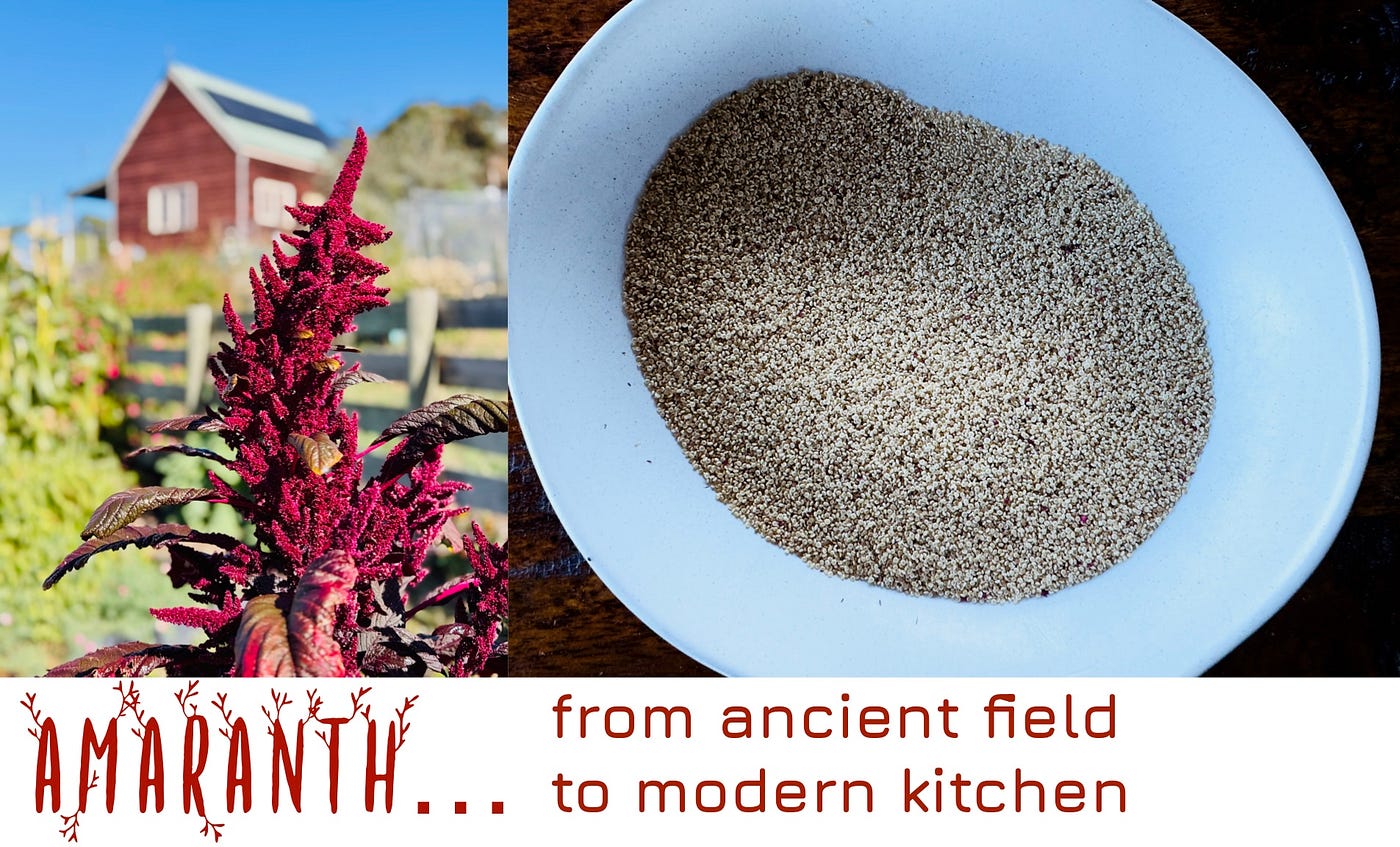
“Sorta weird”, she says, “big red leaves and last year there was this big dark red flower, I guess it was, or maybe a cluster of little flowers that was so heavy it bent the plant over.”
“Hmmm… sounds like amaranth”, I say in hazarding a rough guess.
She looks at me, head tilted to the side as she squints an eye in expectation of an explanation.
“It’s this grain. Leaves sorta dark red. The Aztecs used it for rituals and food. It can withstand heat and drought like we’re having now.”
Mandy: “Uh huh!”

Common name: Amaranth Family: Amaranthaceae Genus: amaranthus Species: more than 50 species
Centre of diversity
Primarily Central and South America.
Ecological note
To highlight the complex relationship between humans and plants in different environments, while amaranth is cultivated as a food source in diverse climates and regions, in others it is regarded as a weed, including in North America and parts of Europe — Amaranthus retroflexus (redroot pigweed) and Amaranthus hybridus grow aggressively in agricultural settings where they compete with crops for nutrients, water and sunlight. In Australia, Amaranthus retroflexus and Amaranthus spinosus can be weedy in agricultural settings where they thrive in disturbed soils. Other species of amaranth are cultivated for their nutritional benefits.
Growth form
Annual or short-lived perennial herbs/shrub
- leaves: oval or elliptical —undulate edges; green, red, purple; 6.5–15cm; arranged either opposite or alternate depending on species
- primary taproot with fibrous secondary roots
- flowers: small, radially symmetric, arranged in dense panicle inflorescences; bisexual or unisexual
- seed: 1–1.5mm diameter.

Reproduction
Seed
Uses
Food
- seed is edible and can be popped like corn
- leaves of some species are edible (Amaranth tastes as good as it looks)
The Hopi indigenous culture of the western United States used amaranth as a source of a deep red dye.
Comment
The four species of Amaranthus cultivated as vegetables in East Asia: *Amaranthus cruentus, [Amaranthus blitum](https://en.wikipedia.org/wiki/Amaranthus_blitum), Amaranthus dubius, and [Amaranthus tricolor](https://en.wikipedia.org/wiki/Amaranthus_tricolor).*
Amaranth is not a traditional food in Oceania (Pacific Islands, Aotearoa-New Zealand, Australia) but is of increasing interest there. It has been adopted as an edible seed in Australian home gardens.
Amaranth was used as a food and for ritual purposes in the Aztec culture of Central America, as well as in ritual in Classical Greece. Cultivation in the Americas was outlawed with the coming of the Spanish conquest.
Photos
The photos are amaranth grown in our home garden in the cool temperate coastal climate of southeast Tasmania. The seed heads were removed when ready and placed in paper bags in which the seeds could be threshed out.

Plant notes
[embed]The Black Russian The tale of a tomato…medium.com
[embed]Mizuna An Asian vegetable with edible leaf and flowers that attract bees…medium.com
[embed]Shungiku An Asian vegetable with a place in every home and community garden…medium.com
Other perma-stories

메타데이터
- post_id
- d70f2949d9be
- slug
- amaranth-d70f2949d9be
- url
- https://medium.com/permaculture-3-0/amaranth-d70f2949d9be
- canonical_url
- https://medium.com/permaculture-3-0/amaranth-d70f2949d9be
- author_url
- https://medium.com/@russgrayson-au
- status
- ok
- fetched_at
- 2026-07-10 23:53:15