PCB vs FPC: What’s the Difference?
In the electronic components industry, PCB and FPC are two of the most fundamental and widely used circuit carrier structures. As products…
PCB vs FPC: What’s the Difference?
In the electronic components industry, PCB and FPC are two of the most fundamental and widely used circuit carrier structures. As products such as smartphones, computers, automotive electronics, and wearable devices continue moving toward thinner designs, higher integration, and more complex structures, engineers increasingly need to make reasonable choices between PCB and FPC during circuit design. Although both belong to the printed circuit technology family, they differ significantly in terms of material structure, mechanical properties, design approaches, and application scenarios. The following sections briefly analyze PCB and FPC from the perspectives of basic concepts, structural characteristics, and practical applications.
I. What is PCB?
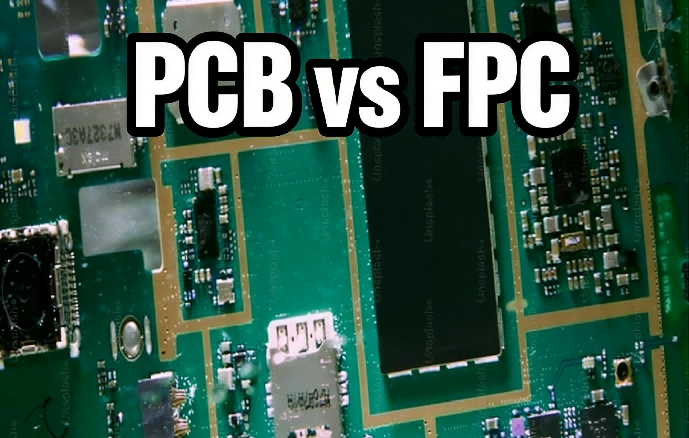
**PCB stands for Printed Circuit Board**. In the electronics industry, PCB is usually referred to as a “rigid board.” It serves as an important support platform for electronic components and is also a key structure for establishing electrical connections. PCB typically uses FR-4 glass fiber epoxy resin as its base material. This material provides high mechanical strength and strong stability, which means the board structure is relatively rigid and cannot be bent or flexed. By covering the base material with copper foil and forming circuit patterns through an etching process, and then mounting various electronic components through soldering, a PCB can form a complete electronic circuit system. Because PCB offers excellent stability and load-bearing capability, it is widely used in electronic devices that do not require bending but demand strong structural support, such as computer motherboards, server boards, industrial control boards, and smartphone mainboards. In many ways, PCB can be considered one of the most essential and fundamental circuit platforms in modern electronic devices.
II. What is FPC?
**FPC is the abbreviation for [Flexible Printed Circuit](https://www.smbom.com/news/32023)**, commonly known as a flexible circuit board or simply a “flex board.” From a technical perspective, FPC is actually a special type of PCB, but it differs greatly from traditional rigid PCBs in terms of materials and structure. FPC usually uses polyimide (PI) or polyester film as the base material. These materials provide excellent flexibility, allowing the circuit board to bend, fold, or even flex repeatedly without affecting its electrical performance. Because of this flexible property, FPC is particularly suitable for positions inside electronic devices where dynamic connections are required or where space is limited. Typical examples include camera module cables, display screen ribbons, foldable phone structural connections, and signal transmission between various small electronic modules. As electronic product designs become increasingly complex, FPC is no longer used only for simple wiring connections. It has gradually become an important design method for creating three-dimensional circuit structures and is playing an increasingly critical role in modern consumer electronics.
Get more details: PCB vs FPC: What’s the Difference?
메타데이터
- post_id
- d72c81200a52
- slug
- pcb-vs-fpc-whats-the-difference-d72c81200a52
- url
- https://medium.com/@szsmyg/pcb-vs-fpc-whats-the-difference-d72c81200a52
- canonical_url
- https://medium.com/@szsmyg/pcb-vs-fpc-whats-the-difference-d72c81200a52
- author_url
- https://medium.com/@szsmyg
- status
- ok
- fetched_at
- 2026-07-11 20:55:18