Seoul Transit Survival Guide: Speak Like a Native Commuter
Surviving the Seoul Commute: How to Talk About Your Daily Transit Like a Local
Seoul Transit Survival Guide: Speak Like a Native Commuter
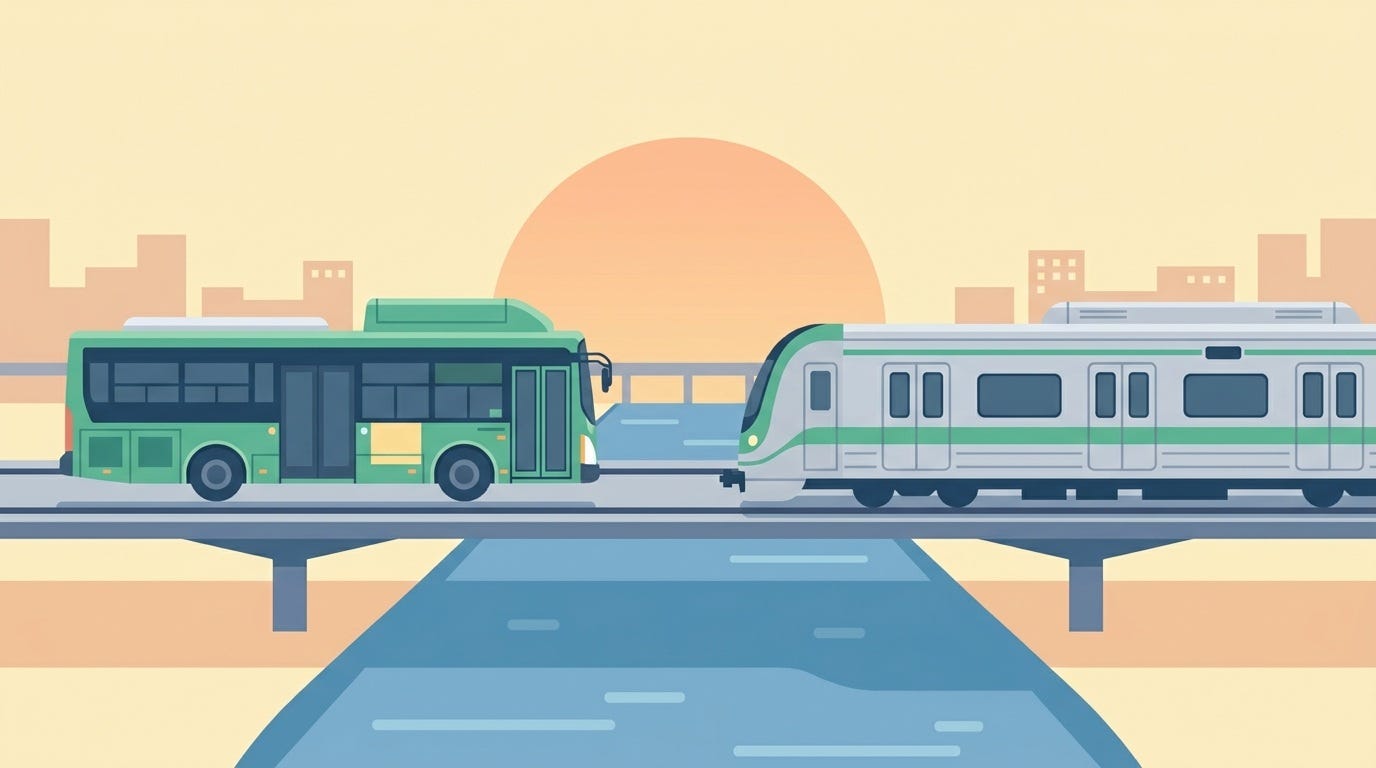
Surviving the Seoul Commute: How to Talk About Your Daily Transit Like a Local
안녕하세요! Welcome back to another edition of Daily Hangul. I’m your head editor and resident Seoul guide. If you’ve ever watched a modern K-Drama like My Liberation Notes (나의 해방일지) or Start-Up, you’ve probably seen those scenes: the protagonist squeezing onto a packed subway train, staring longingly out the window at the Han River, or sprinting to catch a green bus. Seoul’s transportation system is world-class, but during peak hours, it is an absolute battlefield. If you are learning Korean, being able to naturally explain how you get to work or school is a major milestone. Today, we aren’t just memorizing dry vocabulary lists; we are mastering the real-life phrases that will make your Korean friends go, “Wow, you sound like you’ve lived in Seoul for ten years!” Let’s dive into the daily rush hour adventure!
Phase 2: Essential Commute Expressions Deep Dive
Here are the top three expressions you need to describe your daily journey.
1. 버스로 출근해요 (I commute by bus)
• Pronunciation: [beoseu-ro chul-geun-hae-yo] • Sound-alike guide: “bus-row chool-goon-hae-yo” • Meaning: I commute to work by bus. • K-Culture Moment: You’ve seen those colorful buses (blue for main lines, green for local neighborhoods) weaving beautifully through Seoul’s heavy traffic. Telling someone you take the bus implies you know the local geography well! • Editor’s Insight: The magic particle here is ~로/으로 (ro / euro). It means “by means of” or “using.” Since 버스 (beoseu) ends in a vowel, we attach ~로. If you took the subway, you’d say 지하철로 (jihacheol-lo). • Situation Spectrum: • Close friends (Casual): ✅ (버스로 출근해) • Coworkers (Semi-formal): ✅ (버스로 출근해요) • Bosses/Elders (Formal): ✅ (버스로 출근합니다)
🤔 Think About It: Why does Korean have dedicated words like 출근 (chul-geun — going to work) and 퇴근 (toe-geun — leaving work) instead of just saying “I go to the office”? What does this tell us about how work transitions are valued in Korean society?
2. 지하철을 타고 가요 (I take the subway)
• Pronunciation: [ji-ha-cheol-eul ta-go ga-yo] • Sound-alike guide: “jee-hah-chul-eul tah-go gah-yo” • Meaning: I ride the subway (literally: “I ride the subway and go”). • K-Culture Moment: Think of transfer stations like Shindorim or Dongdaemun History & Culture Park during rush hour. You hear that iconic, cheerful brass music playing over the speakers to alert you of an upcoming transfer line. • Editor’s Insight: English speakers often say “I take the subway.” In Korean, we link two verbs: 타다 (to ride) + ~고 (and) + 가다 (to go). It describes the active motion of boarding and traveling. • Situation Spectrum: • Close friends (Casual): ✅ (지하철 타고 가) • Coworkers (Semi-formal): ✅ (지하철을 타고 가요) • Bosses/Elders (Formal): ✅ (지하철을 타고 갑니다)
🤔 Think About It: Combining verbs like “ride and go” (타고 가다) is highly common in Korean. Why do you think Korean structure prefers tracing actions chronologically rather than wrapping them into a single verb like “take”?
3. 길이 너무 막혀요 (The road is so congested)
• Pronunciation: [gil-i neo-mu mak-hyeo-yo] • Sound-alike guide: “geel-ee neo-moo mahk-hyuh-yo” • Meaning: Traffic is terrible / The roads are packed. • K-Culture Moment: You’re late for a morning meeting, sitting in a taxi on the Olympic Expressway, staring at the red taillights of thousands of cars while the radio plays a soft K-ballad. • Editor’s Insight: 길 (gil) means road/street, and 막히다 (makhida) means to be blocked or clogged. Use this phrase when you want to politely explain why you might be running just a tiny bit late. • Situation Spectrum: • Close friends (Casual): ✅ (길이 너무 막혀) • Coworkers (Semi-formal): ✅ (길이 너무 막혀요) • Bosses/Elders (Formal): ✅ (길이 너무 막힙니다)
🤔 Think About It: Expressing shared frustration about public spaces (like traffic or crowded trains) is a unique way Koreans bond over daily struggles. Is sharing minor complaints considered polite or impolite in your home culture?
Phase 3: Textbook vs. Real Korean
When you study from standard textbooks, the dialog can sound incredibly robotic. Let’s look at how native Seoulites actually speak.
Describing Commute Method
• 📖 Textbook Korean: “저는 매일 지하철을 타고 회사에 갑니다.” (jeo-neun mae-il ji-ha-cheol-eul ta-go hoes-a-e gam-ni-da.) • 🗣️ Real Korean: “보통 지하철 타고 출근해요.” (bo-tong ji-ha-cheol ta-go chul-geun-hae-yo.) • 💡 Why it’s different: Natives rarely say “저는” (I) and prefer “출근해요” (commute to work) over “회사에 갑니다” (go to the company) because it sounds much more natural and compact.
Expressing Travel Time
• 📖 Textbook Korean: “집에서 회사까지 한 시간이 소요됩니다.” (jib-e-seo hoes-a-kka-ji han si-gan-i so-yo-dem-ni-da.) • 🗣️ Real Korean: “한 시간 정도 걸려요.” (han si-gan jeong-do geol-lyeo-yo.) • 💡 Why it’s different: “소요됩니다” is highly formal, almost like a transit announcement. In casual conversations, “걸려요” (it takes / hangs) is the absolute king of time expressions.
Phase 4: Cultural Context — K-Transit Deep Dive
4–1. The Silent Rules of ‘Nunchi’ (눈치) on Seoul Transit
When traveling during rush hour, practicing Nunchi (the art of sensing other people’s feelings and circumstances) is vital.
- The Backpack Rule (백팩은 앞으로!): If you are wearing a bulky backpack on a packed subway car, you must take it off and hold it down, or wear it on your front. Keeping it on your back is considered highly inconsiderate to those squeezed behind you.
- Whisper Zone: You will notice that Korean subways are incredibly quiet. Loud phone calls are heavily frowned upon. If you must take a call, keep it brief, cup your hand over your mouth, and speak in a whisper.
4–2. The K-Drama Commute vs. Reality
In dramas like Business Proposal, characters always seem to find empty seats on the subway or enjoy a peaceful bus ride with romantic music playing in the background. In reality, Seoul transit during peak hours (8:00 AM — 9:00 AM) is lovingly referred to as 지옥철 (ji-ok-cheol) — a combination of “지옥” (hell) and “지하철” (subway). Be prepared to be cozy with strangers!
Phase 5: Real-Life Roleplay Scenario
Scenario A: The Morning Office Greeting
• Setting: A bustling office elevator lobby in Yeouido (Seoul’s Wall Street) at 8:50 AM. You are slightly out of breath after rushing from the subway station. You bump into Ji-won, your friendly team lead. • Characters: • YOU: An international intern starting your second week. • 지원 (Ji-won): Energetic senior manager (32, loves iced coffee).
지원: 어, 좋은 아침이에요! 오늘 아침 출근길 어땠어요? (eo, jo-eun a-chim-i-e-yo! o-neul a-chim chul-geun-gil eo-ttaet-seo-yo?) [Ji-won: Oh, good morning! How was your commute this morning?] (🎭 Stage Direction: Ji-won takes a sip of her iced coffee and smiles warm-heartedly) YOU: 안녕하세요! 오늘 지하철에 사람이 정말 많았어요. (an-nyeong-ha-se-yo! o-neul ji-ha-cheol-e sa-ram-i jeong-mal man-as-seo-yo.) [YOU: Hello! There were really so many people on the subway today.] 지원: 역시 그랬군요. 몇 호선 타고 와요? (yeok-si geu-raet-gun-yo. myeot ho-seon ta-go wa-yo?) [Ji-won: Ah, as expected. Which line do you take?] YOU: 저는 9호선 타고 와요. (jeo-neun gu-ho-seon ta-go wa-yo.) [YOU: I take Line 9.] (🎭 Stage Direction: You wipe a small bead of sweat from your forehead) 지원: 헉! 9호선이요? 거기는 정말 '지옥철'인데! 고생했네요. (heok! gu-ho-seon-i-yo? geo-gi-neun jeong-mal 'ji-ok-cheol'-in-de! go-saeng-haet-ne-yo.) [Ji-won: Oh gosh! Line 9? That place is absolute "subway hell"! You must have struggled.]🔀 Your Turn! How do you reply?
• A) “네, 힘들었어요.” (Yeah, it was hard. — A bit too blunt/negative.) • B) “괜찮아요! 이제 적응됐어요.” (It’s okay! I’m used to it now. — Shows great attitude and conversational skill!) • C) “지하철을 타는 것은 재미있습니다.” (Riding the subway is fun. — Grammatically okay, but sounds like a textbook robot.) ✅ Best Choice: B! It shows you can take a light challenge in stride and keeps the office vibe positive.
Scenario B: Getting in a Taxi
• Setting: You are running incredibly late, so you hail an orange Seoul taxi.
YOU: 기사님, 강남역으로 가주세요. (gi-sa-nim, gang-nam-yeok-eu-ro ga-ju-se-yo.) [YOU: Driver, please go to Gangnam Station.] 택시 기사: 네, 알겠습니다. 근데 지금 시간이 길 좀 막힐 텐데요. (ne, al-get-seum-ni-da. geun-de ji-geum si-gan-i gil jom mak-hil ten-de-yo.) [Driver: Sure, okay. But at this hour, traffic might be quite blocked.]Phase 6: 10-Second Shadowing Drill
Try saying these with the right emotion! Pay attention to the pauses (/).
• 😊 보통 / 지하철 타고 / 출근해요!
(bo-tong / ji-ha-cheol ta-go / chul-geun-hae-yo!)
(Emotion: Friendly, bright)
• 😢 아, 오늘 / 길이 / 너무 막혀요.
(ah, o-neul / gil-i / neo-mu mak-hyeo-yo.)
(Emotion: Slightly worried, apologetic)
Phase 7: K-Culture Mini Dictionary
• 1. 지옥철 (ji-ok-cheol): Literally “Hell-way.” Used to describe the incredibly crowded subway during morning and evening rush hour. • 2. 따릉이 (tta-reung-i): Seoul’s beloved public rental bicycles. You can spot these white and green bikes parked near almost every subway exit. • 3. 야근 (ya-geun): Overtime work. Many office workers’ “퇴근” (commute home) is delayed because of unexpected ya-geun. • 4. 환승 (hwan-seung): Transferring. Seoul offers free transfers between buses and subways within 30 minutes if you tap your card!
Phase 8: Traveler’s Survival Kit
🆘 Survival Phrase #1
- 🇰🇷 “여기 내려주세요.” (yeo-gi nae-ryeo-ju-se-yo.)
- 🗣️ English Guide: “Let me off here, please.”
- 📍 Where to use: In a taxi or local neighborhood shuttle bus. 🆘 Survival Phrase #2
- 🇰🇷 “반대로 탔어요.” (ban-dae-ro tat-seo-yo.)
- 🗣️ English Guide: “I took it in the opposite direction.”
- 📍 Where to use: At subway stations when asking a station master for help to cross over to the other platform.
📌 Editor’s Travel Note: Always download Naver Map or KakaoMap before coming to Korea. Google Maps does not update real-time transit routes accurately due to national security laws mapping restrictions.
Phase 9: Critical Thinking — “One Step Deeper”
In many Western cultures, asking details about how someone got to a place is just small talk. But in Korea, asking “How did you come here?” (어떻게 오셨어요?) or talking about the commute is a way of building empathy. By acknowledging that someone survived the morning “지옥철” or spent an hour on a bus, you show that you value their effort to show up. It’s a small but powerful cultural bridge.
Phase 10: FAQ & Common Mistakes
• Q: Can I use “타다” (to ride) for walking? • No! For walking to work, use 걸어서 가요 (geol-eo-seo ga-yo) which means “I walk and go.” • ❌ Common Mistake: “버스를 운전해요” (beoseureul unjeonhaeyo) • If you say this, Koreans will think you are the professional bus driver! If you are a passenger, always use 버스를 타고 가요.
Phase 11: Summary & Action Mission
• One-Liner Summary: To talk about your commute like a local, master the linking verb structure ~타고 가요 (take and go) and keep your eyes peeled for 지옥철!
Your Action Mission today:
• 🥉 Bronze: Say “지하철 타고 가요” out loud to yourself three times. • 🥈 Silver: Imagine your commute route and write it in the comments below using “~로 출근해요.” • 🥇 Gold: Next time you take transit, search for a K-Pop “commute playlist” (퇴근길 노래) to listen to, and feel like a real Seoul local.
Phase 12: Interactive Challenge Quiz
1. Which word means “subway hell” due to severe crowding?
- A) 지하철 (jihacheol)
- B) 지옥철 (jiokcheol)
- C) 따릉이 (ttareungi) 2. Fill in the blank: “버스로 출근____” (I commute by bus — polite form)
- A) 가요 (gayo)
- B) 해요 (haeyo)
- C) 타요 (tayo) 3. True or False: Seoul offers free transit transfers if you tap your card within 30 minutes. (T / F)
Answers: 1: B / 2: B (출근해요) / 3: True!
Originally published at https://dailyhangul.com on May 21, 2026.
메타데이터
- post_id
- d7b9d2be5888
- slug
- seoul-transit-survival-guide-speak-like-a-native-commuter-d7b9d2be5888
- url
- https://medium.com/@dailyhangul/seoul-transit-survival-guide-speak-like-a-native-commuter-d7b9d2be5888
- canonical_url
- https://medium.com/@dailyhangul/seoul-transit-survival-guide-speak-like-a-native-commuter-d7b9d2be5888
- author_url
- https://medium.com/@dailyhangul
- status
- ok
- fetched_at
- 2026-06-09 15:37:30